
1,800 Vanished Villages and $100 Billion Down the Drain: the Results of Three Decades of lukashenko’s Rule in Rural Areas
5/2/2026
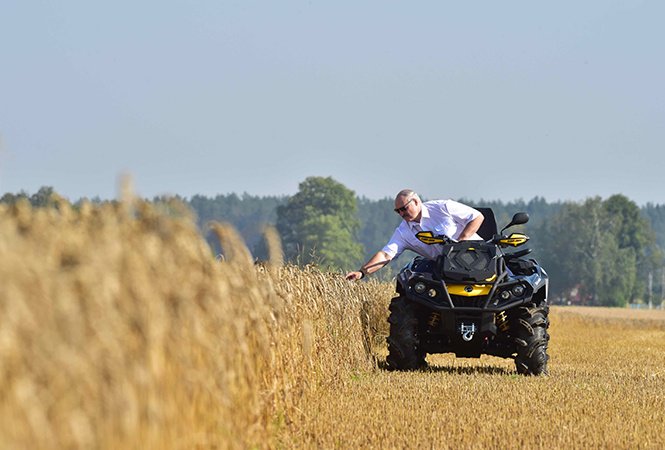
Thirty years in power – and the only promise kept: the collective farms survived. Everything else lukashenko swore to do for the belarusian villages either never happened or turned into a disaster.
70% of belarusian agricultural enterprises are unable to operate without constant state subsidies. The profitability of grain production has fallen from 71% in 1995 to less than 10% in 2020. The agricultural sector’s debts to banks exceed its annual production volume by one-fifth. Over twenty years, the state has invested $100 billion in the sector – and ended up with collective farms yielding a 4.7% return, compared to private farms which, without any preferential treatment, achieve 21.4%.
Lithuania – with its population three times smaller – exports $8 billion worth of food, compared to belarus’ $10 billion. Lithuania’s crop yield rose from 19 centners per hectare in 1992 to 47 in 2020. During the same period, despite billions in investments and high-profile programs, belarus reached 43 – and only last year, and only as an exception.
The state program for rural revival and development, launched by lukashenko in 2005, promised belarusians a better quality of life: infrastructure, schools, and sports clubs. Twenty years later, state television reported on a heated toilet in a house, presenting it as an achievement. A 2016 inspection found out that in 130 out of 300 inspected agricultural settlements there were empty houses. They built them – but couldn’t find anyone willing to live there.
Meanwhile, villages are simply disappearing. Over the past thirty years, 1,800 settlements have vanished from the map of belarus. The rural population has shrunk from 3.2 million to less than 2 million people. There are 236,000 people employed in the agricultural sector, whereas in the early 1990s there were about a million. A third of those who remain are retirees. In 2023, 13,000 children were born in rural areas, and 37,000 people died.