
Isolated russia Is Shifting Its Focus to Asia on a Mass Scale
3/19/2026
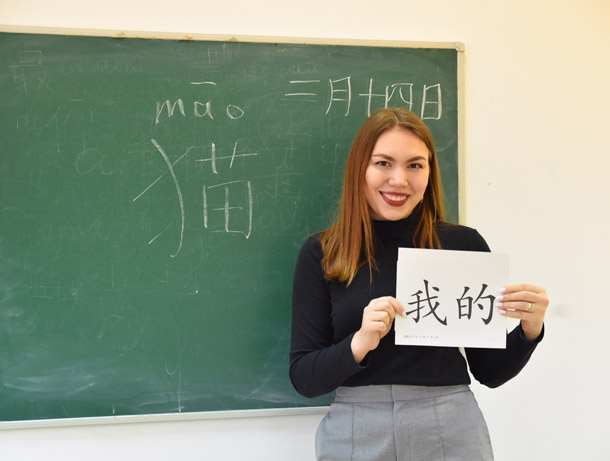
Against the background of deteriorating relations with the West and increasing isolation, interest in Asian countries has grown in russia. While just ten years ago, studying Chinese, Japanese, or Korean was considered a rare hobby, today this trend is becoming widespread. Indeed, Chinese has now become the most popular language, with Korean ranking second in demand.
The shift in educational priorities is clearly evident in student program statistics. According to the higher school of economics, in the spring of 2026, nearly 60% of applications for study abroad were submitted by russian students to universities in Asian countries – China, Japan, Indonesia, Vietnam, and South Korea. Interest in Chinese universities has grown especially sharply: while there were only five applications for a second diploma in China in 2020, by spring 2026 that number had risen to 134 at mainland universities and another 56 – in Hong Kong.
Just a few years ago, the situation was the opposite. In 2023, approximately two-thirds of russian students chose European countries – first of all Germany, Spain, the Netherlands, and Italy. However, following russia’s full-scale invasion of Ukraine and the imposition of sweeping sanctions, access to European educational programs has become much more complicated.
Representatives of russian universities openly acknowledge that the shift in where students study is directly linked to sanctions. Difficulties in opening bank accounts abroad, a significant increase in airfare prices, and difficulties with health insurance are cited as the main problems. Against this background, Asian countries appear more accessible to russian students thanks to direct flights, simplified visa procedures, and the development of educational partnerships.
In parallel, interest in Asian culture and food is growing in russia. According to data from the “O’KEY” hypermarket chain, demand for Asian food products skyrocketed in the second half of 2025: in the third quarter, it rose by 36%, and in the fourth – by another 89% compared to the previous period.
The growing interest in Asia in russia is not so much the result of a conscious strategic choice as it is a consequence of international isolation following the start of the war against Ukraine. Due to sanctions, travel restrictions, and financial barriers, most civilized Western educational and economic opportunities are effectively closed off to russians. Under such circumstances, the kremlin is attempting to promote a “pivot to the East”, but for a significant portion of russian society, this is more of a forced adaptation to the loss of access to Europe and the global West.