
kirienko Has Lost Europe and Began to Lose Ground Domestically
4/24/2026
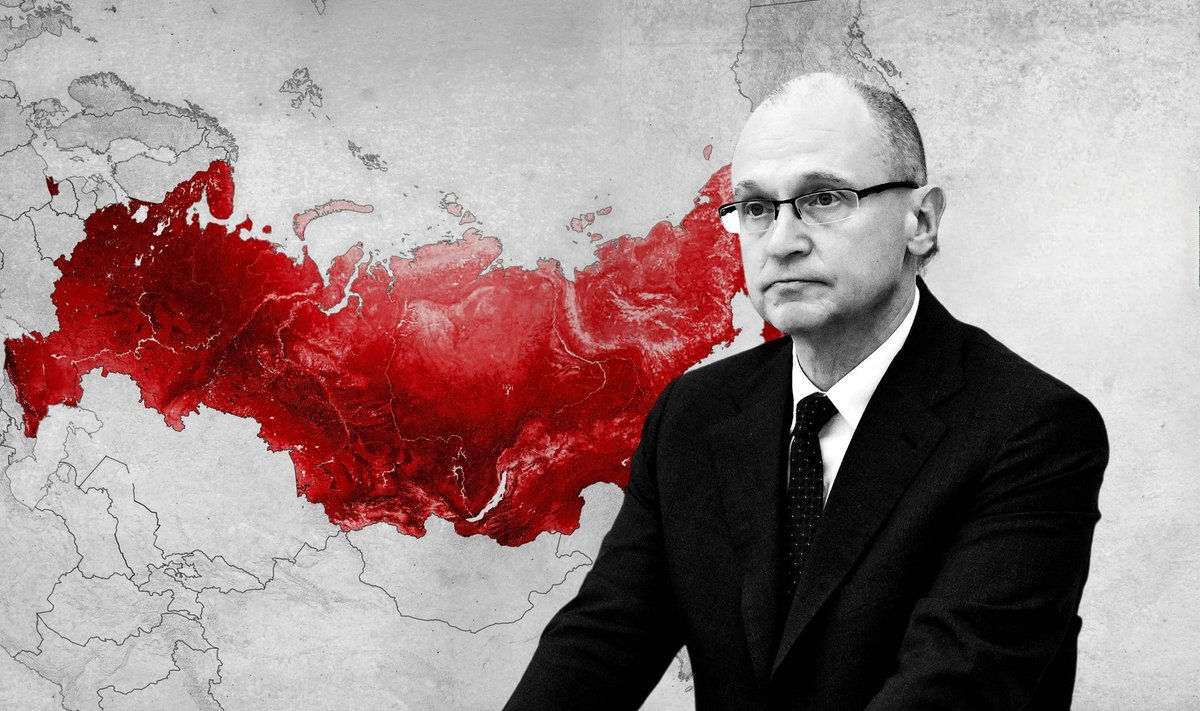
In the rf, sergei kirienko’s position has systemically weakened following a series of foreign policy failures that have undermined his key institutional advantage – his reputation as an effective manager of political processes.
Defeats in foreign elections, first of all in Moldova and Hungary, coincided with the fsb’s internal takeover of critically important governance tools. As a result, a configuration has emerged in which kirienko retains formal responsibility for political stability and election results, but is rapidly losing control over the environment in which these results are to be achieved. This creates the conditions for a fierce intra-elite conflict and a redistribution of power in favor of the security bloc.
sergei kirienko was a key operator of russia’s political system for a long time. His power was based not on public policy, but on the ability to ensure a controlled outcome through technology: rigged elections, administrative verticals, digital platforms, information networks, and engagement with regional elites. That is precisely why his position within the apparatus was directly dependent on the effectiveness of this model.
The breakdown began on the external front. Moldova was the first warning sign: the significant resources invested in political influence failed to yield a strategic result. But it was Hungary that became the turning point. Viktor Orbán’s defeat meant that the kremlin lost a key ally within the EU who had the ability to block sanctions and influence policy toward Ukraine. What is important is not only that Orbán lost, but that this defeat was publicly linked to russian attempts at interference, which experts attribute specifically to kirienko’s political bloc.
This created a situation critical for the authoritarian system: a manager tasked with delivering results began to be associated with a series of failures. For the kremlin’s logic, this means a loss of invulnerability. After Moldova and Hungary, kirienko ceases to be “irreplaceable,” and his opponents gain an argument that his model no longer works either externally or internally.
This moment was immediately exploited by the security apparatus. The fsb, primarily through its second directorate under the leadership of aleksei sedov, began systematically seizing control of the digital environment. What had previously been a tool of political governance – Telegram, information networks, and semi-controlled communication channels – began to be replaced by a rigid model of total control. The blocking of Telegram, attacks on VPNs, pressure on payment systems, and promotion of MAX became tools for ousting the political bloc from the key sphere of influence.
There is a fundamental clash of models. kirienko operates through managed complexity, where the environment is not fully controlled but is predictable. The fsb operates through total transparency and coercion. For kirienko, Telegram is a management tool. For sedov, it is a threat that must be eliminated. As a result, siloviki are destroying the very infrastructure on which the political management system was based.
This situation can be described as “responsibility without control”. kirienko is responsible for elections, for stability, for the narrative, but the tools that ensure this are shifting to the fsb. At the same time, the fsb does not assume political responsibility for the consequences of its actions. A rift emerges between those who formally manage the process and those who actually control the environment.
Against this background, the conflict begins to spread to other centers of power. Additional players are emerging in the system who are capitalizing on kirienko’s weakening position. dmitry medvedev, who is strengthening his role through hardline ideological rhetoric, could potentially secure a position within the parliamentary sphere. vyacheslav volodin, who historically represents a more public model of politics, is seen as a candidate for reforming the federation council and strengthening the regional lobby. valentina matviyenko may be ousted, which would mean a shift in the balance of power in the upper house.
These shifts are not random. They indicate a search for a new configuration of the system in which kirienko’s technocratic bloc is no longer the sole center of power. In parallel, siloviki are expanding their influence not only through the fsb but also through related structures – the prosecutor general’s office, judicial system, as well as through ties to the military and intelligence. In this configuration, kirienko finds himself caught between several centers of pressure.
The digital sphere plays a special role. The MAX project, which was supposed to become a new tool of control and simultaneously strengthen kirienko’s position through his connection to vk and his own son, has turned into a problem. Instead of a controlled transition, chaos ensued: communication failures, public discontent, panic of businesses, and criticism even from loyalists. This undermines not only effectiveness but also trust in the political bloc.
As a result, a new logic of the system is taking shape. The fsb, using the arguments of security and war, is gradually bringing the instruments of governance under its control. The political bloc is losing its autonomy. The Parliament may partially restore its role as a separate center of influence through its control of the duma and a potential alliance with medvedev. Regional elites are seeking new channels of interaction beyond kirienko. Technocrats and business leaders are beginning to openly express their dissatisfaction.
All of this is unfolding against the background of a key factor: the weakening of putin’s role as an arbiter. Whereas he used to balance the interests of different factions, he now increasingly endorses decisions made by siloviki without considering their consequences. This intensifies the conflict, as the mechanism that kept it in check is disappearing.
External setbacks, first of all in Moldova and Hungary, became a critical factor in the weakening of sergei kirienko, as they destroyed his main institutional asset – his reputation as an effective political manager. The fsb, capitalizing on these failings, has moved to systemically seize control of the digital environment, thereby depriving kirienko of key management tools.
The conflict between kirienko and the security services is not personal but structural – it is a struggle between a technocratic model of governance and a coercive model of total control.
The current situation is not a point of collapse but a point of power redistribution, in which kirienko is no longer the dominant center but merely one of several competing actors. The most likely scenario is further strengthening of the fsb and gradual narrowing of kirienko’s influence without his immediate removal, but with the loss of his monopoly on managing the political process and his designation as a “scapegoat” for putin’s declining approval ratings.