
moscow Uses Education and Employment to Draw Africans into the War Against Ukraine
2/21/2026
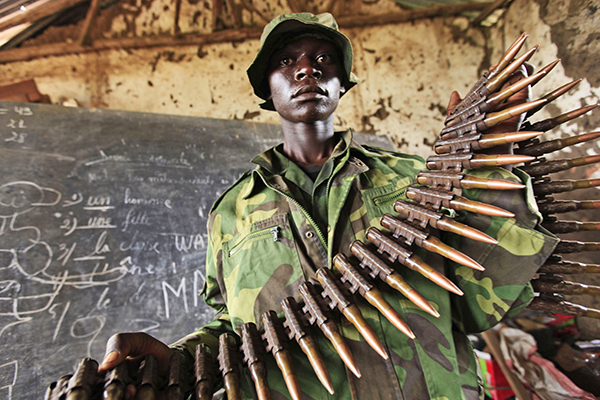
russia is increasing its influence in African countries by combining humanitarian initiatives with covert military recruitment. Through educational, cultural, and religious tools, russia is forming loyal networks and, at the same time, recruiting foreigners to fight in the war against Ukraine and work in defense industry enterprises. As of the end of 2025, more than 1,400 citizens from 36 African countries are fighting on moscow’s side.
The main focus is on socially vulnerable young people, people with limited access to education and work, as well as low-income women and people with military experience. Recruitment is often disguised as civilian employment: Africans are offered jobs as security guards, drivers, or construction workers, but are later involved in activities in the interests of the rf. Under the “Alabuga Start” program, young women aged 18–22 are sent to russia ostensibly for civilian work, but in fact to manufacture military products, including UAVs, in the Alabuga Special Economic Zone.
Another channel is educational and cultural projects. Scholarships, language courses, and short programs at russian universities are complemented by the expansion of the “russky dom” network of centers and the activities of state media outlets – sputnik and rt. This creates an information environment from which it is easier to select potential recruits. Private military companies, local intermediaries, and military-technical cooperation play an additional role, forming long-term dependencies through training and arms supplies.
The expansion of the russian orthodox church has become a separate instrument of influence. Between 2022 and 2026, its presence expanded from four to more than thirty African countries. The construction of churches, high salaries for clergy, and distance learning in seminaries serve as a channel for forming loyal networks and spreading pro-russian narratives about “traditional values”.
The reaction of African governments is becoming tougher. Kenya, South Africa, Nigeria, Botswana, and Lesotho accuse moscow of large-scale recruitment. In the near future, some African states plan to tighten control over employment agencies, review migration agreements, and limit contacts with russian educational and cultural structures.