
russia Has Destroyed Its Own Cinematography
3/8/2026
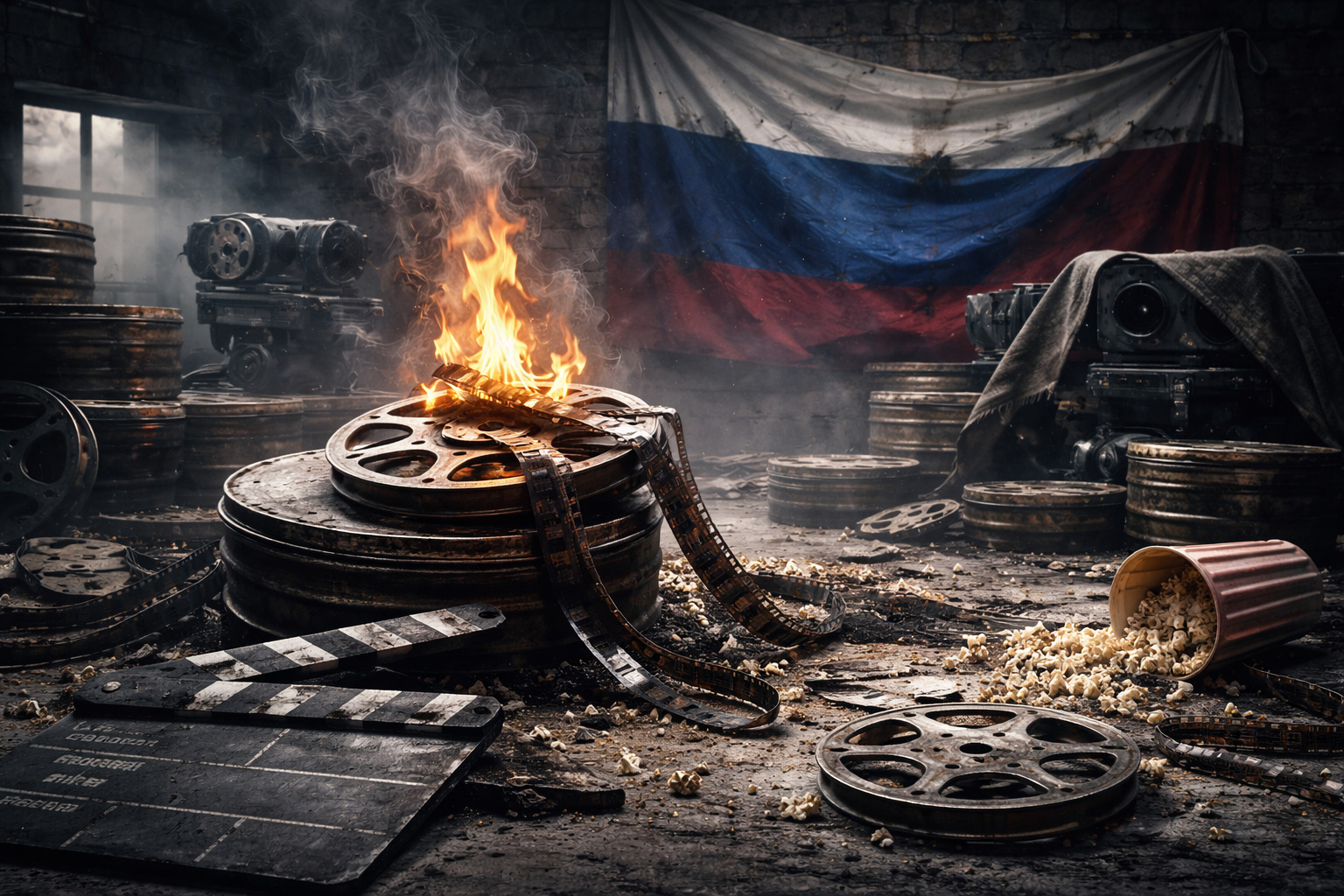
russia’s film industry follows the soviet system of “shelving” films, with the difference that today’s censorship operates without clear rules or formal explanations. Films are banned or removed from distribution due to complaints from “public activists”, interference from law enforcement agencies, or simply because they do not conform to military rhetoric – and none of these mechanisms are provided for by any law.
sergei chliyanets’ film “the wind”, recognized as the best russian film of 2025 by the “White Elephant” Award, was not included in the “mayak” festival after a curator from the security services reviewed its content. aleksandr sokurov’s film “fairy tale” was denied a distribution certificate without any official explanation. stepan burnashev’s yakutsk film “aita”, which made up for its budget tenfold, lost its distribution permit with the wording “demonstration of national inequality”. Even having a distribution certificate, as in the case of vladimir munkuev’s “nuuchchi”, does not guarantee a release: public accusations of “russophobia” are enough.
boris khlebnikov and natalia meshchaninova – two of the country’s most renowned filmmakers who did not leave, simply stopped getting work. Without convictions, without official bans: the industry just learnt to do without them. Self-censorship became cheaper and more reliable than any government decree.
It is telling that even within the russian cultural establishment, this is beginning to be recognized, albeit in its own way. At a roundtable in the state duma on support for cinema, director aleksei german jr. cautiously spoke out against excessive control, asking at least for an explanation of the rules: what may and what must not be filmed. Some of his colleagues went even further and openly proposed a return to the soviet model with formalized censorship and “professional” censors. This is an eloquent sign: when a return to the brezhnev era is presented as progress, the degradation has gone too far.
There is virtually no independent cinematography left in russia. What is still being filmed either passes through the filter of the security forces at the production stage or ends up on the shelf afterwards. The authorities are expecting a “boom in patriotic film-making” and do not understand why it is not happening. But it is they who have destroyed the environment in which any film could emerge in the first place.