russia Is Eating up the Last Reserves of Wage Growth
5/7/2026

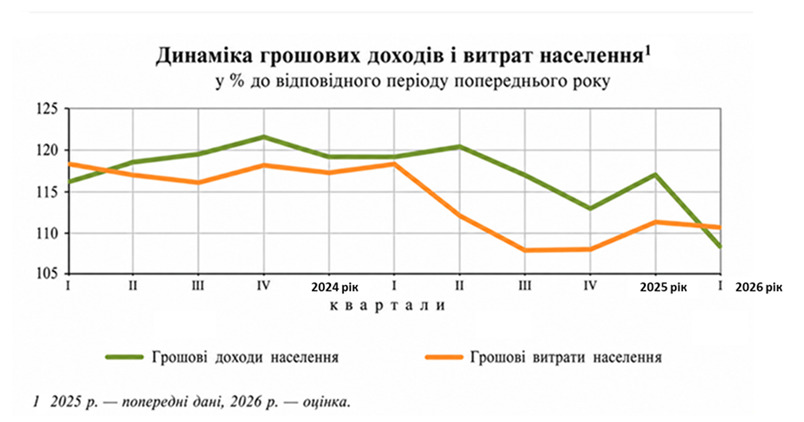
russians’ real incomes rose by only 1.5% in the first quarter of 2026 – down from nearly 7% last year. And this despite the fact that nominal wages soared by 9%, inflation halved to 5.86%, and pensions also increased.
The explanation is simple: business revenues have collapsed, and no wage increase for public sector or defense workers can plug this hole. About half of russian companies – first of all small and medium-sized businesses – are complaining about non-payments. The reasons are standard: the government is delaying payments for state contracts, cross-border payments are blocked by sanctions, and loans are exorbitantly expensive.
The figures confirm this: overdue receivables of russian organizations reached $109 billion by early 2026 – by 21% more than a year earlier. The manufacturing sector accounts for the lion’s share – $38.7 billion – while trade accounts for another $25.3 billion. In 2025 alone, the manufacturing sector increased its debt by $13.3 billion out of a total of $18.7 billion in new non-payments across the entire economy.
At the same time, the share of loss-making companies rose to 37% from 32% a year earlier. Profits for nearly 40,000 organizations fell to $72.6 billion, which is by 28% less than in 2025. The corporate sector is struggling, and this inevitably hits employees’ pockets: businesses that are barely staying afloat themselves will not raise salaries or retain staff.
The rise in incomes that russia experienced in previous years was supported by three factors: a labor shortage due to mobilization, budget injections into the defense sector, and inflation-driven growth in nominal wages. All three are gradually coming to an end. Going forward, the economy will be dragged down by what has already begun: payment defaults, expensive loans, and falling profitability.