
russia’s Regions Hit by Financial Crisis
1/11/2026
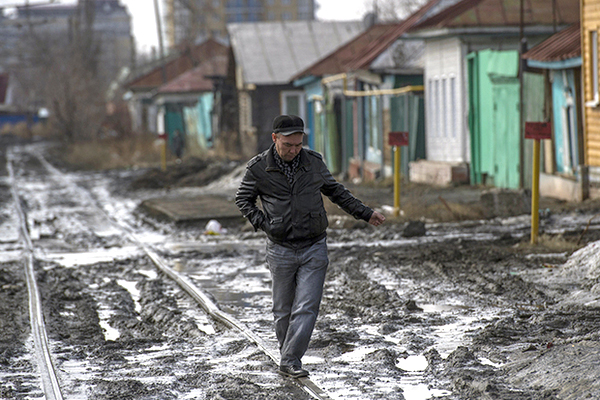
russia’s regions are entering the new year with a growing sense of hopelessness, while the financial burden is rapidly concentrating in areas that until recently were the backbone of the economy. A combination of sanctions, the loss of foreign markets, and deterioration of the global economic situation have exposed the structural weakness of regional budgets, which are no longer able to meet even their basic obligations.
The worst situation is in traditionally depressed regions – kalmykia, mari el, and pskov region. For decades, their survival model was based on federal transfers, but now these flows are shrinking and access to loans is rapidly narrowing. Chronical debt, lack of investor interest, and declining subsidies are creating the conditions for a full-blown budget crisis with no visible way out.
Against this background, the problems of industrial regions only exacerbate the overall picture. Coal-mining areas, particularly kemerovo region, will be one of the main “minuses” for the rf’s budget this year. The decline in world coal prices, sanctions pressure, and the final loss of the European market are leading to a projected 4.1% decrease in gross regional product (GRP) and a budget deficit of about 44 billion rubles. khakassia has found itself in a similar trap: unprofitable mines are combined with dependence on non-ferrous metal prices and limited hydropower capabilities, where the state-owned “rusHydro” is caught between tariff regulation and lobbying by metallurgists.
Metallurgical regions are also losing ground. In irkutsk region, falling prices for aluminum and coal are creating a projected budget deficit of 40 billion rubles, while the protracted crisis at rusal’s enterprises leaves local authorities little room for optimism. In vologda region, the situation is further exacerbated by the conflict between governor georgy filimonov and owner of “severstal” aleksei mordashov – so much so that economists have effectively refused to update their GRP forecasts from 2024 onwards.
Regions with “specific risks” are putting particular pressure on the federal budget. astrakhan region expects a 2.1% drop in GRP, with the prospect of negative dynamics continuing until 2028 due to the depletion of oil and gas fields and a lack of resources to launch new ones. kursk and belgorod regions, which previously benefited from border trade with Ukraine, have become frontline territories completely dependent on subsidies.
The general logic for the regions is becoming increasingly harsh: they can no longer count on the center. The federal budget, limited in resources, is focused on the war against Ukraine. Domestic demand is not growing, the population and investors have no additional money. For russia’s regions, this means one thing: survival without support and without prospects.