
Teodor Romzha. On the Defensive Line of the Greek Catholic Church in Transcarpathia
3/6/2026
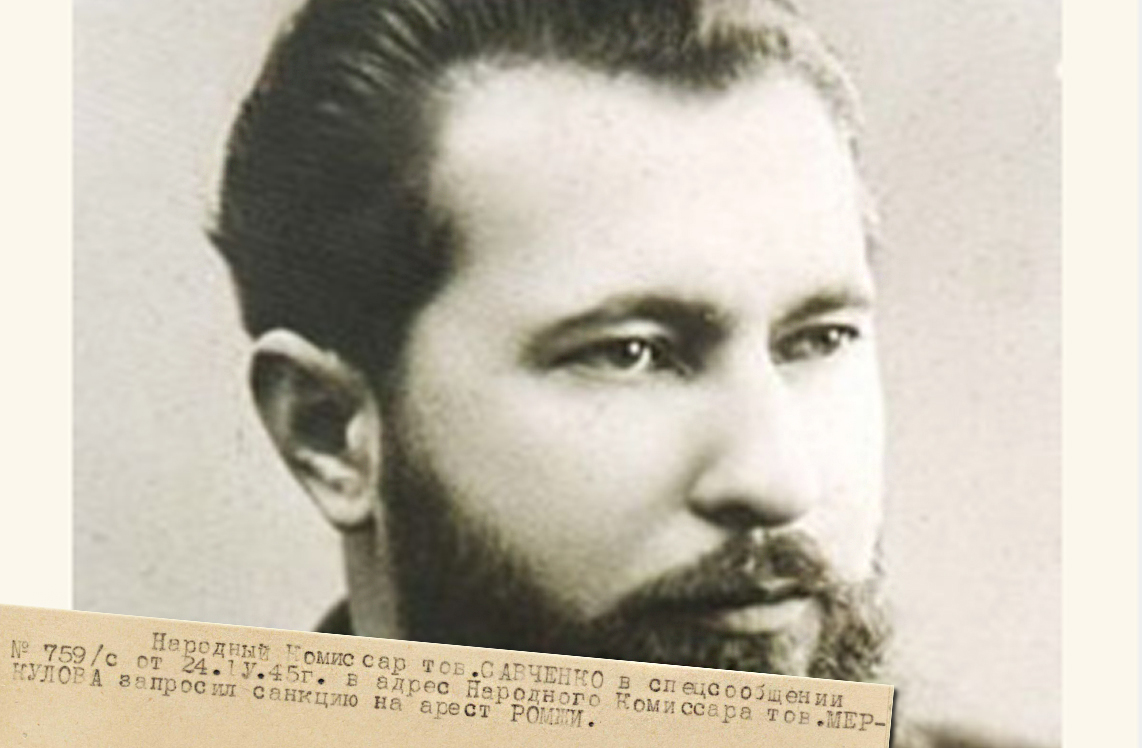
The Foreign Intelligence Service of Ukraine, based on declassified documents from the mgb/kgb of the ussr, continues to publish materials to the 80th anniversary of the Lviv pseudo-council (March 8–10, 1946). They provide deeper insight into the stalinist regime’s special operations to liquidate the Ukrainian Greek Catholic Church (UGCC) and absorb it into the russian orthodox church (roc).
After the Lviv pseudo-council, the stalinist regime set about destroying the Greek Catholic Church in Transcarpathia, which was annexed to the Ukrainian ssr in 1945. However, it was not possible to carry this out according to the scenario developed by the mgb authorities in Halychyna. Bishop Teodor Romzha of Mukachevo stood in the way. To remove this obstacle from their path, the chekists, through their foreign agents and mgb residenturas in European countries, began to persecute him, fabricating evidence to accuse him of spying for the Vatican and collaborating with the underground Ukrainian national movement. This is evidenced by declassified documents from the archives of the Foreign Intelligence Service of Ukraine.
The life story, church service, and murder of Teodor Romzha are described in detail in many publications based on eyewitness accounts, materials from the SBU’s branch state archive, and other information. However, a number of documents have been found in the archives of the FISU (Foreign Intelligence Service of Ukraine) which indicate that the first (intelligence) directorate of the nkvd of the Ukrainian ssr was also involved in the operational cultivation of the clergyman. These materials complement the overall picture and add new pages and colors to the biography and characterization of one of the most prominent representatives of the Ukrainian Greek Catholic Church.
In the spring of 1945, the first directorate of the nkvd of the Ukrainian ssr prepared several special reports on the activities of the Greek Catholic Church in Transcarpathian Ukraine and its leader, Bishop Romzha. They were addressed to first secretary of the central committee of the communist party of Ukraine, nikita khrushchev, head of the soviet foreign intelligence pavel fitin, and chief of the nkvd of the ussr vsevolod merkulov. The documents stated that, against the background of preparations for the annexation of Transcarpathia to soviet Ukraine, the Greek Catholic Church had intensified its anti-soviet activities. In support of this thesis, it was pointed out that the local bishop Romzha, refused to sign the “Manifesto on the Reunification of Transcarpathia with soviet Ukraine” and declared that “the existing government is not from God, it will soon collapse”.
“Well-known to you vicar of Uzhhorod, Bishop Romzha of the Greek Catholic Church has presented the chairman of the People’s Rada of Turiany with an ultimatum demanding to put an an end to the oppression of Uniates by the Orthodox, threatening that otherwise he would not be responsible for the consequences. As a result of Romzha’s efforts, opposition forces were mobilized – Czechs, Hungarians, Ukrainian Sich Riflemen, and Jews consolidated together” (FISU. – F. 1. – Case 4160. – Vol. 1. – P. 32).
Further on in the document, it becomes clear why Bishop Romzha reacted so negatively to the introduction of the new policy in Transcarpathian Ukraine. When the red army arrived in that territory in October 1944, there were more than 400 Greek Catholic parishes and about 100 Orthodox parishes (different figures appear in the operational documents of the nkvd – about 300 and more than 100). The local Mukachevo Greek Catholic diocese was directly subordinated to the Vatican. The soviet leadership could not allow this. Therefore, instructions were given to persuade Catholic clergymen to renounce their allegiance to Rome and convert to Orthodoxy, to stir up interfaith disputes, and to seize church lands. These were only the first tentative steps on the path to the complete destruction of the Greek Catholic Church in Transcarpathia. The final measures were implemented after the Lviv pseudo-council.
Meanwhile, even the few facts that appear in archival documents indicate that even before the conclusion of the agreement in June 1945 on the incorporation of Transcarpathian Ukraine into the ussr, the soviet military administration encouraged arbitrariness and oppression of Greek Catholics in those areas. At that time, the People’s Rada adopted a decree on the transfer of church lands to peasants, which was protested by the clergy.
“In the town of Perechyn, clergyman Deziderii,” nkvd employees reported, “refused to transfer 36 hectares of church land to the People’s Rada. When Desiderius turned to Romzha for advice on what to do with this land, Romzha forbade him to transfer the land to the local committee...
On April 29 and May 2 of this year, two delegations of Greek Catholic peasants, led by Romzha’s secretary Punko and prelate-canon Khira, visited the People’s Rada. The delegations demanded the return of churches transferred to the Orthodox...
During our agent “Ivanov”’s stay in Irshava, he was invited to the church by a Greek Catholic clergyman, who addressed him as a member of the People’s Rada with a protest against the transfer of churches to the Orthodox and demanded their return. At that moment, local residents began to gather at the church, and when “Ivanov” was leaving the church, they greeted him with shouts: “Return the churches. Do not allow bloodshed. If you do not return them, we will raise an uprising with axes and scythes, and take them ourselves...”
Bishop Romzha himself, in a conversation with our agent “Borzhava” about the transfer of Greek Catholic churches to the Orthodox, stated: “I will insist on the return of the churches even after reunification, through the international court in Rome”.
(FISU. – F. 1. – Case 4160. – Vol. 1. – P. 59–61).
So, Bishop Romzha became too dangerous for the kremlin leadership, because his activities made the “Galician option” for the liquidation of the Greek Catholic Church, which was already being developed in moscow in the offices of the nkvd, impossible. They began to compile a dossier on him and organized surveillance. The documents indicate that, on the instructions of the military council of the 4th Ukrainian front, the press began publishing materials against the Greek Catholic Church and its leader.
In the documents that the nkvd of the Ukrainian ssr sent to khrushchev, fitin, and merkulov, the situation was deliberately exaggerated. They reported on contacts between the Greek Catholic clergy and the OUN underground, which was active in the Carpathians, and that “there is an unregistered printing house in the Uniate monastery of the Basilian Order, which is located next to the Greek Catholic church and is directly subordinate to Romzha”. Another printing house was allegedly owned by an illegal organization of Czech sympathizers, which was supported by the Greek Catholic clergy and financed by British intelligence. Another report stated that “according to intelligence information, which needs to be verified, a radio station is believed to be stored in the catacombs of the Greek Catholic church in Uzhhorod” (FISU. – F. 1. – Case 4160. – Vol. 1. – P.54).
It was reported that Romzha was visited several times in 1944 by senior Czech officers, one of whom was allegedly a British intelligence officer. Besides, referring to information obtained by soviet intelligence and counterintelligence, it was noted that before leaving Rome for Uzhhorod, Romzha attended secret two-month courses at the Eastern Congregation together with individuals who, according to operational records, were agents of the Vatican. He allegedly engaged in intensive sports and shooting training, so he could also have been a Vatican agent.
These were no longer just negative statements against the policies of the soviet government; they amounted to accusations of espionage, ties to foreign intelligence services, and the Ukrainian nationalist underground. It is no coincidence that at the end of one of the documents there is the following phrase: “people’s commissar comrade savchenko, in special report No. 759/c dated 24 April 1945 addressed to people’s commissar comrade merkulov and requested authorization to arrest Romzha” (FISU. – F. 1. – Case 4160. – Vol. 1. – P. 56). But moscow apparently had other plans.
T. Romzha began to be monitored more closely. The task was set to collect information about who he communicated with, who he received letters from, and where he traveled. Operational interest grew even more after receiving more detailed information about his education, character traits, and spiritual growth. This was learnt in detail during the interrogation in August 1945 of the arrested by the nkvd. “Vatican agent in Transcarpathian Ukraine” Oleksandr Ilnytskyi. In the interrogation protocol, he appears as the former Vicar General of the Vatican for the Greek Catholic Church of Transcarpathian Ukraine, former Chief Advisor to the Regency Commissariat of Transcarpathian Ukraine, and former member of the upper house of the Hungarian Parliament.
O. Ilnytskyi said that he knew T. Romzha’s whole family well and often visited his parents when they were still alive. He described the sisters as staunch Ukrainian nationalists who were persecuted by the Hungarian authorities for their views. He had known Teodor himself since 1928, during his service as a notary of the episcopal consistory. At that time, the young T. Romzha asked Bishop Petro Hebei to accept him into the ranks of theology.
“Considering that Romzha graduated from high school with an ‘excellent’ diploma”, pointed out O. Ilnytsky, “the consistorial council unanimously accepted him into the ranks of the theological diocese. Romzha voluntarily agreed to a life without marriage, celibacy, so the consistory decided to send him to the Eastern Congregation. Romzha received his theological education at the ‘Rusicum’ College, where he studied russian literary language, the rites of the russian orthodox church, and other disciplines necessary for missionary work in the ussr. Every year, the ‘Rusicum’ College administration reported to the Mukachevo Bishop in Uzhhorod that Romzha was the top student in the seminary in terms of both his studies and his behavior” (FISU. – F. 1. – Case 10348. – Vol. 1. – P. 187).
O. Ilnytskyi went on to describe T. Romzha’s arrival in Transcarpathian Ukraine after completing his studies and the beginning of his clergy activity, emphasizing that both Greek Catholics and Orthodox Christians respected him for his strict and righteous lifestyle. He pointed out that Romzha devoted a great deal of time to church service and self-education, studied russian, Italian, German, French, and English, and knew Ukrainian, Czech, Hungarian, and Slovak perfectly. Hence he did not participate in the activities of political parties and various societies – he did not have time for that. That is, he was persistently preparing for missionary work in the ussr. In addition, he described the circumstances of T. Romzha’s appointment in 1944 as Bishop of the Mukachevo Greek Catholic Diocese.
The nkvd also learned from its agents that while studying in the Vatican, T. Romzha thoroughly studied international economic issues, was well versed in national issues, and studied marxism-leninism in preparation for his future missionary work.
Moreover, nkvd agent “Kuzen” reported that on January 28, 1943, T. Romzha was granted the title of honorary chamberlain from the Pope. He noted that this title is a high award in the Vatican and is granted for life for special services of a confidential and political nature. According to the agent’s assumptions, the title was awarded to T. Romzha for establishing contact between the head of the Ukrainian Autocephalous Orthodox Church in the occupied territories of Ukraine, Metropolitan Polikarp (Petro Sikorskyi) and former diplomat of the Ukrainian People’s Republic government Prince Jan Tokarzewski, who was living in Rome at the time and maintained contacts with the Vatican.
Agent “Kuzen” reported that during meetings with T. Romzha in the Vatican, the latter assured him that a well-prepared clergyman could successfully fight communism by debunking its teachings and bringing people to believe in the true values of human existence.
It was probably this information that was decisive in forming the nkvd’s conclusion that Bishop Romzha would not agree to any deals or concessions and that he was too dangerous an obstacle to the establishment of soviet power in Transcarpathian Ukraine and the implementation of measures to eliminate the Greek Catholic Church, similar to the pseudo-council in Lviv. Despite this, they did not arrest him at that time, but decided to first compromise him as an agent of the Vatican and remove him from office. Instead, they would replace him with another priest who would act as advised by nkvd officials. This is evidenced by a special report on the “Zveno” agent case, dated June 1945 and sent to the chief of the nkvd of the ussr v. merkulov.
The document states that the nkvd of the Ukrainian ssr tracked T. Romzha’s communication channels with the Vatican. In particular, the Bishop’s personal secretary and the treasurer of the chapter were intercepted at the Chop railway station. One was traveling to Rome with T. Romzha’s report on the situation in Transcarpathian Ukraine and the oppression of the Greek Catholic Church, while the other was traveling to the Slovak city of Prešov, where he was supposed to settle permanently and organize a channel for informing the Vatican about developments in Uzhhorod.
In a special report, “transferring detailed information about the political situation in Transcarpathian Ukraine and receiving instructions from the Vatican” was treated as a crime. Although in reality, the Bishop, who was appointed by the Vatican and subordinate to the Holy See, was required to do so. But the chekists had a different opinion. So, the so-called couriers were interrogated, threatened with criminal liability and other negative consequences, and forced to cooperate. Similarly, they secretly arrested the vicar of the Greek Catholic Church in one of the districts of Romania, seized his written report to the Vatican from T. Romzha, and recruited him. They also selected one of the clergymen for recruitment, whom they intended to promote to the position of Bishop instead of T. Romzha.
Meanwhile, Bishop Teodor tried to consolidate the faithful, strongly opposed the annexation of the diocese to the orthodox church, protested against the closure of Greek Catholic churches, and spoke about the inadmissibility of betrayal. Even when the authorities confiscated the diocese’s car, he continued to travel around the diocese on horseback.
During one of these trips, on October 27, 1947, he was the victim of a premeditated assassination attempt by the nkvd. As a result of a car accident organized by the chekists, specifically a collision between a car and the Bishop’s horse-drawn carriage, T. Romzha was seriously injured. A few days later, on October 31, he died in a hospital in Mukachevo. Most likely, he was poisoned by nkvd agents on orders from moscow. However, no information about this has been found in the declassified documents stored in the archives of the Foreign Intelligence Service of Ukraine. The relevant materials are stored in archives in moscow and are inaccessible to researchers.
T. Romzha was buried in Uzhhorod in the cathedral. In June 2001, during his visit to Ukraine, Pope John Paul II beatified Teodor Romzha.
After the Bishop was assassinated, the resistance of Greek Catholics in Transcarpathia was broken. So, following Halychyna, the Greek Catholic Church was officially banned in this region as well. Within two years, all parishes were either transferred to the russian orthodox church or destroyed. Following a scenario developed in moscow, similar measures were also organized in Poland, Romania, and Czechoslovakia.
(To be continued).