
The kremlin Establishing a Ministry for “Correct” Historical Memory
5/6/2026
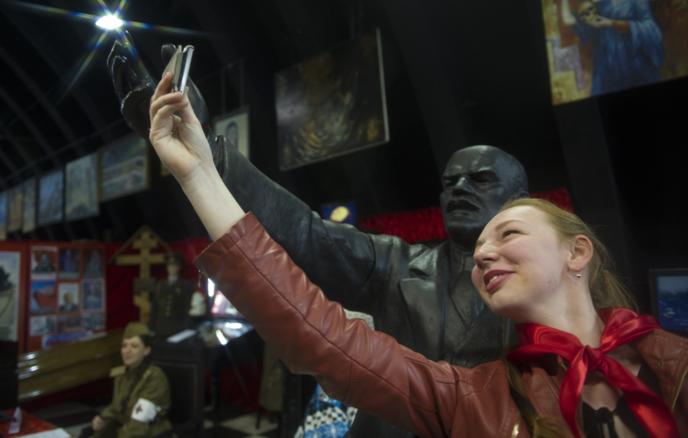
In April 2026, the ministry of education of the rf approved the Concept of Historical Education – a policy document outlining how knowledge about the past should be taught and disseminated. One of its consequences was the decision to create an expert council to assess the “correctness” of historical content on the internet, in book publishing, and in cinematography. The council will operate out of moscow state pedagogical university and will formally consist of scholars and science communicators from universities and institutions of the academy of sciences of the rf.
The council’s true function is to decide which interpretation of the past is permissible. Materials that do not fit into the kremlin’s narrative will be classified as “unreliable” or as “undermining civic identity” – a formulation so vague that it allows for the inclusion of virtually any inconvenient text.
The concept has become part of a systemic effort that moscow has been pursuing for at least several years: putin’s decrees on “traditional values” and “historical policy” established the ideological framework, and now an institutional framework is being built around it. In February 2026, the state duma passed the first reading of a draft law on “preventing the distortion of historical truth” – a document that provides for official warnings for those whose actions the authorities may deem an attack on the “correct” version of events. Repeated violations carry the threat of criminal liability.
In parallel, on March 1, 2026, a law banning films that “discredit traditional values” came into effect. It applies to online cinemas and streaming platforms: violators are denied a distribution certificate or face restrictions on distribution.
Together, these mechanisms form a two-tier control system. The first tier consists of existing bans. The second involves prior regulatory review: even before a text or film reaches the audience, the state determines whether it aligns with “acceptable” interpretations. Publishers, authors, filmmakers, and educational platforms working with historical themes find themselves in a situation of constant regulatory risk – not because of violations, but because of the very possibility of misplaced emphasis.
For the kremlin, this is also an economic project. Those integrated into the official narrative gain a competitive advantage in the humanities market. Those who are not will find themselves outside of it.