
The kremlin Has Embarked on a Course of Protracted Confrontation with the West
12/31/2025
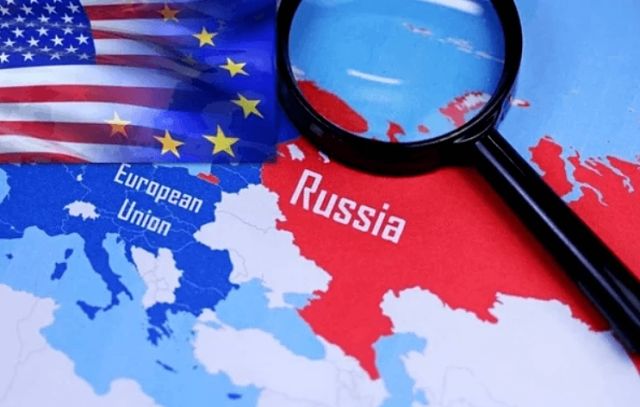
The federation council of the rf has approved a resolution “On current issues of foreign policy of the rf”, which effectively codifies the course of the kremlin’s foreign policy and makes it a binding guideline for parliament, government, and agencies. The document does not seek compromise, but rather a systemic commitment to prolonged confrontation with the West.
The key thesis of the resolution boils down to shifting full responsibility for “unprecedented international tensions” onto NATO and the “collective West”. Against this background, the kremlin declares its intention to build an alternative world order that openly opposes the Euro-Atlantic security system. This involves the formation of an “architecture of equal and indivisible security in Eurasia” based on the CIS, CSTO, SCO, and ASEAN, as well as the promotion of the “Eurasian charter of diversity and multipolarity”, initiated jointly with belarus.
Special emphasis is placed on reorienting foreign relations toward Asia, Africa, and Latin America. The kremlin plans to deepen economic, diplomatic, and parliamentary cooperation with China, Iran, India, Southeast Asian countries, and other states of the Global South, using the BRICS, SCO, and EAEU formats. Parliamentary diplomacy is explicitly seen as a substitute for full-fledged contacts with the West in conditions of political isolation.
At the same time, the document formally leaves open the possibility of restoring full-fledged russian-American relations, but only on condition that the kremlin’s interests in the war against Ukraine are taken into account, which makes such “readiness” purely declarative. Western sanctions are recognized as a “long-term reality” to which moscow plans to respond with adaptation: settlements in national currencies, countering the confiscation of frozen assets, and creating special legal regimes for cross-border cooperation.
The resolution also provides for strengthening the informational and ideological activities of the ministry of foreign affairs of the rf, particularly in the digital environment, to promote russian narratives about the war and discredit Ukraine, as well as to intensify projects under the slogans of fighting “falsification of history” and “rehabilitation of Nazism”. In parallel, the kremlin is expanding its support for networks of “compatriots” abroad and plans a separate strategy for working with foreign graduates of russian universities.
In general, the document leaves no doubt: russia’s authorities are institutionalizing a course of protracted confrontation with the West, trying to circumvent isolation through parliamentary and “humanitarian” channels and at the same time undermine the West’s unity by relying on selective contacts and influence in the countries of the Global South.