
Ukraine and the World – Against russia’s Aggression. Sanctions in Action
3/31/2026
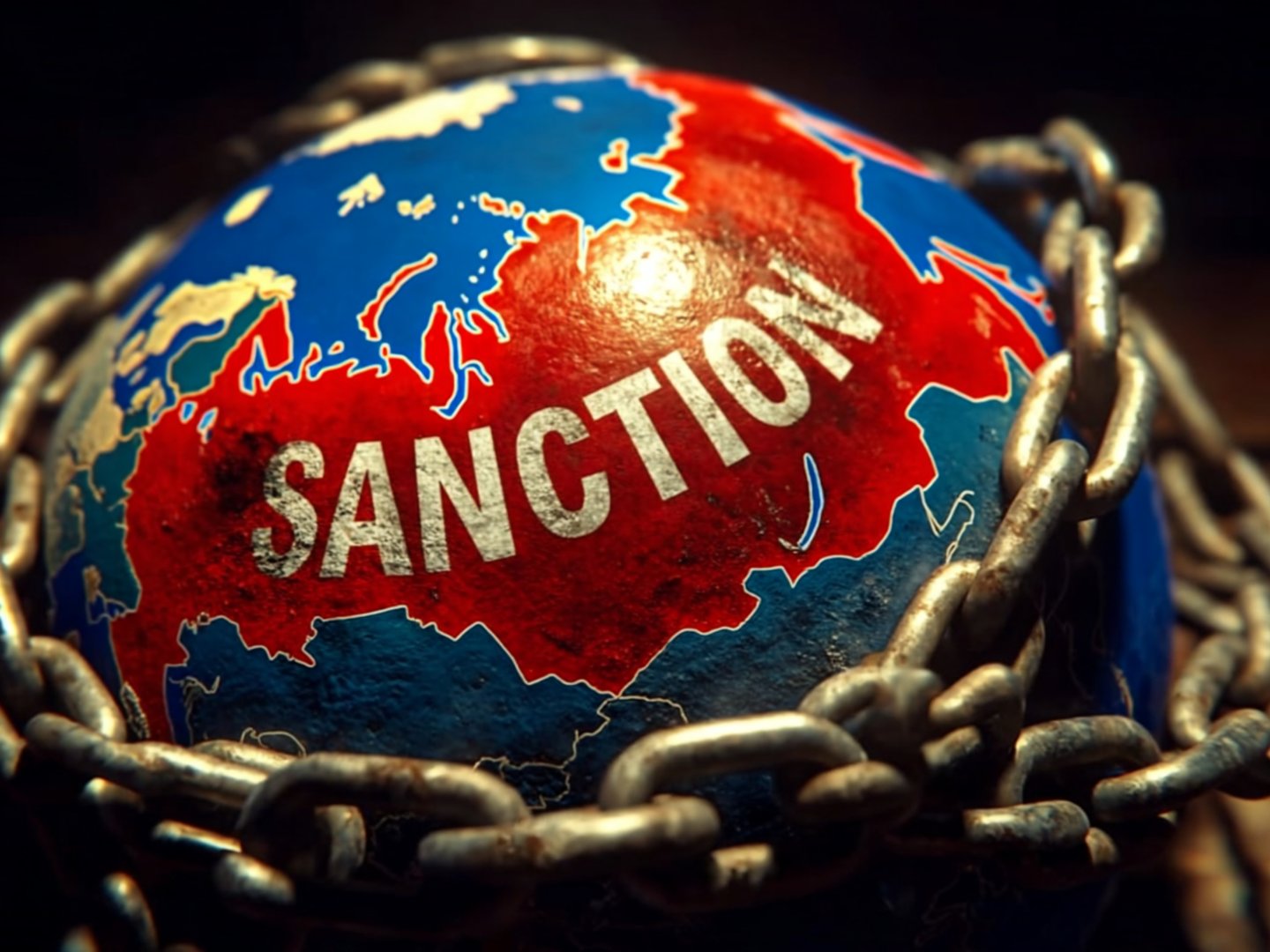
“We must force them (the russians) into a situation where they will change their calculations and move from pretending to negotiate to actually agreeing to end this war,” said EU High Representative for Foreign Affairs and Security Policy Kaja Kallas. She also believes that on the issue of a complete ban on russian oil, it is necessary to “move forward”, despite the sharp rise in energy prices. According to her, the EU and member states are working to overcome obstacles and approve the 20th package of sanctions against russia at the next meeting of the European Council.
Minister of Foreign Affairs of the Netherlands Tom Berendsen has stated that his country supports Ukraine’s accession to the European Union and opposes individual member states blocking this process. “For a successful accession, it is in the interests of both Ukraine and the European Union to fulfill all conditions, including the Copenhagen Criteria. Rest assured, the Netherlands is ready to support Ukraine in this process in every possible way”, Berendsen emphasized.
Minister of Foreign Trade and Development Cooperation of the Netherlands Sjoerd Sjoerdsma has called on international businesses to invest and become more actively involved in Ukraine’s recovery, stressing that reconstruction cannot wait for the war to end.
“…We reaffirm our commitment to ensuring full accountability for war crimes and other most serious crimes committed in connection with russia’s war of aggression against Ukraine,” EU Ministers of Foreign Affairs stated during an informal meeting in Kyiv.
“Ukraine has a clear strategy for victory and a just peace,” said European Commissioner for Defense and Space Andrius Kubilius, pointing out that Europe supports this strategy.
Latvia has informed the Council of Europe of its intention to join the Enlarged Partial Agreement on the Special Tribunal for the Investigation of russia’s Crime of Aggression Against Ukraine”. To date, 11 countries have confirmed their readiness to join the Special Tribunal.
Minister of Foreign Affairs of Finland Elina Valtonen has assured that her country had not demanded that Ukraine suspend or reduce attacks on russian targets, despite incidents involving “stray” drones. “Ukraine is allowed to defend itself. We are not making any demands on Ukraine regarding which russian targets it seeks to strike”, Valtonen stated.
Georgia’s one and only oil refinery, the Kulevi Oil Refinery, has decided to stop using russian oil due to the threat of EU sanctions.
russia’s national debt increased by 21%, or 6.1 trillion rubles, in 2025, having reached a total of 35.1 trillion rubles. Domestic debt rose to 30.7 trillion rubles (+29.1%).
In russia, against the background of a deteriorating economic situation, falling demand, and rising taxes, a wave of layoffs is looming – if businesses lack revenue, they simply cannot afford to pay salaries at previous levels. russia’s small businesses are currently suffering the most, with nearly half of them having faced a collapse in profits in 2025. The number of SMEs in the retail sector alone fell by 11,500 in 2025. In 2026, against the background of a rising tax burden, another 250,000–300,000 microenterprises may close.
“Civil sectors of russian industry accelerated their decline in early 2026”, stated the kremlin-aligned analytical center TsMAKP. According to its calculations, excluding sectors dominated by the military-industrial complex, industrial production decreased by 2% over the three winter months.
To save the economy, oligarch oleg deripaska has proposed that russians switch to a work schedule from 8 a.m. to 8 p.m. and work on Saturdays.
“russia needs to introduce a six-day workweek to boost economic growth”, said ran academician gennady onishchenko. “People aren’t producing enough right now”, he pointed out.
gazprombank’s net profit in 2025 fell by 32%.
“russia’s post”’s net loss for 2025 amounted to 18.7 billion rubles.
The net profit of “softline” group, one of the leaders in the russian IT market, fell 12.7-fold to 288 million rubles, compared to 3.7 billion rubles in 2024.
Revenue for “grain gates”, a leading russian grain exporter, fell by 46%.
The chelyabinsk electrometallurgical plant, russia’s largest producer of ferroalloys, has halted part of its production due to falling demand.
Tufts University and its School of Diplomacy have been declared undesirable in russia due to their solidarity with Ukraine and for hosting events that “spread distorted and unreliable information about russia”.
roskomnadzor is demanding that media outlets remove articles about its failing to block the internet.
The ministry of digital development, communications, and mass media of the rf is threatening to remove from the “whitelist” platforms that allow users to access websites via a VPN. This is part of the kremlin’s strategy to fight circumvention of internet blocking.
In russia, sales of standard landline phones through government procurement have surged amid internet outages. Officials have increased spending on these purchases by more than 50% in just one year. Purchases of IP telephony equipment have also jumped. Conventional phones operate on telephone networks that, as recently as 30 years ago, were also used to access the internet via classic modems.
russia’s garrison courts, which hear cases against the military, received nine times more rape cases in 2025 than in 2021.
Also in 2025, garrison courts received by a third more murder cases than the previous year, and 16 times more than in the first year of the full-scale war. Most murders occur outside the combat zone – the victims are acquaintances, relatives, or random people.
According to chairman of the federation council committee on constitutional legislation and state building andrei klishas, in russia, after the war against Ukraine, the laws and restrictions adopted during the hostilities will remain in effect. The authorities will review the legislation and lift restrictions only “if they lose their relevance”.
As of March 2026, the vacancy rate within the federal penitentiary service in the stavropol territory administration had reached 30.24%. The greatest shortage of personnel is observed among junior management staff.
Dozens of companies in st. petersburg and leningrad region have scaled back operations or closed due to financial difficulties.
Internet providers in rostov-on-don have begun testing the implementation of a “whitelist” for home internet.
Changes to the calculation of the recycling fee are taking effect in russia, effectively shutting down the scheme for importing cars through belarus to save on fees.
belarus has designated the BBC website as extremist. lukashenko has given several interviews to its journalist Rosenberg.
“As long as lukashenko’s regime continues its hybrid attack, Lithuania has nothing to discuss with belarus,” said Asta Skaisgirite, the Chief Advisor to President Gitanas Nausėda. According to her, minsk has no desire to engage in a friendly dialogue either.
According to January figures, German exports to belarus fell by 13.1%, while belarusian exports to Germany dropped by 36%. In monetary terms, German exports totaled EUR 29.1 million, while the rb’s exports amounted to just EUR 2.41 million.
The rb’s public sector debt on loans increased by 13.5% over the year, while the private sector’s debt rose by 10.1%.
Starting April 1, it will no longer be possible to buy beer in shops from countries considered “unfriendly” to the belarusian government. These countries include, in particular, European Union member states, the United Kingdom, and Australia. Beer already imported into belarus from those countries will not be confiscated. However, to sell remaining stock, retailers must affix special labels to the bottles.
The passports of released political prisoners who were forcibly deported from belarus are being revoked. Representative of the United Transitional Cabinet on Social Policy Olga Zazulinskaya has stated that such tactics by the authorities are a continuation of repression. The revocation of a passport means problems with legalization, access to work, housing, and basic services. People without passports will also have to urgently obtain alternative travel documents.
belarusian human rights activists have recognized six more people as political prisoners. As of March 30, 2026, the number of political prisoners in belarus stands at 913.