
US Congress Preparing a Legal Barrier Against russia and China’s Arctic Ambitions
6/24/2026
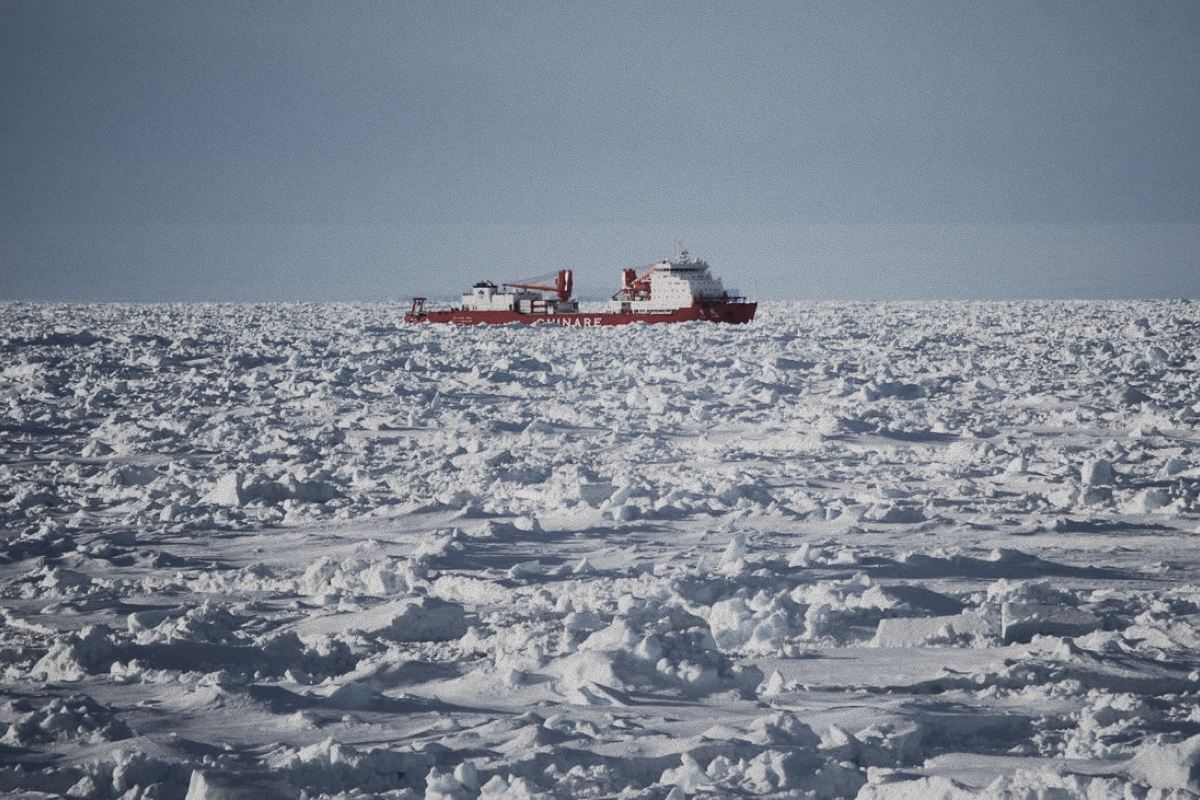
The United States is tightening control of foreign scientific activity in the Arctic, and these measures are primarily aimed at russia and China. Senators have introduced a bipartisan bill, the Arctic Security and Diplomacy Act, which prohibits vessels affiliated with the governments of the rf, China, and other “hostile states” from conducting research in the USA’s exclusive economic zone and on the USA’s continental shelf in the Arctic.
The immediate trigger was the growing Chinese presence near Alaska. In August 2025, the US Coast Guard tracked five Chinese research vessels near the US Arctic, including the polar icebreaker Xue Long 2. Washington is also concerned about the deepening coordination between russia and China: as early as 2024, a group of four russian and Chinese vessels conducted joint maritime activities near Alaska, repeatedly passing through the Bering Strait. For the USA’s intelligence community, this episode served as a clear example of how moscow is attempting to use its geographical advantage and Arctic infrastructure as a tool for cooperation with Beijing, which in turn provides technology and expeditionary resources.
The bill aims to close the legal loophole between formally civilian scientific activities and the actual collection of intelligence data. Scientific expeditions are difficult to classify as military activities, but the data collected during them is entirely suitable for planning operations, mapping submarine routes, assessing vulnerabilities in communications infrastructure, and ensuring a future naval presence. In fact, this is Washington’s attempt to deprive moscow and Beijing of a convenient channel for legitimate access to critical data on the marine environment near the USA’s borders.
In parallel, the USA has increased its own physical presence in the region. Since late 2025, the Arctic Security Cutters program has been underway, aimed at accelerating the construction of a fleet of medium-sized icebreakers of Coast Guard. Contracts for the first vessels were awarded in late 2025, and in February 2026, the Coast Guard completed contracting for all 11 icebreakers in the series. The first vessel is scheduled for delivery in 2028, the final contract is set to be fulfilled in February 2035.
For Beijing, the bill limits its ability to use civilian expeditions as a tool to legitimize its presence in the region. For moscow, the consequences are more painful: it is losing the opportunity to demonstrate joint access with China to northern sea routes, which remains one of the last symbols of its status as an Arctic power.