
While russia Is Drowning in a Petrol Crisis, the kremlin Is Pretending that Everything Is Under Control
7/18/2026
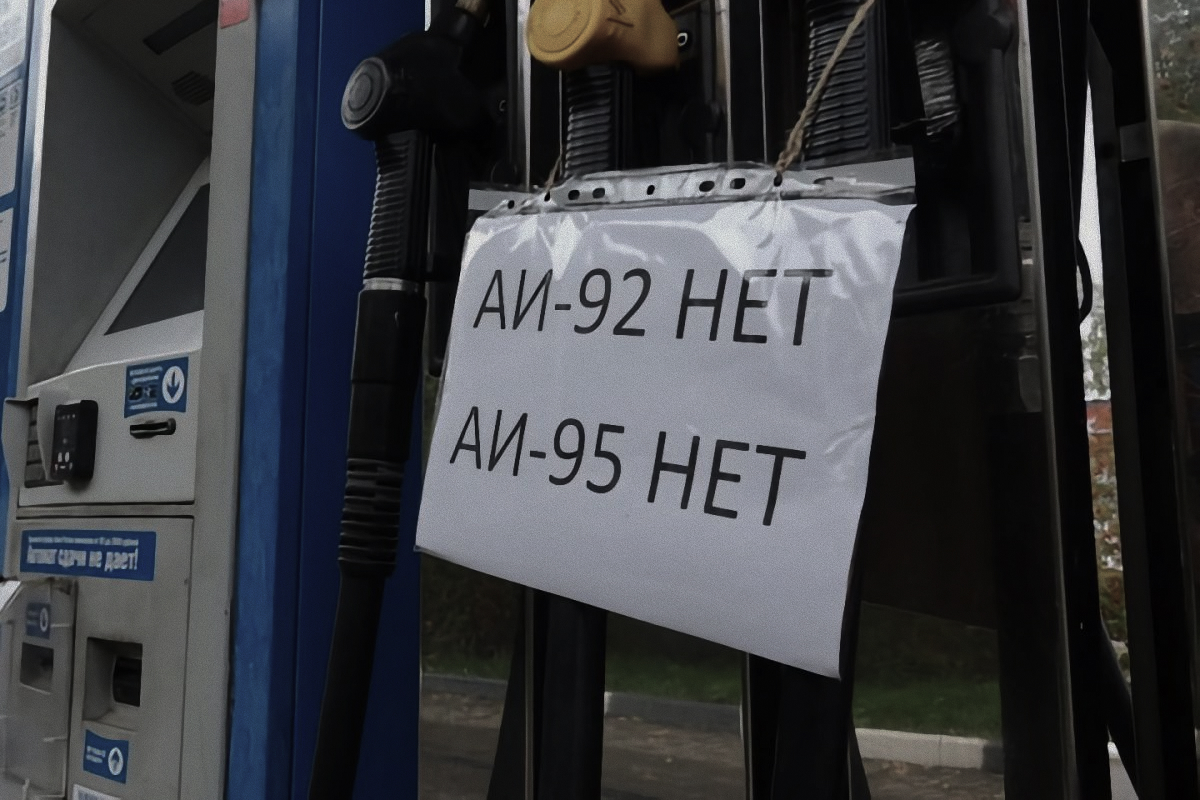
russia is once again trying to persuade its own population that the fuel crisis is subsiding. kremlin-controlled media are racing to publish reports about an alleged increase in petroleum product supplies, the partial lifting of restrictions at filling stations, and an improvement in the situation in 15 regions, including moscow and st. petersburg. The logic is familiar: the capitals come first; the rest will have to wait. This rhetoric has been backed by official statements from the russian leadership, which insists that the situation is fully under control.
However, the reality looks different. The local relief in certain regions is not due to a resumption of production, but rather to a simple administrative redistribution of available fuel volumes among territories and consumer categories.
The worst situation persists in tambov, astrakhan, kirov, penza, voronezh, rostov, volgograd, orenburg, and yaroslavl regions; the perm territory; the chuvash republic; the republics of mordovia and udmurtia; as well as in the temporarily occupied territory of Crimea. No stabilization is expected for those regions.
The figures confirm this. From July 1 through July 10, the average price of AI-92 petrol at russian filling stations rose to 64.5 rubles per liter – a 20% increase year-on-year. AI-95 rose to 77.5 rubles (+24%), and AI-98 soared to 119.5 rubles per liter, having risen by 32% year-on-year. These are signs of a market in collapse.
The main reason for the crisis remains unchanged: fuel production is falling due to damage to oil refineries. In July, petrol production in russia dropped to approximately 71,500 tons per day, while average summer demand stands at about 110,000 tons. In fact, only 65% of demand is being met. The estimated shortfall amounts to about 38,500 tons per day, or 35% of total domestic consumption.
Everything indicates that the kremlin is preparing not to overcome the crisis, but for it to persist for the long term. The regime’s main goal is not to restore full-scale supply to the market, but to prevent shutdowns in strategically important sectors. Statements about the situation returning to normal serve a purely informational function: they mask the transition to selective resource allocation, where some receive fuel while others are left with nothing.
The gap between official rhetoric and the reality on the ground will only widen. And along with it, public distrust in the kremlin’s ability to ensure even basic stability in its own country will grow.