Daria Rebet. Find and Kidnap in Vienna
2/26/2026
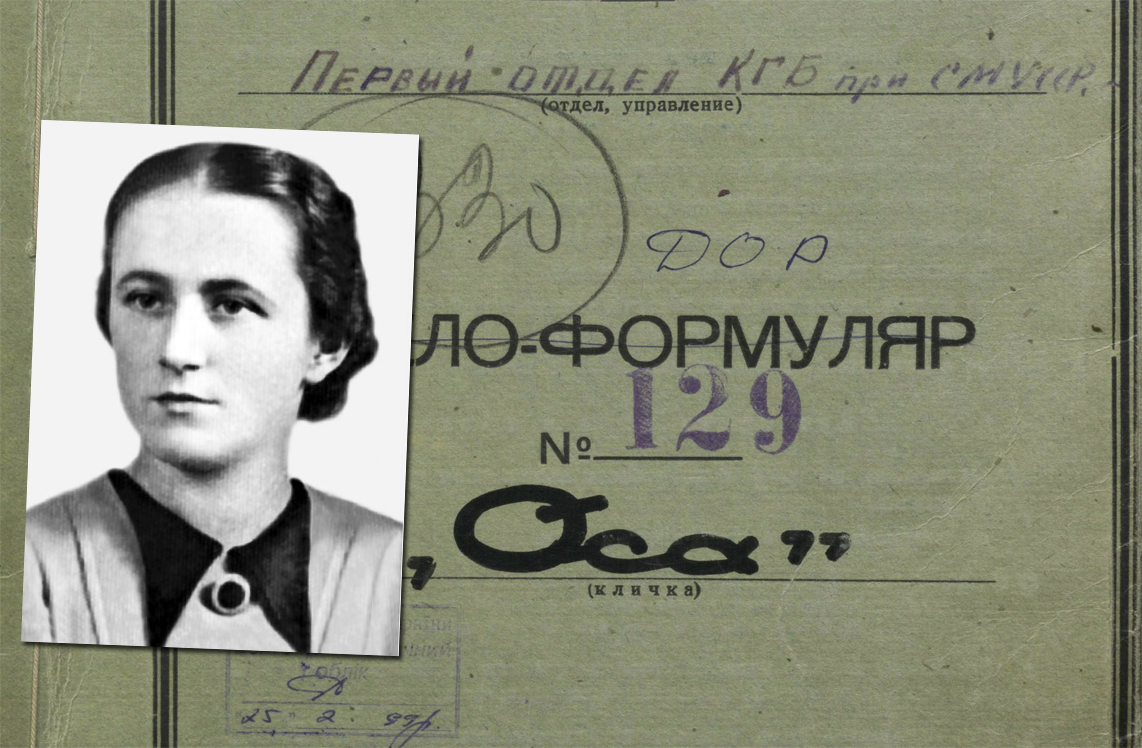
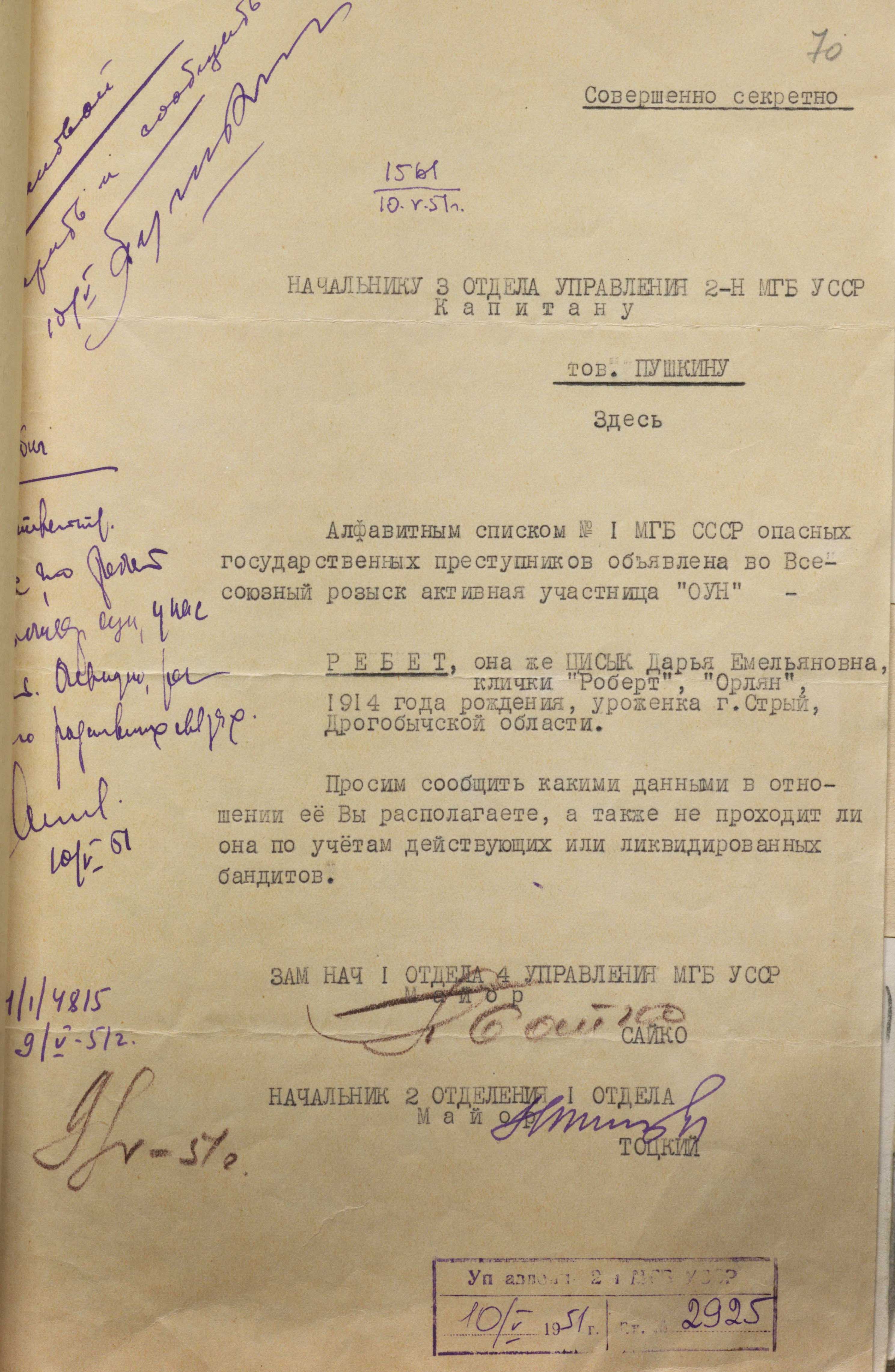
Against the background of the sensational story of the attempt to first kidnap and then kill one of the leading figures of the OUN, Lev Rebet, in Munich in 1957, the question of how the chekists carried out the operational cultivation of his wife remained somewhat in the shadows of researchers. Interest in her was no less, and perhaps even greater, due to her remarkable charisma, education, intellectual abilities, progressive views, ability to defend her principled position and express it in public discussions and on paper, her authority, and, ultimately, her place in the OUN hierarchy. After all, Daria Rebet was the only female member of the of the OUN Provid. This is emphasized in the declassified documents from the archives of the Foreign Intelligence Service of Ukraine.
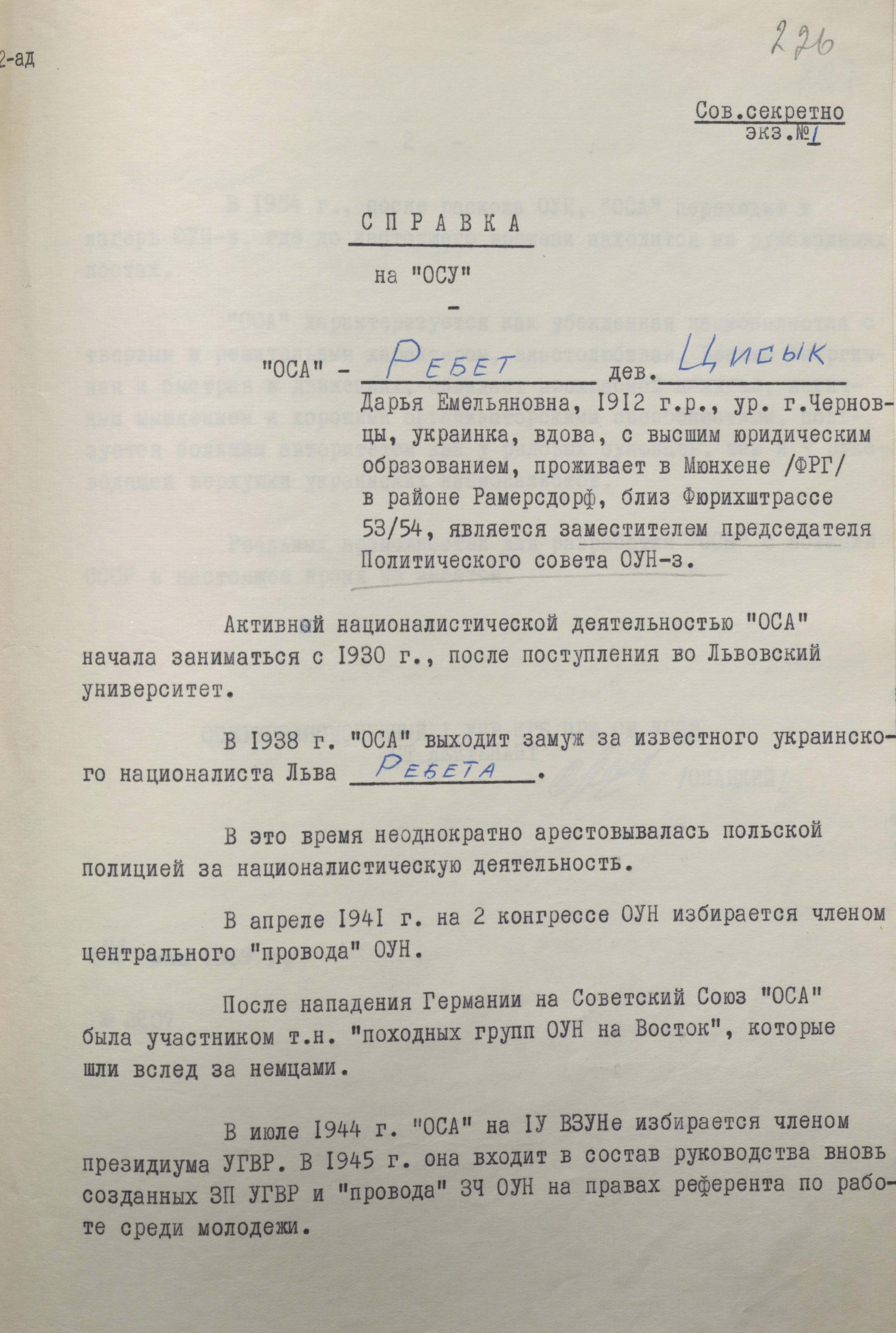
The case opened against Daria Rebet by the mgb of the ussr was code-named “Osa” (“Wasp” – Transl.). She could sting both enemies and political opponents painfully. Stepan Bandera experienced this firsthand during discussions with her at various meetings and forums where they discussed the reform and further development of the Organization of Ukrainian Nationalists, as well as in letters she wrote to him on this topic.
In the OUN, D. Rebet took the pseudonym “Orlian” – one who is related to the eagle family. The eagle has always been associated with willpower, strength of spirit, independence, warrior-host, power, and statehood. The pseudonym is more “masculine”, with deep subtext and symbolic ideological content.
The decision to open the case is dated August 17, 1947. It stated: “Daria Rebet, OUN pseudonym “Orlian”, has been a member of the OUN Central Provid since 1943, is a member of the OUN Foreign Bureau, and performs the duties of the OUN organizational referent”. In other words, in the absence of the OUN’s leading figures, who were in Hitler’s concentration camps until 1944, D. Rebet was entrusted with managing all of the OUN’s work abroad.
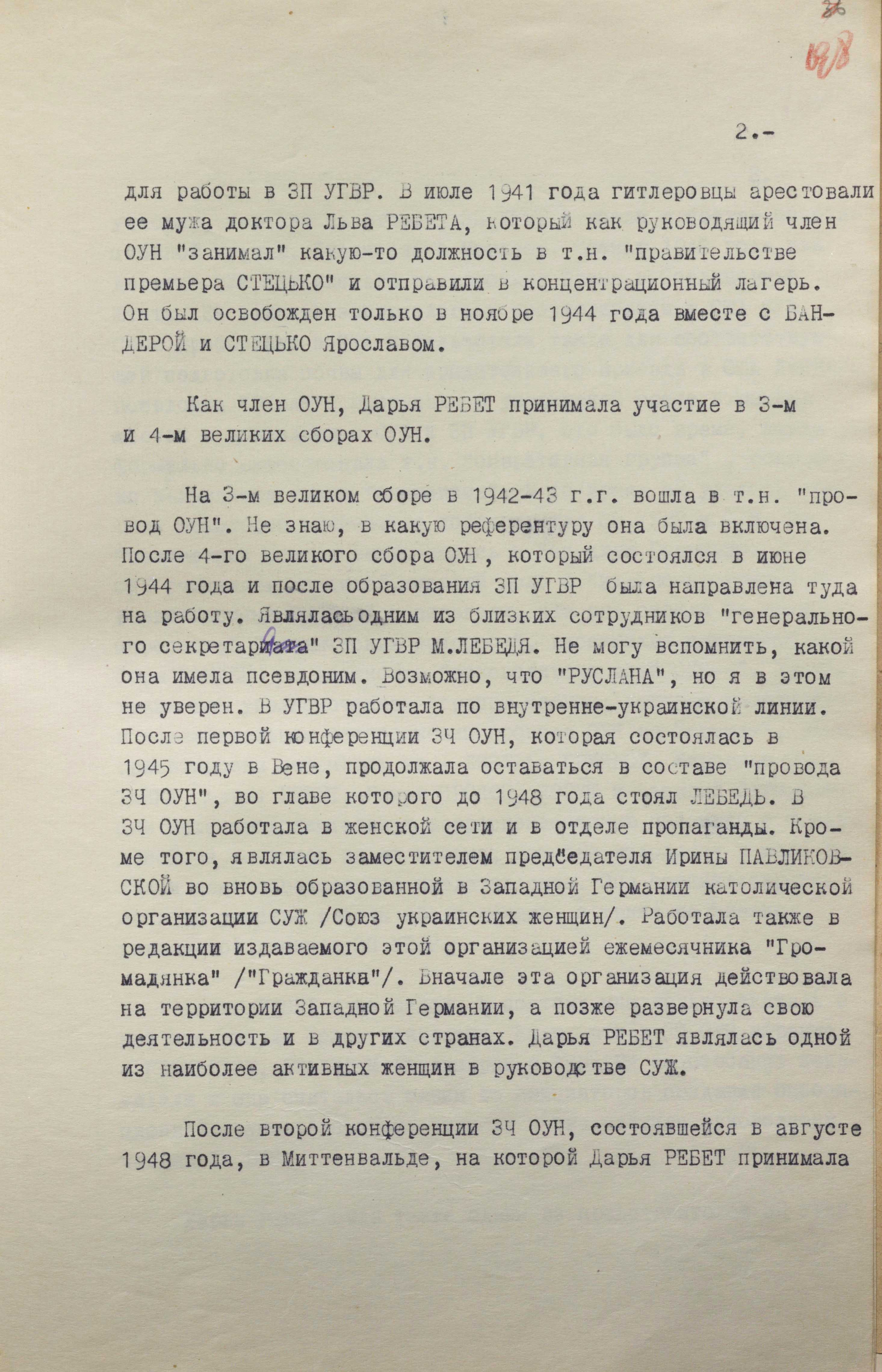
The case file states as follows: “During the period when Bandera, Stetsko, L. Rebet, and other OUN leaders were imprisoned (mid-1941 – November 1944), Daria Rebet, together with M. Lebid, and then R. Shukhevych, led the anti-soviet activities of the Central “Provid” of the OUN and was one of the organizers of the UHVR... By decision of the UHVR Presidium, she traveled to Bratislava and then to Vienna, among other OUN-UHVR leaders, having received from R. Shukhevych the authority to manage all organizational work of the OUN abroad” (FISU– F. 1. – Case 13089. – P. 221).
When the mgb analyzed the agents’ reports on D. Rebet and the characterizations of her by people who knew her well, they realized that they were dealing with an idea-driven, staunch, and unyielding enemy of soviet power. Here are excerpts from some of the documents on which the chekists based her psychological portrait.
From a report by the kgb under the soviet of ministers of the Ukrainian ssr:
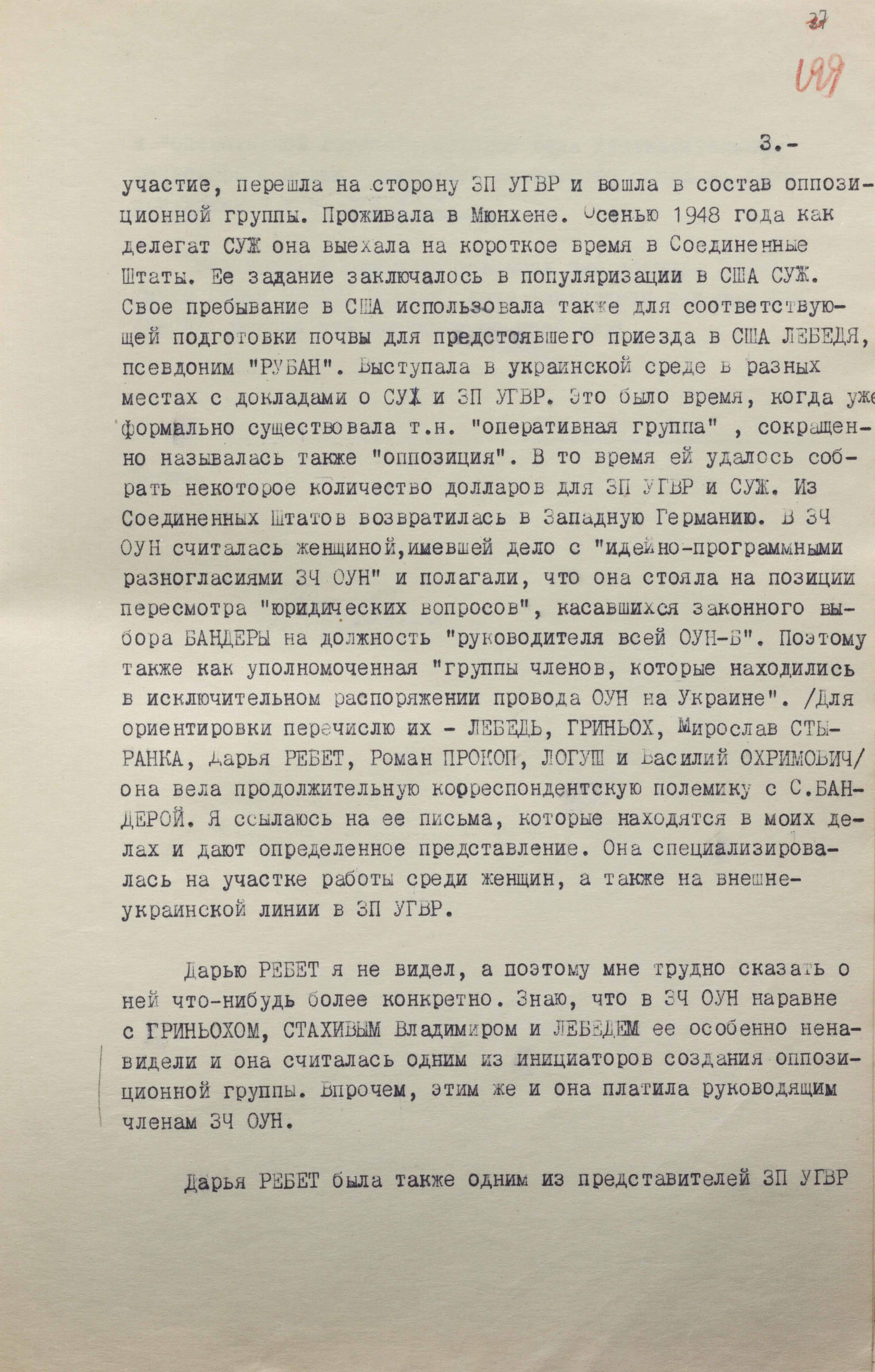
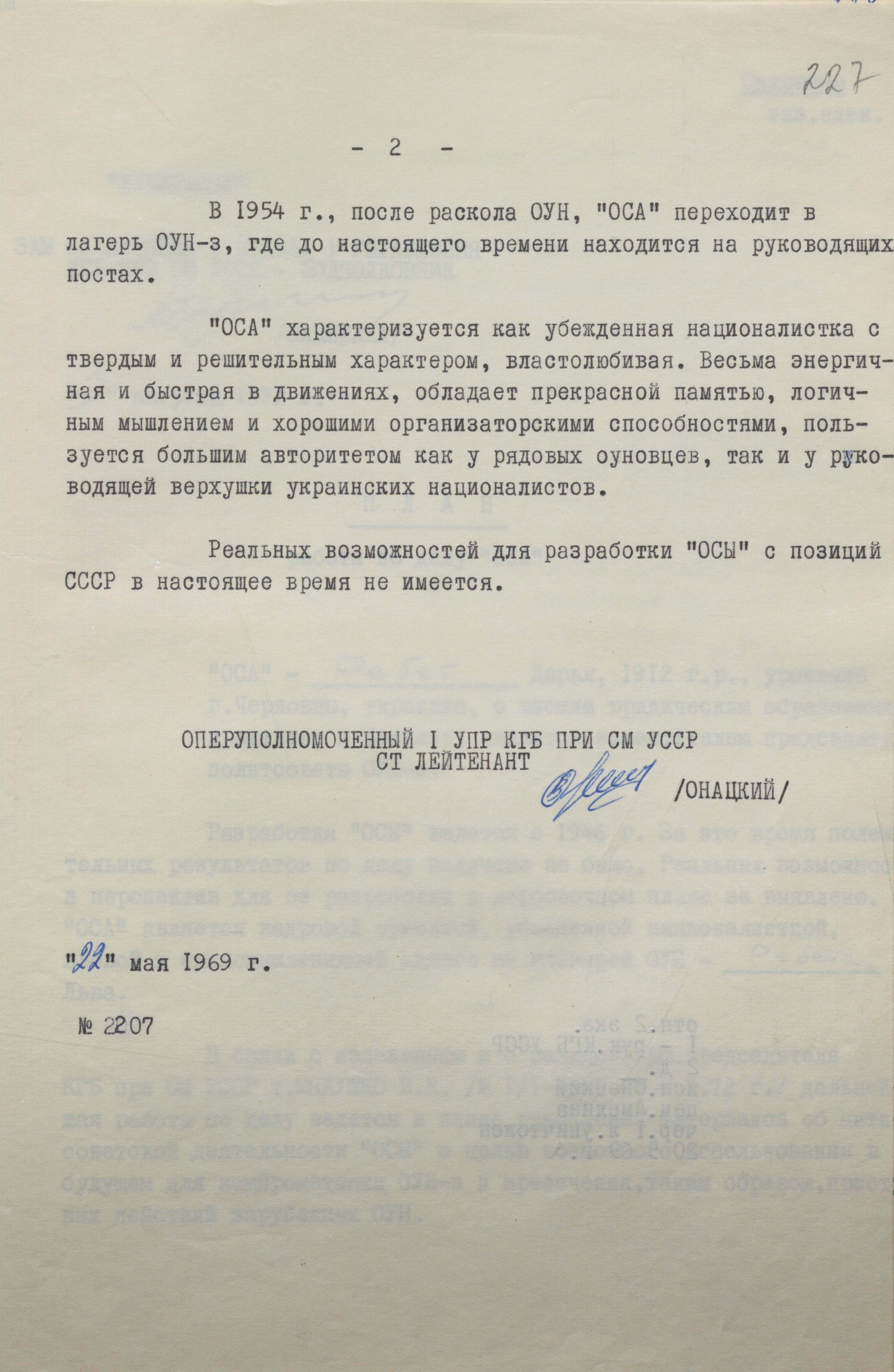
“Osa” is characterized as a staunch nationalist with a firm and decisive character, power-hungry. She is quite energetic and quick in her movements, has an excellent memory, logical thinking, and good organizational skills, and enjoys great authority among both ordinary OUN members and the leadership of Ukrainian nationalists”. (FISU – F. 1. – Case 13089. – P. 227).
From the interrogation report of Vasyl Dyshkant:
“From the accounts of members of the OUN-Banderites and Stepan Bandera himself, I know that Daria Rebet has great authority among the leaders of the OUN underground in Ukraine, and in particular is respected by Roman Shukhevych.
Description: medium height, brunette, normal build, quick and energetic in her movements”
(FISU. – F. 1. – Case 13089. – P. 89–90).
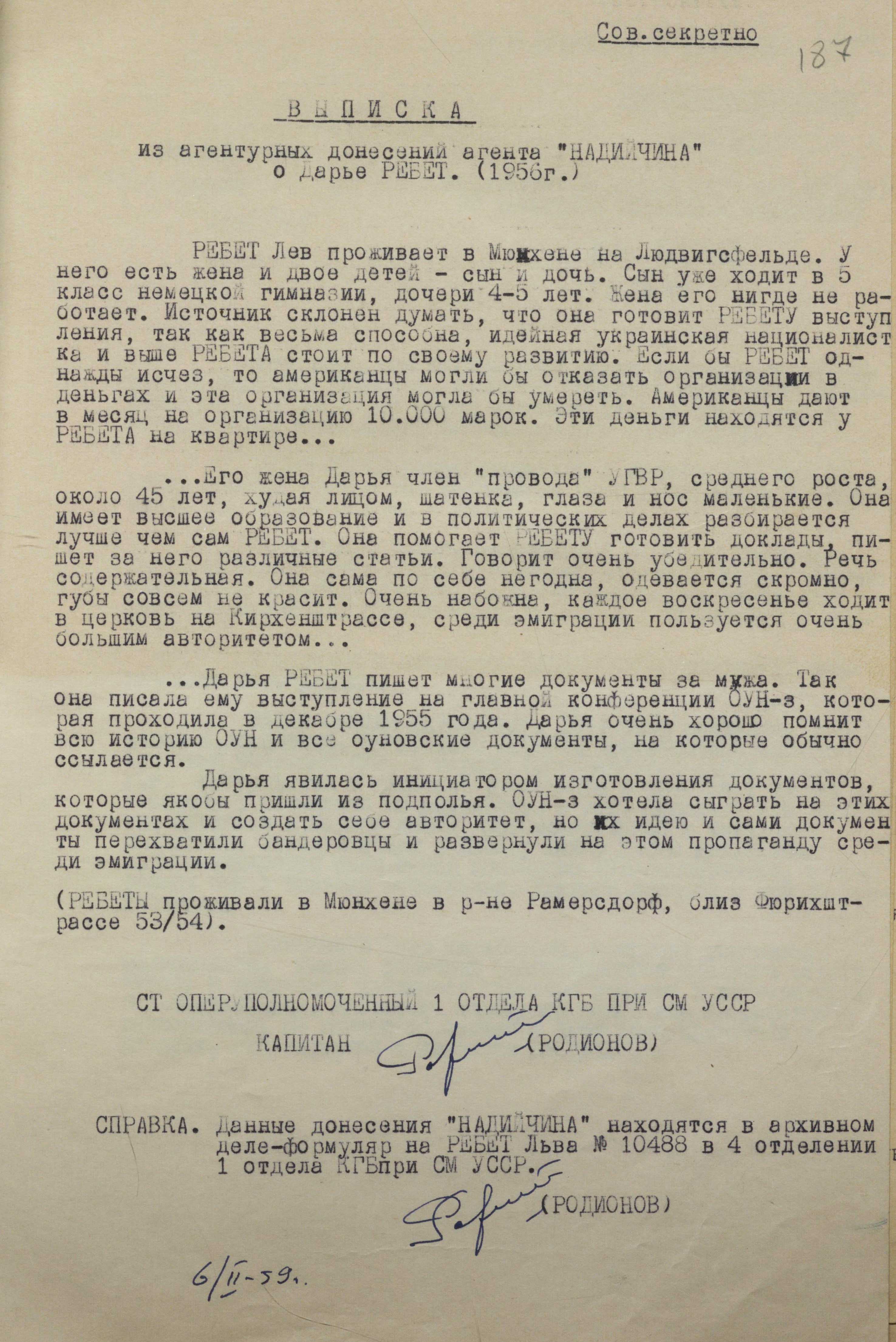
From the reports of agent “Nadiychyna”:
“She has a higher education and understands political issues better than Rebet himself. She helps Rebet prepare reports and writes various articles for him. She speaks very convincingly. Her speeches are meaningful. She is unattractive, dresses modestly, and does not wear lipstick. She is very religious, attends church on Kirchenstrasse every Sunday, and is highly respected by the émigré community...
Daria remembers very well the entire history of the OUN and all the OUN documents to which she usually refers...”
(FISU. – F. 1. – Case 13089. – P. 187).
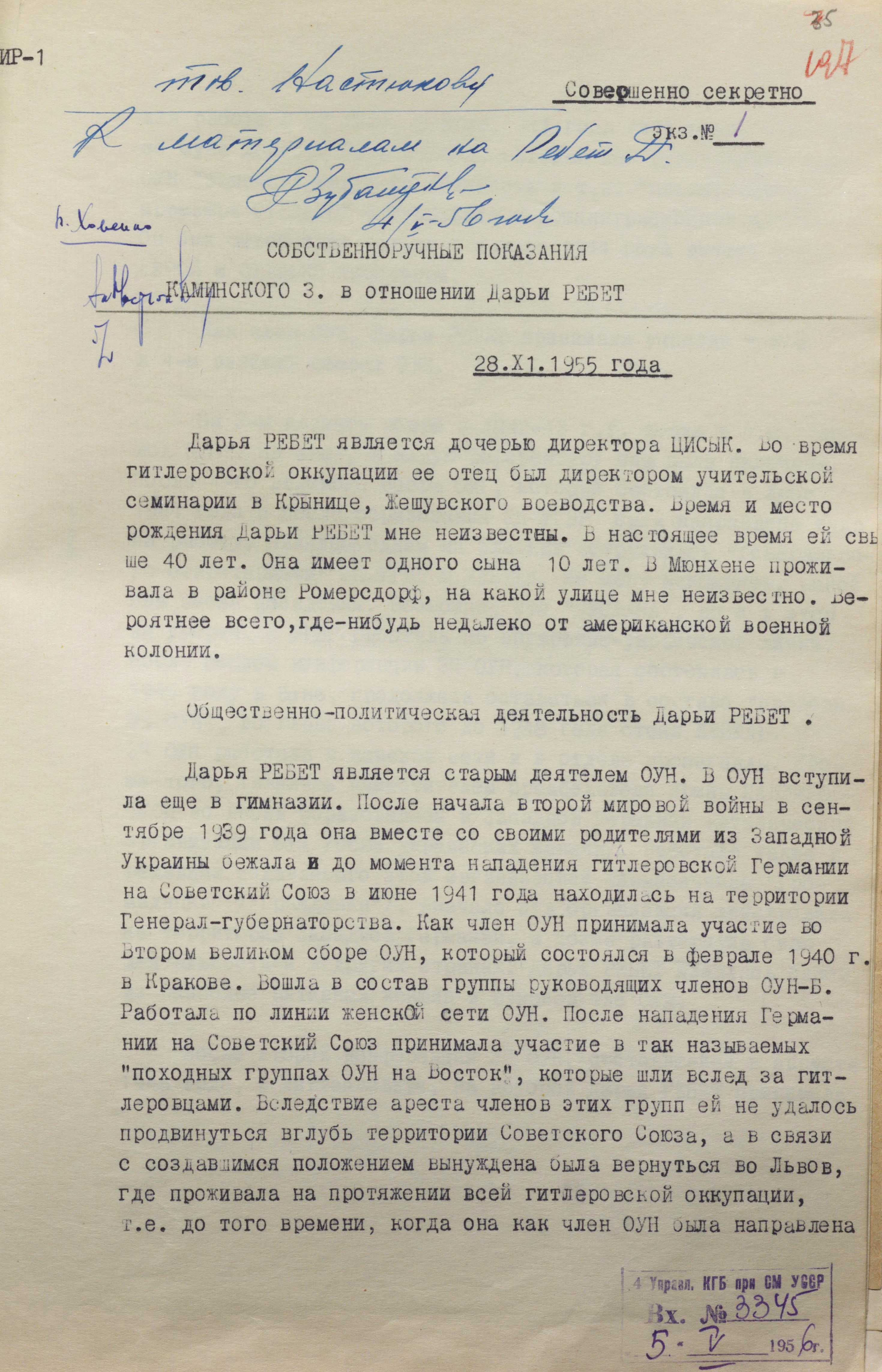
The chekists did not delve into the origins of Daria Rebet’s character or the factors that influenced it. Otherwise, they would have understood that it came from her ancestors. In general, the biographical references compiled about her in kgb offices contain many errors and inaccuracies. In particular, it is stated everywhere that Daria was born in 1912 in Chernivtsi. In reality, she was born on February 26, 1913, in the town of Kitsman, Duchy of Bukovina, Austro-Hungarian Empire (now a city in Chernivtsi region). Her grandfathers on both her parents’ sides were clergymen. Her maternal grandfather, Yerotei, participated in the reburial of Taras Shevchenko in Kaniv and was a high-ranking clergyman in the Ukrainian Orthodox Church.
Daria’s father, Omelian Tsisyk, was a teacher and later the director of a boys’ gymnasium in Stryi, where the family soon moved. She studied at a girls’ gymnasium and was also a member of Plast. At the age of 15, she secretly joined the underground Ukrainian Military Organization. Later, she became involved in the activities of the OUN youth structures in Stryi.
There is no information about that period in the archival documents. Her life can only be traced from the early 1930s. Operational reports indicate that in 1930 she graduated from high school and entered the law faculty of Lviv University, where she became actively involved in nationalist activities, for which she was repeatedly arrested by the Polish police. As a result, she could not complete her studies. She later obtained a master’s degree in law from the Catholic University in Lublin.
“In 1938,” one of the documents states, “she married the prominent Ukrainian nationalist Lev Rebet. In 1939, she was again arrested by the Polish police and remained in prison until the beginning of the Polish-German war. In early 1940, she and her husband illegally fled to Krakow, where in February of that year she participated in the creation of Bandera’s revolutionary “Provid” of the OUN, which she joined as head of the women’s department. In April 1941, at the Second Congress of the OUN, she was elected a member of the Central “Provid” of the OUN. After Germany’s attack on the soviet union, D. Rebet participated in the so-called “OUN expeditionary groups to the East” (FISU. – F. 1. – Case 13089. – P. 220–224).
Shortly after the proclamation of the Act of Restoration of the Ukrainian State on June 30, 1941, Daria was arrested by the Gestapo. She was initially imprisoned in Lviv in a prison in Lontskoho Street. Later, she was transferred to the Montelupich prison in Krakow. She was released after a number of Ukrainian activists appealed to the German occupation administration with a request to release the women. Soon after, she gave birth to her son Andriy. Lev Rebet was in the Auschwitz concentration camp at that time.
Daria continued to be actively involved in organizational work in the OUN. She met her husband at the end of 1944 in Vienna. During one of the bombings of the city, Lev was concussed and she was wounded. During the period when the couple lived in the Austrian capital, they were sought by the mgb of the ussr.
One day in June 1946, a stranger knocked on the door of the apartment of Galina Lonkevich – the daughter of a Ukrainian clergyman who lived at 10 Salvatorstrasse. He asked in Ukrainian if anyone was renting out a room. He added that he was looking for accommodation in the area. The countryman was welcomed and asked who he was and where he was from. He also tried to find out who else was living in the building. After a short conversation, he said goodbye and left.
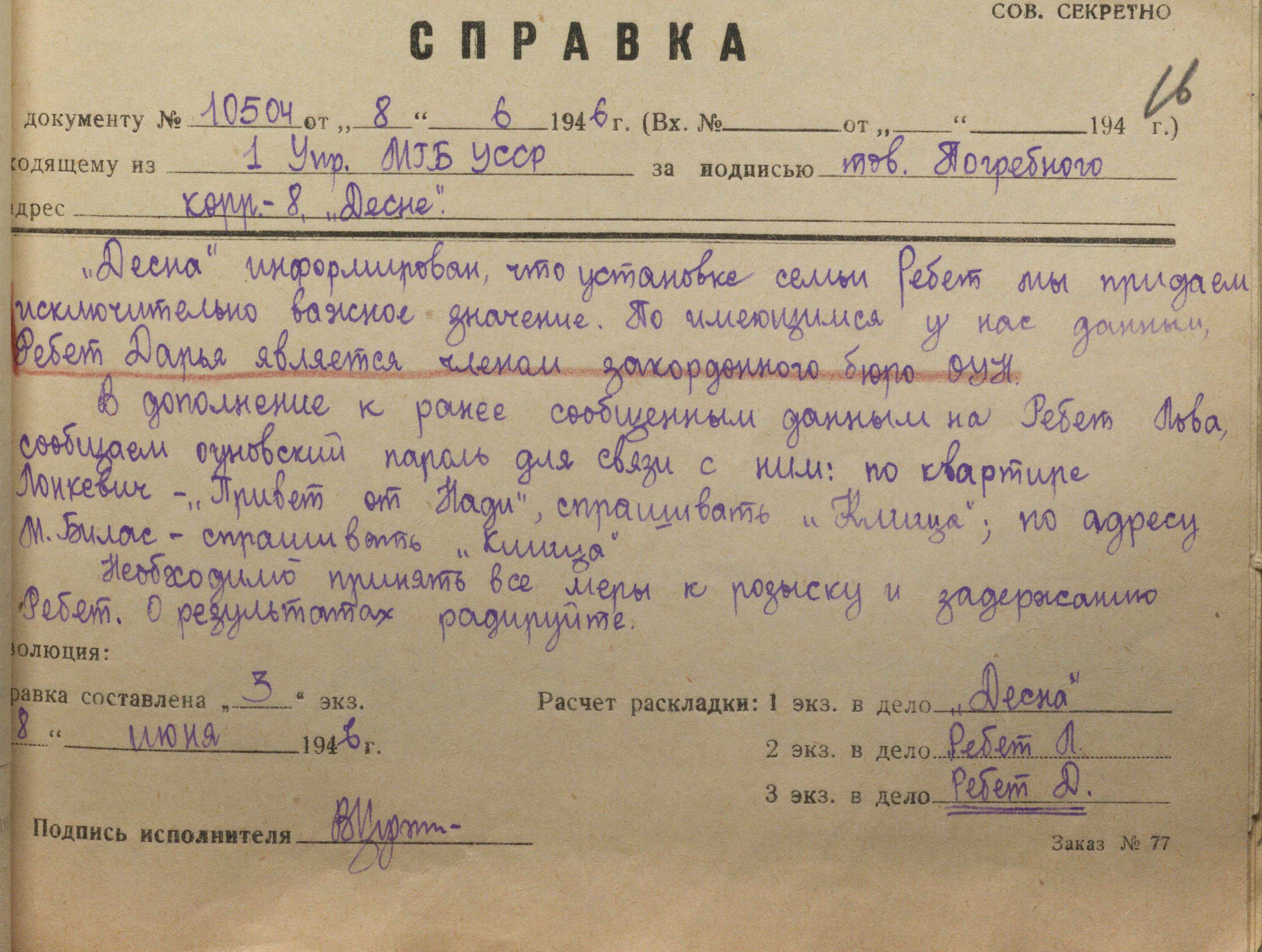
The next day, an employee of the mgb residentura “Desna”, which operated in Austria, saw agent “Karagodov” He reported that, in order to carry out the assigned task, he had visited G. Lonkevich’s apartment under a false pretext and found out that neither Daria nor Lev Rebet lived there. This information was immediately reported to Kyiv. Chief of the 1st (intelligence) directorate of the mgb of the Ukrainian ssr M. Pohribnyi was quite surprised. Shortly before that, foreign agents had provided seemingly reliable information that the Rebets lived at that address. The chekists even had a password for communication: “Greetings from Nadia. I want to see ‘Klishch’.” That was Lev Rebet’s underground pseudonym.
Once contact was established, the operation was to move into its final phase. The nature of further actions is evidenced by individual phrases in the reports and resolutions on them. In particular, one of the resolutions signed by M. Pohribnyi said: “Inform ‘Desna’ that we attach particular importance to the establishment of Daria Rebet, as she is a member of the ‘Foreign Bureau’. Let them make every effort to find and detain her” (FISU. – F. 1. – Case 13089. – P. 15).
Another document, which arrived at the mgb ussr residentura in Vienna in March 1947, stated: “Attaching extreme importance to the arrest of D. Rebet and her husband, comrade Pohribnyi personally asks ‘Yurii’ to take all possible measures to locate and arrest them. There are reasons to believe that they are living under assumed names. In order to locate and arrest them, a plan involving their son should be devised. Additionally, we report that on weekends from 9 a.m. to 12 p.m., they can be found at the Alserkirche catholic church” (FISU. – F. 1. – Case 13089. – P. 17).
It is not known exactly what plan the mgb had in mind for the Rebets’ five-year-old son. At the same time, all documents clearly state that they were going to arrest these OUN activists, and in some cases the phrase “secretly remove” is used. Sometimes both were mentioned, while in some documents there was mention of carrying out such an operation only in relation to Daria.
In that situation, to “secretly remove” meant to kidnap. This is because such activities by the mgb of the ussr and the military counterintelligence SMERSH on the territory of Austria were not agreed with the country’s authorities, took place outside the legal field, and violated all international norms. Soviet secret services essentially brazenly hunted down those who, for various reasons, had emigrated and did not support the policies of the ussr, secretly kidnapped them, and transported them to the territory of the ussr for punishment. This was the case with Vasyl Vyshyvanyi, who was abducted in 1947 by SMERSH agents in the British occupation zone of Vienna and taken first to Karlsbad prison, where a preliminary investigation was conducted, and then – to Lukianivska prison in Kyiv.
But in the case of Daria Rebet, something went wrong. This turn of events is somewhat clarified by a reference in one of the mgb documents stating that the operation failed due to the betrayal of agent “Karagodov”. Apparently, he warned one of the Ukrainian emigrants that the Rebets were being hunted. So they urgently moved from Vienna to Munich.
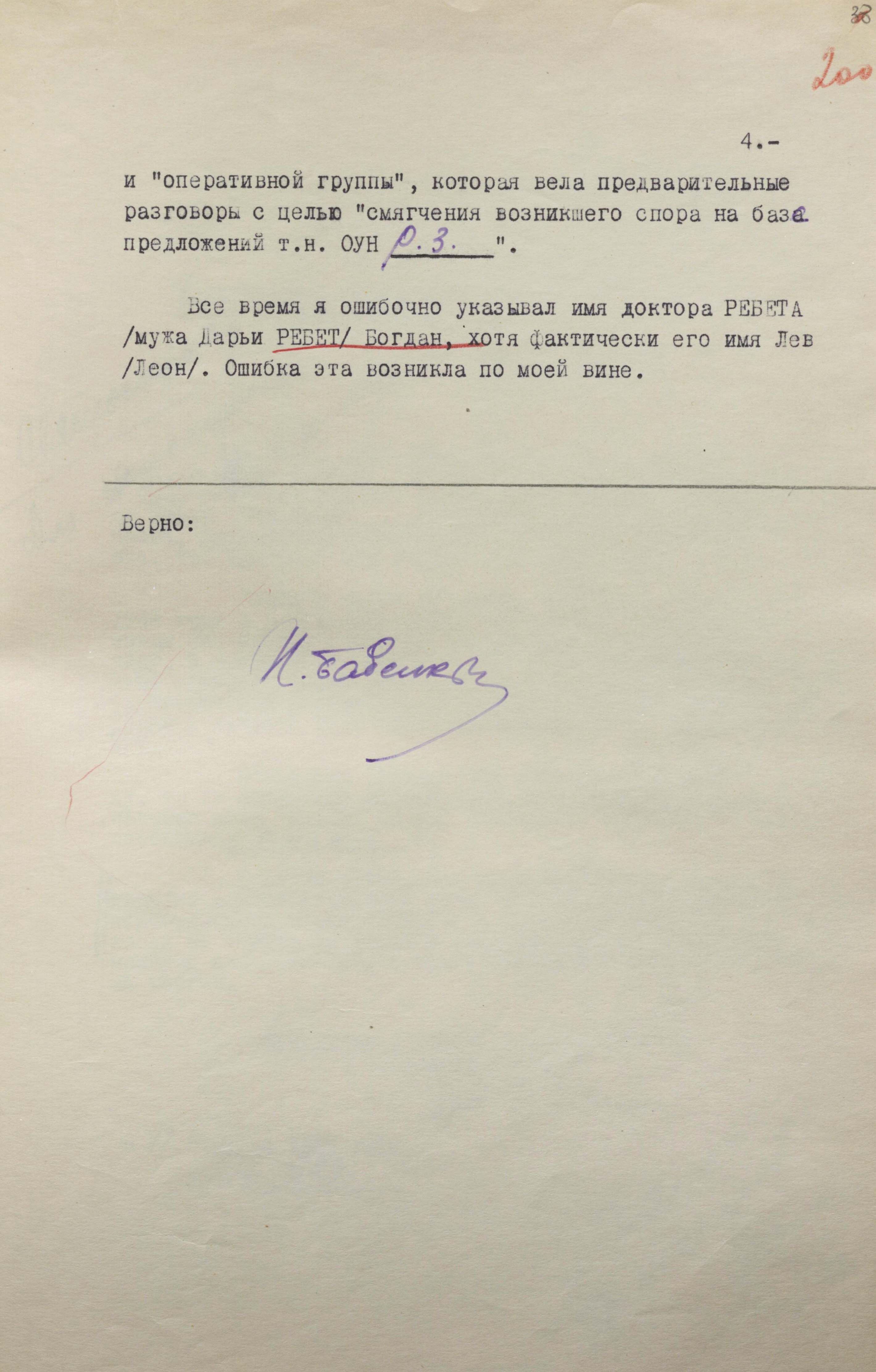
In their new location, Daria, together with her husband and other activists, formed the so-called democratic opposition within the OUN. They advocated a new ideological course for the Organization – one that was more open, more socially oriented, and free of any authoritarian methods on the part of the leadership. At the Mittenwald Conference of the Foreign Units of the OUN, which took place in August 1948, D. Rebet, as one of the leaders of the anti-Bandera opposition, delivered a speech. She tried to persuade those present and call for changes in the Organization’s work. But at that time, S. Bandera’s supporters prevailed.
For this, D. Rebet and other opposition members were expelled from the ranks of the OUN’s Foreign Units. This left supporters of democratization with no other option but to create their own organization in 1954, which soon chose the name OUN abroad (OUN za kordonom – OUN-z), or “dviykari” (“the two’s” – Transl.). They were given this name because the new organization was effectively headed by two of S. Bandera’s main opponents – Zenon Matla and Lev Rebet.
In a summary report on D. Rebet, the kgb, describing those events, pointed out that she did not renounce her views and continued to work quite actively in the OUN-z and the Foreign Representation of the Ukrainian Main Liberation Council (Ukrainska Holovna Vyzvolna Rada –UHVR). In particular, she led the work among Ukrainian women, became a co-founder of the Association of Ukrainian Women, where she was permanent secretary, and the International League of Women in Exile. In 1948, as one of the delegates of the Association of Ukrainian Women, she participated in the World Congress of Ukrainian Women in Philadelphia, where the World Federation of Ukrainian Women’s Organizations was created.
In the same year, Daria Rebet attended a meeting of that Organization in New York. A report from the foreign residentura of the kgb of the ussr emphasized that the Congress discussed the issue of providing material assistance to Ukrainian refugees, mostly women and children. However, the document focused more on the press conference, where Daria spoke about the activities of the Ukrainian Insurgent Army, the continuation of the struggle for the restoration of Ukraine’s independence, and called on the international community to draw attention to this and support Ukrainians’ aspirations to live in their own state. Not only Ukrainian newspapers wrote about that speech, but so did American ones, including The New York Times. Reporting on this, the central apparatus of the kgb in moscow set the task for the kgb of the Ukrainian ssr to take measures to limit Daria Rebet’s such activity.
Another document noted that after the United States, D. Rebet visited Canada. There she spoke at many gatherings of Ukrainian emigrants, talking about the work of the OUN in Ukraine and life in West Germany. At the same time, she raised a significant amount of money for the activities of the UHVR and OUN-z.
kgb agents tried to track and analyze publications authored by D. Rebet. During that period, she contributed to numerous Ukrainian émigré periodicals, was a member of the editorial boards of the magazines “Suchasna Ukraina”, “Suchasnist”, “Ukrainskyi Samostiynyk”, and authored programmic articles on the ideology of Ukrainian nationalism. Archival documents mention her articles under the titles “Will We Find the Elixir for Our Youth?”, “Besides Politics, There Are Also People”, “Refugees – an Unresolved Global Problem”, “Is It Bourgeois Nationalism?” and others.
Taking into consideration that D. Rebet had partially withdrawn from organizational work and focused more on humanitarian issues in the activities of the OUN-z and the Foreign Units of the UHVR, her operational cultivation by the kgb, as evidenced by declassified documents, declined somewhat. More attention was focused on her husband. Lev Rebet was actively involved in political, scientific, teaching, and journalistic activities. He defended his doctoral dissertation, became a Professor of Public Law at the Ukrainian Free University, and editor-in-chief of the socio-political magazine “Ukrainskyi Samostiynyk”. He participated in many scientific conferences, forums, and discussions, where he persistently defended Ukrainian issues, popularized the history of Ukraine, spoke about the peculiarities of the development of the Ukrainian nation, and resolutely rebuffed those who tried to distort and misrepresent historical facts. At that time, he was more involved in events and public life than his wife.
L. Rebet’s speeches, books, and publications, of which there were many, greatly annoyed the kgb leadership in moscow. It was no coincidence that he was considered one of the most dangerous ideological enemies. At first, soviet secret services developed and planned an operation to kidnap him in Munich, but after unsuccessful attempts, they killed him on October 12, 1957. This was done by soviet agent Bohdan Stashynskyi, who used a special device with a poisonous substance.
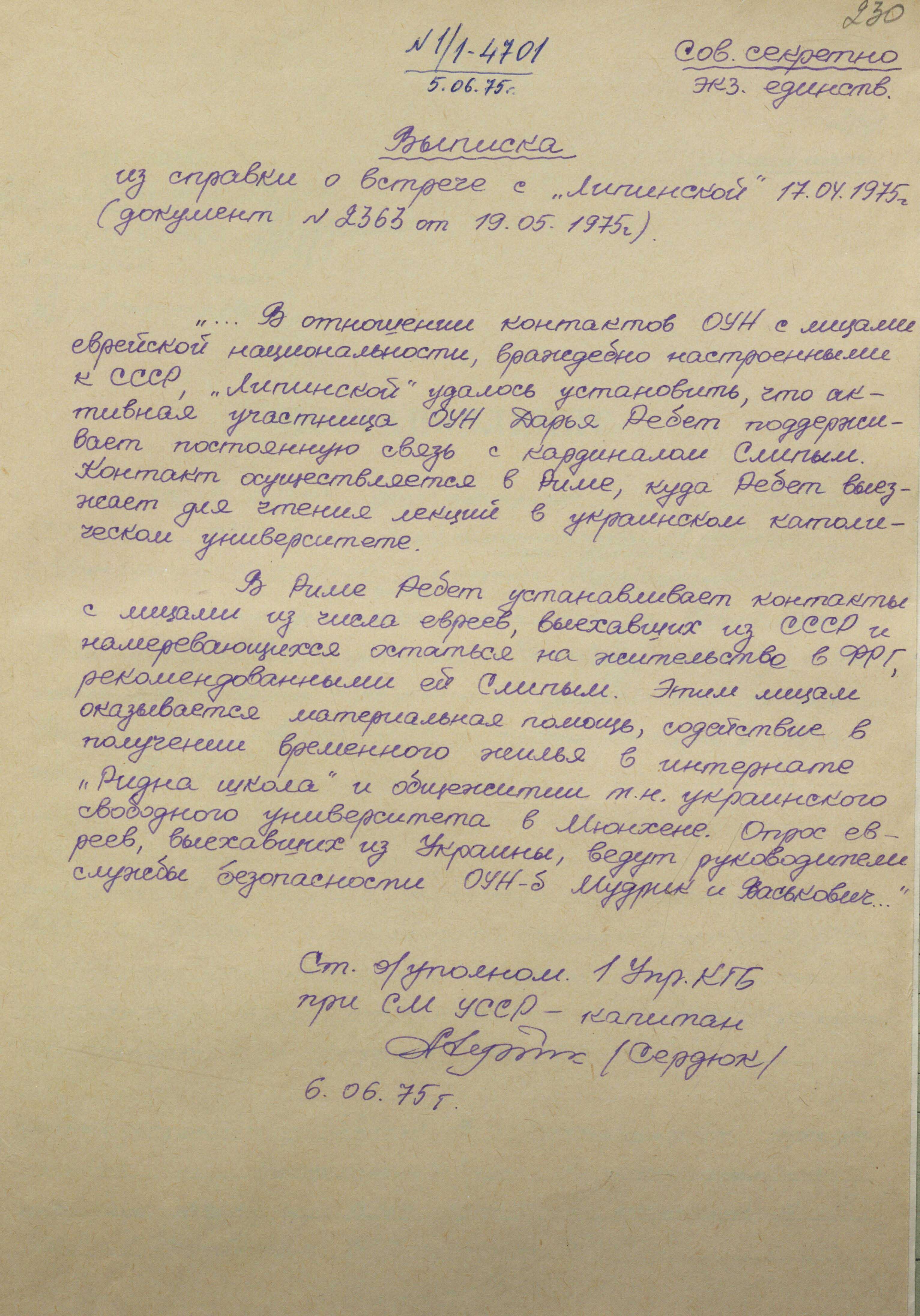
After her husband’s assassination, D. Rebet raised their two children, Andrii and Oksana, on her own. At the same time, she did not cease her political activities. One of the archival documents mentions her speech in May 1958, immediately after S. Bandera, at a meeting near the grave of Ye. Konovalets on the 20th anniversary of the latter’s murder. Another report concerns her contacts with Yosyp Slipyi. “Daria Rebet maintains constant contact with Cardinal Slipyi,” the intelligence report states. “These contacts take place in Rome, where Rebet travels to lecture at the Ukrainian Catholic University. In Rome, Rebet establishes contacts with Jews who have left the ussr and intend to remain in Germany, those recommended to her by Slipyi. These individuals are provided with material assistance and help in obtaining temporary accommodation in the “Ridna Shkola” boarding school and the dormitory of the so-called Ukrainian Free University in Munich” (FISU – F. 1. – Case 13089. – P. 230).
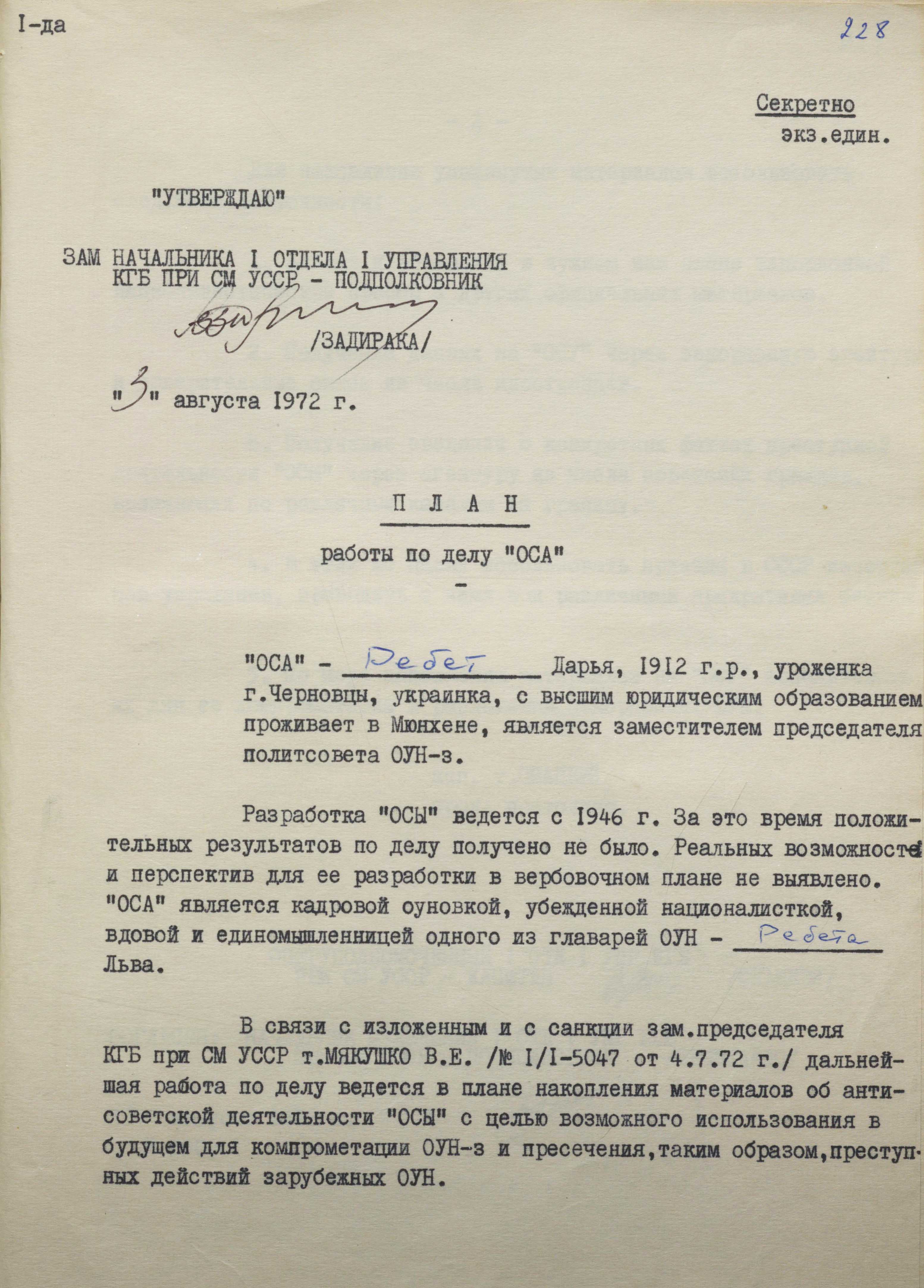
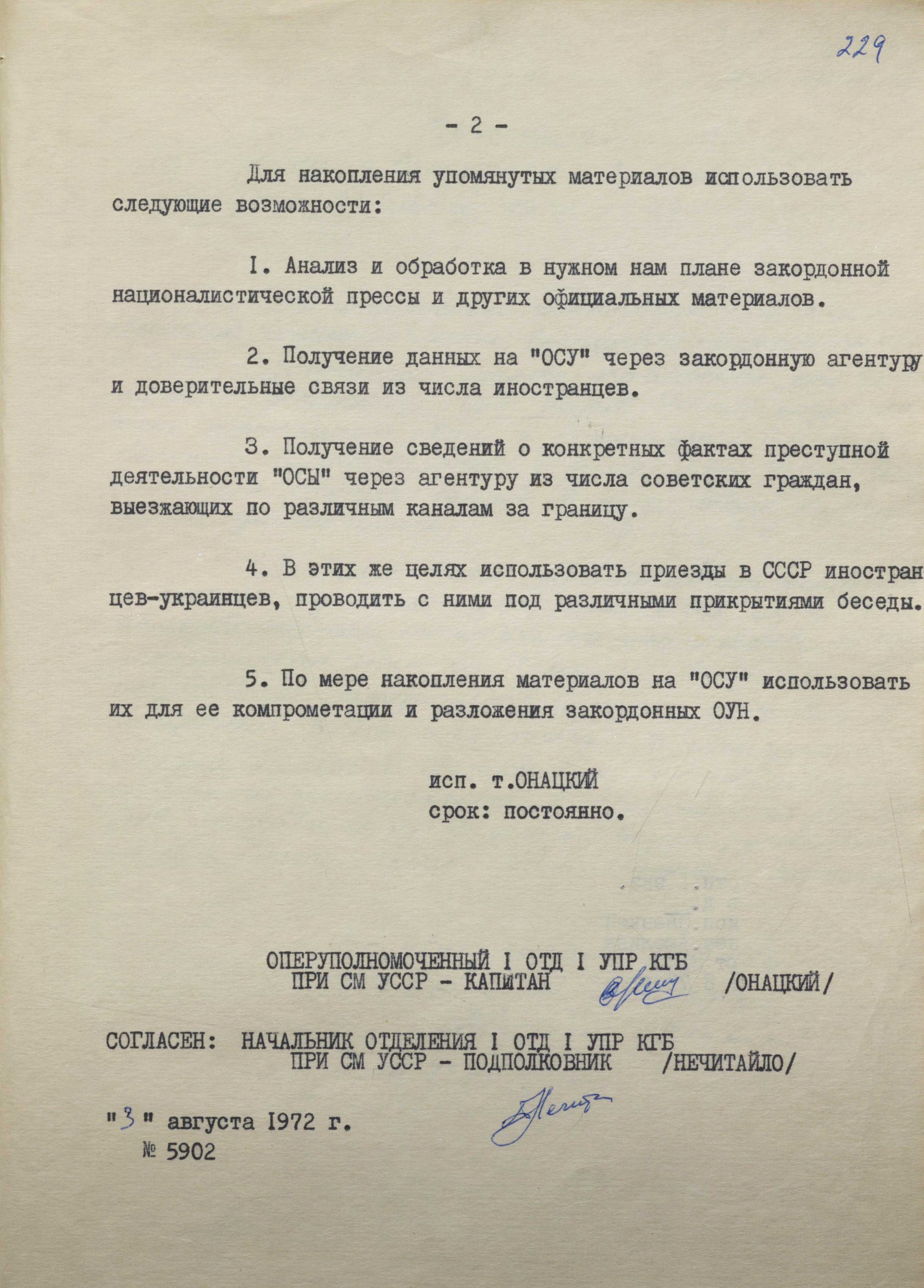
During the 1960s and 1970s, the kgb tried to find a way to approach D. Rebet’s relatives who lived in the ussr, gathered information about them, and monitored all their correspondence. But they could not get to Daria through them. The work plan for the “Osa” case, dated August 1972, points out that there are no real opportunities or prospects for recruiting her, as she has proven herself to be a staunch nationalist. At the same time, no materials were found that would allow to compromise her in any way. Therefore, in August 1977, a decision was made to terminate her cultivation as unpromising.
Without the kgb’s “care”, Daria Rebet lived for another 15 years. She passed away on January 5, 1992, in Munich at the age of 77. She was initially buried in Munich, but in 2010, her remains and those of her husband were solemnly reburied in Lviv at the Lychakiv Cemetery.