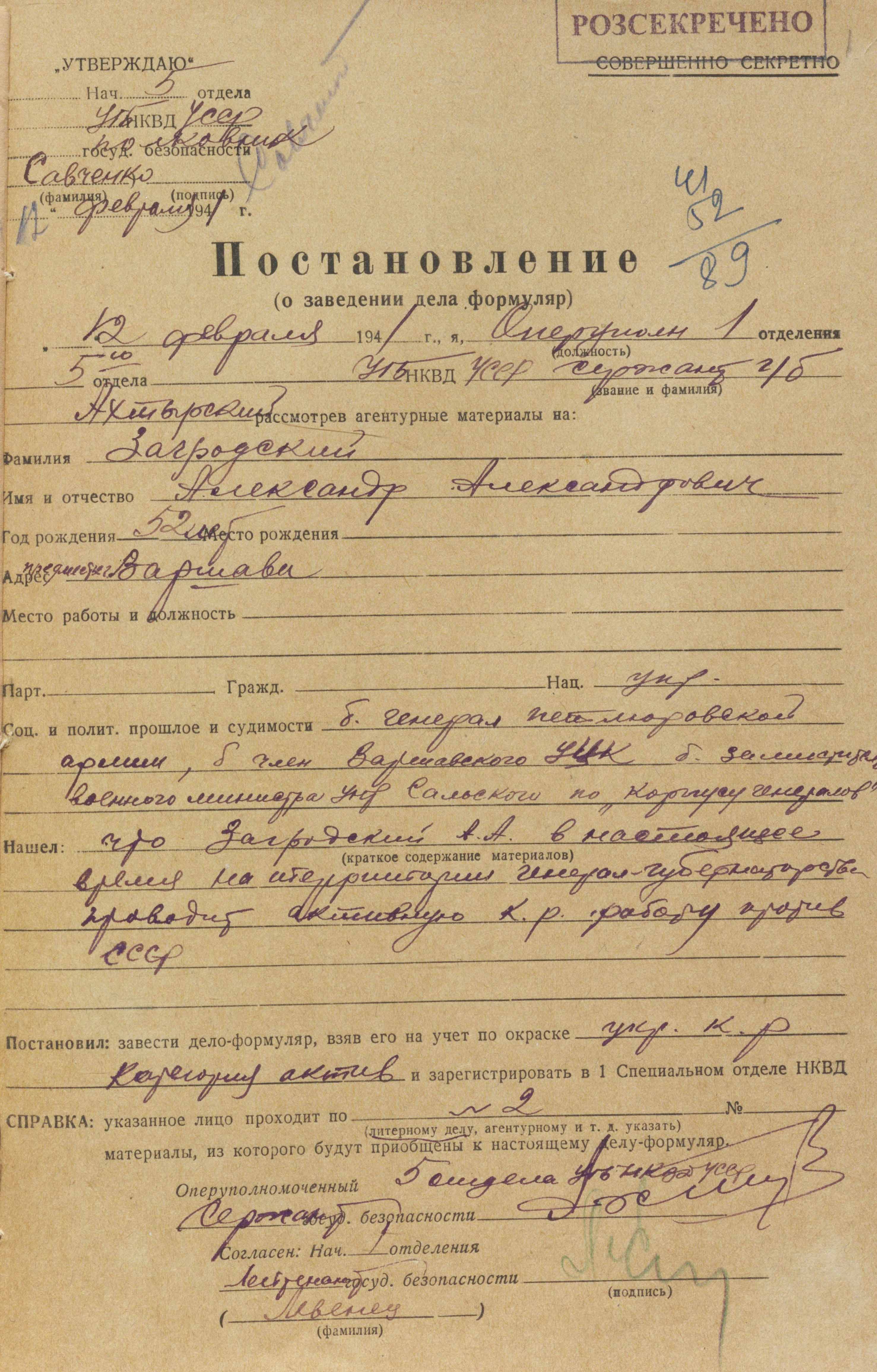
General Oleksandr Zahrodskyi. «Give Recruiting Up As a Bad Job»
12/4/2025
The archives of the Foreign Intelligence Service of Ukraine contain a file on one of the initiators and most prominent commanders of the First Winter Campaign of the Army of the Ukrainian People’s Republic, Colonel General (in exile) Oleksandr Zahrodskyi. Along with the leaders of that legendary Campaign, Mykhailo Omelianovych-Pavlenko, Yurko Tyutyunnyk, and Oleksandr Udovychenko, he also was subject to the ussr gpu/nkvd’s close attention. Declassified documents reveal the result of the operation, codenamed “Tryzub” (“Trident” – Transl.).
According to archival materials, O. Zahrodskyi was of interest to the chekists primarily as an influential figure among the UPR émigrés. He was invariably respected by Ukrainian officers as a brave commander on the battlefield and a tireless organizer of a large community of former soldiers of the Army of the Ukrainian People’s Republic, who were forced to settle abroad. His words were listened to, he was trusted, and he was constantly elected to the leadership structures of all sorts of organizations, societies, and other associations. He gained such authority first of all during the national liberation struggle for Ukraine’s independence in 1917–1921.
During that period, O. Zahrodskyi first established himself as Commander of the Kyiv Guard Regiment of the Central Rada, the 1st Infantry Kurin in the Separate Zaporizhzhia Detachment, the First Hetman Doroshenko Infantry Regiment in the Zaporizhzhia Division of the Army of the Ukrainian People’s Republic, and then as the Commander of the Division and Deputy Commander of the Zaporizhzhia Corps. He commanded the Volyn Combined Group of the Army of the Ukrainian People’s Republic during the First Winter Campaign (1919–1920) in the rear of the white and red russian occupiers and was Deputy Commander-in-Chief of the Army of the Ukrainian People’s Republic.
After the internment of the Army of the Ukrainian People’s Republic, he spent some time in a camp in Wadowice, Poland, where he was a Commandant. After the entire Volyn Division was transferred to a camp in Kalisz, he was a Commandant of two camps there. For a long time, he took care of the treatment of wounded soldiers and headed the Union of Disabled Soldiers of the Army of the Ukrainian People’s Republic. He was the Chairman of the Order Council of the Knights of the Iron Cross. He was a member of the Main Council of the Cross of Simon Petliura and the Ministry of Military Affairs of the Ukrainian People’s Republic government in exile.
The chekists monitored his activities through their Warsaw residentura. Then, on October 30, 1921, a letter signed by the head of the council of people’s commissars of the Ukrainian ssr, Khrystyian Rakovskyi, was sent to the Polish government demanding the extradition of O. Zahrodskyi. But the Poles refused. So foreign agents continued to gather information about him. This continued throughout the interwar years.
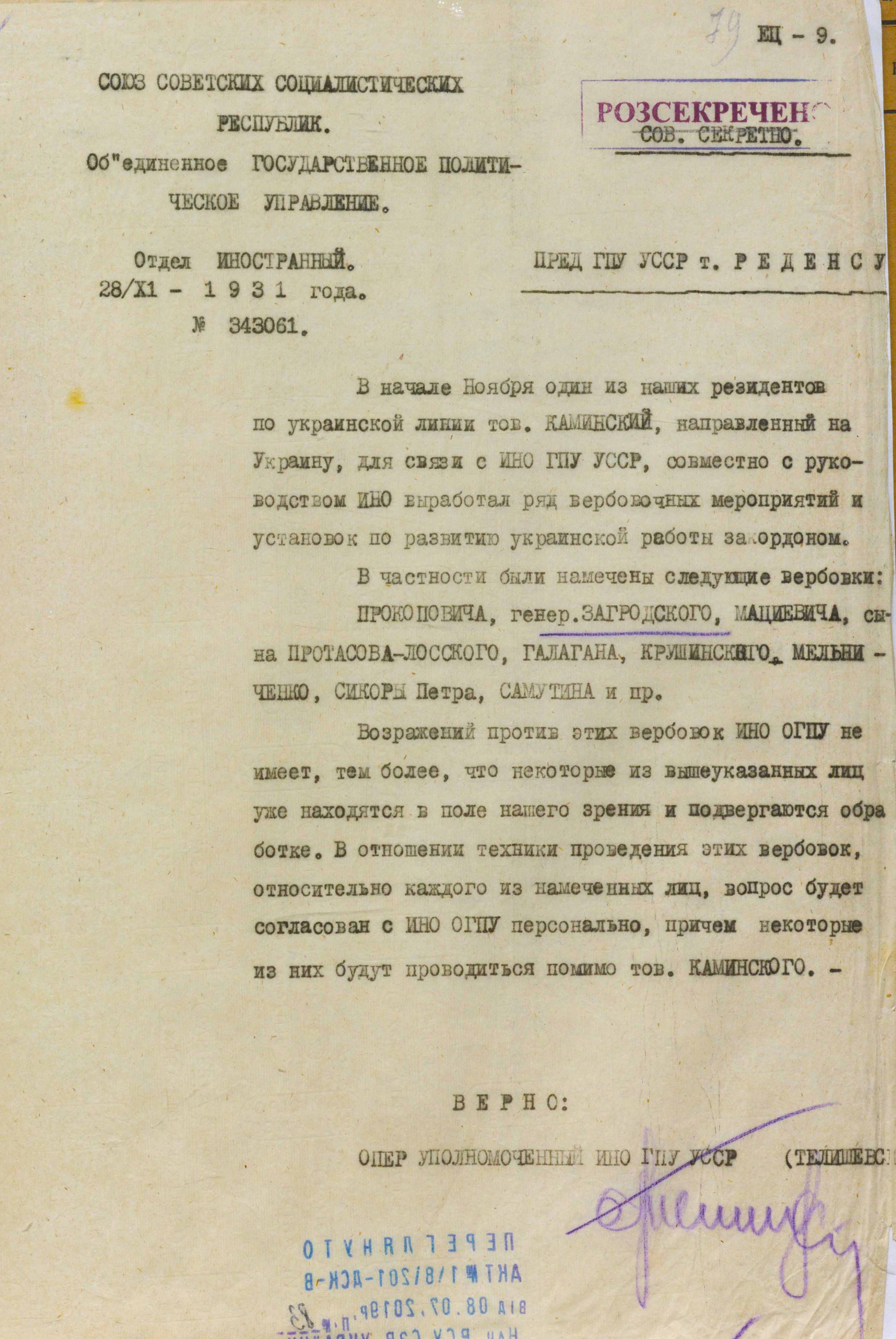
In November 1931, the Foreign Department of the ogpu of the ussr sent a letter to Stanislav Redens, the head of the gpu of the Ukrainian ssr, which read as follows:
“In early November, one of our residents on the Ukrainian line, Comrade Kaminskyi, was sent to Ukraine to liaise with the Foreign Department of the gpu of the Ukrainian ssr. Kaminskiy, together with the leadership of the Foreign Department, prepared a series of recruitment measures and proposals for the development of the Ukrainian cause abroad. In particular, the following recruitments were planned: of Prokopovych, Gen. Zahrodskyi, Matsiyevych, the son of Protasov-Loskyi, Galagan, Krushynskyi, Melnychenko, Petro Sikora, Samutin, and others.
The Foreign Department has no objections to these recruitments, especially since some of the above mentioned persons are already in our field of vision and are susceptible to influence. Regarding the technique of carrying out these recruitments, for each of the targeted individuals, the issue will be agreed upon with the Foreign Department of the ogpu personally, with some being carried out without Comrade Kaminskyi.
(FISU – F.1. – Case 7474. – P. 79).
Two approaches were attempted to reach O. Zahrodskyi: through people close to him and through his close relatives. In the former case, attention was focused on his adjutant, Serhiy Fedorovych Yefremov. There is little information about him in the case file. Open sources show that, like O. Zahrodskyi, he was born in the village of Zelenkiv, now in Talnivskyi district of Cherkasy region. He was four years junior. Therefore, they were obviously old acquaintances.
S. Yefremov was also a military serviceman and participated in combat operations to establish Ukrainian statehood. In 1917, in Katerynoslav, he led a detachment of Haidamaks and Free Cossacks – the 3rd Katerynoslav Haidamak Kurin of the Central Rada troops. At that time, together with his father Fedir and other educators, he initiated a congress of teachers of Katerynoslav region, at which they proposed renaming the city to Sicheslav. During the Hetmanate, he served in the General Staff of the Armed Forces of the Ukrainian State. During the Directory of the Ukrainian People’s Republic, he was a senior officer in the Ministry of Military Affairs. In 1920, at the end of the war with bolshevik troops, he commanded the kurins of the Iron Division of the Ukrainian People’s Republic. Apparently, together with the remnants of the Division, he ended up in the Kalisz camp, where for some time he was an adjutant to his fellow countryman O. Zahrodskyi.
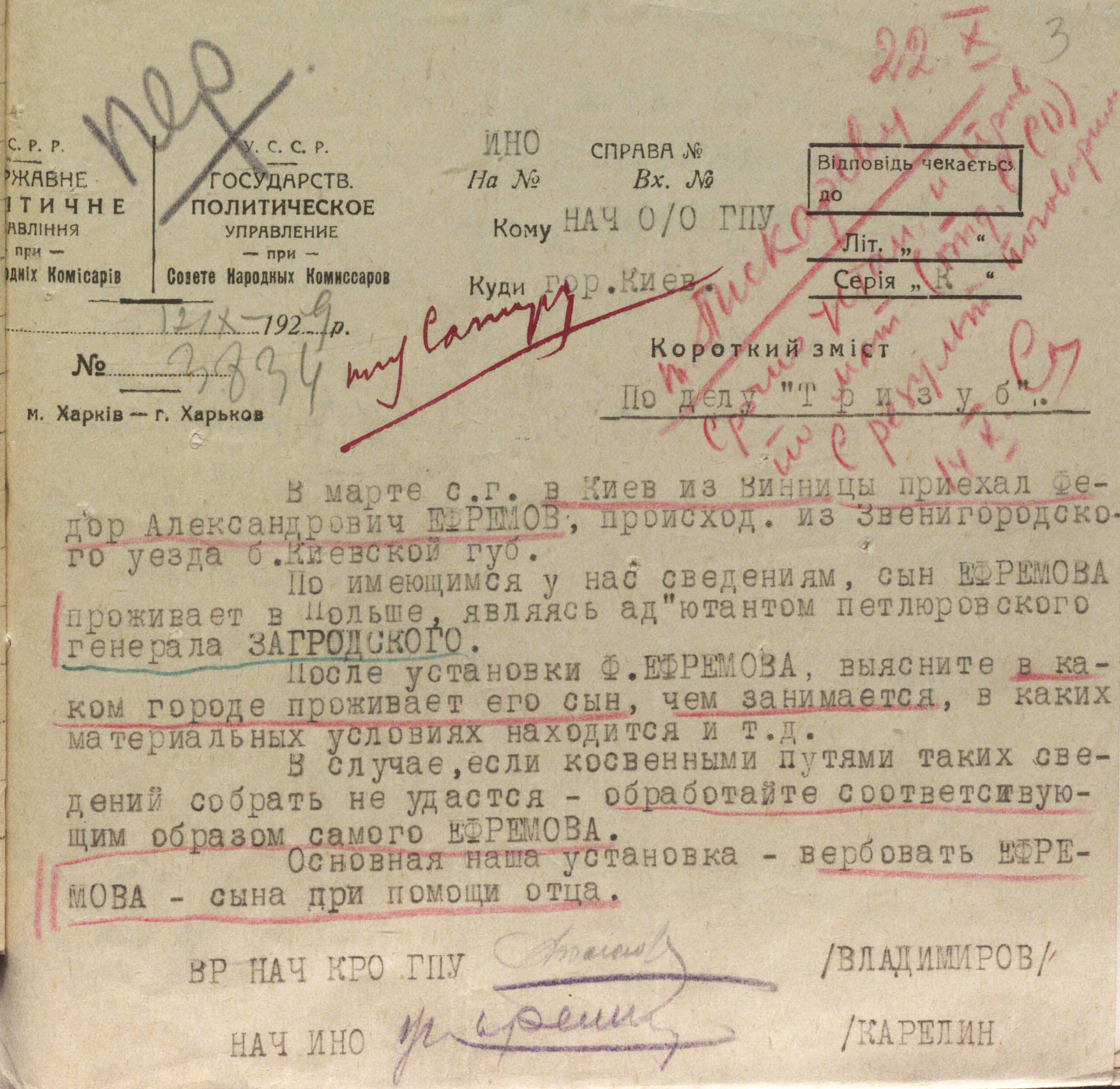
The chekists collected some information about S. Yefremov’s father, Fedir. They found out that at that time (1929) he lived in Kyiv and was a Professor at the Kyiv Commercial Institute. He was also the brother of Academician Serhii Yefremov, who was arrested that same year and accused of organizing the Union of Liberation of Ukraine – an underground organization fabricated by the chekists.
The case file stated that Fedir’s brother was not involved in the Union for the Liberation of Ukraine case. The task was to use him to find out all the information about his son abroad. “If it is not possible to collect such information through indirect means,” one of the documents stated, “then work on Yefremov himself in the appropriate manner. Our main focus is to recruit Yefremov’s son with the help of his father” (FISU – F.1. – Case 7474. – P. 3).
The biographical information on F. Yefremov in Wikipedia states that his fate after 1928 is unknown. Therefore, one can only guess how the chekists “worked on” him. There is no information about this in the operational case files. Similarly, there is no information about the cultivation of his son. Apparently, nothing came of it. S. Yefremov later became Commander-in-Chief of the national defense of Carpathian Ukraine in 1939 and a Khorunzhyi General in exile.
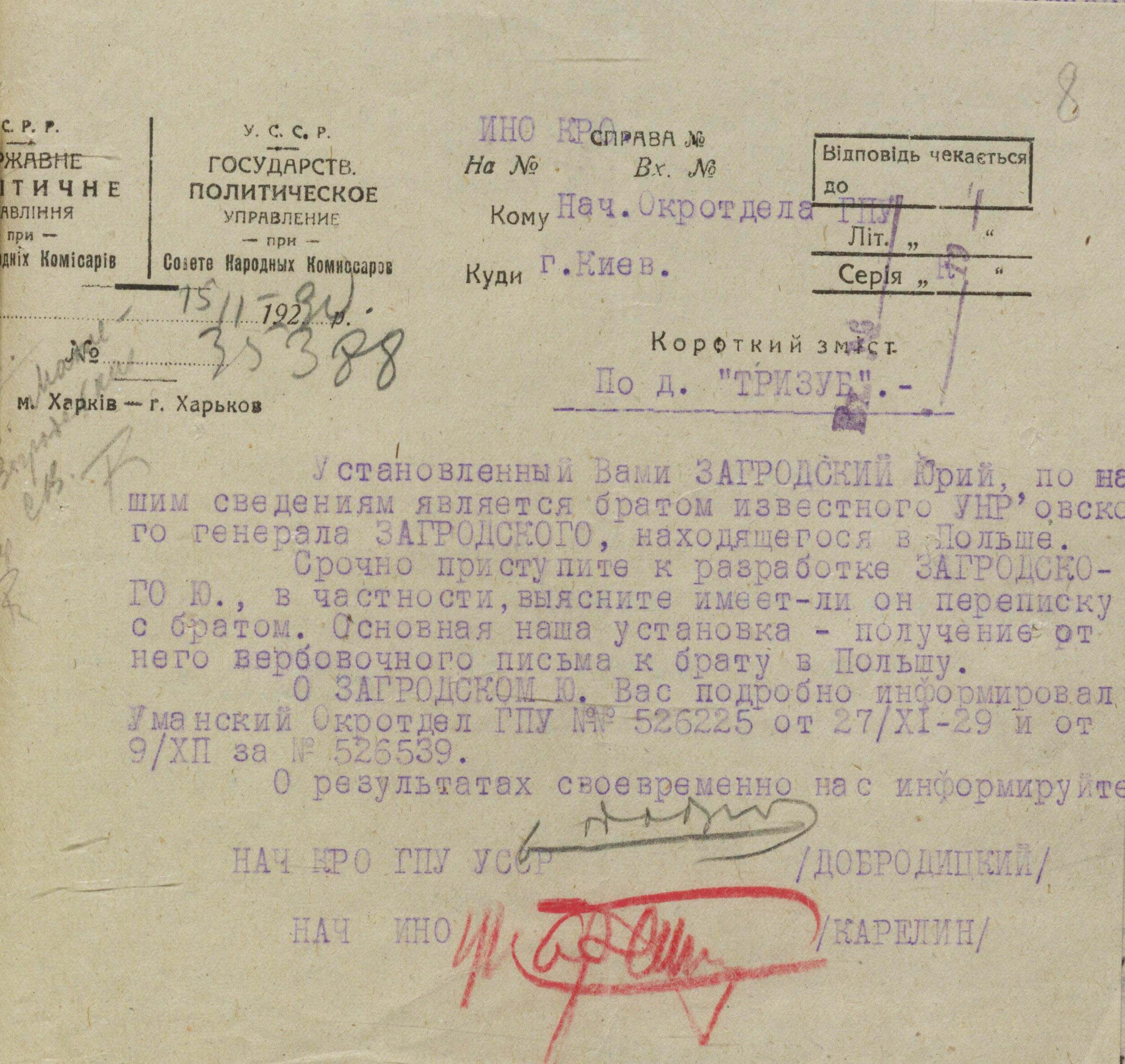
After an unsuccessful attempt to get close to O. Zahrodskyi through the Yefremovs, the gpu of the Ukrainian ssr switched to his close relatives. They found his brother Yurii in Kyiv. One of the reports states that on April 12, 1931, he was summoned to the gpu of the Ukrainian ssr “apparently for the purpose of recruitment, which did not take place for unknown reasons”. Other materials in the case shed some light on the circumstances.
First of all, chekists wanted to find out whether Yurii was corresponding with Oleksandr. If this had been confirmed, they planned to obtain from him a “recruitment letter to his brother in Poland”. Translated from operational language, this meant that Yurii had to write under dictation in the gpu office about how good life was in Ukraine, persuading his brother to renounce anti-soviet activities and take the path of supporting his homeland and defending it from external enemies.
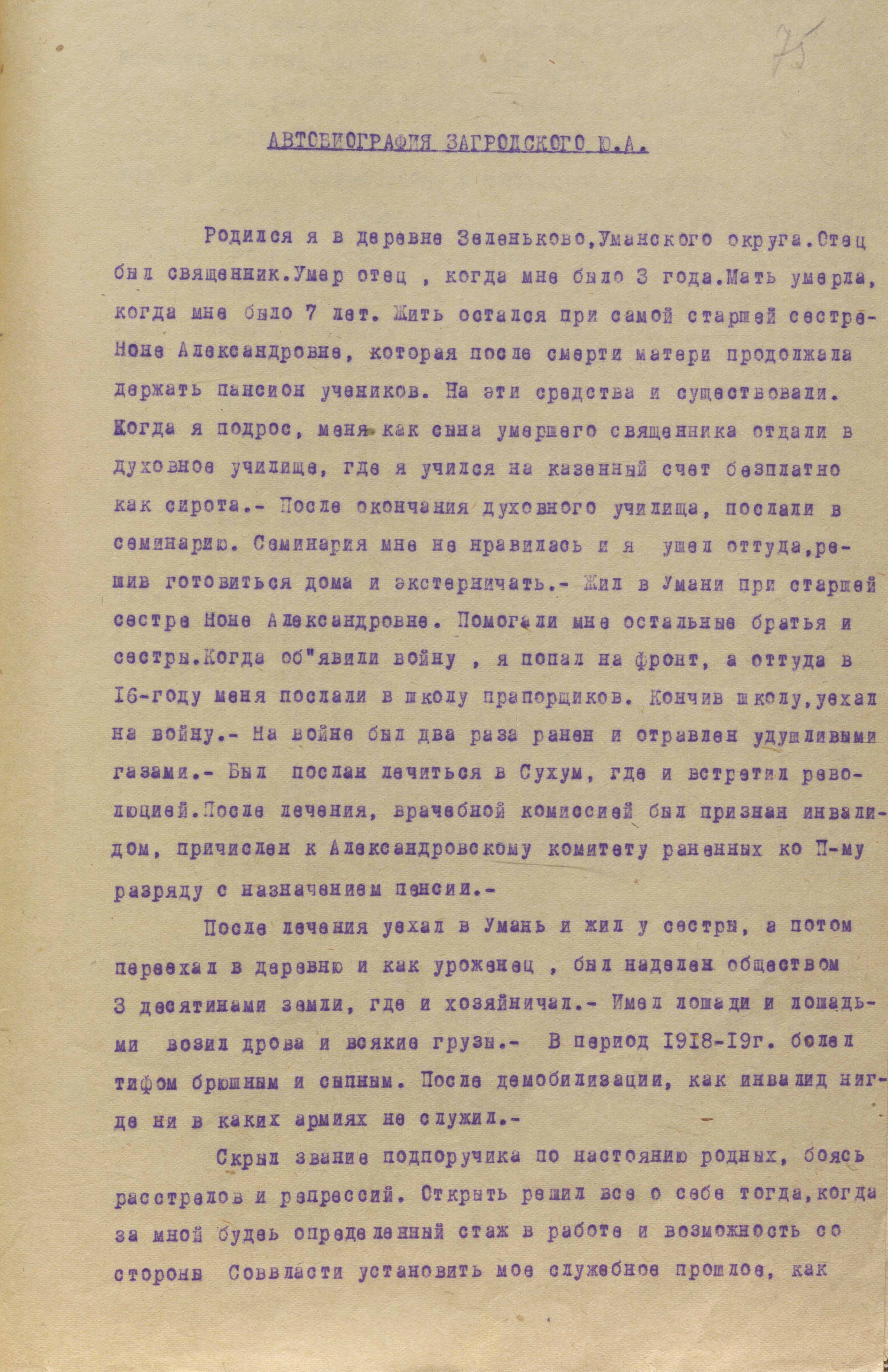
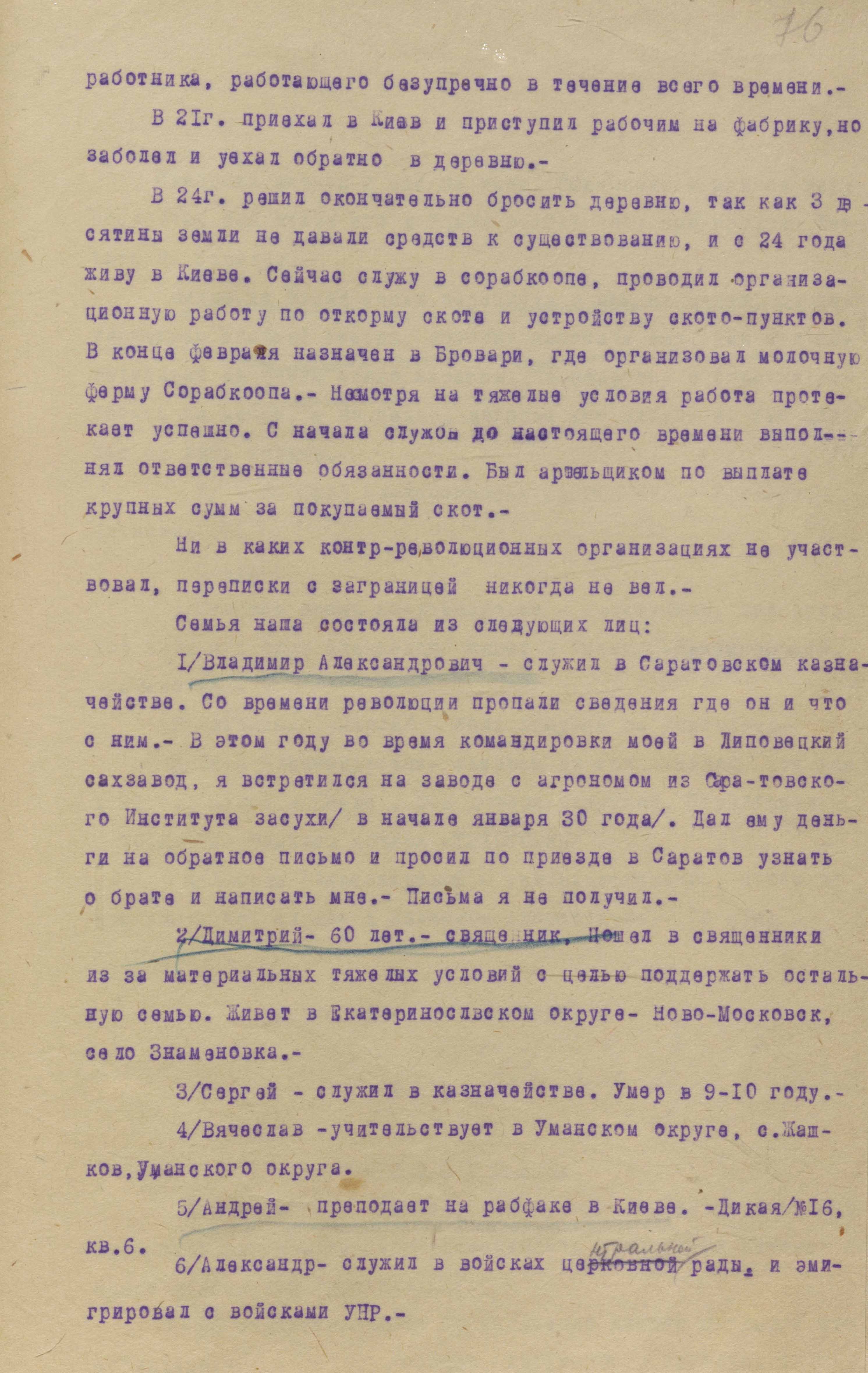
According to declassified documents, that was not the only summons to the gpu. The case file contains Yurii Zahrodskyi’s autobiography, dated April 15, 1931. In it, he described his life, family ties, and contacts with his brother Oleksandr. This information somewhat supplements the general information about the Khorunzhyi General of the Army of the Ukrainian People’s Republic, which is not very abundant in open sources. In particular, Yurii pointed out that his father was a clergyman and died when Yurii was three years old. Four years later, his mother died. His eldest sister, Nona, took care of him. He also had sisters Antonina, Vira, and Liubov, and brothers Volodymyr, Dmytro, Serhii, Viacheslav, Andrii, and Oleksandr. He mentioned the following about Oleksandr:
“I have no information about him. I do not correspond with him. The last time I saw him was in Uman in 1919 during Petliura’s arrival in Ukraine.
No one in our family corresponds with him, except for my older sister, who wrote to him because she is struggling financially...”
(FISU – F.1. – Case 7474. – P. 75–77).
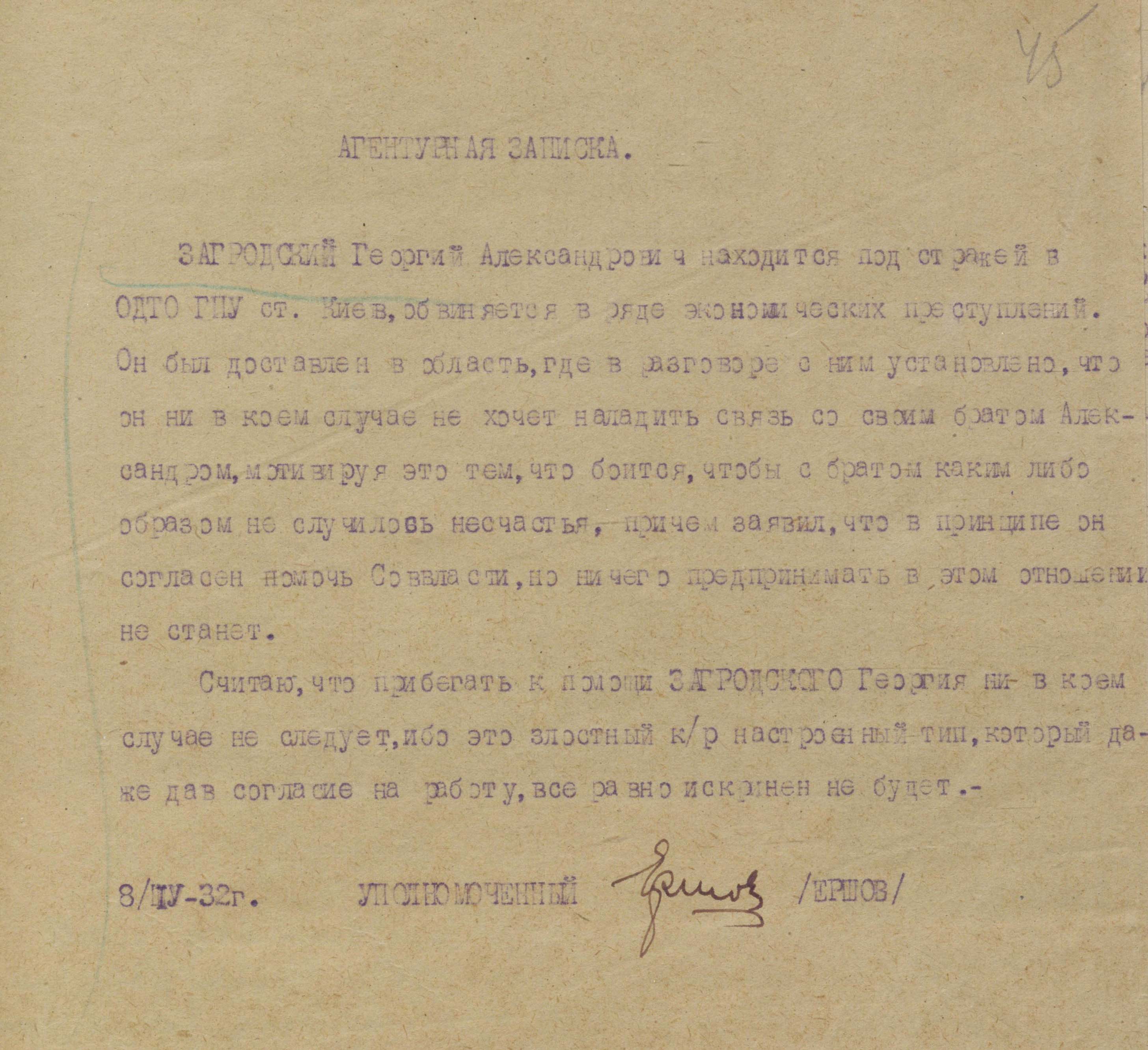
Further cultivation of Yurii did not yield anything encouraging for the chekists. After six months, they realized that he would not write anything under their dictation because he did not want to harm his brother. Therefore, they decided to get rid of him, opened a criminal case against him on charges of allegedly committing some economic crimes, and arrested him. They decided to pressure and blackmail him in this way. One of the reports stated that he was again offered to cooperate and establish contact with his brother. But he did not agree to that.
“He does not want to establish contact with his brother Oleksandr in any way,” the document said. “He explains this by saying that he is afraid that something bad might happen to his brother...”. And in conclusion: “Under no circumstances should Heorhiy Zahrodskyi be sought for assistance, as he is a malicious counterrevolutionary type who, even if he agrees to cooperate, will still not be sincere” (FISU – F.1. – Case 7474. – P. 45).
The chekists were also unsuccessful with sister Nona. The case file states that she was not suitable for work as an agent because she was fanatically religious and, given her circumstances, would not disclose any information about her close relatives.
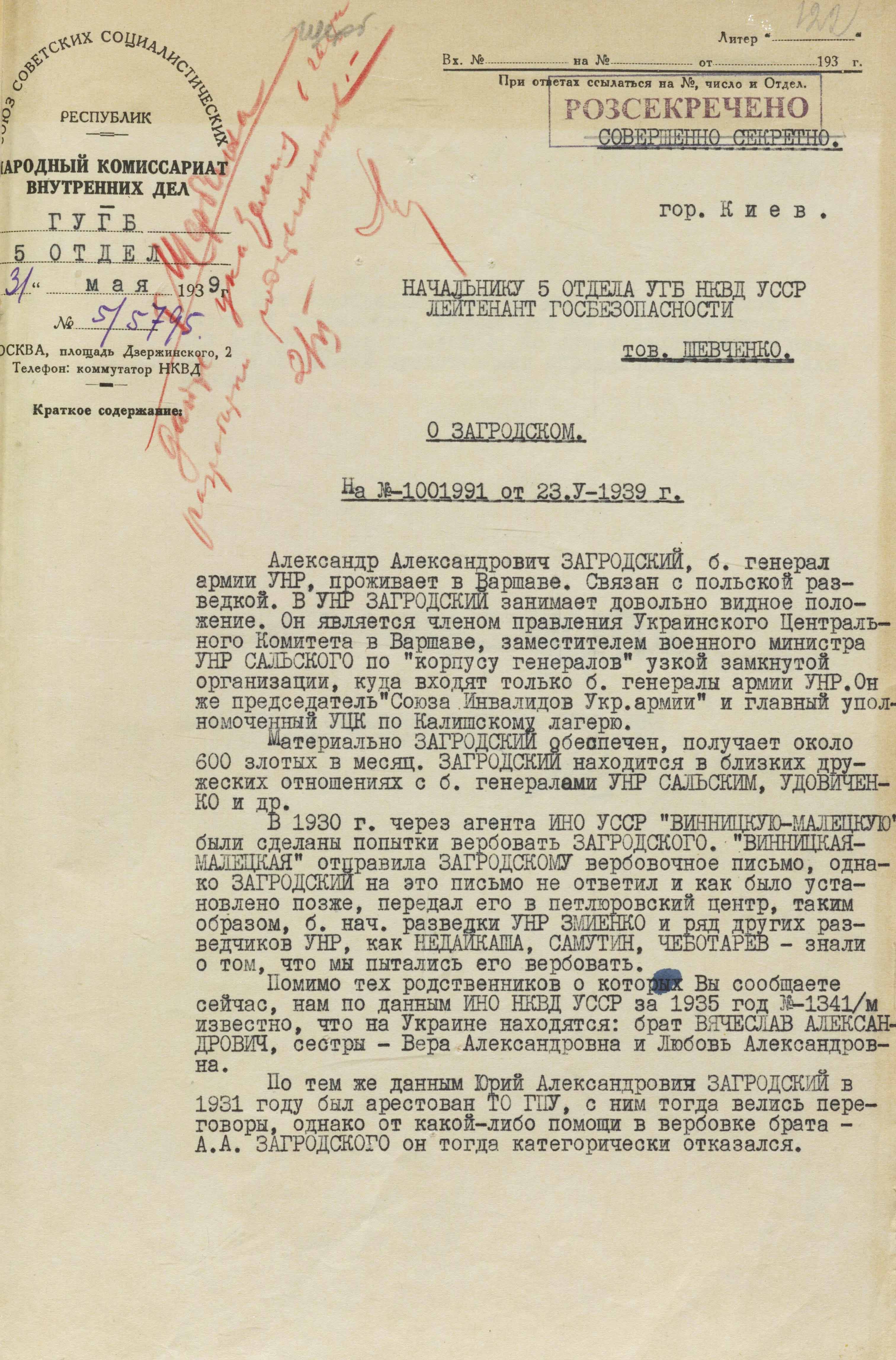
Therefore, the gpu decided to make one last attempt. They sent O. Zahrodskyi a recruitment letter on behalf of an agent of the Foreign Department of the gpu of the Ukrainian ssr, “Vinnytska-Maletska”. However, he did not respond to the letter. Moreover, the chekists found out that he had forwarded it to the State Center of the Ukrainian People’s Republic in exile and that the Chief of the Intelligence Service of the UPR V. Zmiyenko, as well as representatives of the UPRs Intelligence Service V. Nedaykasha, P. Samutin, and M. Chebotariv, learned of the intention to recruit him.
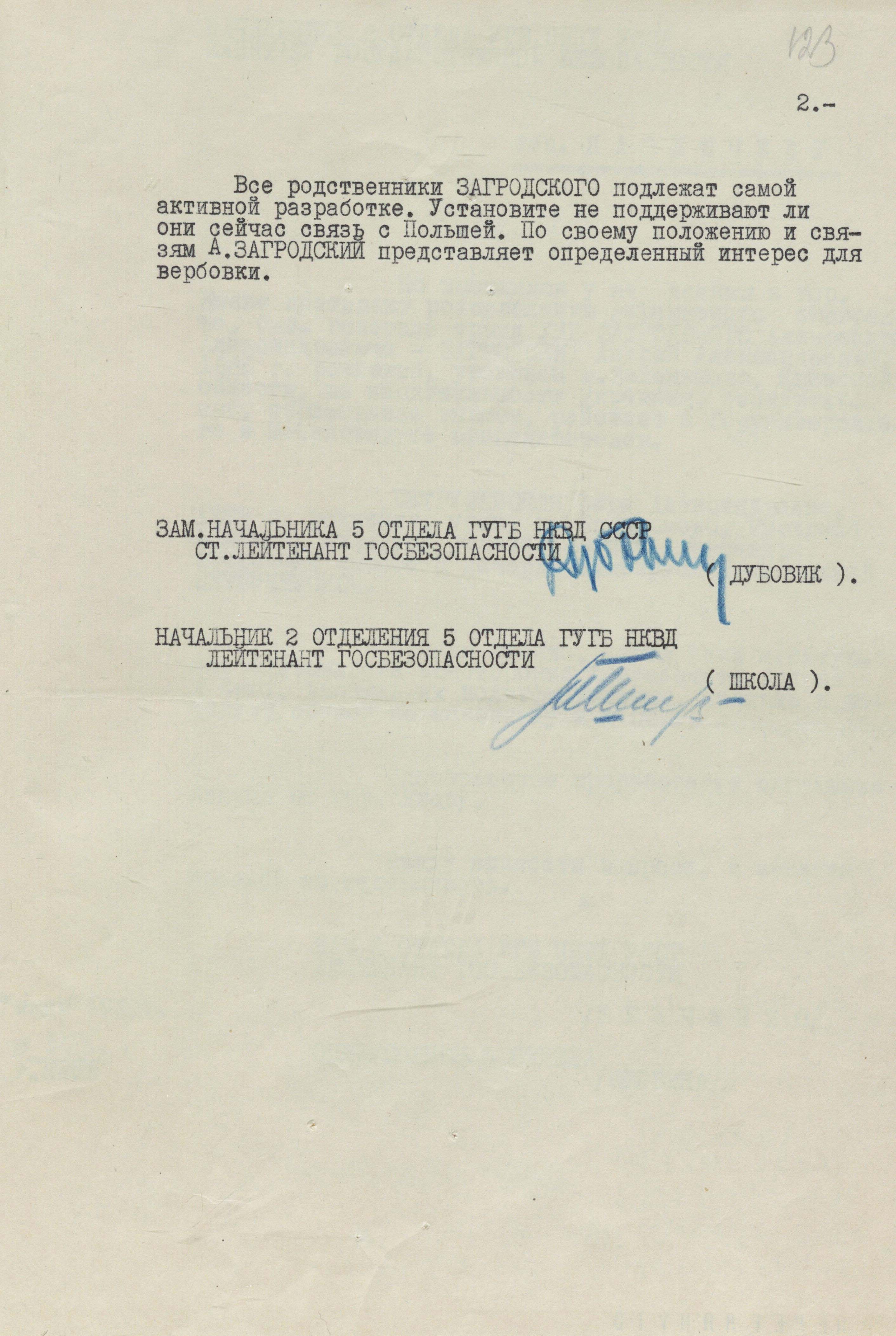
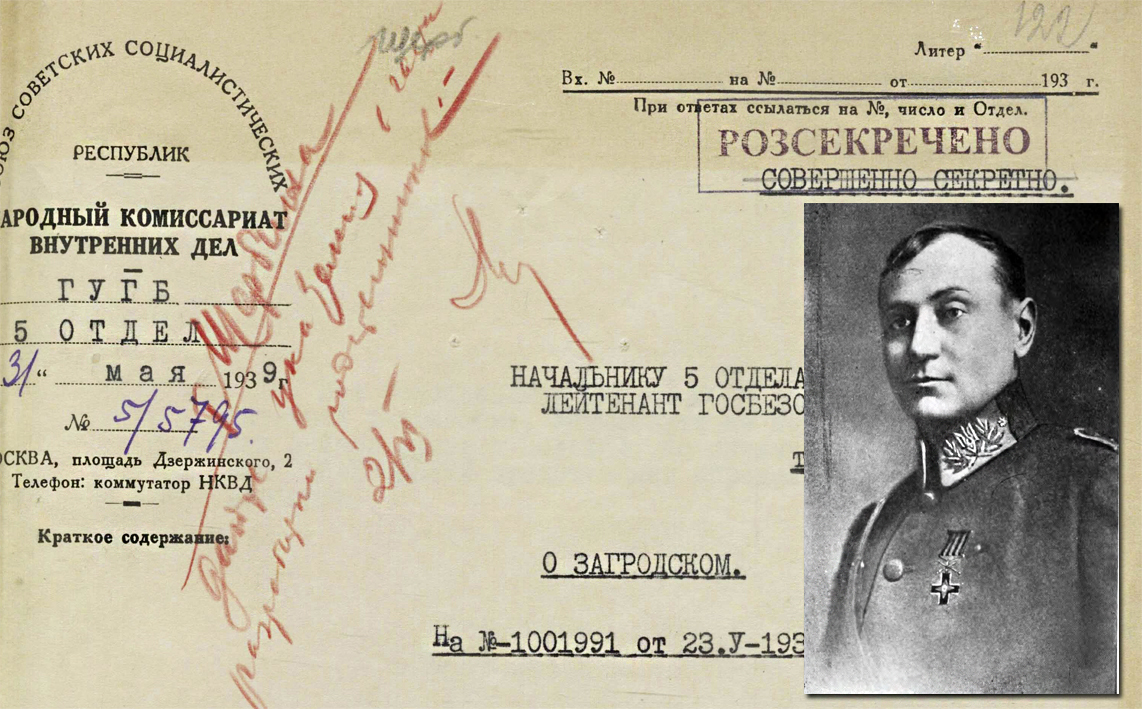
It would seem that this should have been the end of the matter for the gpu. But O. Zahrodskyi was such an important figure for the chekists in every respect that they kept trying again and again. In May 1939, a letter entitled “About Zahrodskyi” arrived in Kyiv from moscow, from the main directorate of state security of the nkvd of the ussr. It stated that he held an important position in the Ukrainian People’s Republic (UPR) in exile, was a member of the board of the Ukrainian Central Committee in Warsaw, and was UPR Minister of Military Affairs V. Salskyi’s Deputy in the “Corps of Generals” – a closed organization allegedly consisting only of former Generals of the UPR Army. “Due to his position and connections, O. Zahrodskyi is of some interest for recruitment,” the letter concluded (FISU. – F.1. – Case 7474. – P. 135–136).
But it never got beyond intentions. In February 1941, a new resolution was issued to open a case against him on the grounds that he was actively engaged in counterrevolutionary work against the ussr abroad. However, World War II prevented further operational cultivation. After the war, O. Zahrodskyi lived in Austria, and in 1949 he moved to the United States. There, he could no longer be reached. Therefore, there is no information in the case file about his residence overseas. He worked as a worker at a factory that manufactured aircraft parts. Soon, his old injuries took their toll, resulting in the amputation of his leg. But this did not affect his work among the Ukrainian émigré community.
On a voluntary basis, he headed an initiative group to create an association of former military servicemen of the Ukrainian People’s Republic Army in America. He was a member of the Ukrainian Congress Committee of America and also participated in the work of other émigré organizations. He did a lot to preserve the memory of the history of the Ukrainian Army and the armed struggle for Ukrainian statehood. In particular, he contributed to the reissue of V. Salskyi’s book “The Ukrainian-moscow War of 1920 in Documents” and O. Dotsenko’s “The Winter Campaign of the Army of the Ukrainian People’s Republic”.
O. Zahrodskyi passed away on August 4, 1968, in New York. He is buried in the Ukrainian Orthodox cemetery in South Bound Brook.