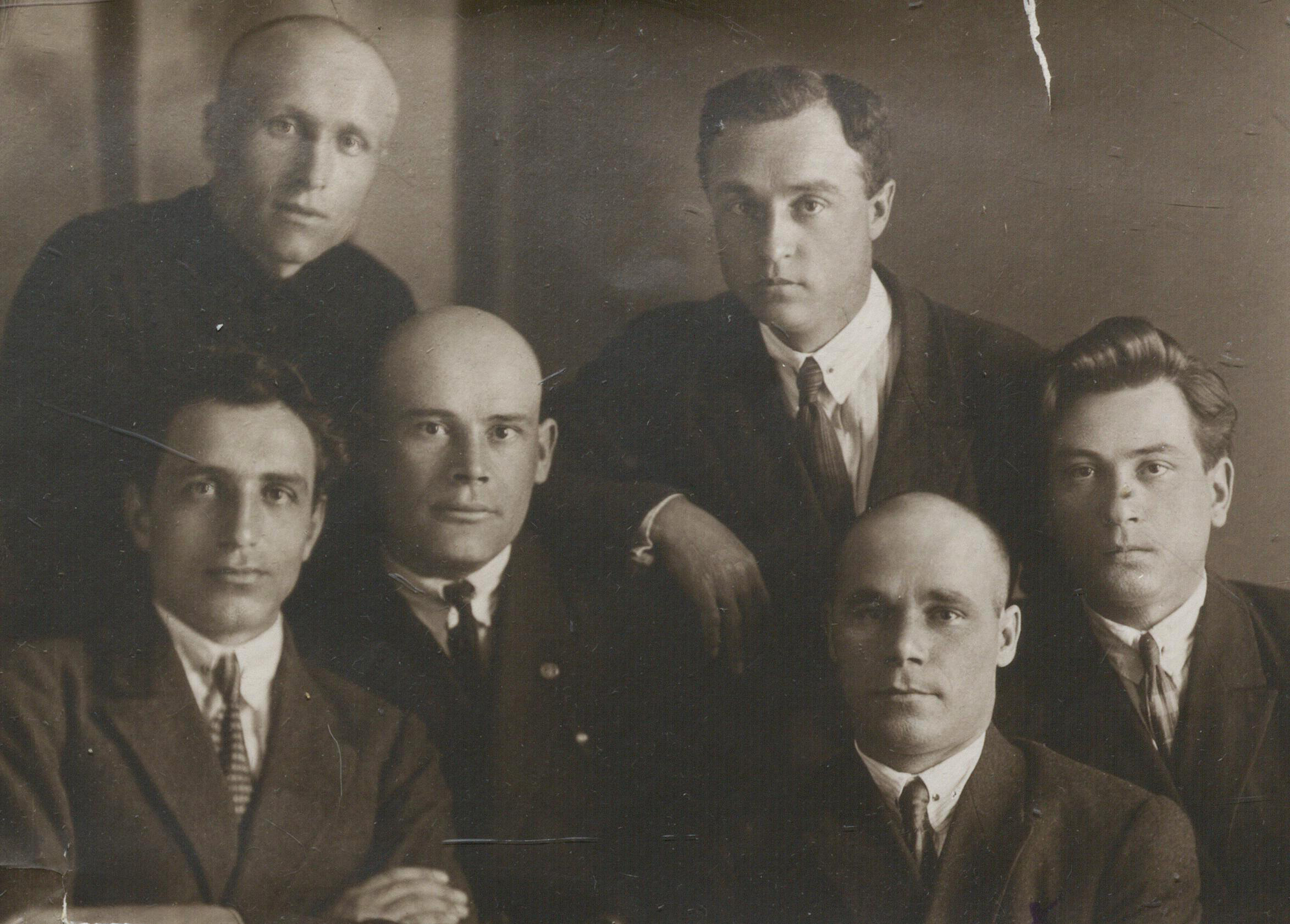
Kindrat Poluvedko. The Arrest in Kharkiv as an Echo of the High-Profile Murder in Rotterdam
5/22/2026
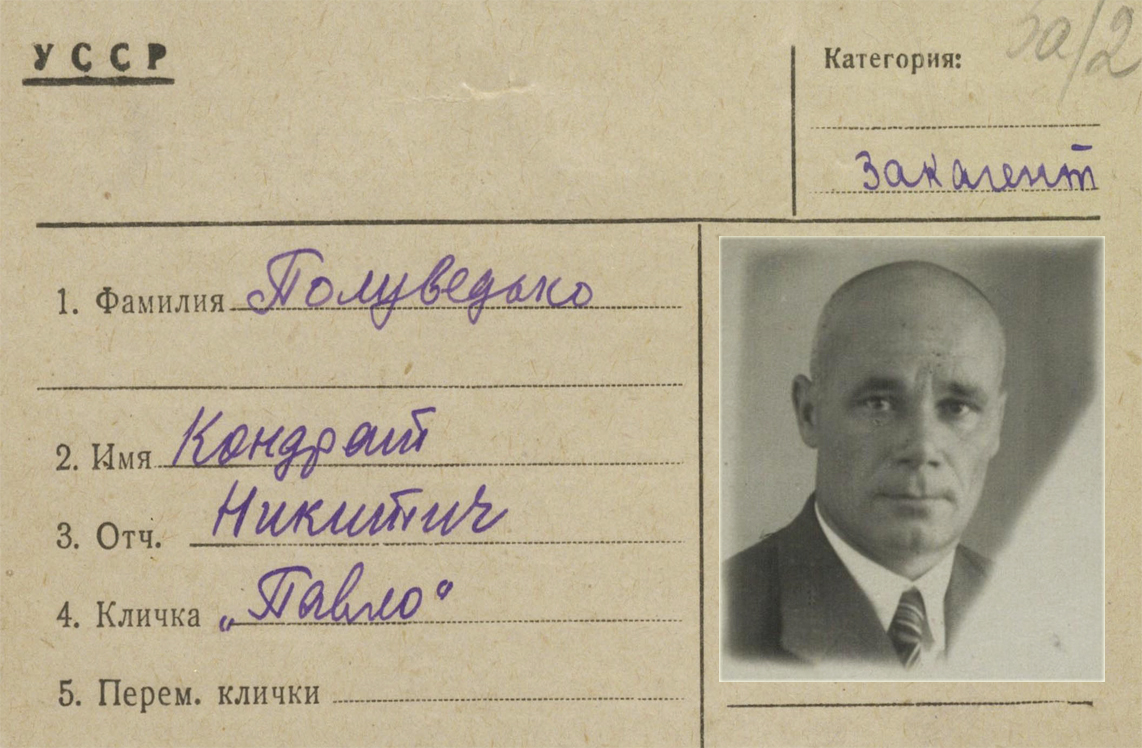
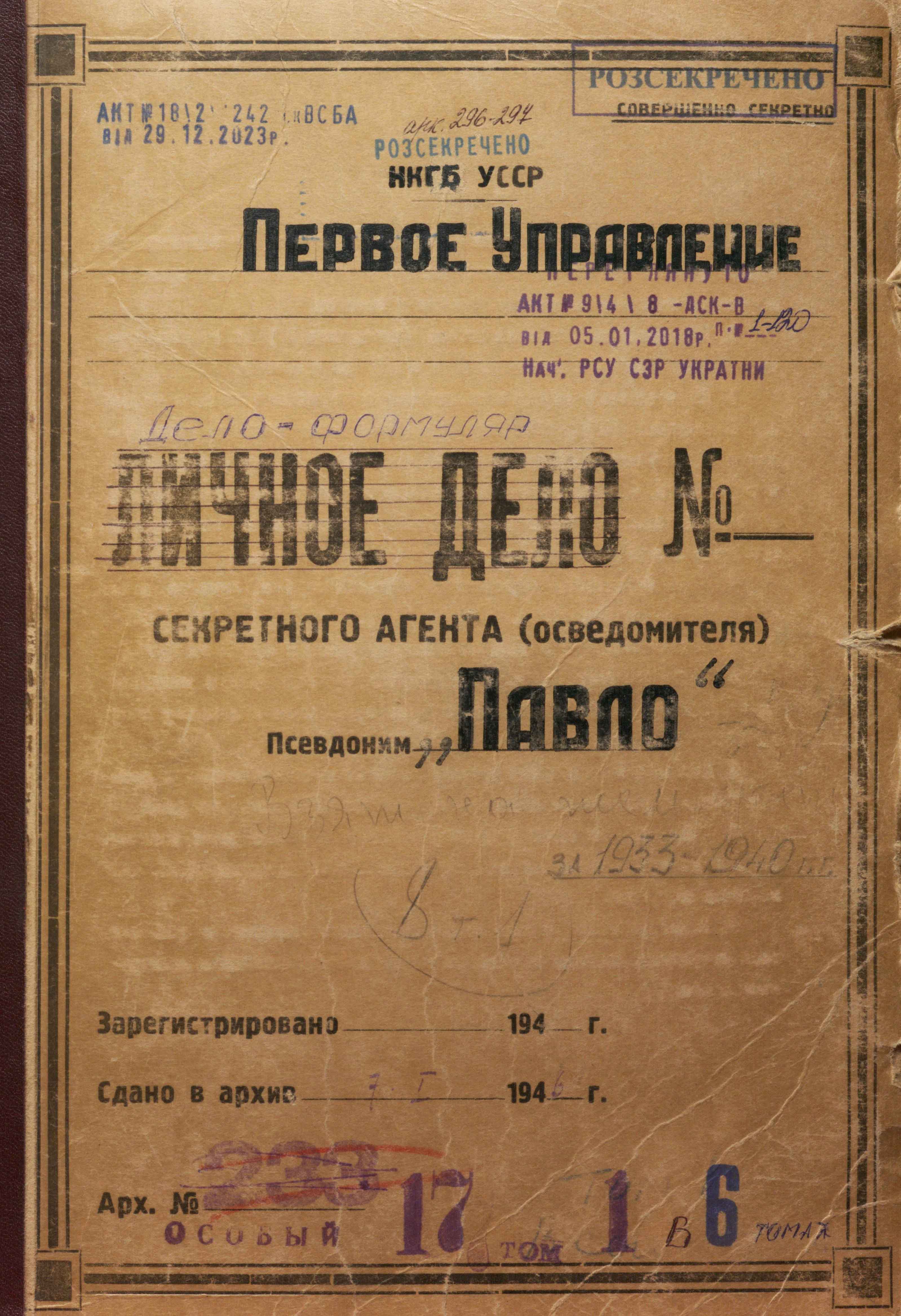
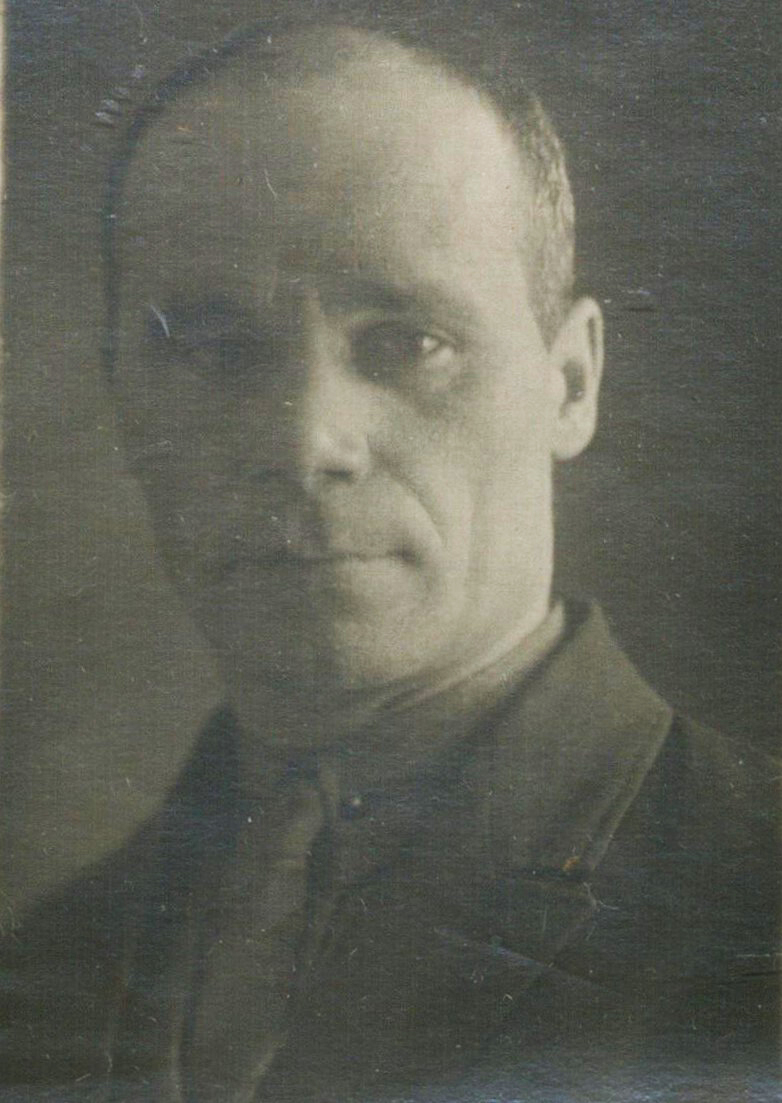
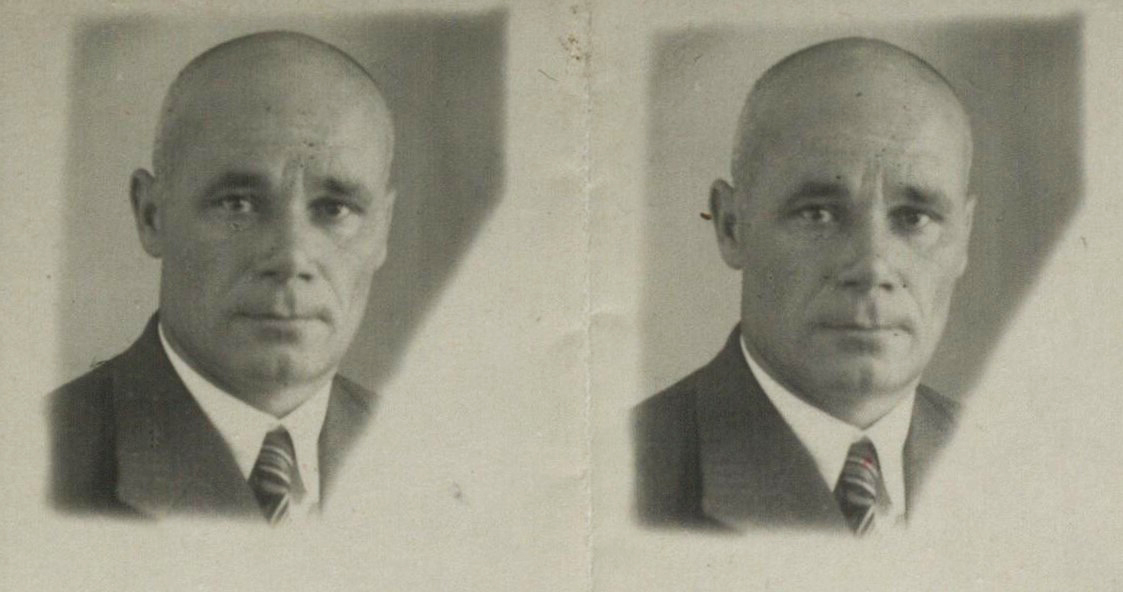
Thanks to declassified documents, earlier it was possible to trace in detail the role of nkvd officer Pavel Sudoplatov and agent “Lebed” (Vasyl Khomyak) in the murder of OUN leader Yevhen Konovalets. The discovery and analysis of the multi-volume “Pavlo” case in the archives of the Foreign Intelligence Service of Ukraine allows us to learn more about the involvement in the “Stavka” special operation of another nkvd agent– Kindrat Poluvedko. Besides, the answers to the question of why exactly the Gestapo arrested him in 1942 are becoming clearer – whether for his active participation in the OUN in occupied Kharkiv or for his involvement in the assassination of Ye. Konovalets on May 23, 1938.
“The solovki Escapee”
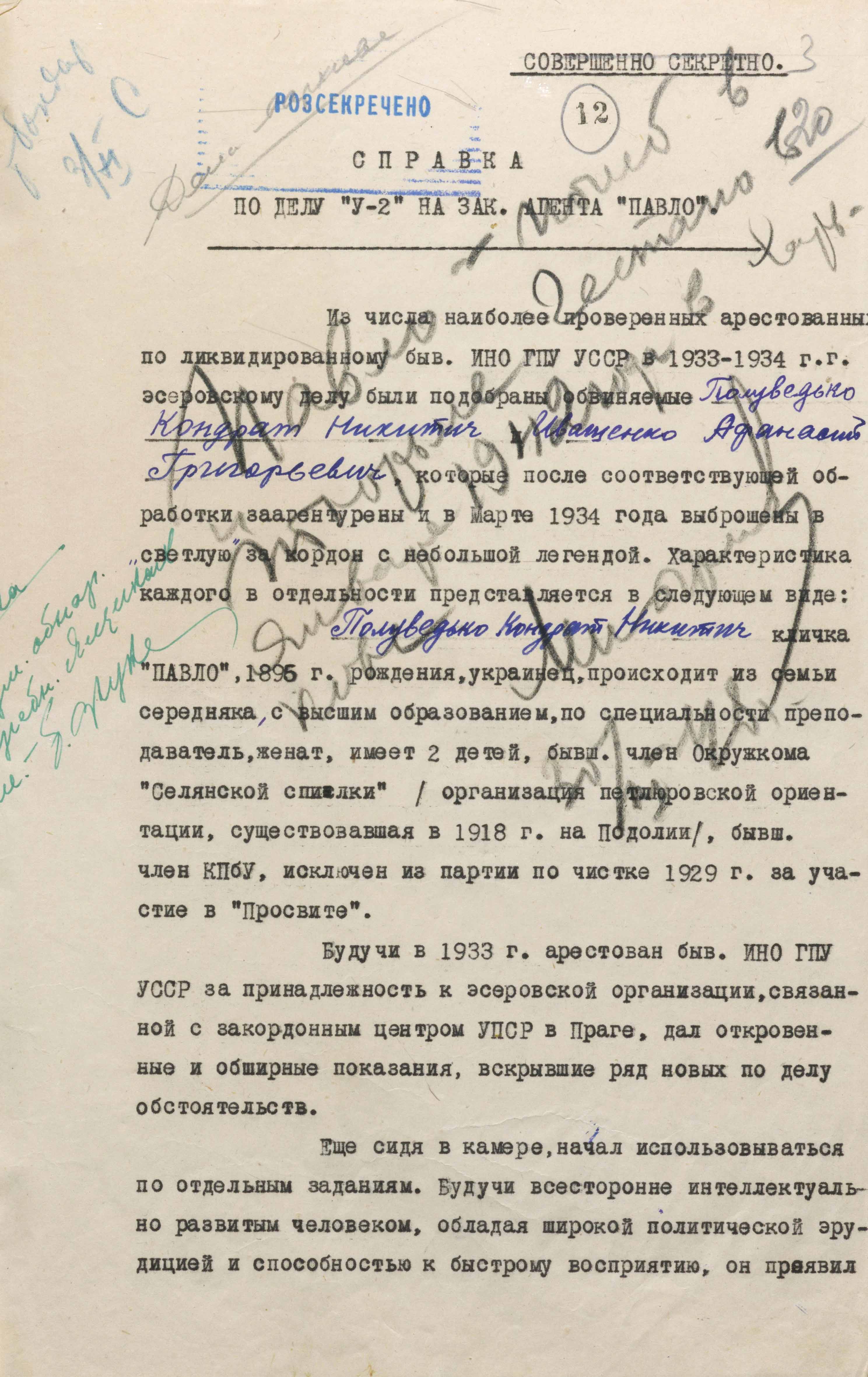
In 1933–1934, the gpu of the Ukrainian ssr exposed and dismantled an underground counterrevolutionary socialist-revolutionary organization in Kharkiv, led by the overseas center of the Ukrainian Party of Socialist-Revolutionaries (UPSR) in Prague. Like many other cases of that time, this one was also fabricated by stalin’s secret services as part of a plan to combat enemies of the people. The chekists arrested a number of individuals who, during the investigation, were forced under psychological pressure and torture to confess to anti-soviet activities and other “crimes”.
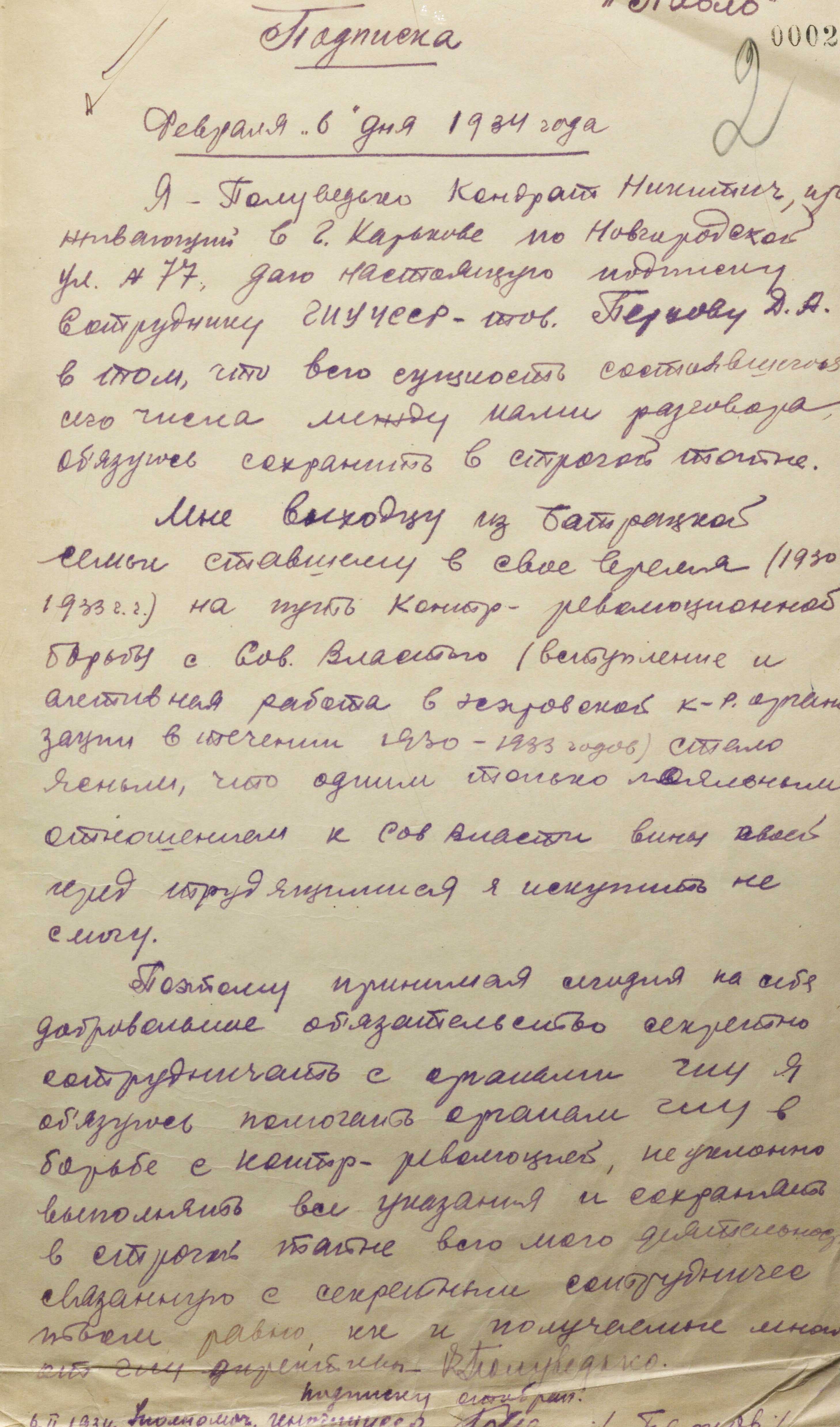
Among those who repented and testified against their colleagues and acquaintances who held nationalist views, the gpu agents singled out Pavlo Mykytovych Poluvedko. According to their observations, he did so apparently of his own free will and without coercion. In this regard, on February 6, 1934, operative of the foreign department of the gpu of the Ukrainian ssr reported the following to his superiors:
“When K. M. Poluvedko was asked, in somewhat general terms, how he thought it would be possible to demonstrate in practice his shift from the counter-revolutionary past to the acceptance of soviet power, he explained that… for him, merely a loyal attitude to the soviet power and a conscientious approach to his work as an educator were not enough…
The further course of his reasoning was such that it was not difficult to conclude that he wished to cooperate with the gpu in order to demonstrate his attitude to the soviet power through practical work in this way.
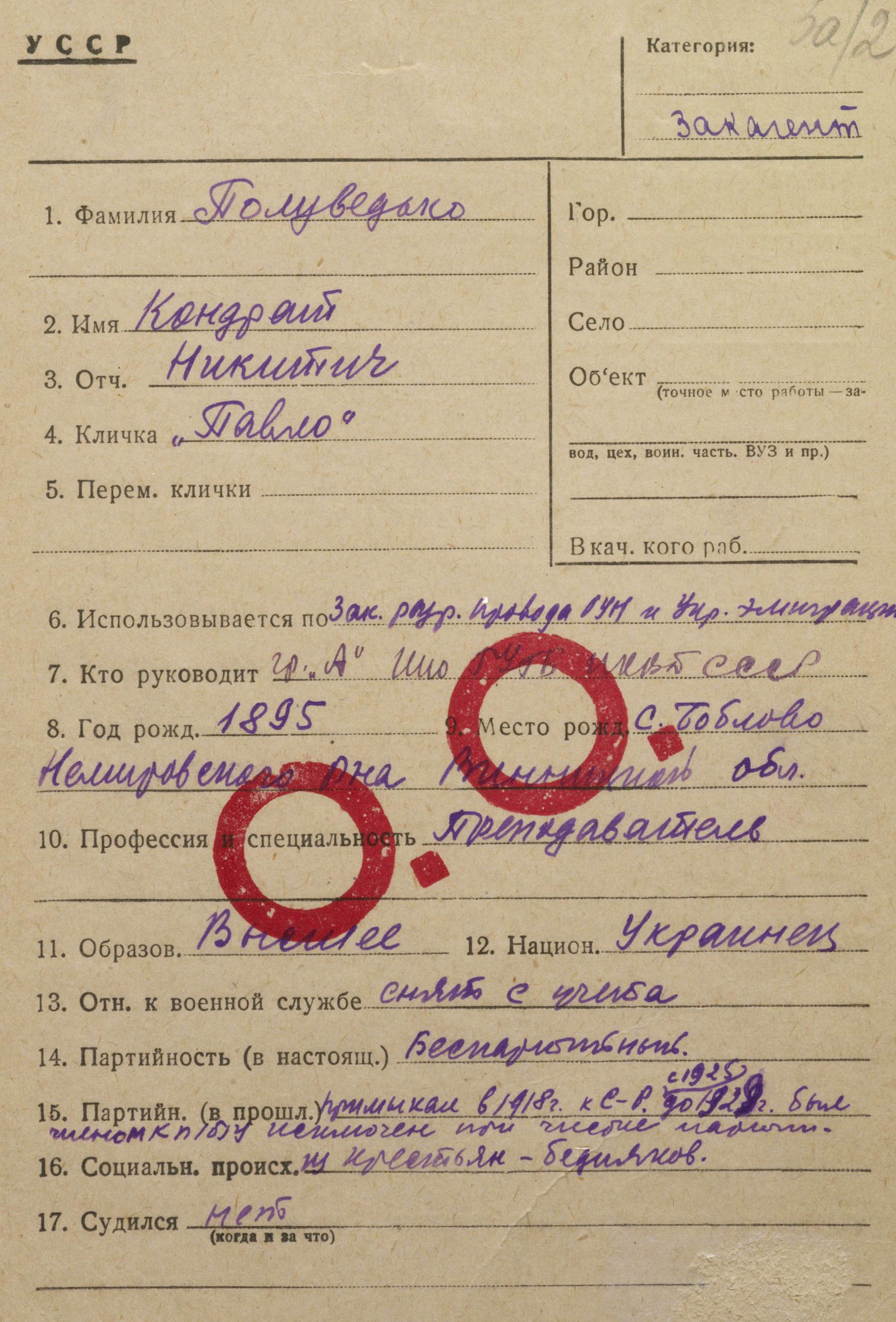
Hence, K. M. Poluvedko was recruited as an agent. He was given the code name ‘Pavlo’”
(FISU. – F. 1. – Case 17. – Vol. 1. – P. 3–4).
At the time of his arrest, K. Poluvedko was working as a teacher of mathematics at the Kharkiv Construction Institute. Prior to that, he had taught in Vinnytsia region, where he was born and raised. In the early 1920s, he joined the bolshevik communist party, but in 1929, as a result of a cleansing within the party, he was expelled as a “foreign element with a hostile ideology”. At that time, he was studying at the Kharkiv Institute of Public Education. He later worked as an inspector for Ukrainization and even as the director of the Karl Marx Courses on Ukrainization – courses that were soon labeled a “nest of sr counterrevolution”.
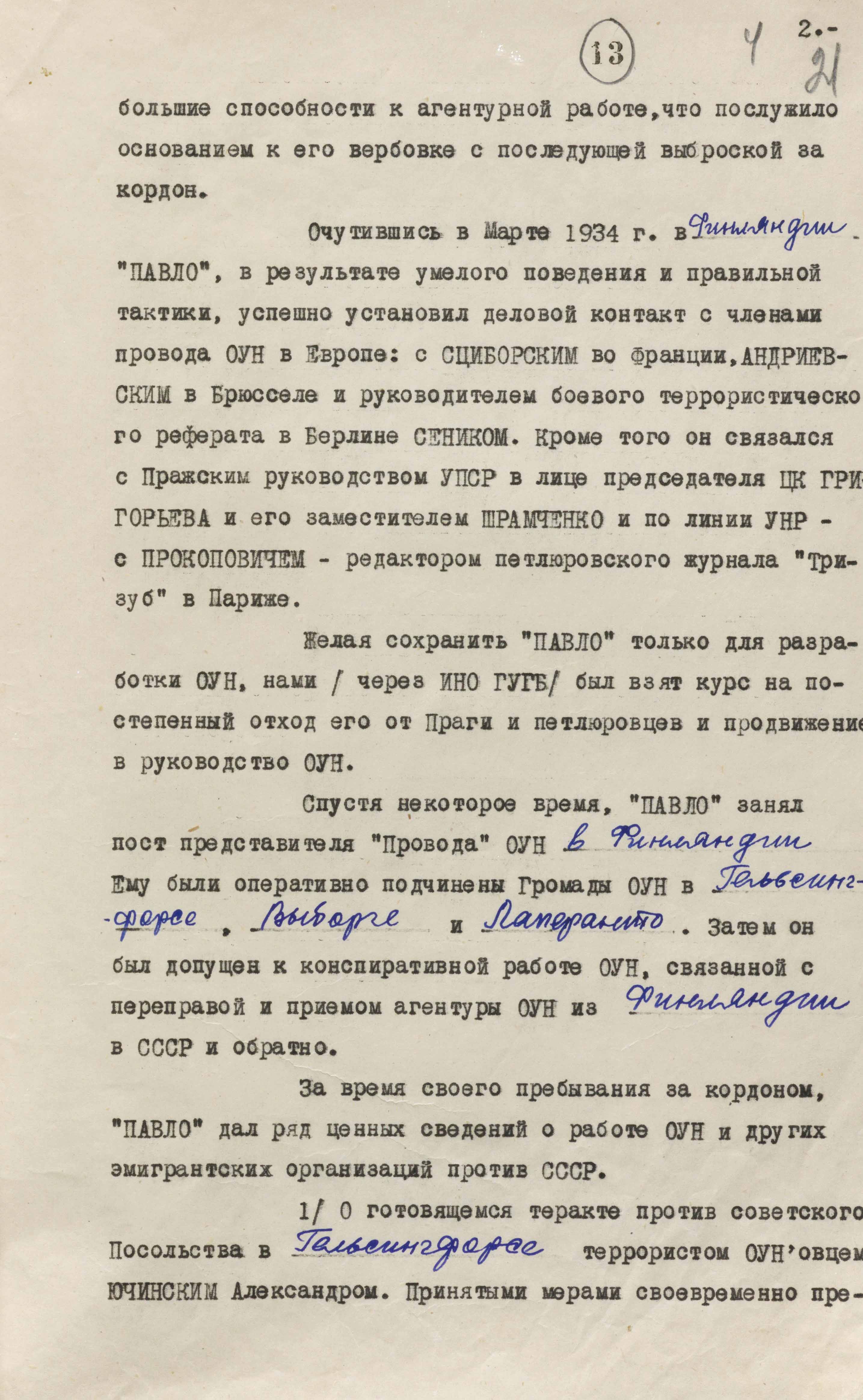
Such a biography of K. Poluvedko fully suited the chekists, who sought to use him as their own agent for the operational cultivation of Ukrainian émigré centers. “Even while he was in a cell”, said one report, “they began to use him for specific tasks. As a well-educated, intellectually developed individual with broad political knowledge and the ability to grasp things quickly, he demonstrated great aptitude for intelligence work, which served as the basis for his recruitment and subsequent transfer abroad” (FISU. – F. 1. – Case 17. – Vol. 6. – P. 3–4).
The idea of sending him abroad took shape after they found, among the former members of the socialist-revolutionary party who had been convicted of counterrevolutionary activities, a man with good ties in the émigré community – Afanasiy Ivashchenko, a native of Kharkiv. He served as a Poruchnyk in the Army of the Ukrainian People’s Republic, emigrated first to Poland, and then settled in Czechoslovakia, where his brother lived. In 1929, A. Ivashchenko decided to return to his homeland, was arrested as an emissary of the foreign center of the UPSR and sentenced to five years of exile. On the orders of the gpu of the Ukrainian ssr, he was tracked down and brought to Kharkiv.
After several conversations with the chekists, A. Ivashchenko became an agent under the code name “Vchytel” (“Teacher”) and agreed to introduce his “party comrade” P. Poluvedko into the circle of leading figures of the UPSR foreign center in Prague. To get him out of the country, they devised a suitable “legend”. Since the investigation into P. Poluvedko’s case was over, and he was also facing five years of exile in remote regions of the ussr, they staged a scene in front of his friends and colleagues depicting his departure to serve his sentence. After that, together with “Teacher” they were smuggled across the soviet-Finnish border. In Helsingfors (now Helsinki), they told the “legend” about their having escaped from the solovki camp.
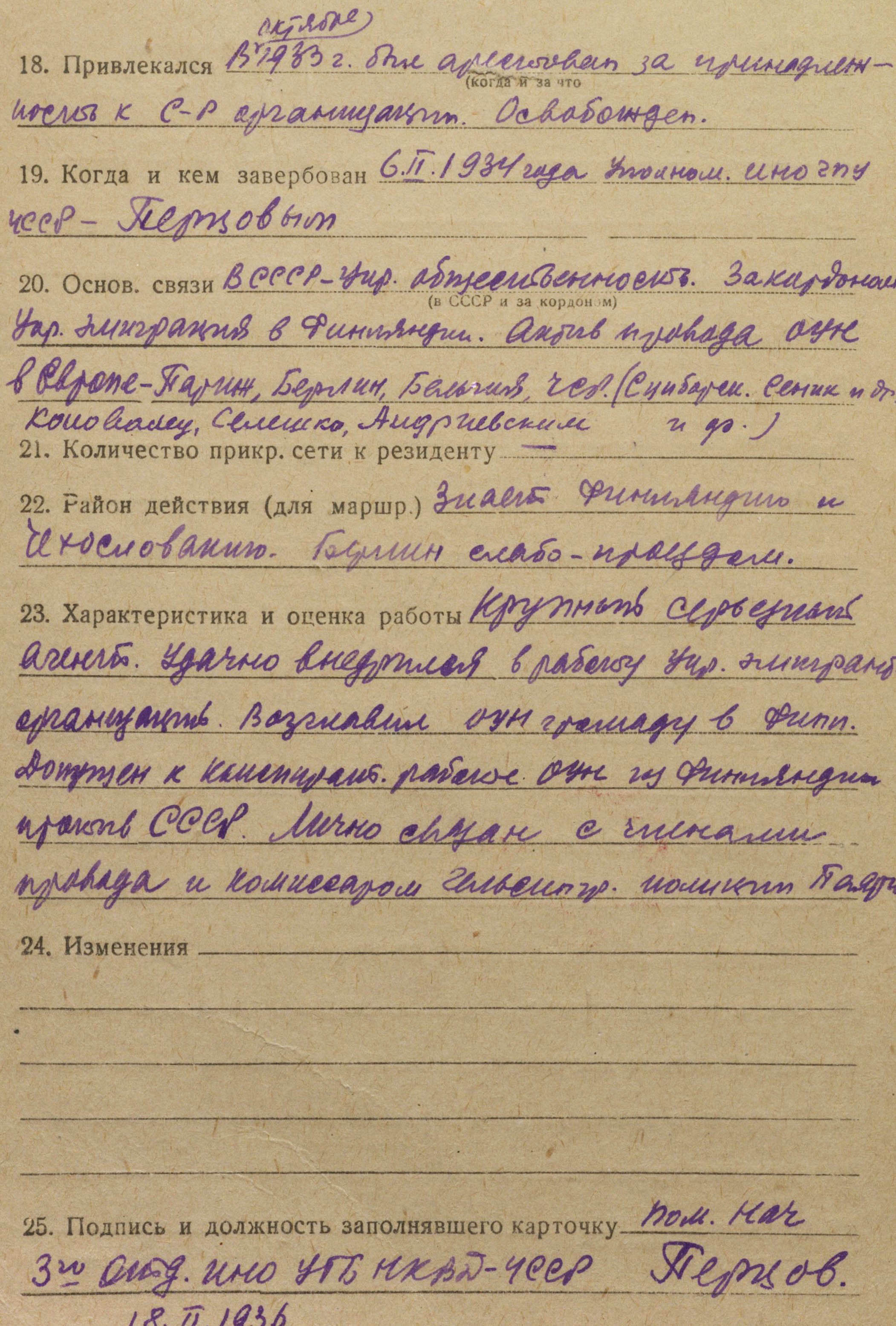
This happened in February 1934. In Finland, K. Poluvedko tried to obtain a Nansen passport through the local Ukrainian community, but his efforts were unsuccessful. Six months later, he traveled to Czechoslovakia. There, “Teacher” helped him settle in and make connections. As noted in archival documents, he fulfilled his cover mission, but he was unable to deeply infiltrate Ukrainian émigré circles. So, a few years later, the chekists sent him back to the ussr, where his family actually remained hostages. But there was another reason for the return – fears that he might reveal who “Pavlo” really was, a man who had managed to accomplish a great deal over the years on the chekists’ orders.
In Prague, K. Poluvedko established good relations with former member of the Ukrainian Central Rada and leader of the Ukrainian community in Czechoslovakia M. Halahan, as well as with the leaders of the Ukrainian Socialist-Revolutionary Party (USRP) and the UPR emigration government, in particular with V. Prokopovych and others. At the same time, representatives of the UPR emigration viewed his appearance abroad and the “legend” of his escape from solovki with caution. The special service of the State Center of the UPR in exile, headed by V. Zmiyenko, conducted an investigation into him.
K. Poluvedko was asked to write an article for the magazine “Hurtuimosia” (“Let’s Unite”– Transl.). To prepare the material, 37 questions were formulated in advance, the answers to each of which would reveal the respondent’s political preferences and more. In addition to biographical questions, there were others – about social consciousness throughout different periods, about why he did not emigrate immediately, and whether he participated in Ukrainian insurgent movements. He was asked to evaluate Shumskyi, Holubovych, Khvylyovyi, Skrypnyk, Hrushevskyi, Tyutyunnyk, Kirov, and other figures, and to describe their views, actions, and the evolution of their worldviews.
A separate set of questions concerned the circumstances of his escape from Ukraine. Specifically, they asked when the idea of fleeing arose and why, how long he had been mulling over the idea, whom he confided in regarding his intentions and why, who helped with the escape, how he crossed the border, and how he traveled from Finland to Czechoslovakia. In addition, he was asked to describe the current state of the national economy, education, and the sentiments of young people and other strata of the population in the Ukrainian ssr. These questions are contained in one of the documents from the national state archives under the heading “Poluvedko”.
No information regarding how the answers to the questions were analyzed could be found in the archives. At the same time, it is known that leading figures in the UPR emigration – V. Salskyi, V. Zmiyenko, and V. Filonovych – expressed the view that caution should be exercised when recruiting individuals such as K. Poluvedko and A. Ivashchenko into their ranks, that such people could be tools in the machinations of bolshevik moscow, and that, if necessary, the bolsheviks could easily buy them off. Evidently, all of this became an obstacle to K. Poluvedko’s deeper infiltration into the ranks of UPR supporters.
At the same time, the OUN’s newspaper “Ukrainske Slovo” published K. Poluvedko’s articles entitled “The soviet Ukraine’s Attitude to Emigration”, “Communism and the National Movement in Ukraine”, and “The Formation of National-State Consciousness in Eastern Ukraine”. They were written in a nationalist spirit and made a positive impression on the leading figures of the OUN Provid, who took notice of them.
The articles were published when K. Poluvedko had returned to Finland in October 1934. Certain suspicions and unresolved issues remained in Prague and Warsaw following his visit. However, the OUN leadership did not inform the Central Provid of the Ukrainian People’s Republic in exile about this. This was hindered by the unhealthy rivalry that was evident at that time in the relations between those centers of Ukrainian emigration. The gpu was aware of the circumstances, so they no longer used K. Poluvedko through the UPR channels but instead focused on promoting him to leadership positions within the OUN.
The Head of the OUN in Finland
In one of his reports to the gpu (which soon changed its name to the nkvd), K. Poluvedko devoted a separate section to the history of the Ukrainian community in Finland. He pointed out that Roman Smal-Stotskyi had joined in its organizational establishment during his visit in 1932. Initially, it had a UPR orientation. It soon fell into decline. Vasyl Baranetskyi revived the community a year and a half later, “reorganizing it along OUN lines”.
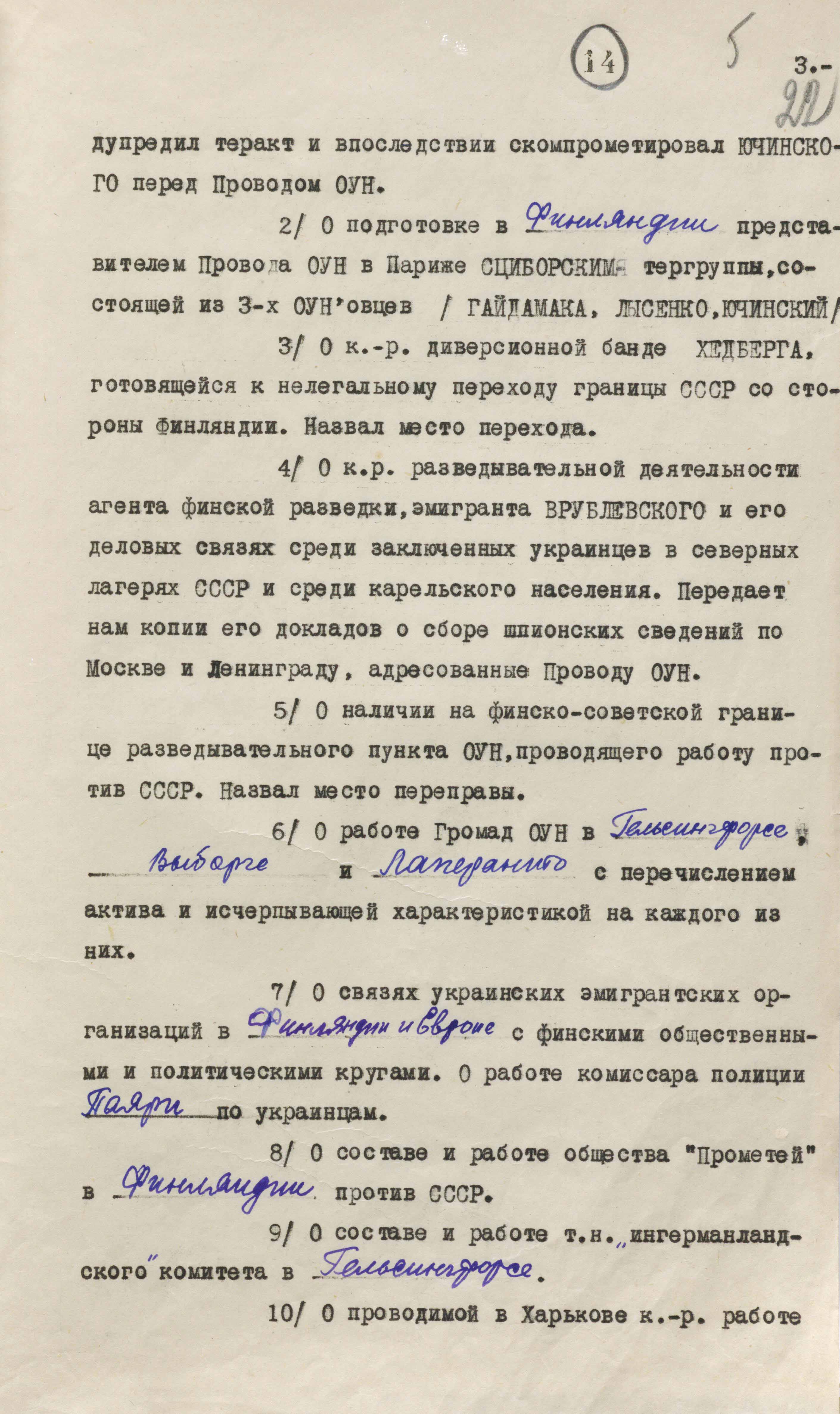
During that period, K. Poluvedko joined the organization and began to show remarkable activity. He was encouraged to do so by representatives of the soviet intelligence residentura. Against the background of the passivity of other members, he stood out considerably. This was noticed by the leaders of the OUN Central Provid – D. Andriyevskyi, M. Stsiborskyi, O. Senyk, M. Seleshko, and others – with whom he began corresponding and soon started direct communication.
As K. Poluvedko pointed out in his report, on March 4, 1935, V. Baranetskyi went to Argentina and handed over “all secret matters of the OUN” to K. Poluvedko. A month later, V. Baranetskyi was killed in Buenos Aires under unexplained circumstances. After that, nkvd agent “Pavlo” became the leader of the OUN centre in Finland. One of the “secret matters” that the chekists had not previously informed him about was connected with Vasyl Khomyak’s appearance abroad. In OUN circles, he was given the pseudonym “Naidenko”. In the nkvd, his code names were “Lebed” and “82”.
The chekists smuggled V. Khomyak abroad in August 1933, also posing as a refugee from soviet Ukraine. He was tasked with infiltrating the OUN Provid, specifically the inner circle of Yevhen Konovalets, with whom he was well acquainted from the liberation struggle. Regarding this “refugee”, K. Poluvedko wrote in his report that V. Baranetskyi had organized the first illegal crossings of the soviet-Finnish border in secret from everyone, including him. But he allegedly already suspected everything at that time, and in July 1935, he himself joined in carrying out such operations.
At that time, V. Khomyak arrived in Finland with staff member of the nkvd’s central apparatus P. Sudoplatov. In his letters to Ye. Konovalets, he wrote that he had recruited a distant relative – whom he had known for a long time – to work in the underground, had educated him in a nationalist spirit, and believed that the young man would become a useful fighter for the cause of Ukraine’s independence. For six months, P. Sudoplatov shared the flat in Helsingfors with K. Poluvedko. But the chekists did not reveal their true identities to one another. As a result, each reported his “companion” to his superiors as a suspicious individual the attitude to whom had to be serious. At the same time, each had the task of getting as close as possible to Ye. Konovalets.
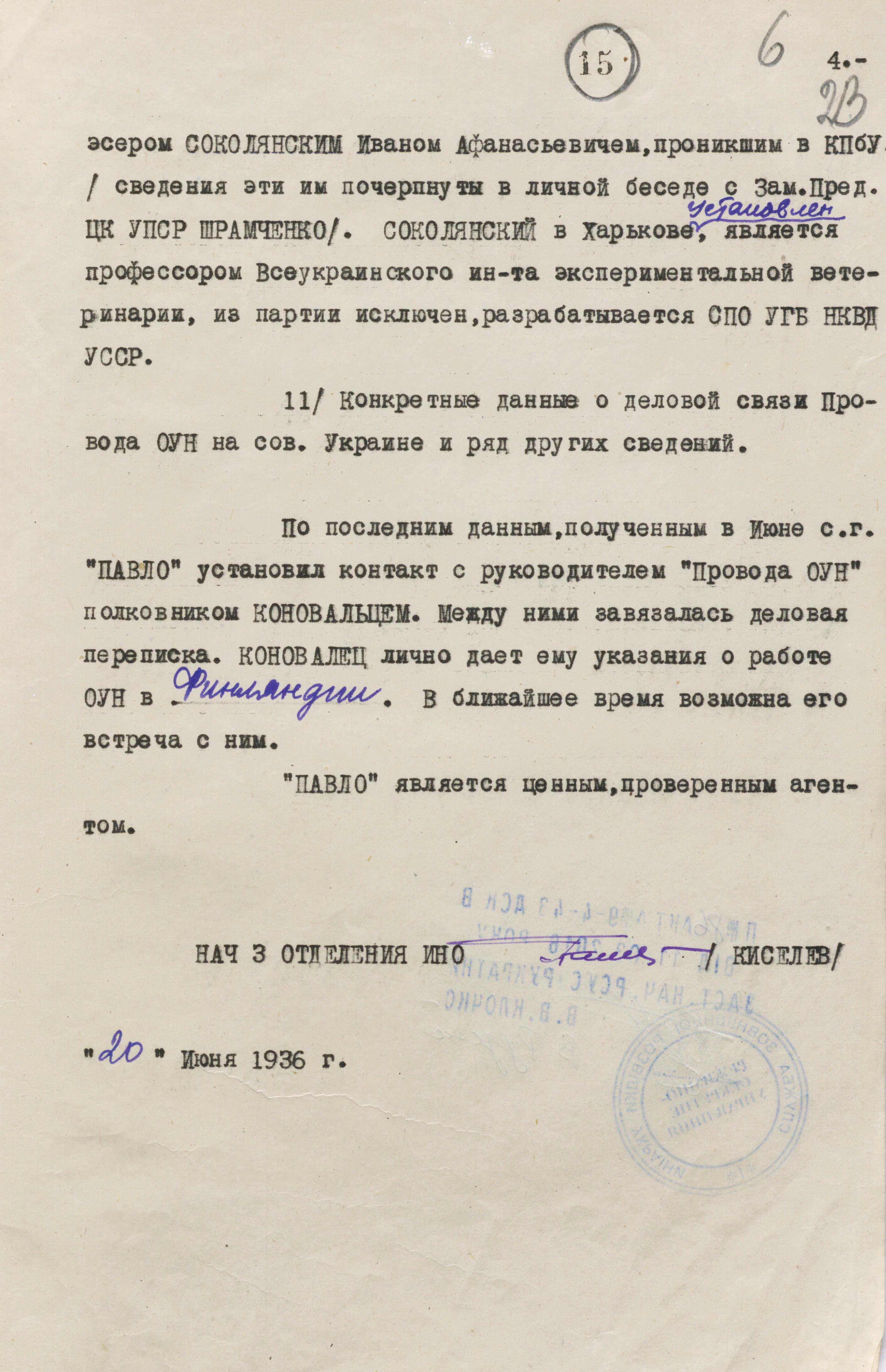
K. Poluvedko established contact with the head of the Provid of Ukrainian Nationalists (PUN) in early 1937. Archival documents indicate that they began corresponding at that time, and soon Ye. Konovalets summoned him to Berlin. “There,” the nkvd report points out, “the source had a series of meetings with Ye. Konovalets and other members of the Provid. As a result of those meetings, the OUN leadership developed a favorable attitude to ‘Pavlo’. He managed to obtain important information from Ye. Konovalets regarding the ‘Stavka’ case. Since the meeting, Ye. Konovalets has personally been giving ‘Pavlo’ instructions regarding the OUN’s work in Finland” (FISU. – F. 1. – Case 17. – Vol. 1. – P. 122–123).
By early 1938, Operation “Stavka” – the intelligence and operational cultivation of Ye. Konovalets – was nearing its final stage. K. Poluvedko played a supporting role in it that, while not the main one, was nonetheless important. He regularly provided the chekists with information about movements of the leader of the OUN, his plans, his moods, and his relationships with the Organization’s leading figures. All of this was taken into consideration when adjusting nkvd measures and making final decisions on what to do with Ye. Konovalets.
K. Poluvedko’s 185-page report on the OUN’s activities abroad, the Organization’s structure, and its current operations – including profiles of key figures – is quite revealing in this regard. In it, he described the situation as it stood in May 1938. At that time, there were substantive discussions about holding an OUN congress in the United States that autumn. The agent pointed out that the Provid of Ukrainian Nationalists and Ye. Konovalets had high expectations for the congress. The plan was to summarize ten years of activity, reaffirm confidence in the Organization’s leader, express gratitude for his work, and thereby cement his status as the “leader of the Ukrainian nation”.
“During my meetings with Konovalets in May 1938,” the report says, “he spoke with great enthusiasm about the congress. I heard from him personally at that time that the congress would represent all of united Ukraine and would be attended by representatives of the Ukrainian ssr, of Ukrainians in Poland, Romania, Czechoslovakia, of Ukrainians in the Far East, in Canada, and the United States. From emigration the Ukrainian ssr was to be represented by Velmut (one of the pseudonyms given by OUN members to P. Sudoplatov– Ed.), whom Konovalets planned to bring from the ussr to the USA at some point, and by me. I was to deliver a report entitled “The OUN and the Comintern” at the congress and be elected to the Provid, serving as “adviser to the leader on Eastern affairs”… After the congress, Konovalets intended to visit the largest OUN organizations in Canada with me, where I was to deliver reports on the situation in the Ukrainian ssr” (FISU. – F. 1. – Case 17. – Vol. 5. – P. 18–19).
Regarding Ye. Konovalets, alongside the negative remarks the agent constantly used to characterize all OUN figures, he pointed out that his significance for the Organization was immense, that as a leader he was irreplaceable, and that no one else had such a “glorious historical name as Konovalets”, and his name had become a kind of banner for the Ukrainian people. “Besides,” wrote K. Poluvedko, “Konovalets has a gift for reconciling activists who are at odds with one another or dissatisfied with the OUN’s ‘line’. In this regard… he possesses a rare talent… All OUN members… are convinced that without him the band could not survive and would fall apart. Miraculously, Konovalets managed to instill among OUN members the belief that he knows every member of the Organization, their personal lives and needs, and that he cares about each. This fosters the loyalty of many OUN members toward him” (FISU. – F. 1. – Case 17. – Vol. 5. – P. 48–49).
At the end of the report, K. Poluvedko concluded that the OUN is dangerous to soviet power and therefore an end should be put to its existence. To this end, he proposed that the nkvd implement a series of measures. Specifically, to discredit the Organization in the eyes of the Ukrainian population in the Ukrainian ssr and among the diaspora, as well as among state institutions and special services in European countries and the United States, which was supposed to lead to a loss of support and means of subsistence. Another step was to sow panic regarding the presence of numerous moscow agents within the OUN ranks, “bring this to a boiling point”, and then, supposedly, nothing would remain of the Organization. And finally– “the surest and quickest means would be a situation in which Konovalets, Hrybivskyi, Yaryi, Baranovskyi, and Dontsov were definitively deprived of influence on the affairs of the OUN” (FISU. – F. 1. – Case 17. – Vol. 5. – P. 184–185).
The nkvd thoroughly studied and analyzed the reports by K. Poluvedko, V. Khomyak, and P. Sudoplatov. Information about the upcoming OUN congress, plans to consolidate the Organization, adopt a new charter, establish a course for the continued struggle for Ukraine’s independence, and further cement Ye. Konovalets’ authority, greatly alarmed the chekists. To thwart these plans, all options proposed by K. Poluvedko were considered. At the same time, the last one was considered the most effective and quickest. By that time, they had already begun to implement it.
Under Pavel Sudoplatov’s Close Supervision
Archival documents contain no information on whether the chekists informed K. Poluvedko of their plans to assassinate Ye. Konovalets. In operation “Stavka,” he was assigned a specific role – to report on everything, to be at the center of events, and to signal any threatening developments. He did indeed report on some issues that posed a risk to the operation. In particular, he recounted to staff at the nkvd residentura in Finland his conversation with Yevhen Konovalets’s secretary, Mykhailo Seleshko. In one of their confidential conversations, Seleshko pointed out that the UPR did not trust P. Sudoplatov “and fully admits that through Pavlo, the Organization came into contact with the gpu.” Pavlo, Pavlus, Valyukh, Velmut – those were the names by which P. Sudoplatov was known abroad.
When K. Poluvedko asked why the Organization was then taking such good care of him and treating him with great attention, M. Seleshko replied: “We are 99 percent certain that Pavlo is a chekist, but there is still one percent chance in his favor. We have great faith in the people who sent Pavlo here… Besides, Konovalets decided, just in case, to remain “attentive” to Pavlo until the very end, so as not to give him any grounds to take revenge on our people “there”, if he really is a chekist. So Pavlo won’t find out what we think of him. On the contrary, we are doing everything so that he has no doubts whatsoever that we trust him completely” (FISU. – F. 1. Case 31. – Vol. 7. – P. 194–195).
K. Poluvedko “took care of” P. Sudoplatov in his own way. When P. Sudoplatov was detained by Finnish border guards during another crossing of the Finnish-soviet border and ended up in prison, K. Poluvedko, through his connections in the local police and special services, secured his swift release and assistance in safely crossing the border again. P. Sudoplatov soon thanked him for this. But this happened only after the assassination of Ye. Konovalets in Rotterdam and the escape of both men to the ussr.
P. Sudoplatov then returned to moscow via several countries, following a route established by the nkvd. According to archival documents, on May 21, 1938, K. Poluvedko was at a Berlin restaurant in the company of Ye. Konovalets, R. Yaryi, and Japanese officials – two generals and two colonels. They discussed the possibility of cooperation and support in the struggle for Ukraine’s independence. K. Poluvedko pointed out in his report that the OUN Leader had invited him to tell the Japanese about the state of affairs in the ussr and the OUN’s strong position in the underground. The local nkvd residentura began closely monitoring the situation surrounding him and, after some time, proposed to the leadership in moscow that measures be taken to bring him back to the ussr.
Did the chekists suspect that K. Poluvedko, among others, had come under suspicion by OUN activists conducting an internal investigation into the circumstances of the murder? No documentary evidence of this has been found. At the same time, in one of the reports dated September 1940, P. Sudoplatov, in a letter from moscow to the head of the nkvd of the Ukrainian ssr, I. Serov, emphasized that K. Poluvedko could no longer be sent abroad, “since the OUN Provid evidently considers him one of the indirect culprits in the death of ‘Zherebtsov’” (FISU. – F. 1. Case 31. – Vol. 1. – P. 335). “Zherebtsov” was the code name of the case file that the nkvd assigned to its main defendant, Ye. Konovalets.
There was another factor that forced the chekists to immediately withdraw the agent from Finland and cover up their mistakes. At that time, K. Poluvedko’s wife was living in Kharkiv with their two daughters under the code name “Nikiforova”. She had also been recruited by the chekists, who gave her a general idea of her husband’s work, arranged correspondence between them, and periodically paid her money.
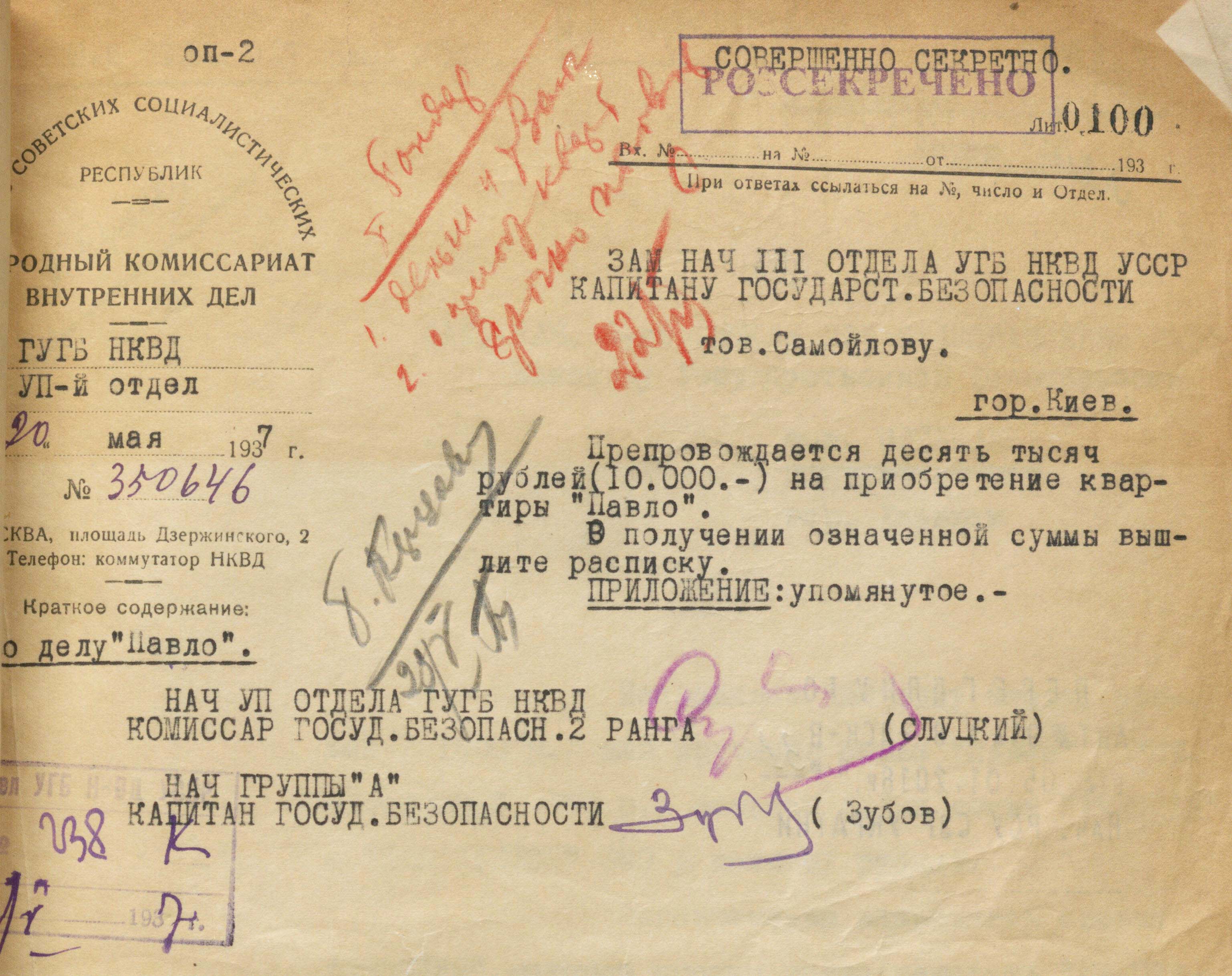
In early 1938, the question arose of improving “Nikiforova”’s living conditions. K. Poluvedko himself had requested this through his handlers. Soon, 10,000 rubles were sent from moscow to Kharkiv to purchase a flat. Employee of the regional nkvd department Ioselevich, who was entrusted with this matter, was unable to find suitable housing for a long time. Eventually, he reached an agreement with Torunev, the head of the administrative and economic department, to have a better new flat allocated to him, while his own flat was registered in “Nikiforova”’s name. This arrangement was quickly carried out. The only problem was that the operative lived in a cooperative building, so the housing management demanded that the new resident join the cooperative and pay a membership fee of 6,500 rubles.
A report containing explanations submitted to the nkvd’s senior leadership details how events unfolded. “It would have been simpler to give this sum to ‘Nikiforova’”, the report noted, “so that she herself could deposit the funds into the housing management office’s account, but instead, comrade Ioselevich, with comrade Torunev, deposited the funds into the housing cooperative’s current account at the state bank, noting in the deposit slip that the money was being deposited by the nkvd regional administration, so now the housing cooperative knows that “Nikiforova” occupies the space previously inhabited by an nkvd employee, and that the share contribution is covered by the regional nkvd administration” (FISU. – F. 1. Case 31. – Vol. 3. – P. 13).
It was a scandal. It was somehow smoothed over; the address slip was removed from the housing office with a note that “Nikiforova” was “the dependent of the husband of nkvd employee Poluvedko”. But the repercussions of this extraordinary event would be felt in the future.
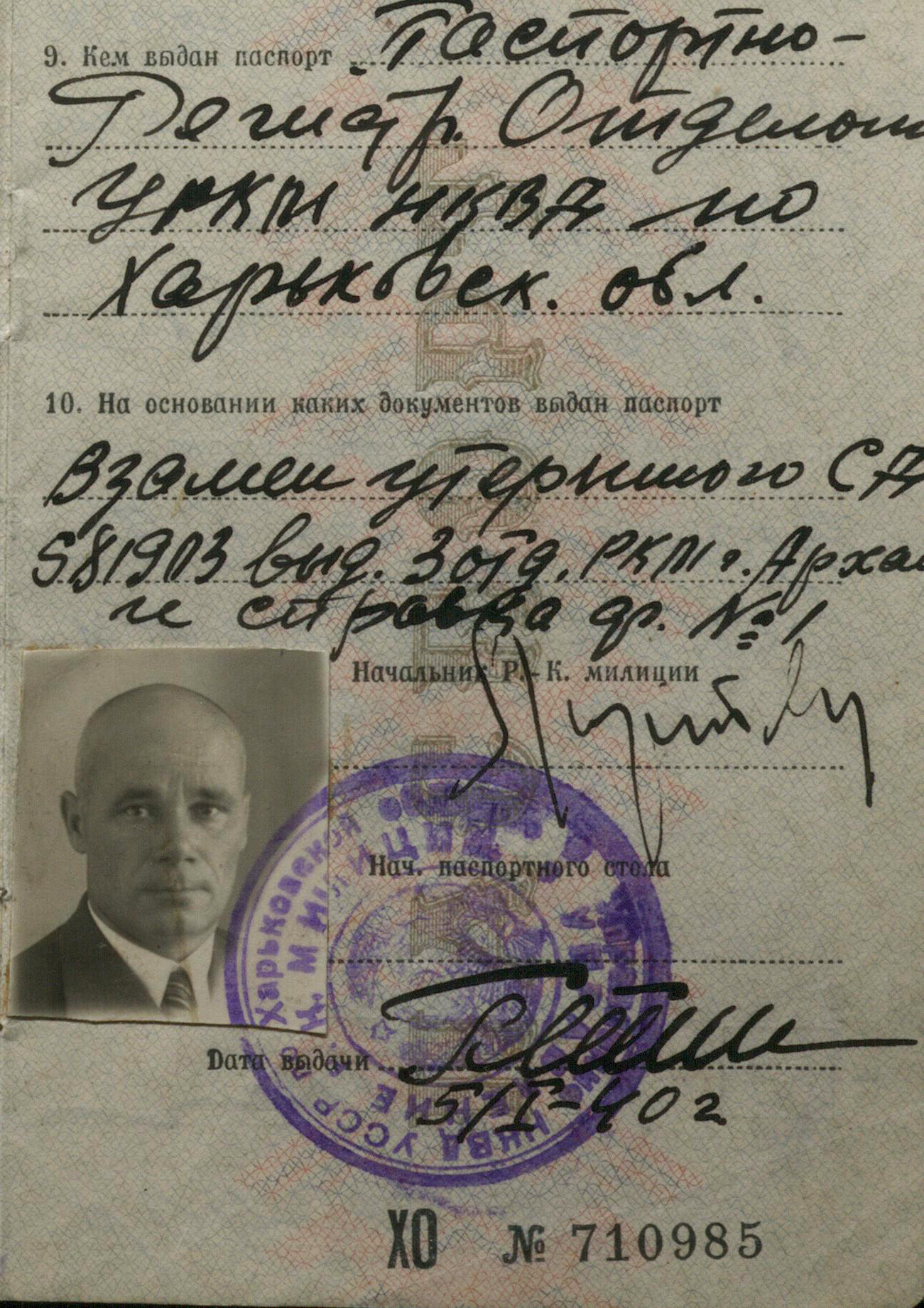
Meanwhile, K. Poluvedko returned to Kharkiv and in October 1938 moved into the flat, which in a sense could be viewed as a reward for carrying out the nkvd’s assignments abroad. P. Sudoplatov, already in the rank of acting head of the 5th (intelligence) department of the nkvd of the ussr, wrote a letter to the head of the Kharkiv regional directorate requesting that he “be placed in a job, provided with good working conditions, treated with care and consideration, and assigned a qualified supervisor”. So, he was soon hired as a teacher of the German language at the agricultural institute, and each month he received additional 300–400 rubles from the nkvd on top of his salary. He explained his prolonged absence to neighbors and acquaintances by saying that he had served a five-year term of administrative exile, notably in Arkhangelsk and Irkutsk, and had since returned home.
Another participant in Operation “Stavka”, V. Khomyak (agent “Lebed”), was rewarded with a three-room flat in Kyiv at 11 Shevchenko Boulevard and additional 1,000 rubles for purchasing furniture. His family at that time consisted of three people. The flat’s previous owner was arrested in 1937 and sentenced to execution with the confiscation of all his property for “treason against the motherland”, while his wife, as a family member of the convicted man, was exiled to Kazakhstan for five years. The accomplice in the murder of Ye. Konovalets began to enjoy all that the “enemies of the people” – later rehabilitated – had accumulated during their lives.
P. Sudoplatov never ceased to show concern for both of his charges in the years that followed. K. Poluvedko, as archival documents attest, kept reminding about himself. He was used as an agent for internal operations, but he wanted more. In one of the letters, which he passed over to his curators and asked them to send to the nkvd leadership, he wrote the following:
“Dear comrades.
…I cannot live… without working on the front lines of the struggle against the enemies of my beloved socialist homeland… I desperately want to work, fight, and perform a heroic deed…
That is why, dear comrades, I am turning to you with a very great request: to accept me into your valiant family and assign me to one of the active fronts in the struggle against the enemies”
(FISU. – F. 1. – Case 31. – Vol. 1. – P. 282).
Further in the letter, he pointed out that he would like to work legally within the nkvd system, and if necessary, also illegally abroad. There, he could “undermine the emigration movement, expose its plans and schemes, recruit the necessary individuals from within its ranks – especially among Ukrainian emigrants – and also do useful work in Western Ukraine among the Ukrainian population.”
In a reply from moscow, it was reported that K. Poluvedko could only be used for clandestine work, and his return to the OUN community “remains open pending receipt of full information on how the OUN actually reacts to his ‘disappearance’”.
While everything was being sorted out, it was decided to send K. Poluvedko to Stanislav (now Ivano-Frankivsk) for operational work within OUN circles. There, he was hired as an inspector for the regional department of public education. But something went wrong with the department’s leadership. Moreover, the individuals he was supposed to be investigating allegedly viewed him with suspicion. So, he was sent back to Kharkiv. This continued until the start of the German-Soviet War.
Mysterious Death in a Gestapo Prison
In June 1941, K. Poluvedko was summoned to Kyiv, lodged at the “Palass” Hotel, and began preparations for deployment to the territory occupied by Hitler’s troops. The main idea behind this plan was laid out in a document approved by head of the nkvd of the Ukrainian ssr P. Myeshyk. It set the task of settling in Stanislav region, making contact with the nationalist underground, and later with the OUN Provid, and continuing to “cultivate Ukrainian counterrevolutionary nationalist formations abroad”. At this stage, the agent’s preparation was directly overseen by I. Kudria, an employee of the nkvd of the Ukrainian ssr.
In case of a meeting with OUN figures- K. Poluvedko’s acquaintances, he was to somehow explain his disappearance from Finland. “The purpose of returning to the ussr,” the “legend” pointed out, “is revenge for Konovalets’ death, disillusionment with emigration, and a depressed state resulting from the incident with Konovalets. Besides, back in February and then in May 1938, Konovalets instructed “Pavlo” by all means to contact “Monakh” and, if the opportunity arose, to visit the ussr” (FISU. – F. 1. – Case 31. – Vol. 2. – P. 9–10). “Monakh” was an nkvd agent about whom K. Poluvedko said that he was a loyal OUN member in leningrad.
According to the “legend” that had been devised, K. Poluvedko was supposedly working as a teacher at a school in Chernihiv and, just before the war began, received a voucher for a health resort in Vorokhta. He allegedly set out for Vorokhta on June 21, but because hostilities had broken out, he was unable to reach his destination and instead traveled to Lviv. There, he hoped to meet some of his acquaintances from the OUN and tell them that he had finally managed to “free himself from the bolshevik yoke”.
K. Poluvedko was escorted to Stanislav by an nkvd officer. Upon arrival, the officer provided him with a certain amount of food and left him in a village near the city. Communication methods and passwords had been worked out with the agent, but, as the case files show, no one ever got in touch with him. One document signed by P. Sudoplatov, dated November 1942, mentions the search for his traces in the occupied territories and articles in the press bearing his byline. There is also P. Sudoplatov’s handwritten note, instructing that no one be sent to contact “Pavel” without prior approval.
The chekists continued their search for traces of K. Poluvedko after the liberation of Kharkiv. Information about where he was and what he was doing from June 1941 to early 1942 is partially available in open sources. In particular, the memoirs of Yaroslav Hayvas, a member of the PUN, describe his meeting with K. Poluvedko in Lviv at the start of the war and how O. Senyk and M. Stsiborskyi, who had known him well previously, spoke with him behind closed doors. They questioned K. Poluvedko about the circumstances of his escape from Finland to the ussr. After that conversation, O. Senyk allegedly said that not everything was clear regarding K. Poluvedko, that much needed to be verified, and that they were awaiting confirmation or refutation from Finland of the facts he had cited.
Upon arriving in Zhytomyr, K. Poluvedko, as Y. Hayvas recalled, shared the flat with O. Senyk and M. Stsiborskyi. Before their murder, he told them that he would travel to Vinnytsia and other cities to look for acquaintances. Later, Y. Hayvas, citing O. Olzhych, pointed out that the latter had instructed K. Poluvedko in Kyiv to travel to Kharkiv to organize operations under the supervision of OUN-M expeditionary group member Bohdan Konyk and others.
The archival file contains more information about his time in Kharkiv. It shows that K. Poluvedko was appointed executive secretary of the city council and oversaw all matters: organizing work, selecting and assigning personnel, defining job responsibilities, and regularly delivering speeches at meetings of the local OUN-M branch. According to nkvd agents, he was one of the Organization’s leaders and an active member. It is therefore not surprising that after the Nazi occupation administration began repressions against both factions of the OUN, he was among those arrested in December 1941 (according to other sources, in early 1942).
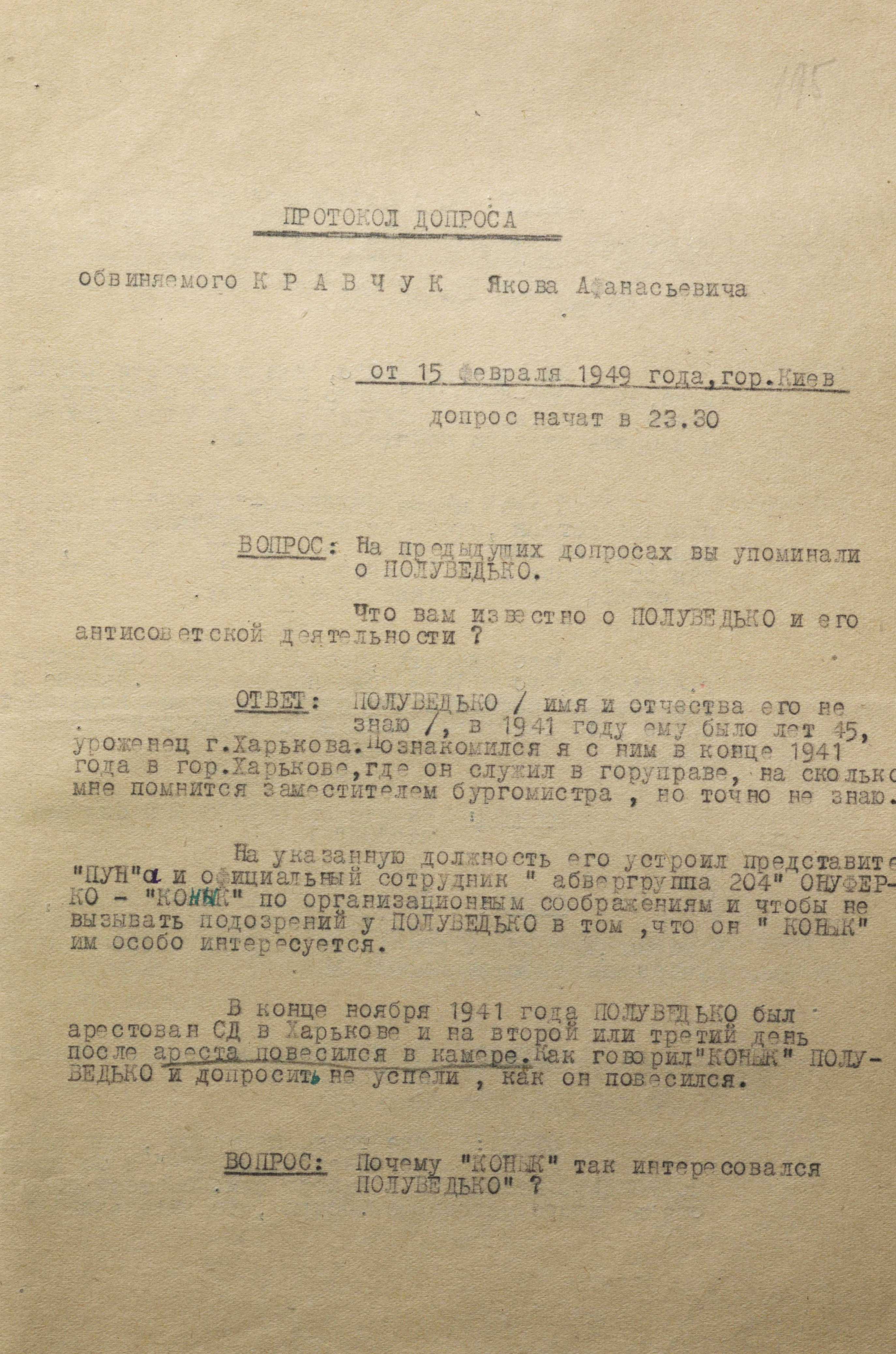
At the same time, declassified archival documents contain materials indicating that K. Poluvedko was accused of more than just active participation in the OUN. Here is an excerpt from the interrogation transcript of Yakiv Kravchuk, accused by the nkvd of the Ukrainian ssr of collaborating with the Nazi occupation authorities:
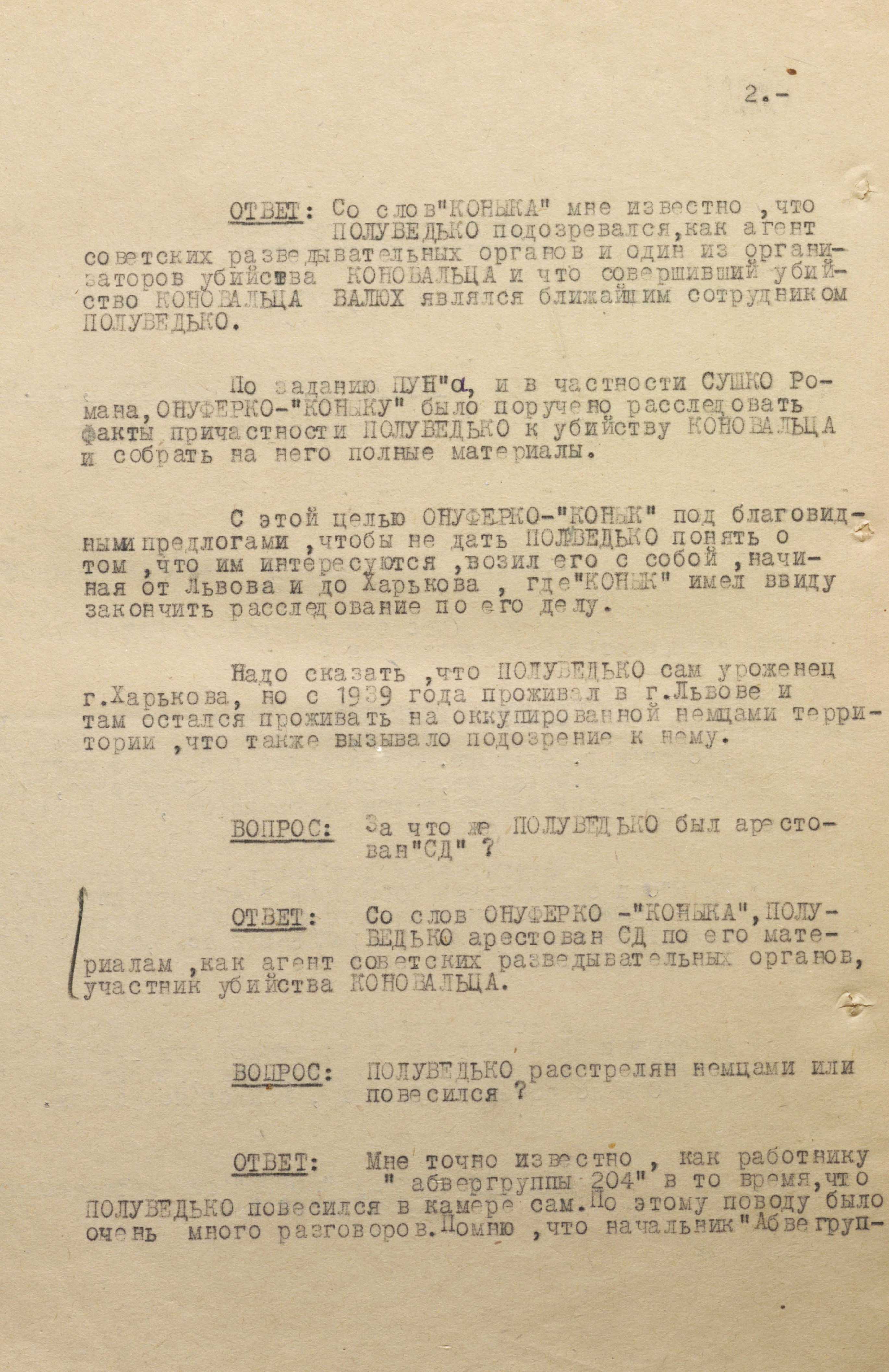
“From what Konyk told me, I know that Poluvedko was suspected of being an agent of soviet intelligence agencies and one of the organizers of Konovalets’ murder, and that Valyukh, who carried out Konovalets’ murder, was Poluvedko’s closest associate.
On the orders of the PUN, specifically Roman Sushko, Onuferko-Konyk was tasked with investigating Poluvedko’s involvement in the murder of Konovalets and compiling a complete dossier on him.
To this end, Onuferko-Konyk, under a plausible pretext so that Poluvedko would not suspect that he was being watched, took him along with him, starting from Lviv and continuing to Kharkiv, where Konyk intended to conclude the investigation regarding the case.”
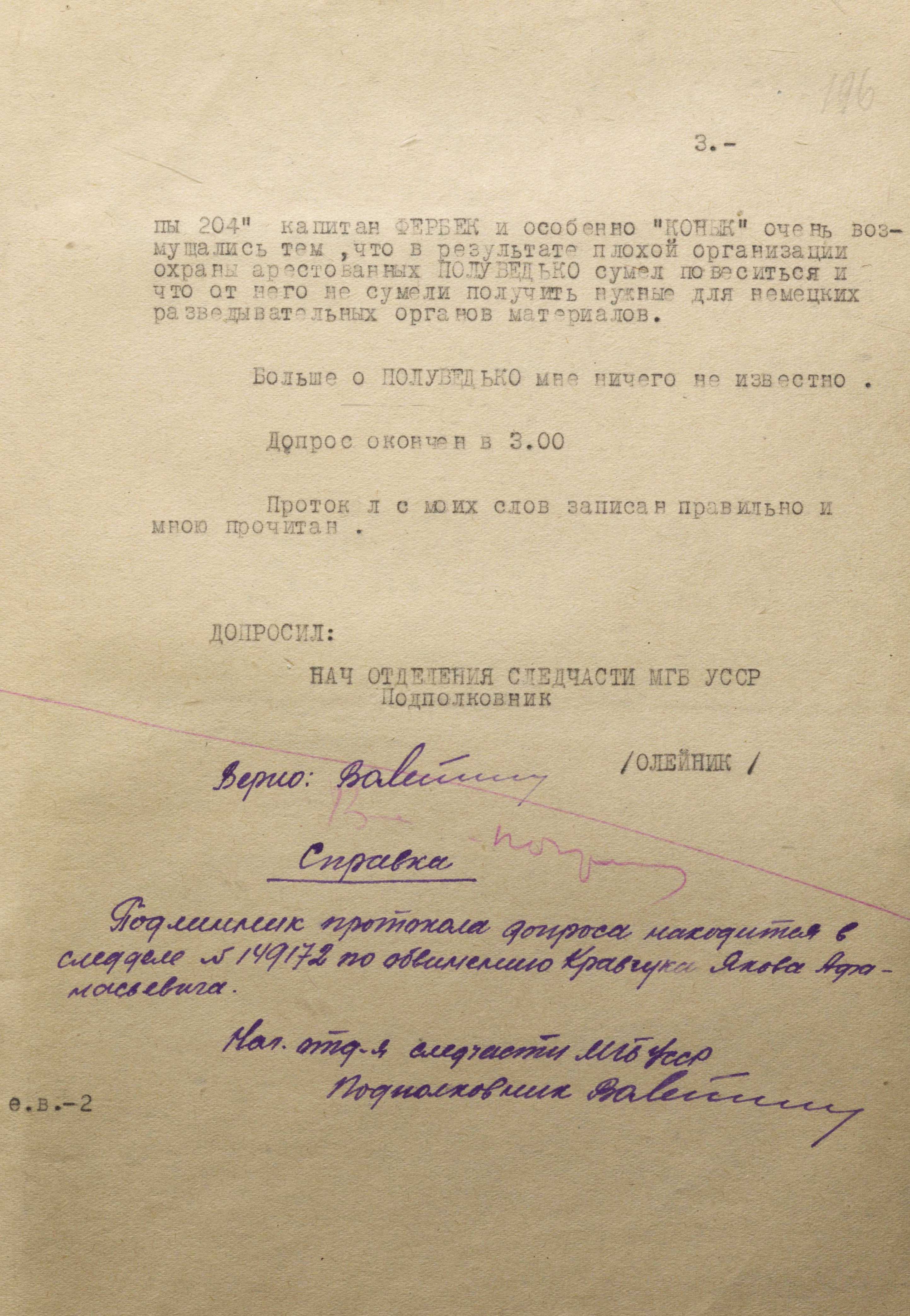
(FISU. – F. 1. – Case 31. – Vol. 3. – P. 195–196).
During interrogation, Ya. Kravchuk stated that K. Poluvedko had been arrested by the Gestapo precisely as an nkvd agent and a participant in the murder of Ye. Konovalets, and that they wanted, among other things, to obtain information from him about the circumstances of that murder. How did they find out about his collaboration with the nkvd? One of the nkvd reports on this matter, dated March 1943, states as follows: “…His arrest gave rise to various rumors. It was said that the Germans had been watching him since Lviv, that his family had been evacuated and was in moscow, and that he was connected to the nkvd. No documentary evidence was found to justify his arrest by the occupiers. Therefore, everything is based on rumors and assumptions. ‘Pavlo’s arrival in Kharkiv was a fatal mistake… The fact is that in 1938, without observing even basic security precautions, a flat was purchased for his family in Kharkiv… He himself spoke of the building’s residents being aware of this”… (FISU. – F. 1. – Case 31. – Vol. 2. – P. 31).
In December 1944, the “Pavlo” case was closed and sent to the archives. The closure order pointed out that K. Poluvedko “was arrested by the Gestapo and shortly thereafter shot dead”. In reality, various documents in the case file stated that he hanged himself in his prison cell on the second or third day of his arrest.
During the soviet period, a brochure entitled “In the Den of Traitors” (“Prapor” Publishing House, 1978) was published in Kharkiv, portraying K. Poluvedko’s life and activities as those of a hero. In it, he is grandly compared to soviet intelligence officers Richard Sorge and Nikolai Kuznetsov. Thanks to declassified documents, it is now possible to clearly see what kind of “intelligence activities” he engaged in abroad, against whom he directed his efforts, whether he did so under duress or of his own free will, whether he acted sincerely or constantly deceived, playing the role assigned to him by the nkvd in accordance with his “legend”.