Liquidation of the Greek Catholic Church in Eastern and Central Europe. The ussr mgb’s Scenario
3/10/2026
Based on declassified documents from the mgb/kgb of the ussr, the Foreign Intelligence Service of Ukraine continues to publish materials on the 80th anniversary of the Lviv pseudo-council (March 8–10, 1946). They provide deeper insight into the stalinist regime’s special operations to liquidate the Ukrainian Greek Catholic Church (UGCC) and absorb it into the russian orthodox church (roc).
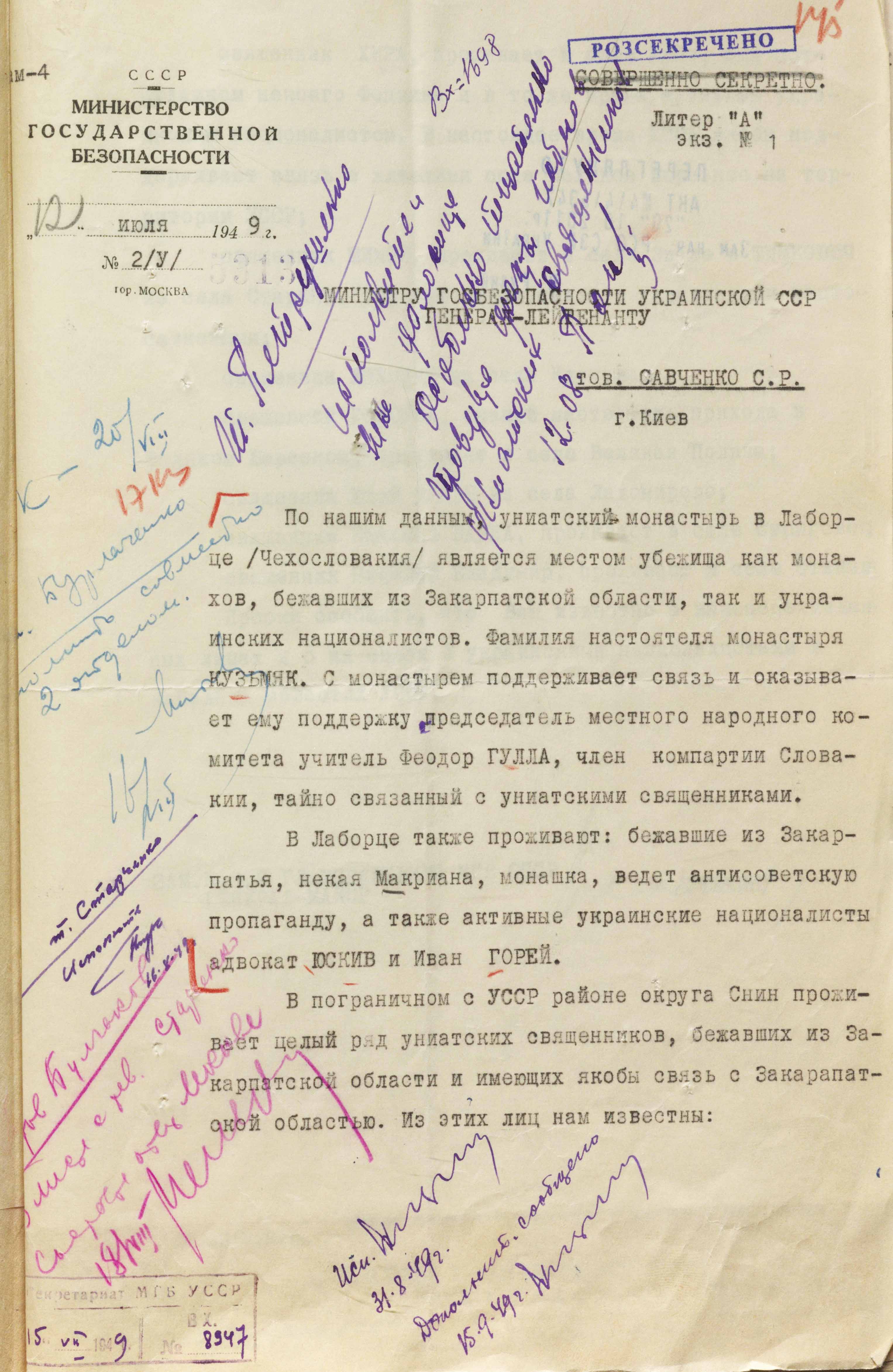
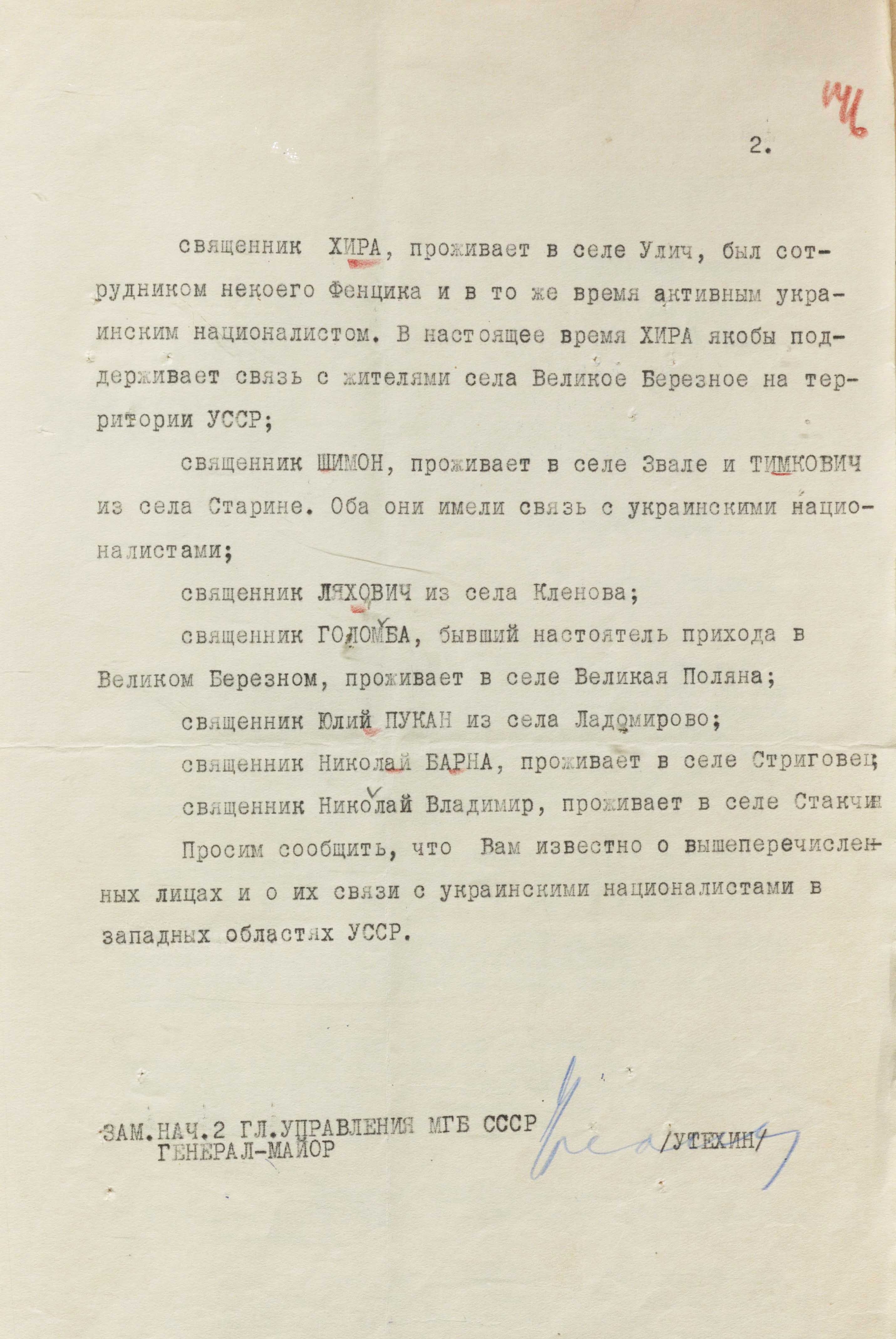
Simultaneously with the liquidation of the Ukrainian Greek Catholic Church in Halychyna and Transcarpathia, the ussr mgb intensified its intelligence activities in Poland, Czechoslovakia, and Romania, where Greek Catholic parishes operated and Ukrainian clergymen found temporary refuge from persecution by the stalinist regime. Declassified documents from the archives of the Foreign Intelligence Service of Ukraine show that the chekists, together with security officials from the then pro-soviet countries of Eastern and Central Europe, were putting pressure on the Ukrainian clergy and faithful, trying to accuse them of links with the UPA and the Ukrainian underground national liberation movement, in order to create an image of the Greek Catholic Church in the diaspora as a hostile or illegal structure and to eliminate it.
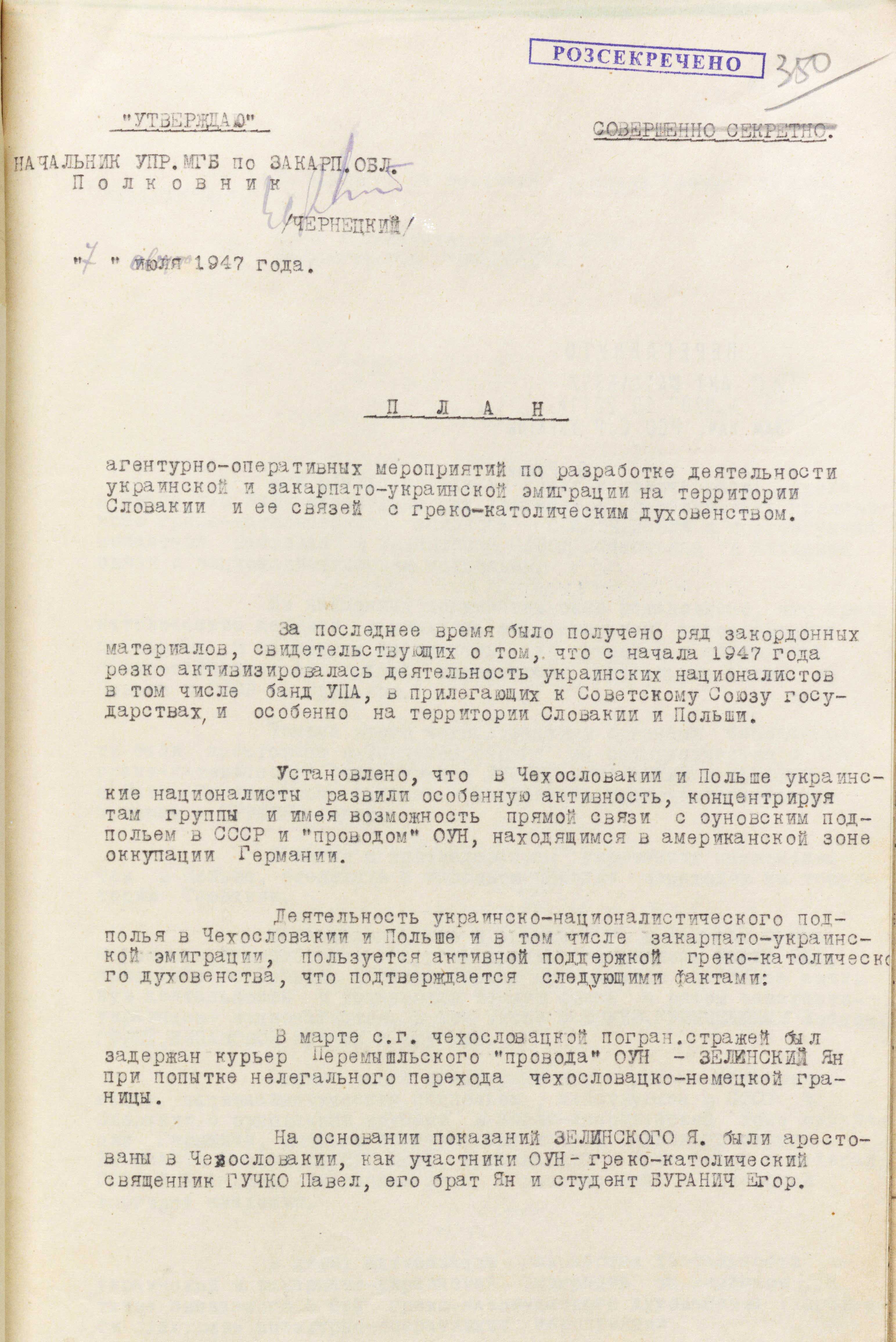
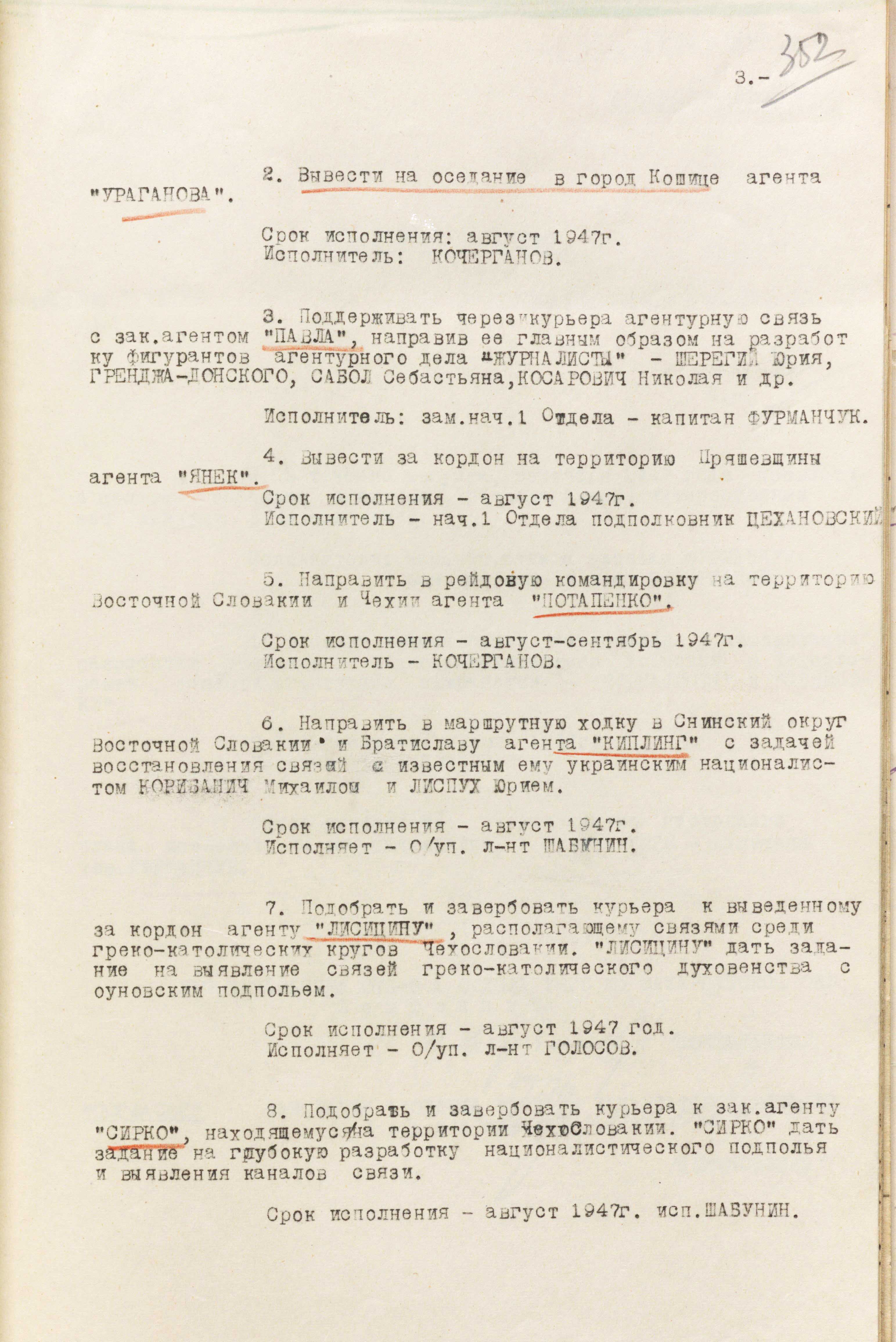
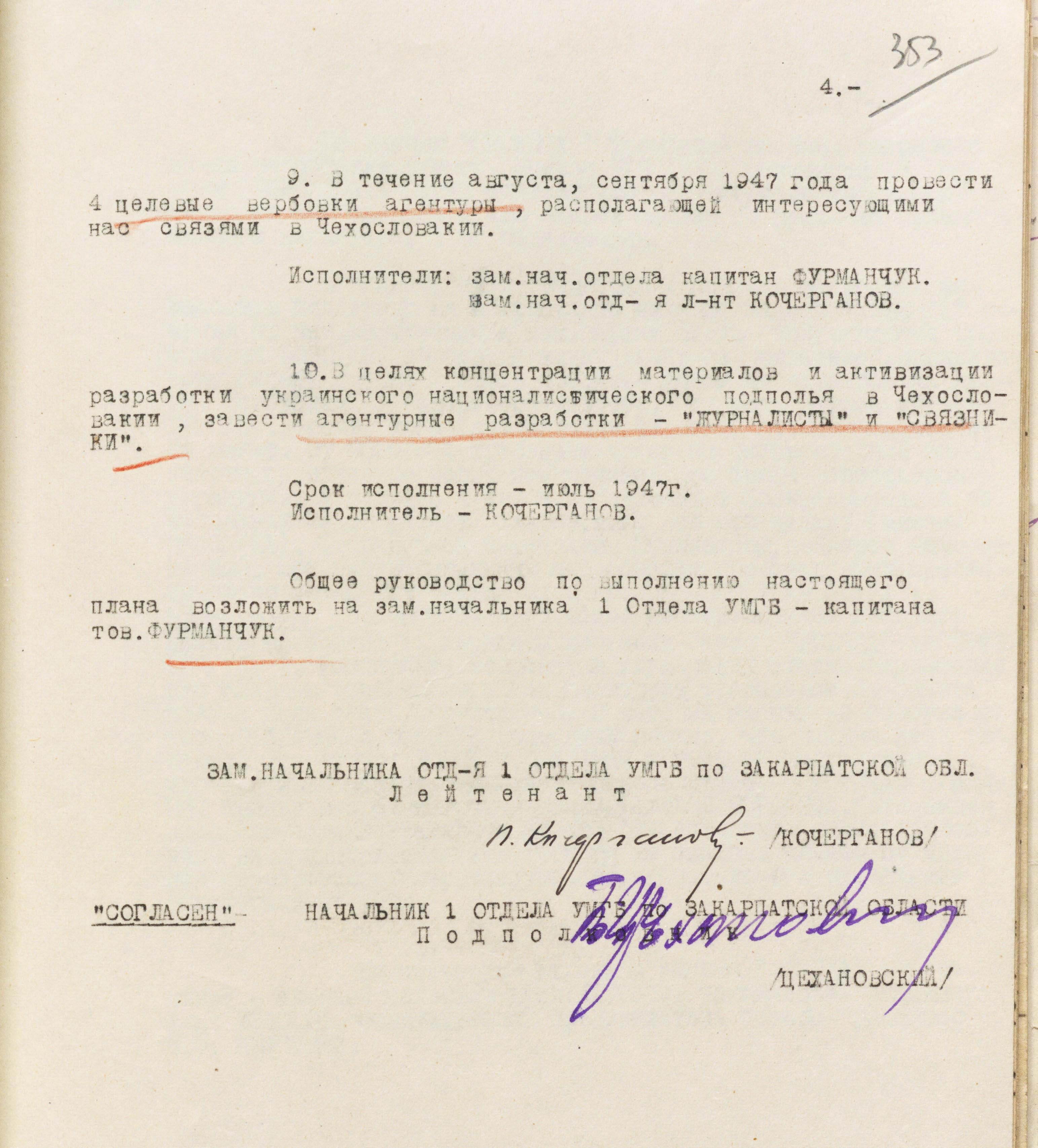
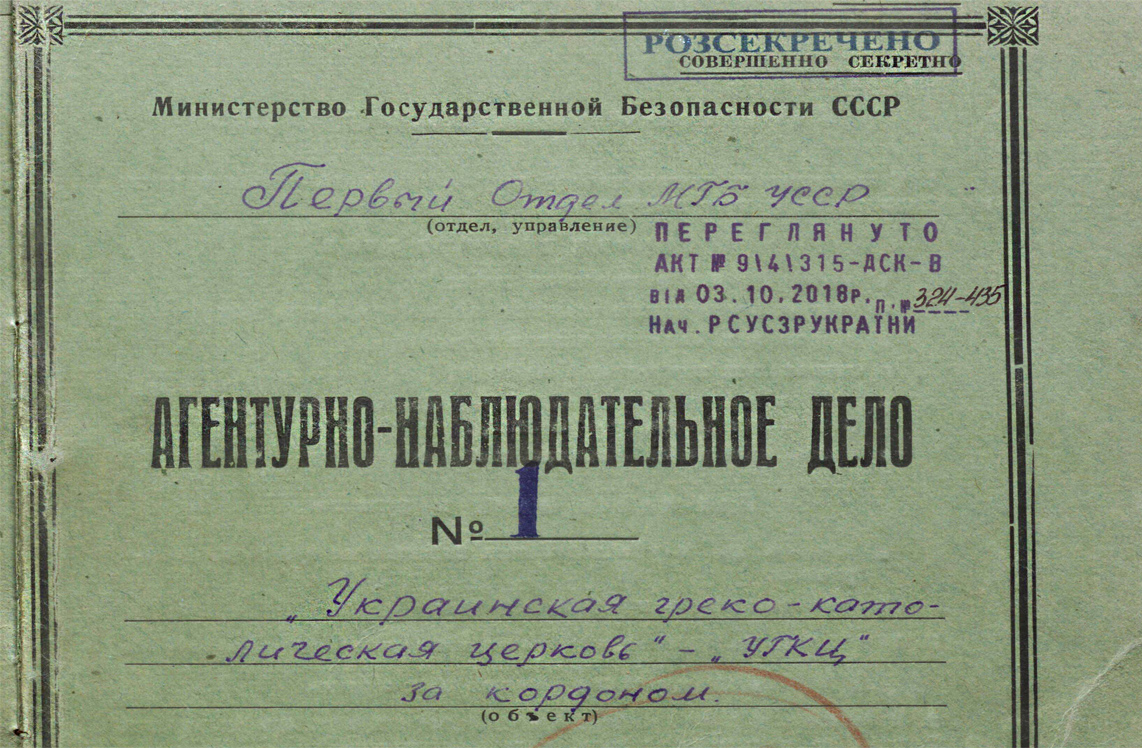
In early 1947, the mgb of the Ukrainian ssr opened an agent-surveillance case entitled “The Ukrainian Greek Catholic Church Abroad”. The resolution to open the case stated that “the Uniate Greek Catholic Church, under the leadership of the Vatican, is conducting anti-soviet activities in the interests of international reaction and is subject to investigation.” At the same time, the mgb of the Ukrainian ssr did not limit itself to gathering information and observing the activities of the UGCC parishes abroad. As a result of establishing close contacts with the security agencies of the socialist camp, joint plans were developed to infiltrate agents into the spiritual environment, assess the situation on the ground, and explore the possibility of convening pseudo-councils similar to the one in Lviv in order to destroy the Greek Catholic Church in Europe as well.
According to archival documents, such plans were based on accusations that the Church was supporting the activities of the Ukrainian Insurgent Army (UPA), in particular by establishing courier links between the OUN center in Munich and the underground in soviet ukraine, storing and distributing leaflets and other materials, and conducting anti-soviet policies abroad. These processes took place differently in each country. In Poland, the liquidation of Ukrainian Greek Catholic parishes was carried out mainly by administrative and forceful methods. Representatives of the ussr mgb, who acted there as advisers, consular and other officials, did not need to resort to multi-step combinations, recruiting a significant number of clergymen and persuading them to vote for the abolition of the Church.
In Romania in 1948, a pseudo-council similar to the one in Lviv was held, but on a smaller scale. Only a dozen clergymen and locals took part in it. Similarly, the separation from Rome and the accession to the Orthodox Church were proclaimed. The situation was somewhat different in Czechoslovakia. This is what most of the materials of the agent-surveillance case are devoted to.
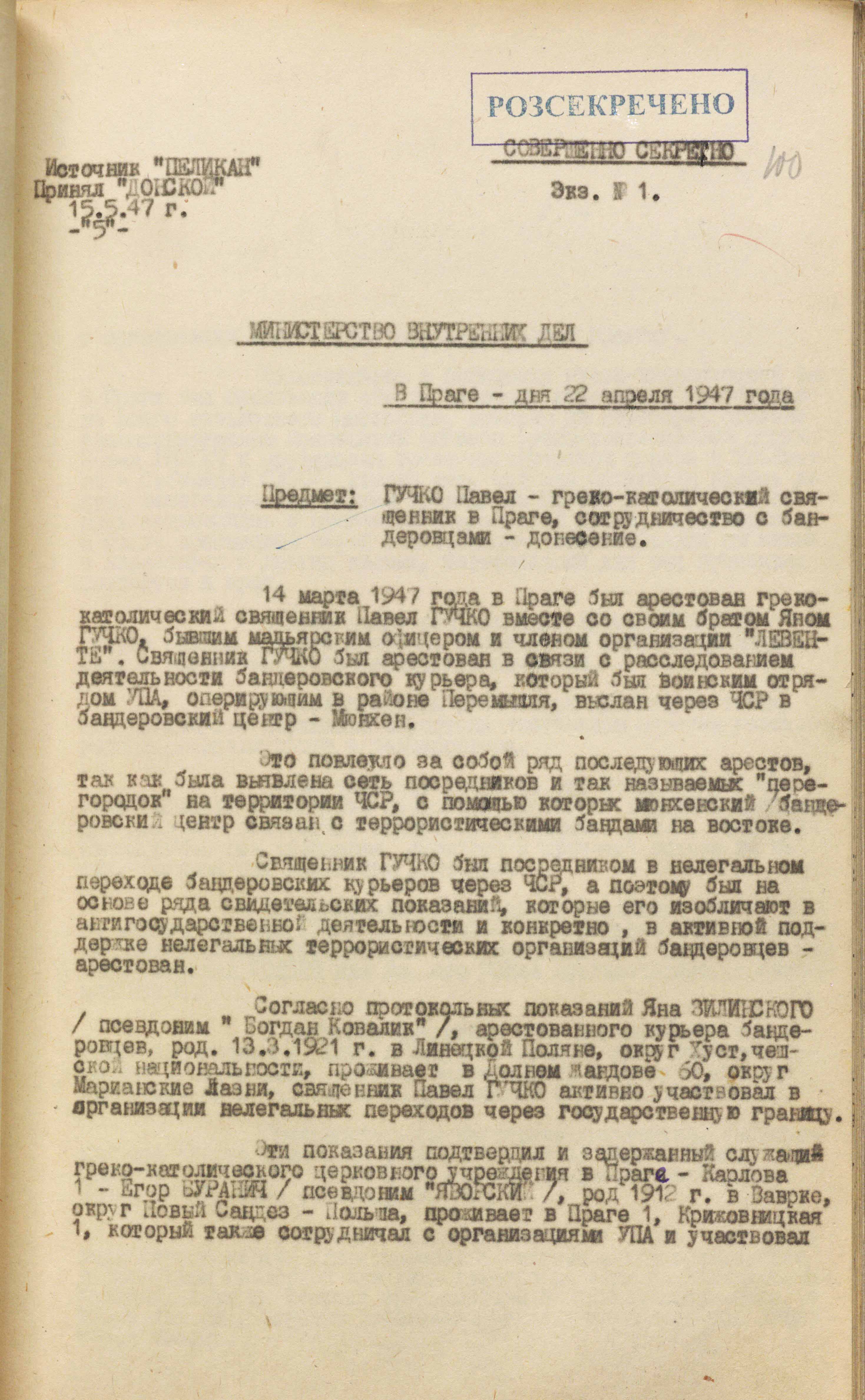
It all began in January 1947, when the Czechoslovak security services detained OUN courier Jan Zelinskyi (code name – Bohdan Kovalyk) while he was crossing the border with West Germany. The investigation lasted four months, after which the court sentenced him to life imprisonment. At the same time, the chekists began to actively pursue another line of investigation. They found out that Pavlo Huchko, a clergyman of the Ukrainian Greek Catholic Church in Prague, had allegedly helped him cross the border. Huchko was immediately arrested along with clergyman Yehor Buranych and others.
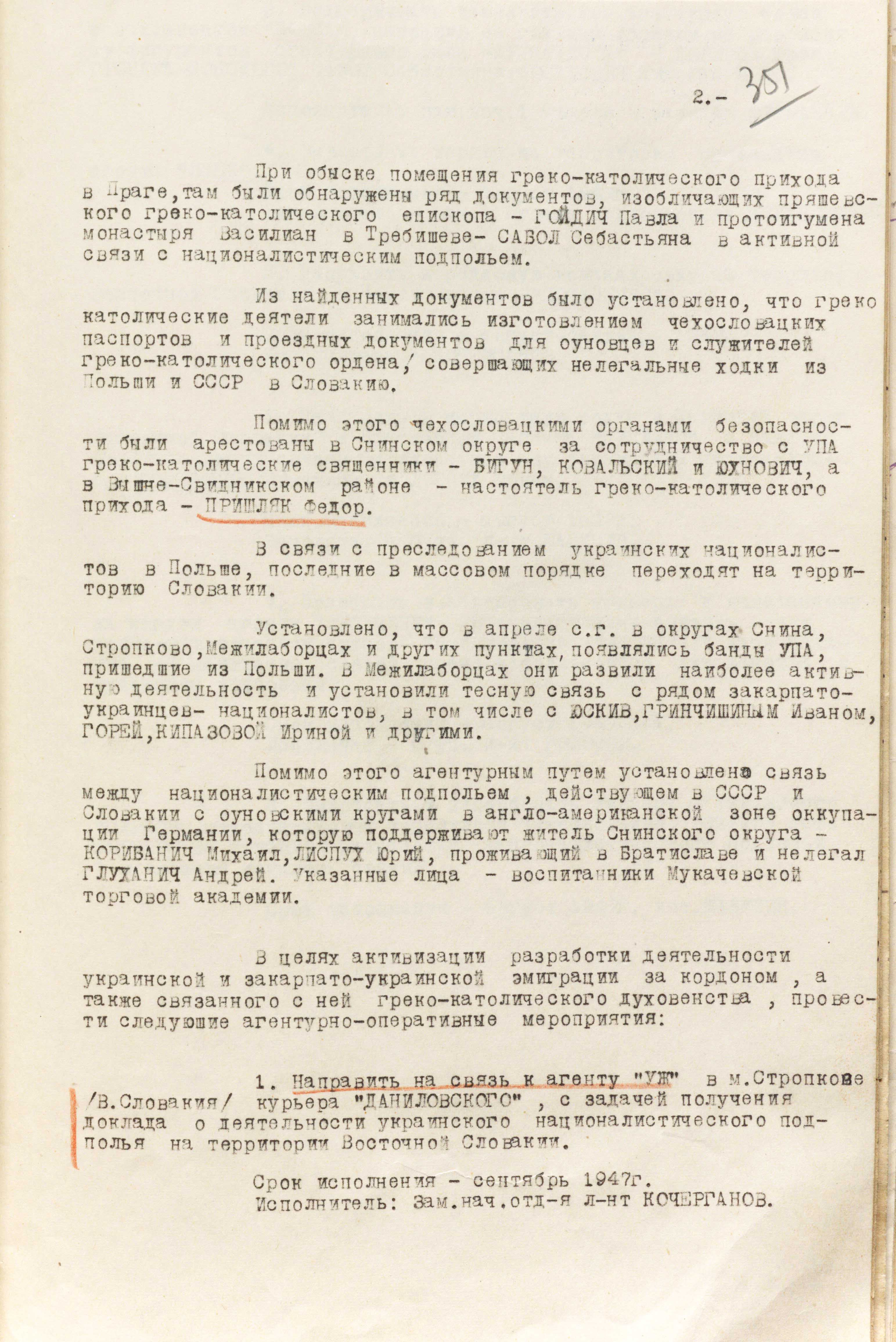
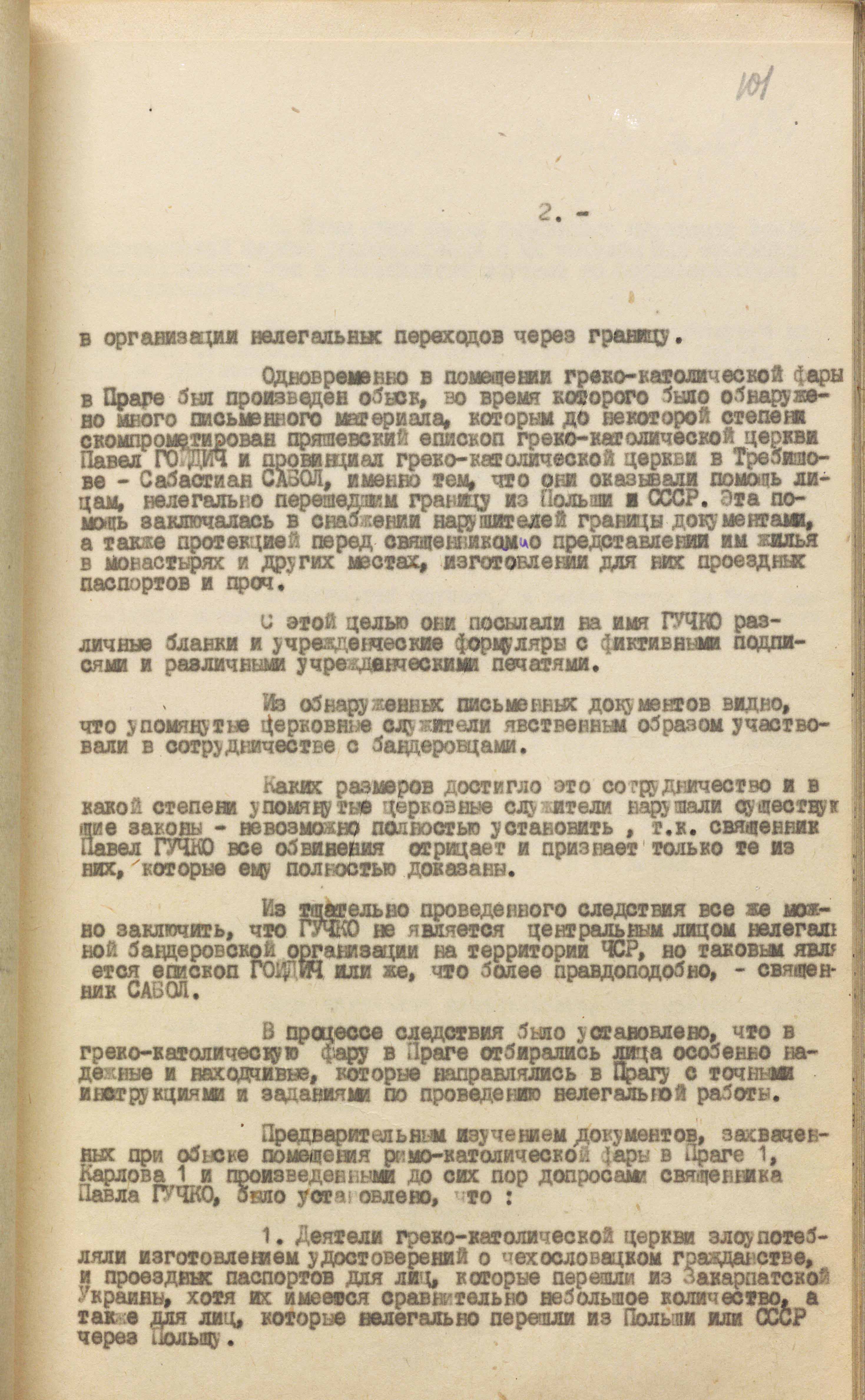
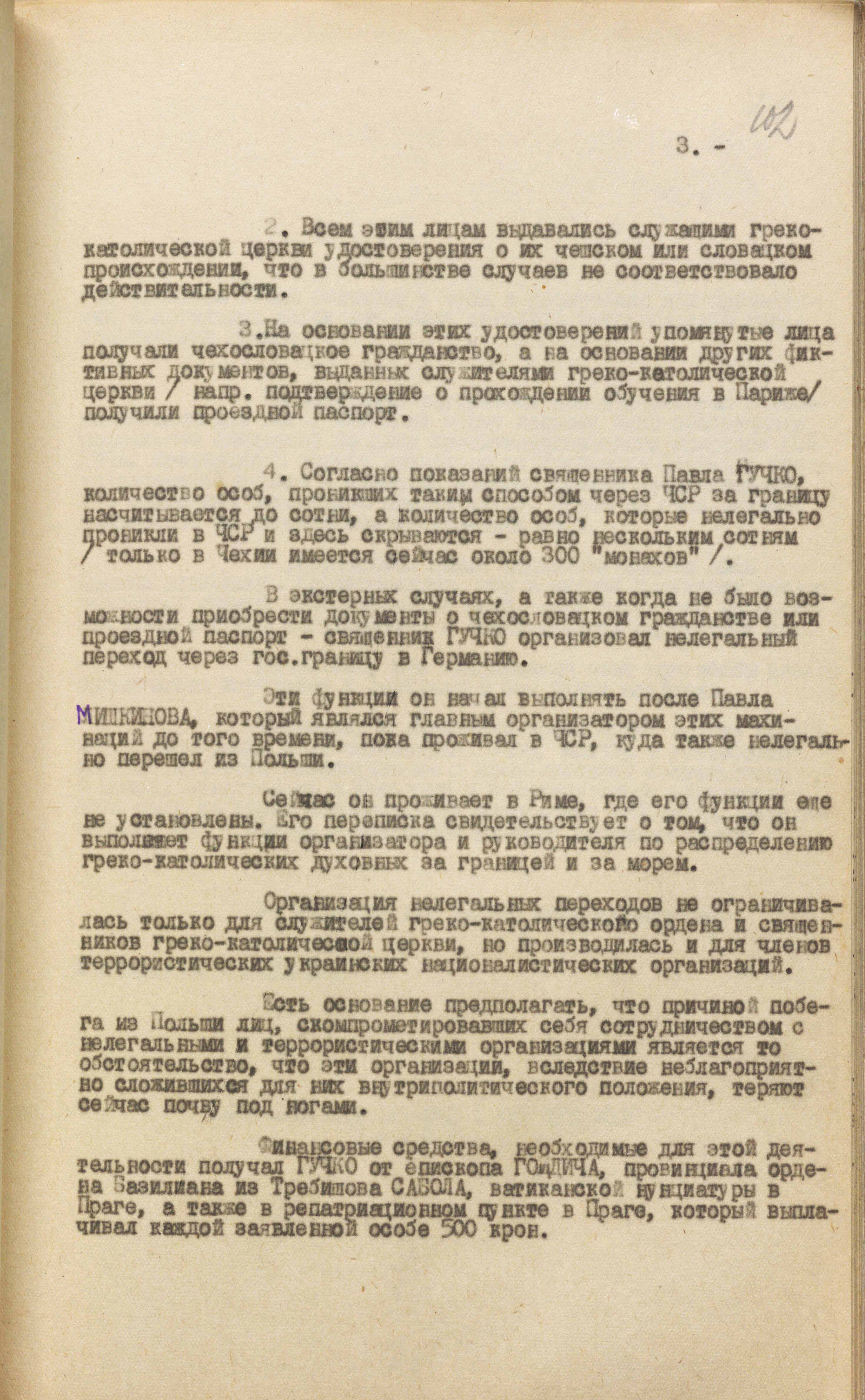
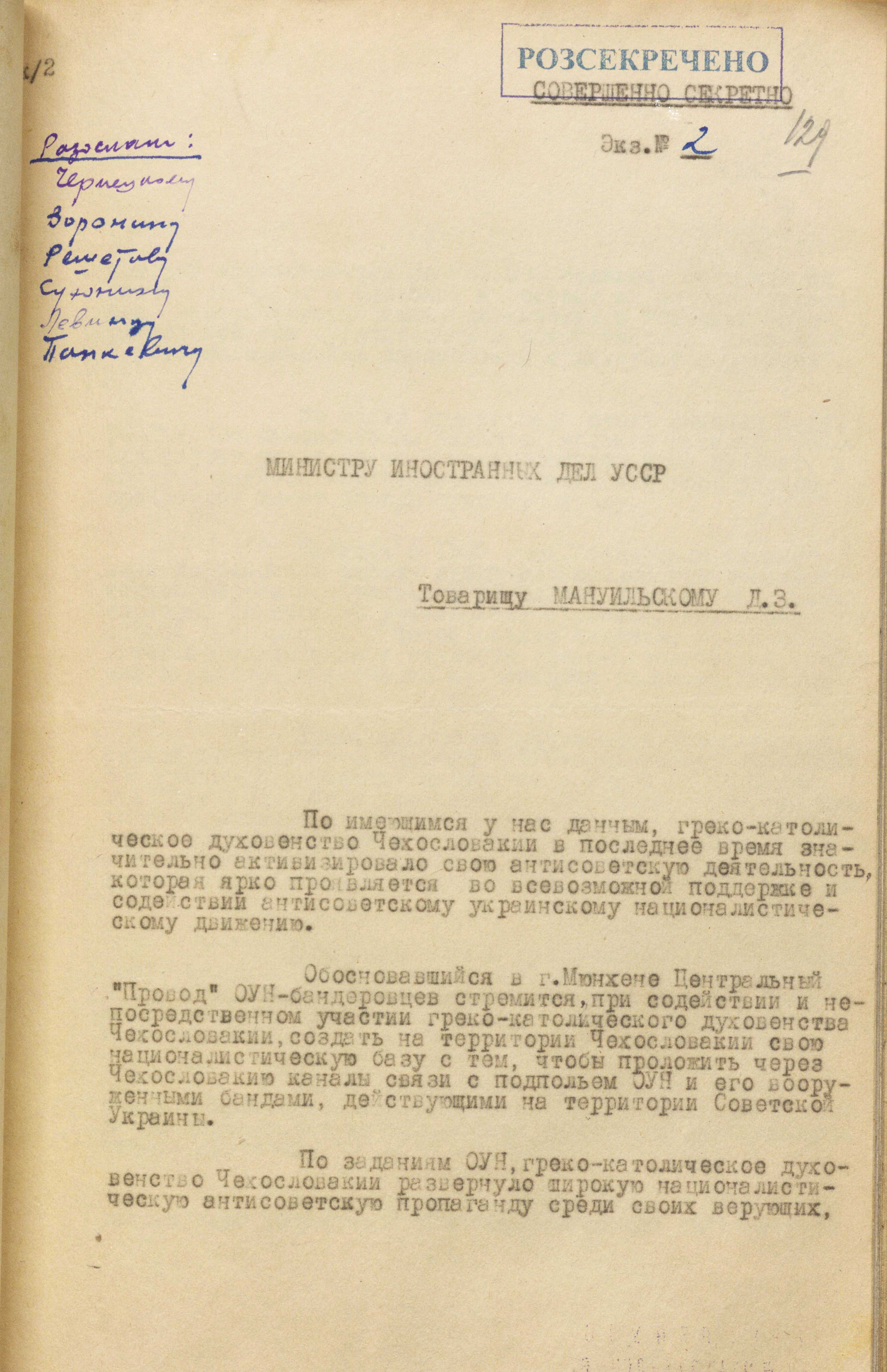
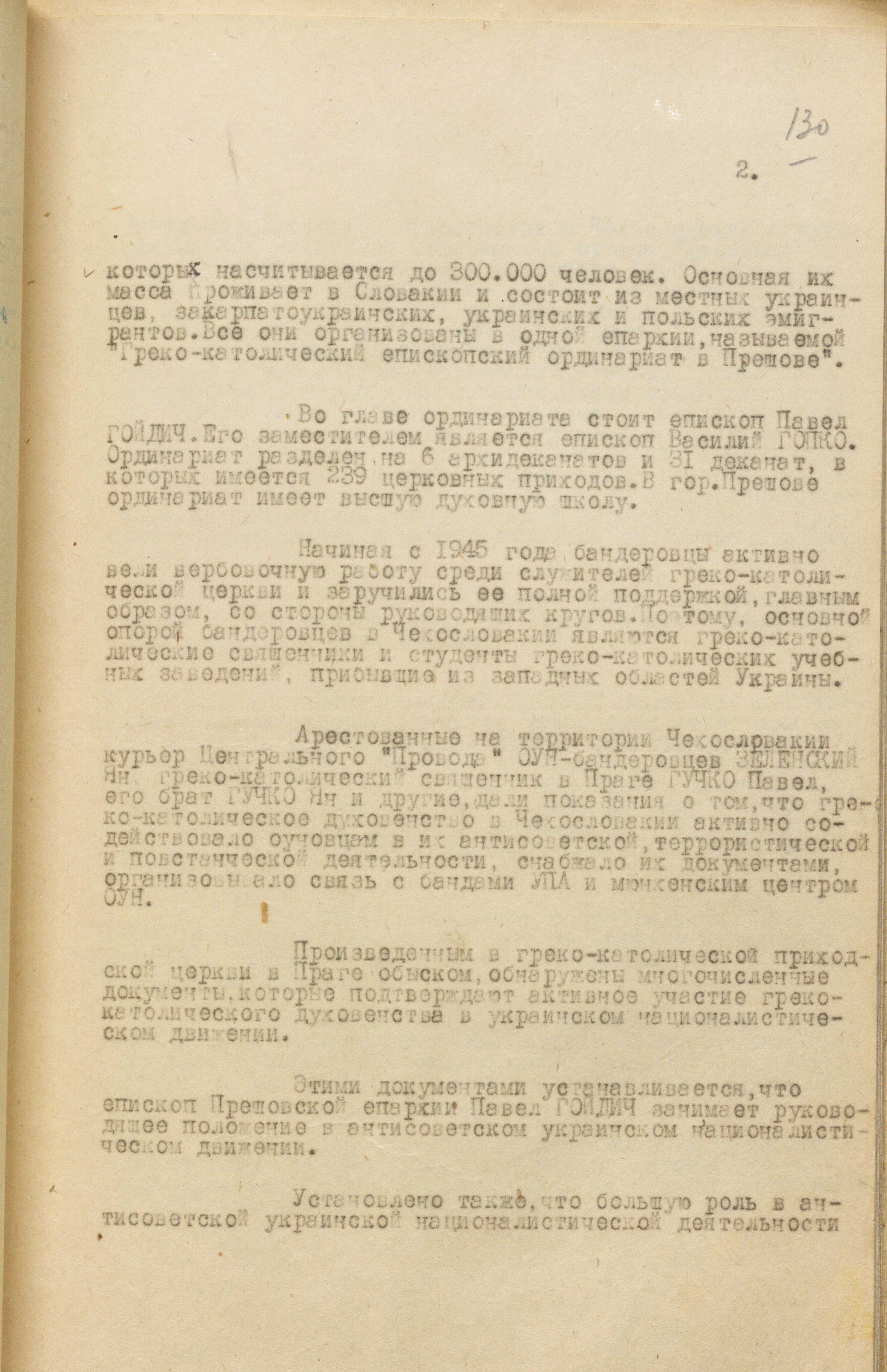
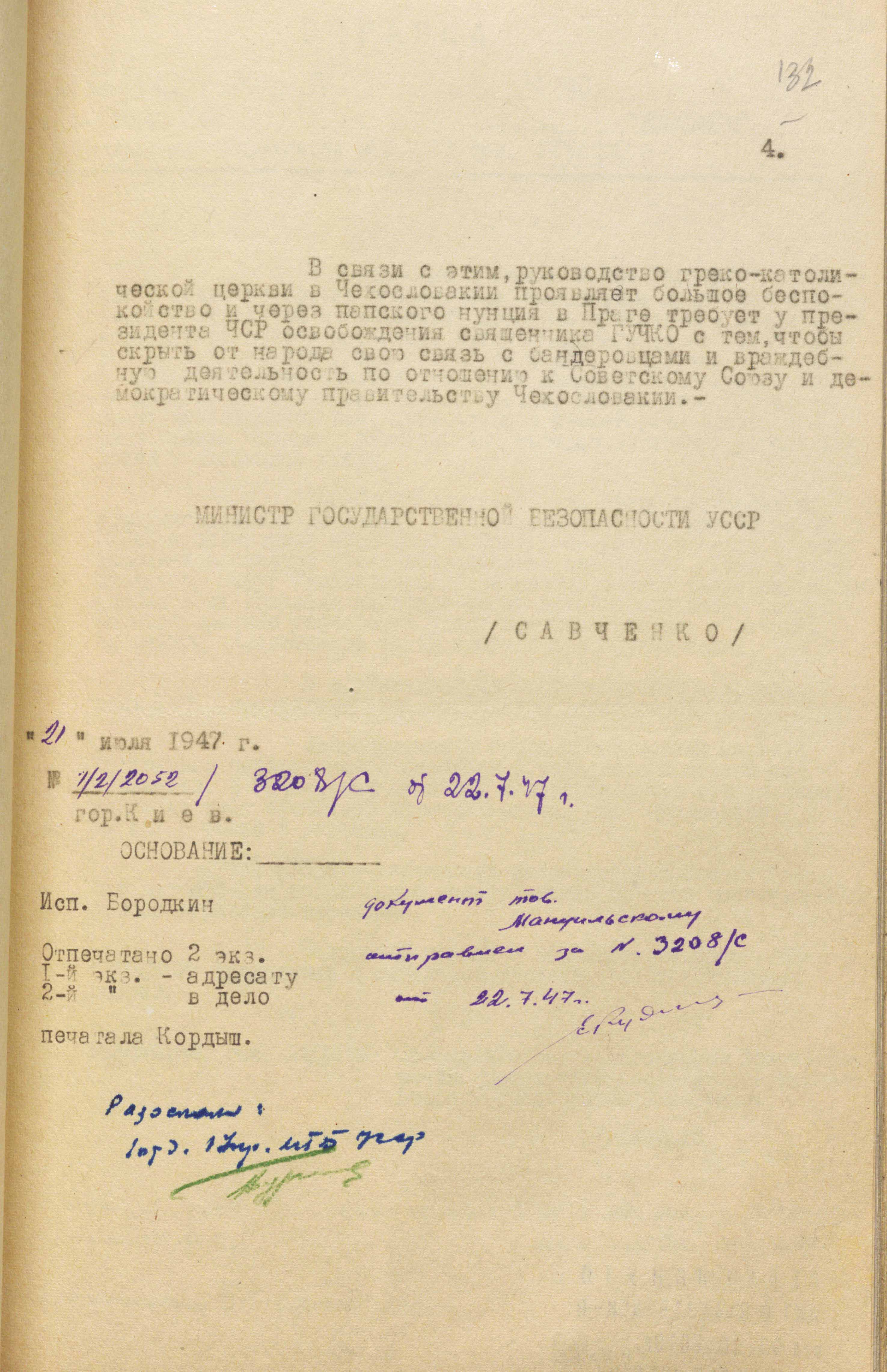
During a search of the church, materials were found that “confirmed the Greek Catholic clergy’s active participation in the Ukrainian nationalist movement”. These conclusions were made in chief of the mgb of the Ukrainian ssr S. Savchenko’s report to the minister of foreign affairs of the Ukrainian ssr D. Manuilsky. The report further stated the following:
“These documents establish that Bishop Pavlo Gojdič of the Prešov Diocese holds a leading position in the anti-soviet Ukrainian nationalist movement.
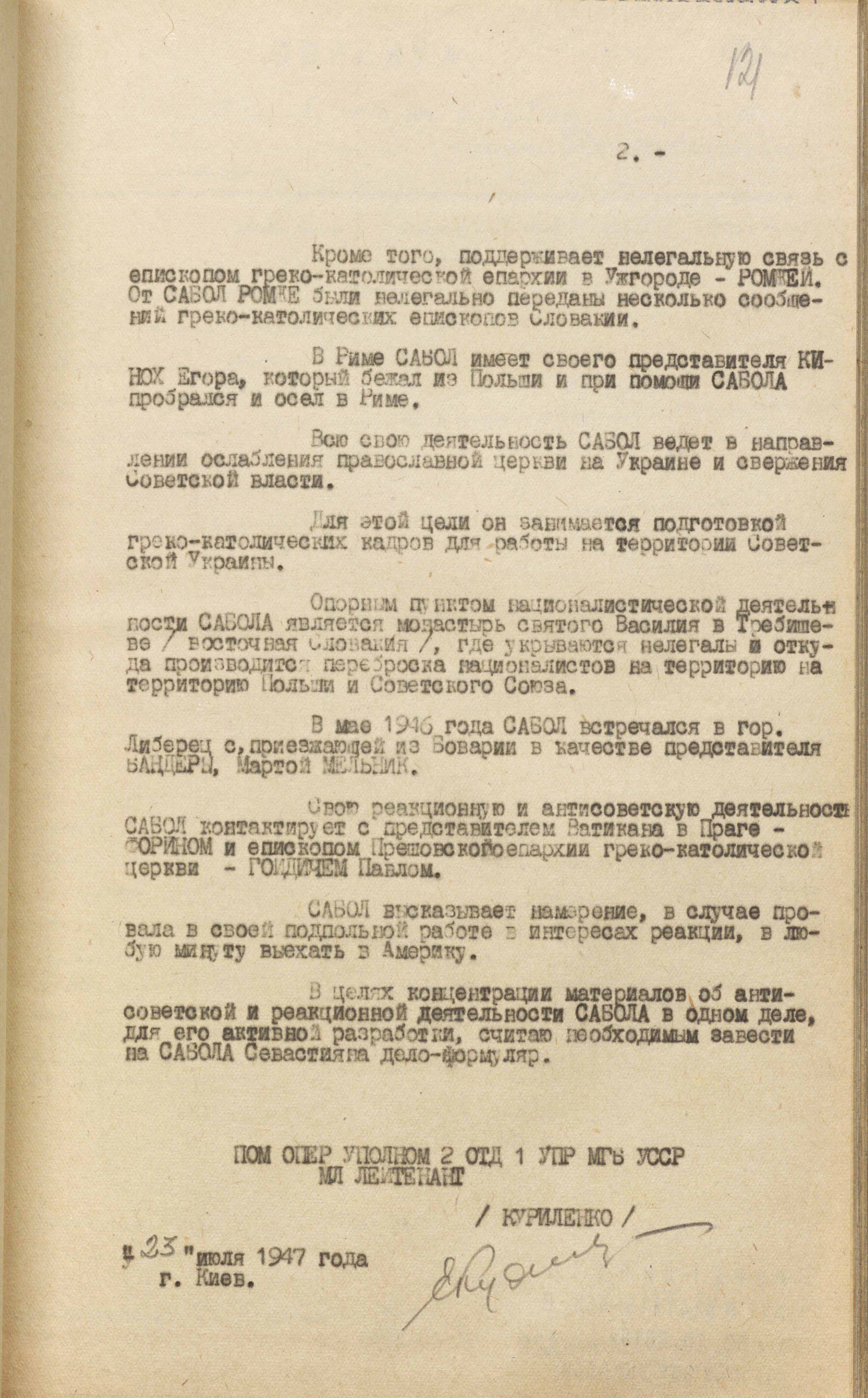
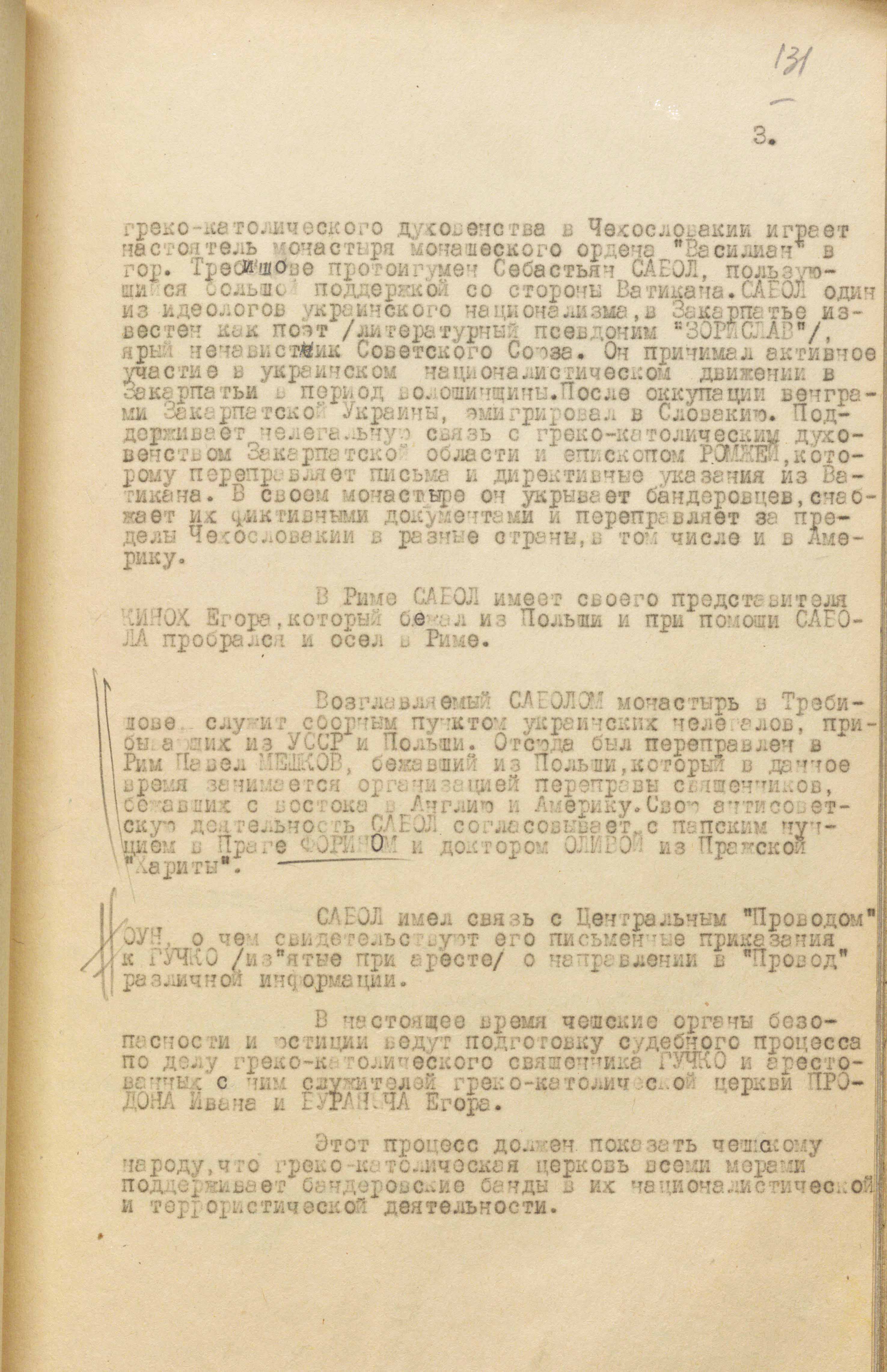
It has also been established that the Abbot of the Basilian monastery in Trebišov, Protopresbyter Sebastian Sabol, who has considerable support in the Vatican, plays a significant role in the anti-soviet Ukrainian nationalist activities of the Greek Catholic clergy in Czechoslovakia. Sabol is one of the ideologists of Ukrainian nationalism, known in Transcarpathia as a poet (literary pseudonym “Zoreslav”) and an irreconcilable hater of the soviet union. He took an active part in the Ukrainian nationalist movement in Transcarpathia during the Voloshyn period. After the Hungarian occupation of Transcarpathian Ukraine, he emigrated to Slovakia. He maintains illegal contact with the Greek Catholic clergy of the Transcarpathian region and Bishop Romzha, to whom he sends letters and directives from the Vatican. In his monastery, he hides Bandera’s followers, provides them with documents, and smuggles them out of Czechoslovakia to various countries, including America”.
(FISU. – F. 1. – Case 10348. – Vol. 1. – P. 129–132).
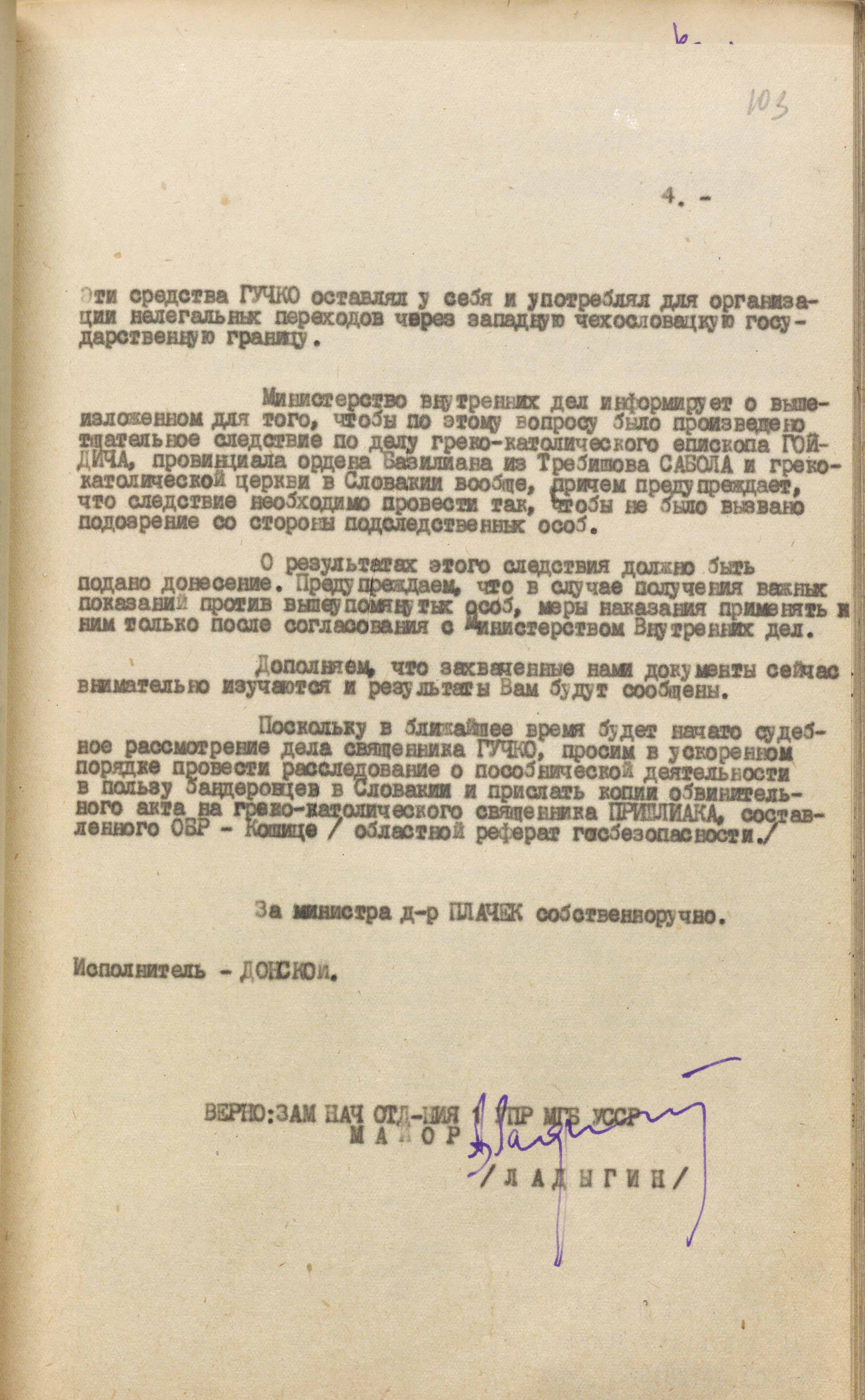
At the end of the report, emphasis was placed on the fact that the mgb of the Ukrainian ssr, together with its Czechoslovak colleagues, were making efforts to ensure that the trial would be exemplary and demonstrate to everyone in Czechoslovakia that the Ukrainian Greek Catholic Church “fully supports the OUN in its underground terrorist activities” and to prepare public opinion for the decision to liquidate the Church.
Other materials in the case show that information about the UGCC and alleged illegal activities of Ukrainian clergymen was subsequently collected in a targeted manner. It was noted that the total number of believers was approximately 250,000. The Church leadership, headed by Bishop Hoidych, was located in Prešov. The core of the faithful consisted of Ukrainians living in Slovakia, as well as those who emigrated from Poland and soviet Ukraine, in particular from Transcarpathia.
Those who fled persecution in soviet territory were reported separately. The testimony of clergyman P. Goidych, obtained during interrogation, was cited. According to him, representatives of the Greek Catholic Church in Czechoslovakia provided fugitives with documents proving their Czech or Slovak origin. On this basis, people were granted Czechoslovak citizenship and could continue to live in the country without fear. At the time of his arrest, there were allegedly several hundred such people, including about 300 Greek Catholic monks. Some were additionally provided with certificates of their studies in Paris, which enabled them to obtain travel documents to go abroad. There were about a hundred of such people. In other words, those were clergymen and believers who had been saved from arrest, exile, and conversion to the russian orthodox church. According to the investigation materials, such actions were considered a criminal offense.
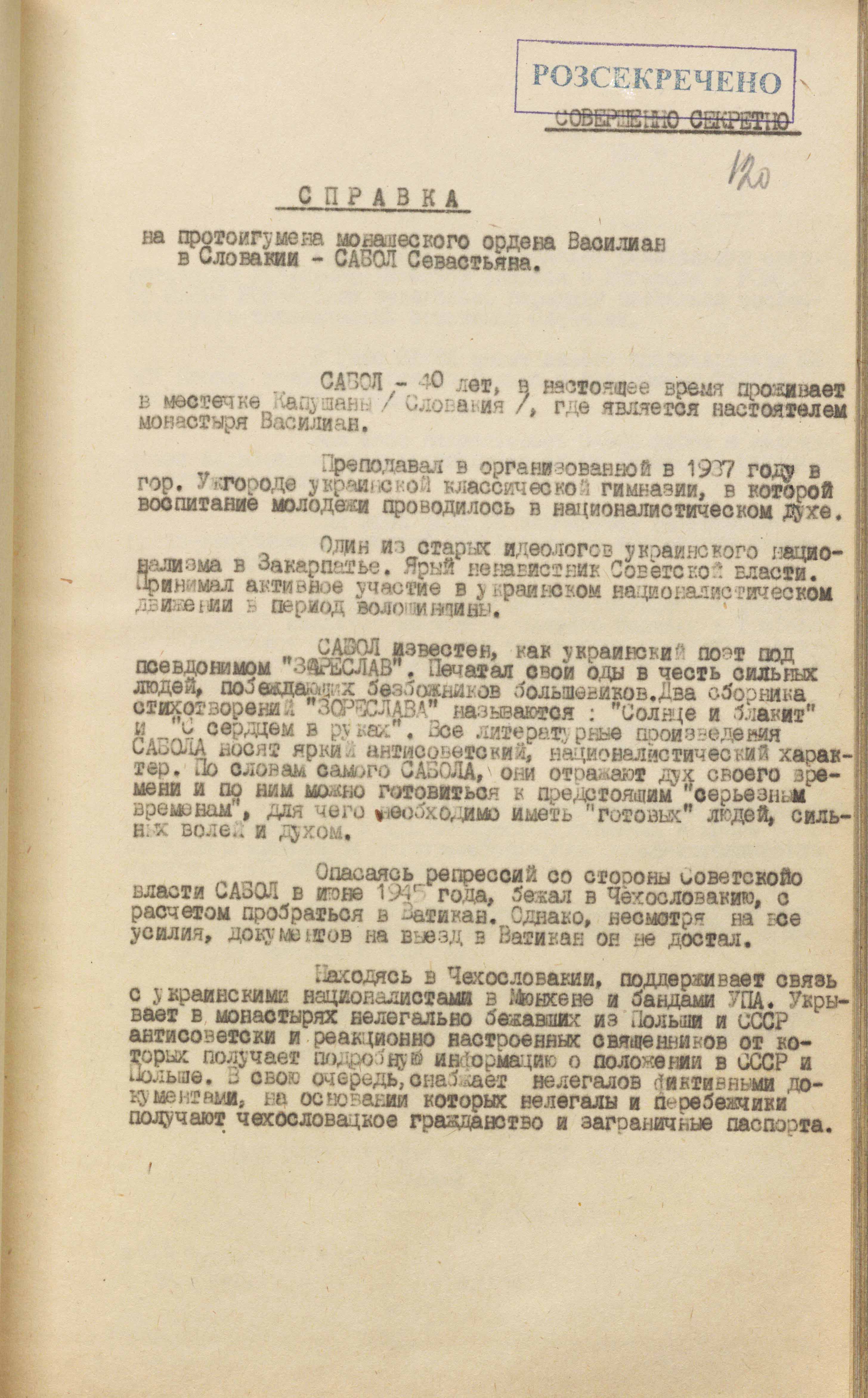
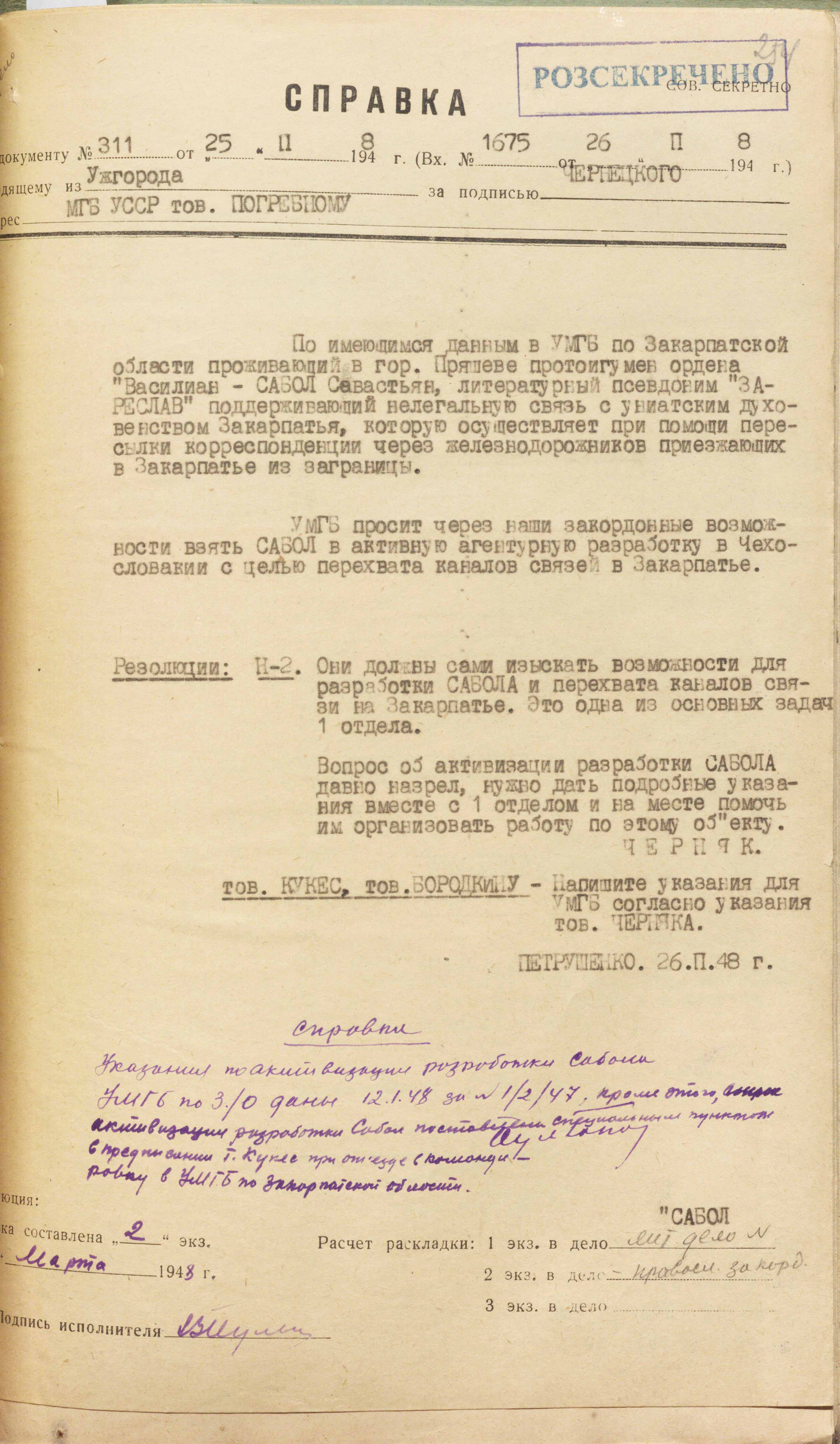
Many intelligence reports and certificates concern the monastery in Trebišov and its Abbot, Father Sevastian Sabol, who also helped fugitives. A separate case file was opened on him. One of the reports states that in 1937, S. Sabol taught at the Ukrainian classical gymnasium in Uzhhorod, where young people were educated in a nationalist spirit. The following is pointed out regarding his literary activity:
“...He published his odes in honor of strong people who defeated the godless bolsheviks. Zoreslav’s two collections of poems are entitled “The Sun and the Blue” and “With My Heart in My Hands”. All of Sabol’s literary works have a pronounced anti-soviet nationalist orientation. According to Sabol himself, they reflect the spirit of their time and can be used to prepare for upcoming “serious events”, for which it is necessary to have “ready” people who are strong in will and spirit”.
(FISU. – F. 1. – Case 10348. – Vol. 1. – P. 120–121).
Another report mentions Sabol’s contacts with the Vatican and the fact that in August 1945 he illegally crossed the border of the ussr and met with Bishop Romzha in Mukachevo. The mgb of the Ukrainian ssr classified that visit as espionage, even though they had been old friends since their studies in Rome. Similarly, reports on the hiding of the clergy from Transcarpathian Ukraine stated that he “received intelligence information from them”.
According to the report by the foreign agent “Georgiy”, another paper states, “in May 1947, Vasyl Hopko was ordained Bishop in Prešov. At the ceremony, Sabol delivered a speech in which he recalled the Uniate clergy who were ‘suffering in siberian exile’ and demanded that those people not be forgotten and that an uncompromising struggle be waged against the enemies of the Catholic Church” (FISU. – F. 1. – Case 10348. – Vol. 1. – P. 454).
The same report states that the Czechoslovak security services were planning to arrest S. Sabol. Upon learning this, he went into hiding in the forests and Czech monasteries for several months. In December 1948, a court in Prague sentenced him in absentia to life imprisonment. He was charged with having ties to the UPA, which was classified as anti-state activity. After that, he continued to live incognito in the country for some time. It was not until August 1949 that he emigrated to Austria, then to Italy, and finally, in 1951, to the United States. In the diaspora, he published a series of articles on the violent liquidation of the Greek Catholic Church in the ussr and the countries of the socialist camp, as well as the arrests and convictions of the clergy who refused to convert to Orthodoxy.
Meanwhile, arrests of Greek Catholic Fathers continued in Czechoslovakia. According to declassified archival documents, along with the arrests, Greek Catholic churches were closed and Orthodox churches were established in their place. The hand of moscow was evident in this process. Here is what the foreign agent “Rusnak”, a Catholic clergyman, wrote about the state of church affairs in Eastern Slovakia in his report dated February 1949:
“Currently, extensive preparations are underway to establish an Orthodox church in Prešov, even though only 10 Orthodox families live there. They have been given the best plot of land to build a church, and we are suspicious about whose pressure the Slovaks are under to make such concessions.
The same is true about Medzilaborce, where there are only 16 Orthodox families, and an Orthodox church is being built on the best site with suspicious funds. These churches are being built under the guise of a monument to fallen soviet soldiers, but in fact the goal is to convert Catholics to the Orthodox faith, and we get the impression that this is the beginning of an attack on the entire Greek Catholic Church in Czechoslovakia. Our opinion is confirmed by the fact that in neighboring Poland and in Transcarpathian Ukraine, our church was liquidated in a similar way...
Meanwhile, we are surprised where the Orthodox priests in Slovakia come from, as they have never lived there before. We know that the Orthodox Church and the entire hierarchy in Czechoslovakia are connected with the moscow metropolis, and some Orthodox priests came directly from moscow. Many Orthodox priests are recruited from the former White émigré community. We are convinced that the entire Orthodox clergy in Czechoslovakia is working to sovietize Czechoslovakia and bring about its annexation to the soviet union”.
(FISU. – F. 1. – Case 4160. – Vol. 2. – P.s 85–86).
This situation is not explained in the case materials. Meanwhile, it is known that immediately after the end of World War II, under an agreement between the Serbian and russian orthodox churches, the Orthodox parishes of Czechoslovakia were removed from the Serbian Church. In 1946, metropolitan eleutherius (vorontsov) of the russian orthodox church arrived in Prague and became the exarch of the russian orthodox church with the title of “archbishop of Prague and Bohemia”. As a result, the Orthodox Church in Czechoslovakia was transferred from the jurisdiction of the Serbian Orthodox Church to the moscow patriarchate. After the communist party came to power in Czechoslovakia in 1948, a document was adopted that set the goal of eliminating the independent Greek Catholic Church and annexing it to the orthodox church.
Shortly thereafter, on April 28, 1950, at a pseudo-council organized by the authorities in Prešov under the dictation of “advisers” from the soviet embassy, a break with the Vatican and reunification with the Orthodox Church was proclaimed. Although formally the operation was carried out by the Czechoslovak security services, in fact the organizational and coordinating role was assigned to the ussr mgb. The soviet representatives applied the model developed during the Lviv pseudo-council of 1946. The senior clergy of the russian orthodox church also played a significant role in the process. A few months before the pseudo-council, a delegation from the russian orthodox church arrived in eastern Slovakia and took part in a meeting with the hierarchs of the Czechoslovak Exarchate and employees of the ussr embassy on the liquidation of the Greek Catholic Church. After that visit, the process intensified.
Thus, the Slovak Greek Catholic Church was liquidated. This became part of the kremlin leadership’s policy of liquidating Uniate churches in Eastern and Central Europe. But even after that, the mgb of the ussr did not leave this issue without further operational follow-up. Within the framework of the cases “UGCC Abroad”, “Transcarpathian Ukrainian Emigration in Czechoslovakia”, and others, Ukrainian Greek Catholic clergy continued to be monitored abroad. In particular, operational measures were taken against Cardinal Josyf Slipyi after his departure from the ussr to Rome. All kinds of obstacles were created in the process of granting the UGCC the status of a patriarchate. The kgb tried to infiltrate agents into the structures of the UGCC in the USA and Canada in order to monitor all events, sow discord, and compromise Church hierarchs who never stopped fighting for the restoration of the Ukrainian state.