Poet Leonid Lyman. “How I Became an Enemy of the People”
1/5/2026
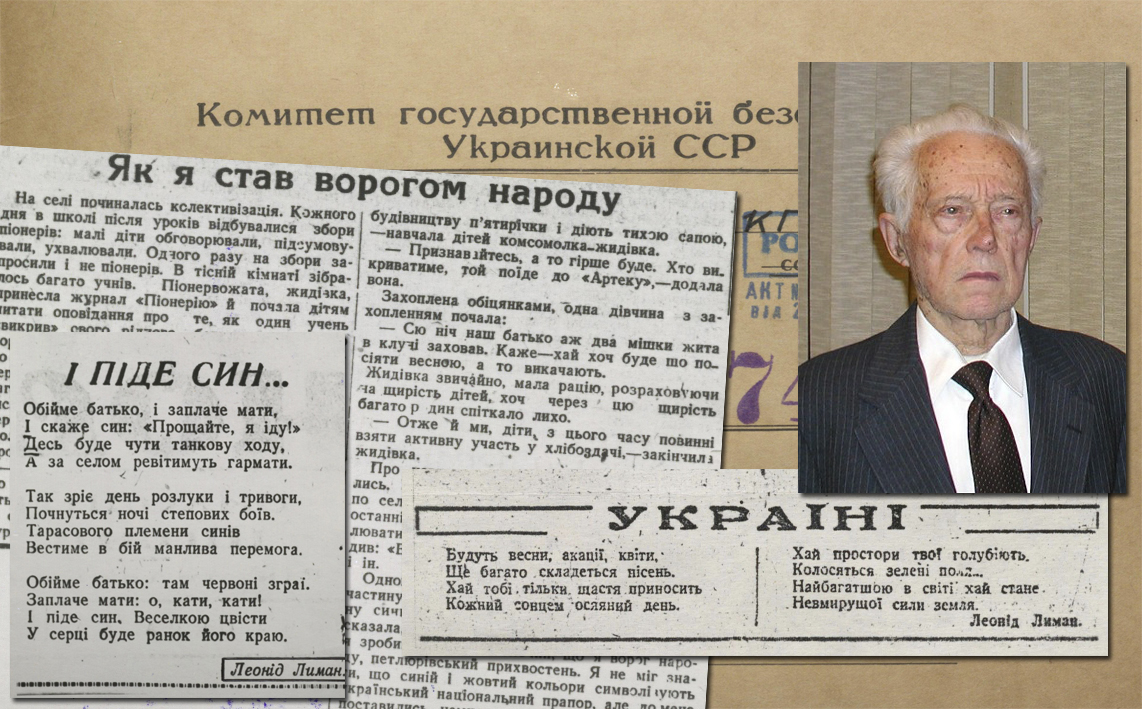
Among a series of the kgb’s operational cultivations of representatives of the Ukrainian creative intelligentsia who found themselves in exile, the case of poet Leonid Lyman occupies a separate niche. At least in terms of the methods used to compromise him. A step-by-step disclosure of the kgb’s “kitchen” based on declassified documents from the archives of the Foreign Intelligence Service of Ukraine makes it possible to clearly show how evidence of anti-soviet activity was falsified, non-existent facts were invented, the names of well-known international organizations and the signatures of their leaders were used, and how foreign journalists were involved in spreading false information.
L. Lyman’s “Notatnyk” and the kgb’s “Notes” About Him
Writer and literary critic Mykhailo Slaboshpytskyi pointed out that if the MUR (from Mystetskyi Ukrainskyi Rukh – Ukrainian Artistic Movement – Transl.) had its own awards, its highest honors, something like “Heroes of the MUR” would have to be given to two Leonids – Poltava and Lyman. Without them, MUR might not have existed in post-war Germany, or at least not in the same form. And above all, it would not have had a printing press. This refers to their desperate and risky act in 1945 of transporting Ukrainian typefaces from the Saxon city of Plauen, which was about to be transferred from the American to the soviet occupation zone, to Regensburg by truck.
M. Slaboshpytskyi included L. Lyman in his book about 25 prominent poets of the Ukrainian diaspora, despite the fact that “only a few tens of poems came from under his pen. But so many of them are artistically timeless!” Yurii Sheveliov also praised him. Experienced poetry connoisseurs Yevhen Malaniuk and Volodymyr Derzhavin, impressed by L. Lyman’s first published poems, were ready to publicly acknowledge the debutant’s genius. Similarly, his colleague at MUR, Viktor Petrov (V. Domontovych), already then pointed out that L. Lyman was a genius.
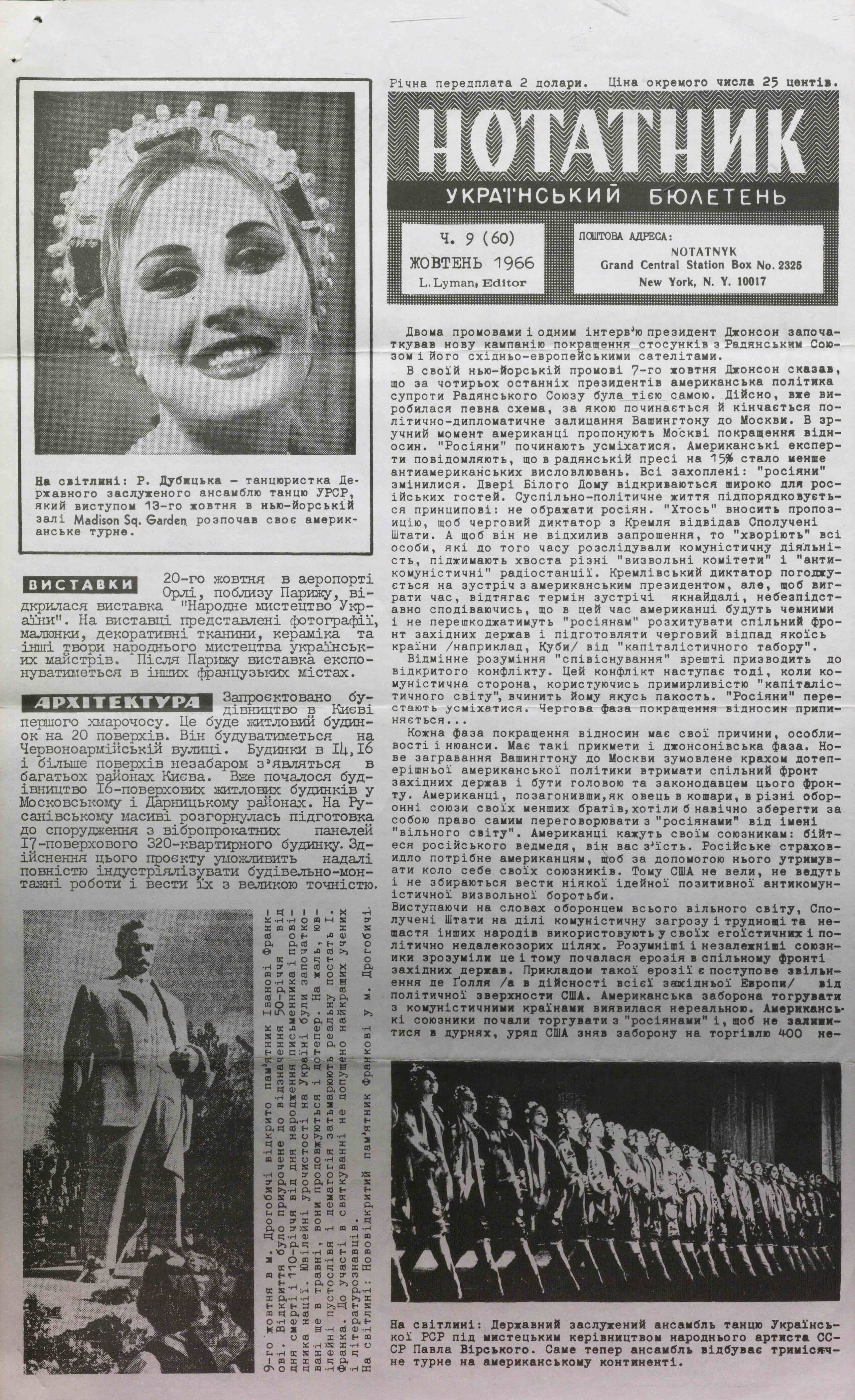
However, the recipient of such complimentary reviews had a more modest opinion of his talents. He had not published a single book during his lifetime. Moreover, after moving from Germany to the United States in 1949, he stopped writing poetry and prose. He focused on publishing the socio-political monthly magazine “Notatnyk” (“Notebook” – Transl.). He was the editor, contributor, and layout designer all in one. It was the content of that publication that was initially used to assess his talents and views by the kgb, which had a nearly complete collection of the “Notatnyk”.
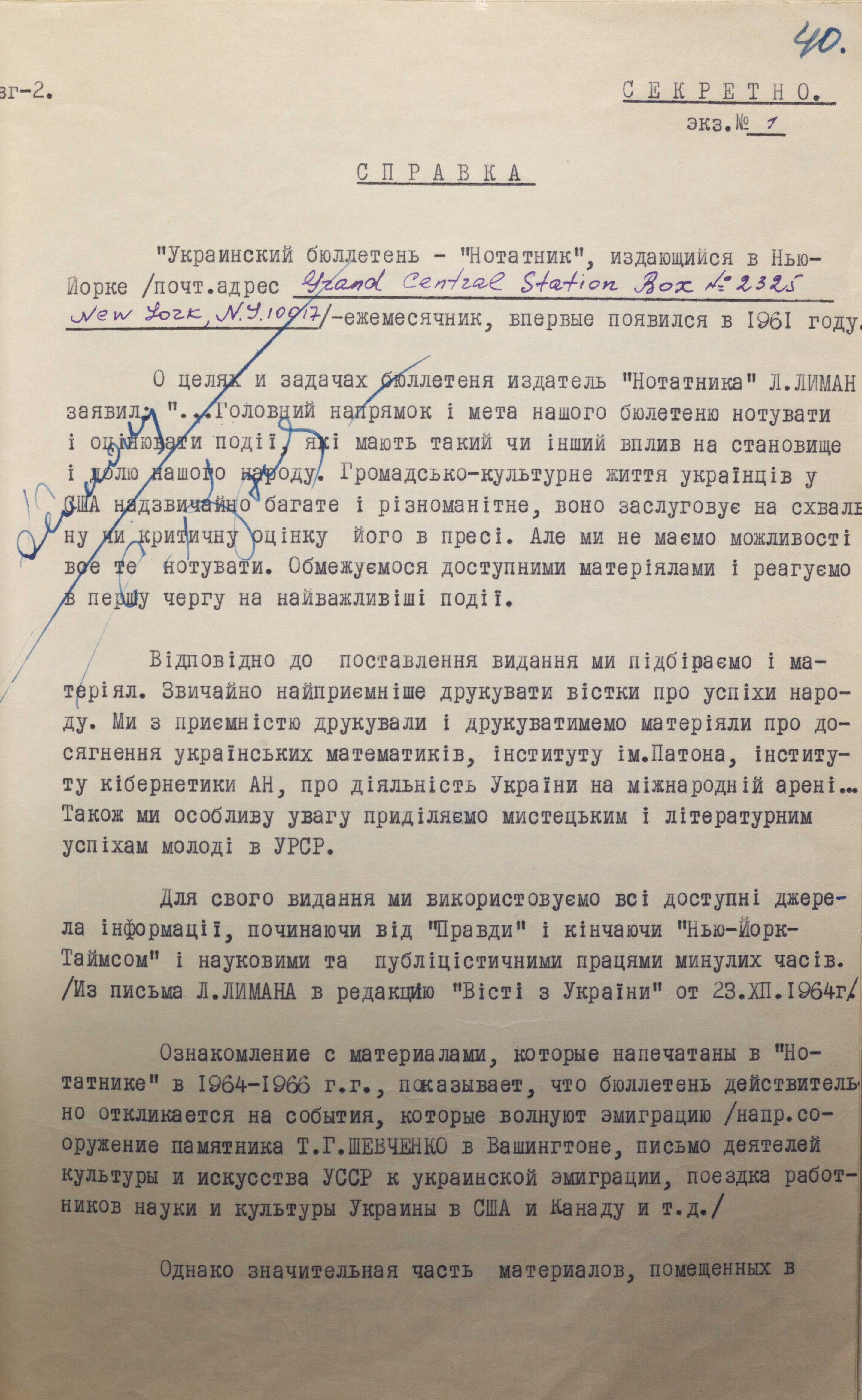
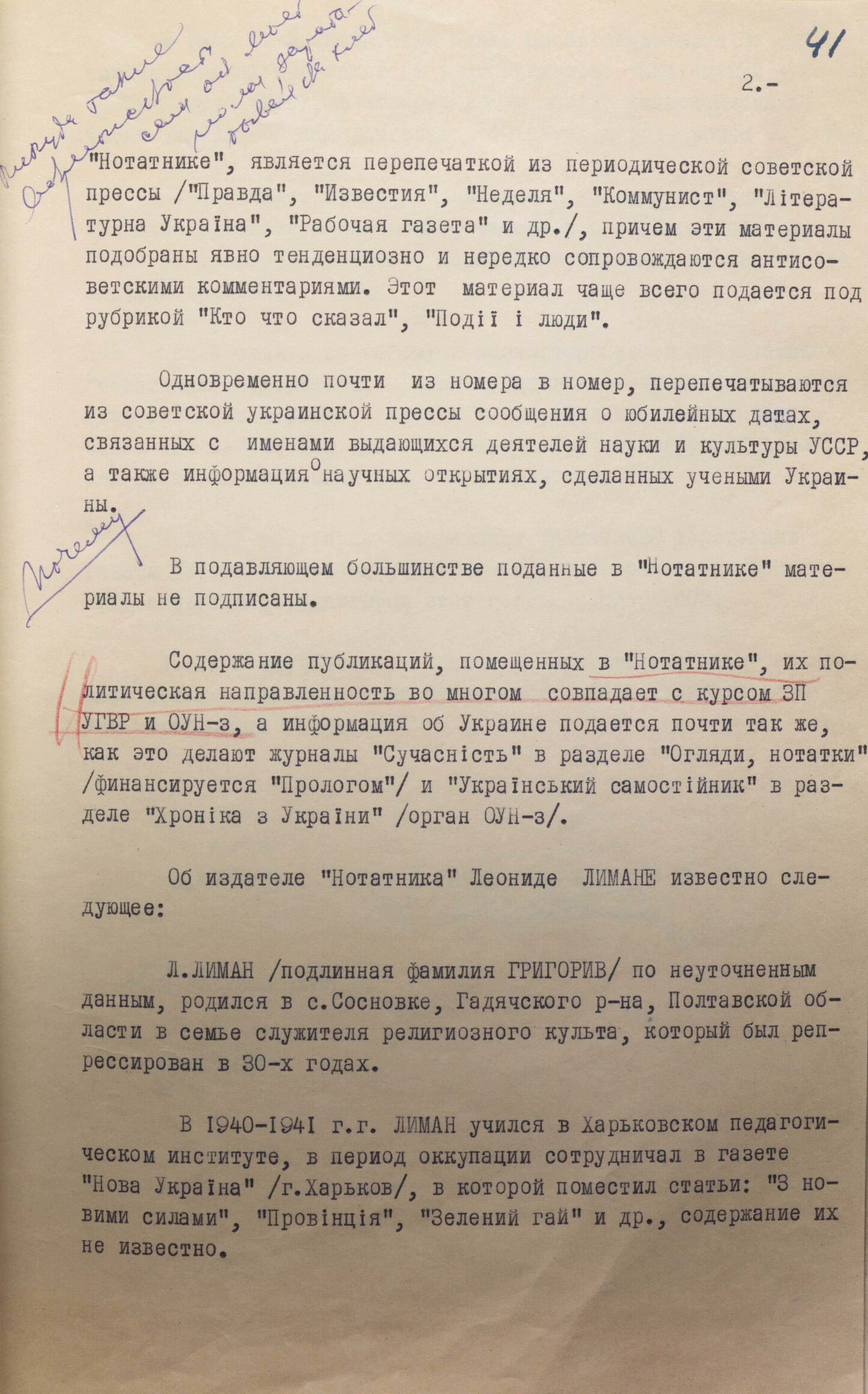
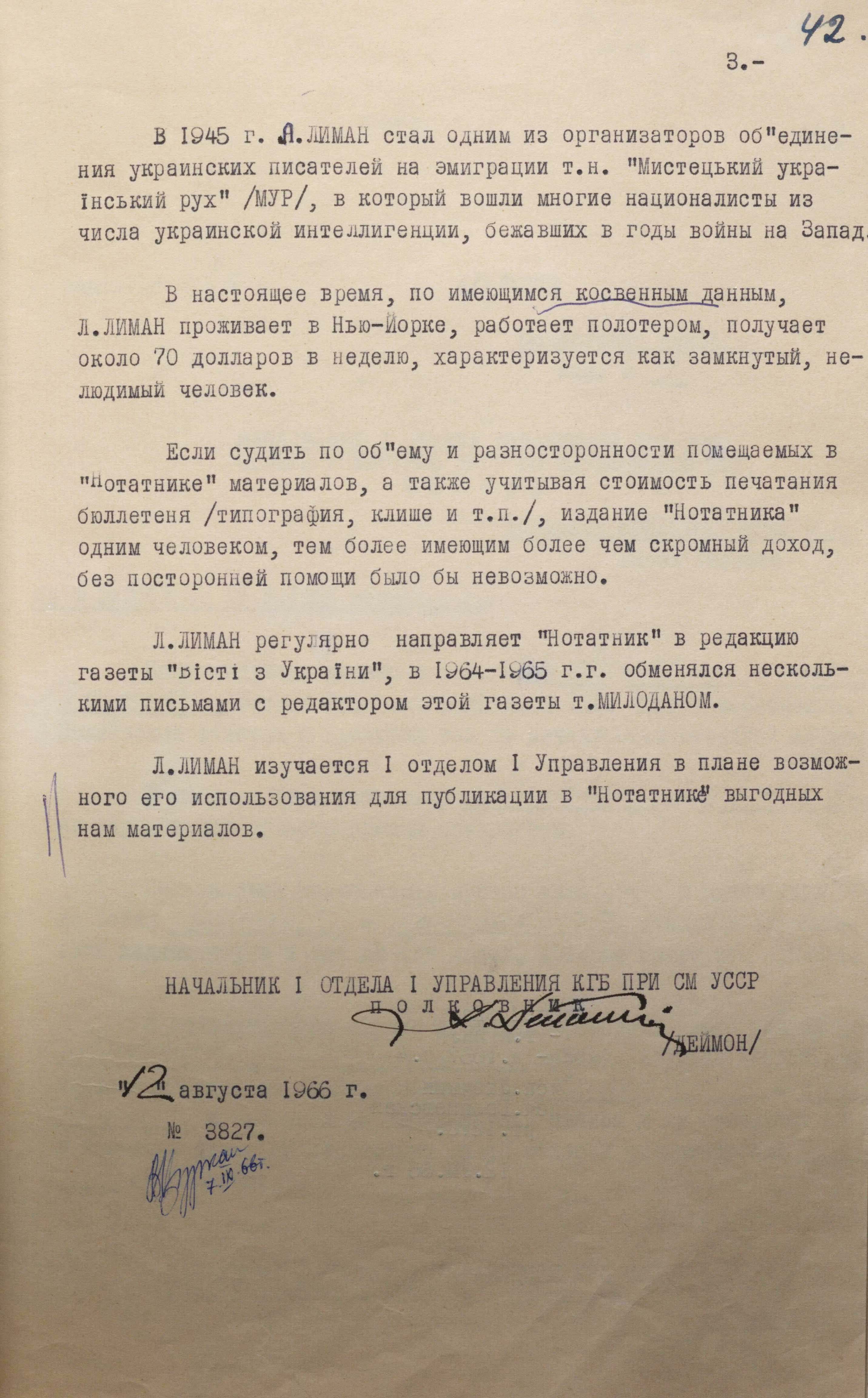
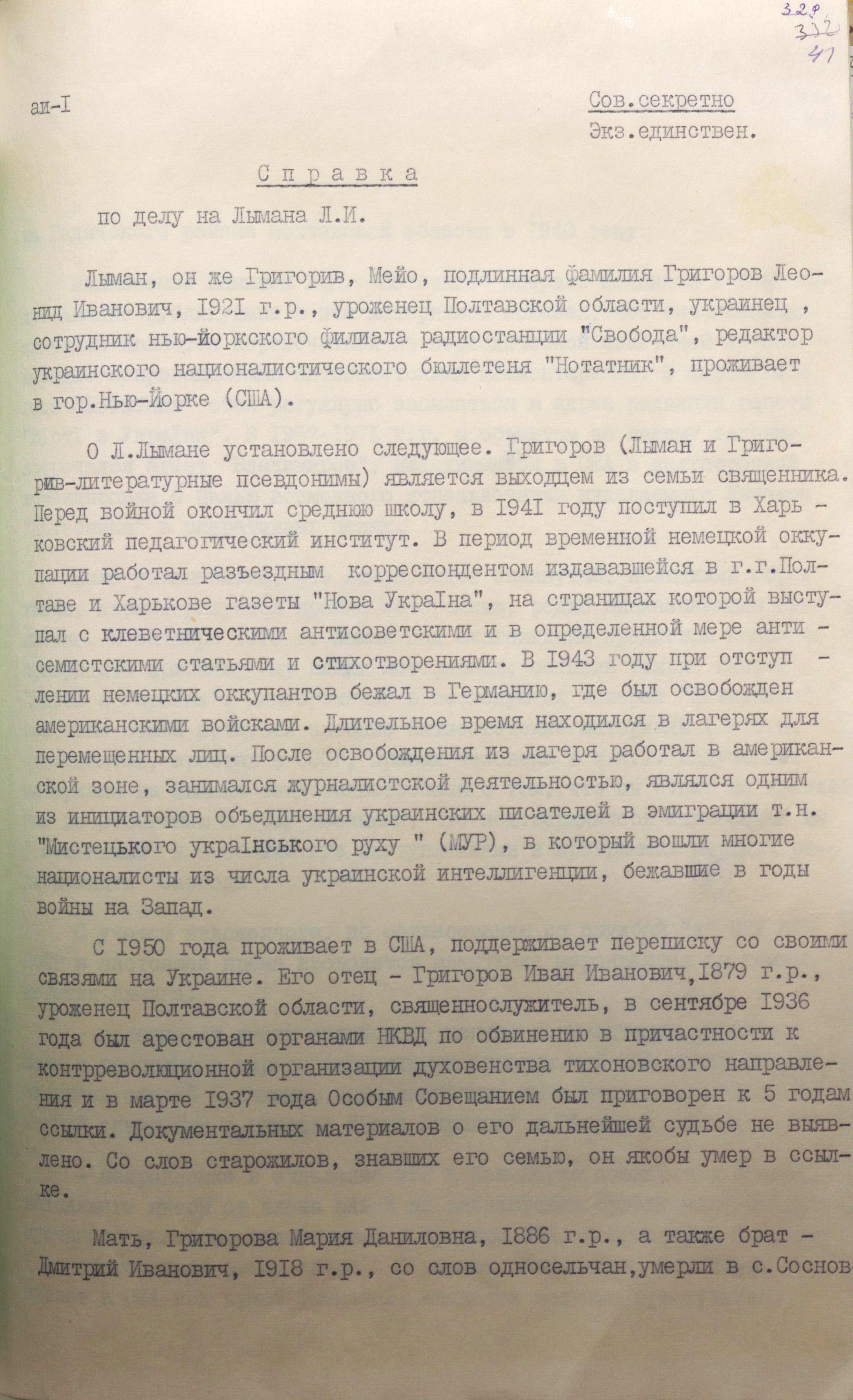
In September 1966, based on an analysis of the first issues of the publication, a resolution was issued stating that Leonid Ivanovych Lyman–Hryhoriv, a native of the village of Sosnivka in Poltava region, a journalist, publishes a Ukrainian monthly magazine in the United States called “Notatnyk”, the political orientation of which gives reason to believe that it is an organ of the Foreign Mission of the Ukrainian Main Liberation Council and the OUN-z, which are of operational interest. The case and its main figure were given the code name “Tkhir” (“Ferret” – Transl.). Apparently, this was based on one of the character references for L. Lyman, obtained even before the case was opened.
One of the papers stated regarding this:
“In a letter dated September 4, 1965, “Pasichnyk” writes from New York to Prokhorenko Kostiantyn Yakovych (a member of the Writers’ Union of Ukraine) that he saw “that Leonid from Hadiach” in New York. The latter has been working as a porter for 15 years, cleaning floors, earning $71 a week, living alone, buying books and magazines, and publishing some small magazine that I have never seen. I told him about you, showed him photos from Ukraine, and said that you had changed a lot. He is a rather strange man, as if he is “not from this world”, something like a monk. Quiet and calm, like a ferret...” (FISU. – F. 1. – Case 15386. – Vol. 1. – P.1).
“Pasichnyk” was the kgb’s code name for writer Yurii Kosach, an excerpt from his letter was added to the case file. In addition, information about L. Lyman began to be gathered in literary circles in Ukraine, as well as in other cases involving Ukrainian emigration, and requests were sent to Poltava, and special checks were conducted based on operational records. Soon, a portrait of the mysterious figure in the case began to emerge from various sources: a poet and prose writer who had never published his works abroad, a journalist who published a magazine on his own, with unknown funding, had no family, lived alone in a small room on the second floor of a Ukrainian church in New York, like Quasimodo from Victor Hugo’s novel “The Hunchback of Notre Dame”, cleaning floors in respectable establishments in the Wall Street area in the evenings and at night, and spending day time in libraries.
The chekists found out that Lyman was a pseudonym which Leonid had adopted abroad. Allegedly, it was the name of one of his relatives. His surname was Hryhoriv. Operational reports state that his birth place was the village of Sosnivka. In reality, he was born on August 13, 1922, in the village of Mali Sorochyntsi, Hadiach District, Poltava Region. His father, Father Ioann, served in the village of Sosnivka. In 1936, his father was arrested by the nkvd on charges of involvement in a counterrevolutionary organization of the clergy, and after a year of investigation, he was sentenced, along with 12 other clergymen, to five years of exile, where he died. Soon after, his older brother Dmytro died of tuberculosis, and his mother committed suicide out of grief. Thus, Leonid was left an orphan.
All this had an impact on the formation of his worldview. In an article entitled “How I Became an Enemy of the People”, published on September 10, 1943, in the newspaper “Nova Ukraina”, which was published in occupied Kharkiv, he reminisced about his school years. It was a period of collectivization and famine of 1932–1933. Under the instructions of the local bolshevik authorities, teachers were forced to involve children in propaganda campaigns for grain deliveries. “I was also assigned to draw posters”, he wrote. “On newspaper paper, I wrote: ‘All bread – to the state’... Once, quite accidentally, I painted some of the letters yellow and some blue... Rumors spread throughout the school that I had committed an unheard-of crime, that I was an enemy of the people, Petliura’s henchman. I couldn’t have known that blue and yellow symbolized the Ukrainian national flag, but they treated me mercilessly: I was expelled from school for three years, even though I still didn’t understand what kind of enemy of the people I was.
The community of Sosnivka, where Father Ioann was fondly remembered, saved him from homelessness. One of the papers mentions that he lived with the families of Mykola Hordiiovych Popenko and Porfyrii Nykonovych Korostyl, and just before the start of the German-soviet war, with Yevheniya Savelivna Hrytsyna in Hadyach. This allowed him to study at a teacher training college and at the Kharkiv Teacher Training Institute. In 1960, he sent several parcels to his fellow countrymen. In his letters, he wrote: “I am neither rich nor poor. I live in America. I have food and drink, and a roof over my head. I am able to help you a little. Please accept everything I send as a token of my gratitude for being close to my father and for praying with him...”
The chekists found out about seven more people to whom Leonid had written letters. All of them were investigated. But in the end, they concluded that the correspondence was of a domestic nature and was not of operational interest. However, the “Notatnyk” aroused considerable interest. The first issues were published in 1961. The title page stated that it was a Ukrainian bulletin. The editor was L. Lyman. The annual subscription was $2, and the price of a single issue was 25 cents. It was 6 pages long and was produced using photolithography. The editor himself sent it out to several hundred subscribers. Some of them donated more money, but even that was not enough to cover all the costs. So L. Lyman contributed something from his modest income.
The “Notatnyk” published various information related to Ukraine. It covered events surrounding the construction of a monument to Taras Shevchenko in Washington, letters from cultural and artistic figures’ in the ussr to Ukrainian emigrants, Ukrainian scientists and cultural figures’ trips to the USA, Canada, and elsewhere. L. Lyman read American sources and Ukrainian newspapers and magazines, which he subscribed to or was able to purchase in New York. He was constantly looking for new sources of information. In 1964, he wrote a letter to the editor of the newspaper “Visti z Ukrainy”, in which he told about the bulletin, sent a few copies as samples, and asked to be provided with materials which he could print in his publication.
L. Lyman, who led a mostly secluded lifestyle and did not interact much with representatives of Ukrainian political parties and public organizations, could not have known that the newspaper “Visti z Ukrainy” had a peculiar reputation as a publication under the supervision of the kgb. Therefore, at his discretion, he selectively published materials about the achievements of Ukrainian scientists, artists, and athletes, which were sent to him by the editor of “Visti”. Meanwhile, all correspondence was carried out under the control of the kgb and in the desired direction.
The kgb’s New York residentura jumped at the chance to use this platform, even if it wasn’t that big, for propaganda purposes. All operational activities were controlled by the central office in moscow. From there, the kgb in the Ukrainian ssr immediately received an instruction stating: “It would be advantageous for us to turn “Notatnyk” into a kind of ‘objectivist’ magazine that takes a ‘neutral’ position and, from this position (but not a pro-soviet one), fights against the Bandera followers as a force that is alien and hostile not only to Ukraine but also to the emigration community.” (FISU. – F. 1. – Case 15386. – Vol. 1. – P. 102).
A foreign agent who worked in one of the official missions of the Ukrainian ssr in the United States was placed into contact with L. Lyman. He met with him several times, offered him press releases prepared by the society for cultural relations with Ukrainians abroad and other materials for use, compiled a psychological profile, held discussions on political topics, and tried to change him and persuade him of something. But it all turned out to be in vain. One of the reports says that L. Lyman willingly took all the materials provided to him and selectively published materials from soviet newspapers, but “obviously selected them in a biased manner and often accompanied them with anti-soviet comments”.
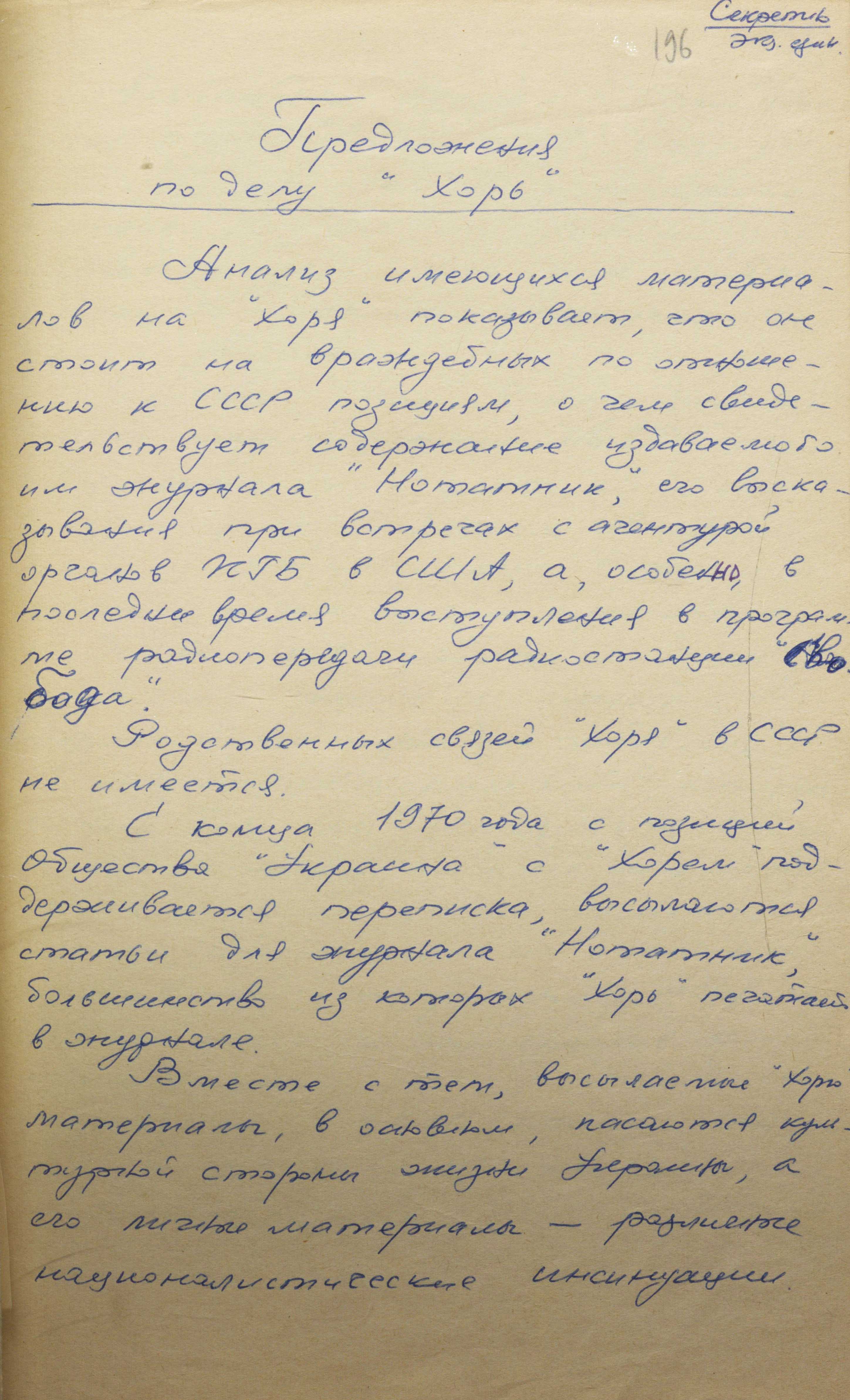
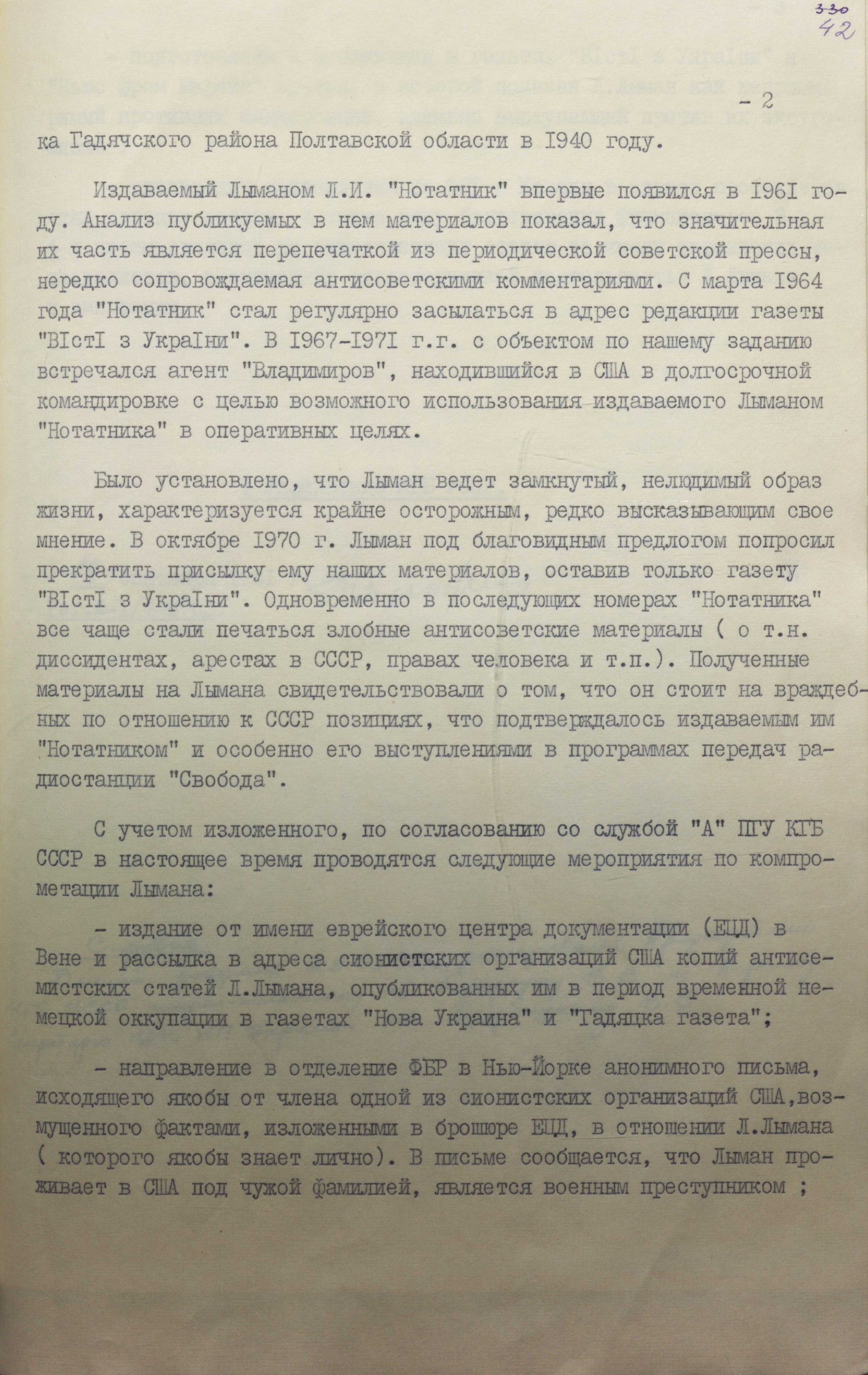
In an information report to the first secretary of the central committee of the communist party of Ukraine, Volodymyr Shcherbytskyi, dated January 25, 1974, the chief of the kgb of the Ukrainian ssr reported as follows: “Recently, the focus of “Notatnyk” has changed dramatically. It increasingly publishes anti-soviet materials from members of the OUN abroad. An analysis of their content, as well as operational information obtained by the state security committee, gives reason to believe that Lyman has established contact with the New York-based group of the Foreign Mission of the Ukrainian Main Liberation Council (FM of the UHVR).” (FISU. – F. 1. – Case 15386. – Vol. 1. – P. 194).
At the same time, they received information that L. Lyman had started working as a commentator on Radio Liberty. Having analyzed a number of his comments, the kgb concluded that the tactics of the work on him had to be changed completely.
Stop All Contacts. Prepare a Plan of Compromising
The kgb reviewed the issues of “Notatnyk” from 1974 to 1977 and calculated that 40 % of all the materials in it consisted of so-called malicious anti-soviet publications. In particular, they covered human rights violations in the ussr, persecution of dissidents, and arrests of those who disagreed with the policies of the communist party. At this, 50 % of the materials consisted of reprints from the soviet press. Those were neutral informational materials about life and activities in the Ukrainian ssr and the achievements of Ukrainians in science, culture, and literature.
In view of this, the kgb decided to put pressure on L. Lyman with quantity. That is, to send him even more materials through the “Ukraina” Society. “Placing them on the pages of the bulletin will displace anti-soviet publications,” one of the points of the plan stated. But even this did not have the desired effect. Soon, reports pointed out that he was publishing the texts, but adding comments that negated all efforts to show the advantages of the soviet way of life.
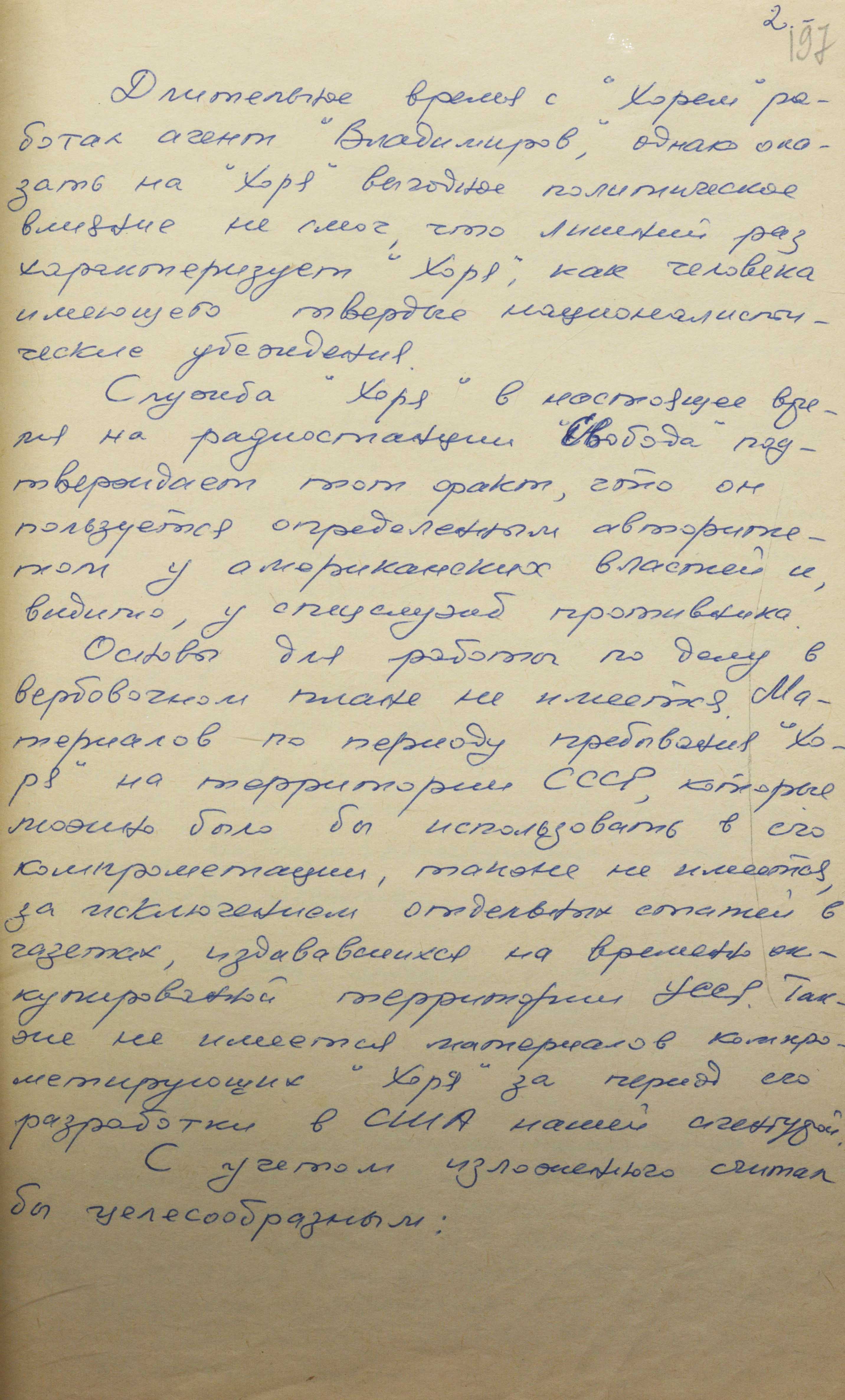
After further study of L. Lyman through agents and his acquaintances, analysis of correspondence, and collection of materials for the period of his residence in the ussr, kgb employees came to a disappointing conclusion. “There is no basis for working on the case in terms of recruitment,” they pointed out in the proposals to the leadership. “There is also no material from the period of “Tkhir”’s stay in the ussr that could be used to compromise him, with the exception of a few articles in newspapers published in the temporarily occupied territory of the Ukrainian ssr. There is also no material that would compromise “Tkhir” from the period of his cultivation by our agents in the United States.” (FISU. – F. 1. – Case 15386. – Vol. 1. – P. 197).
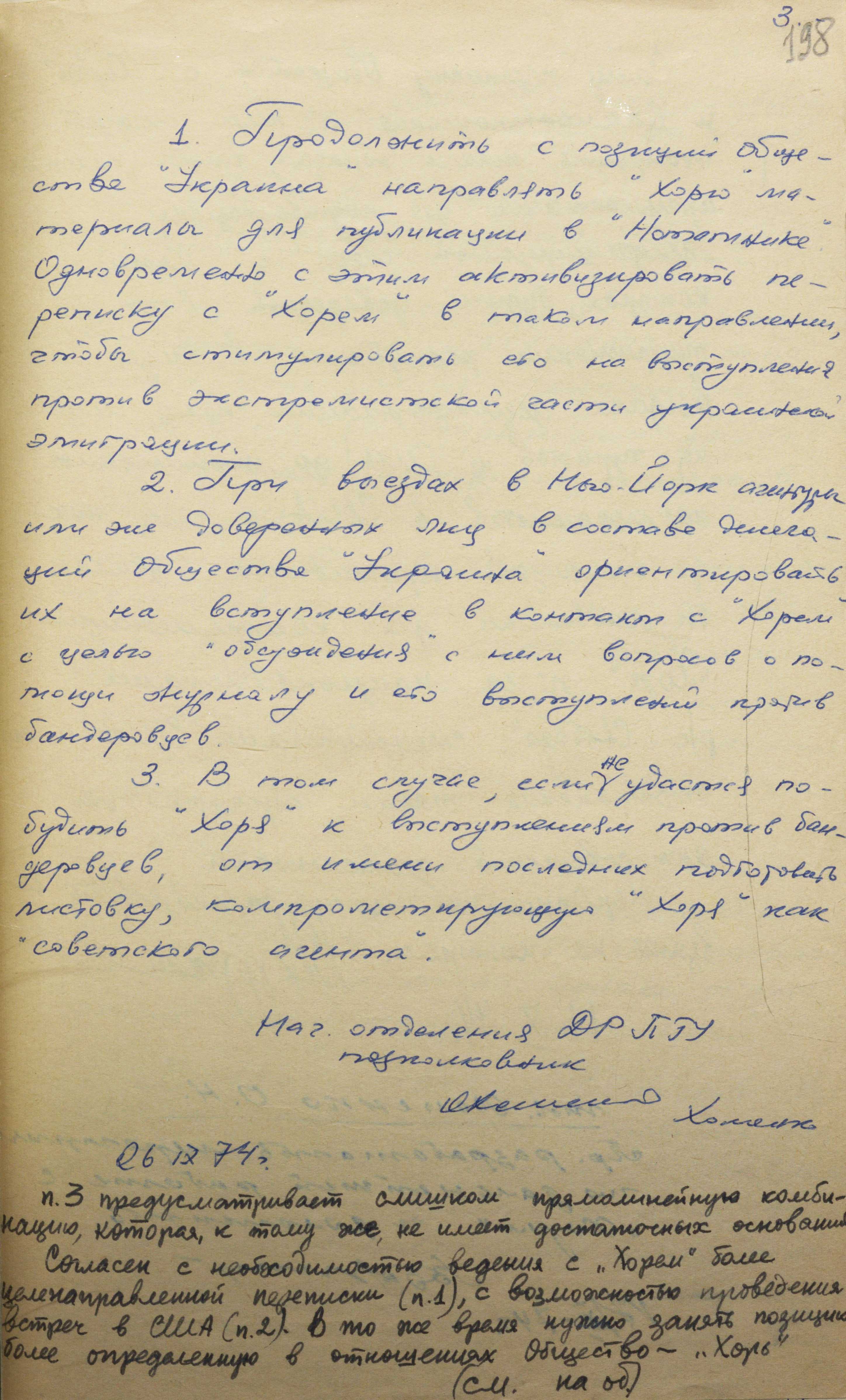
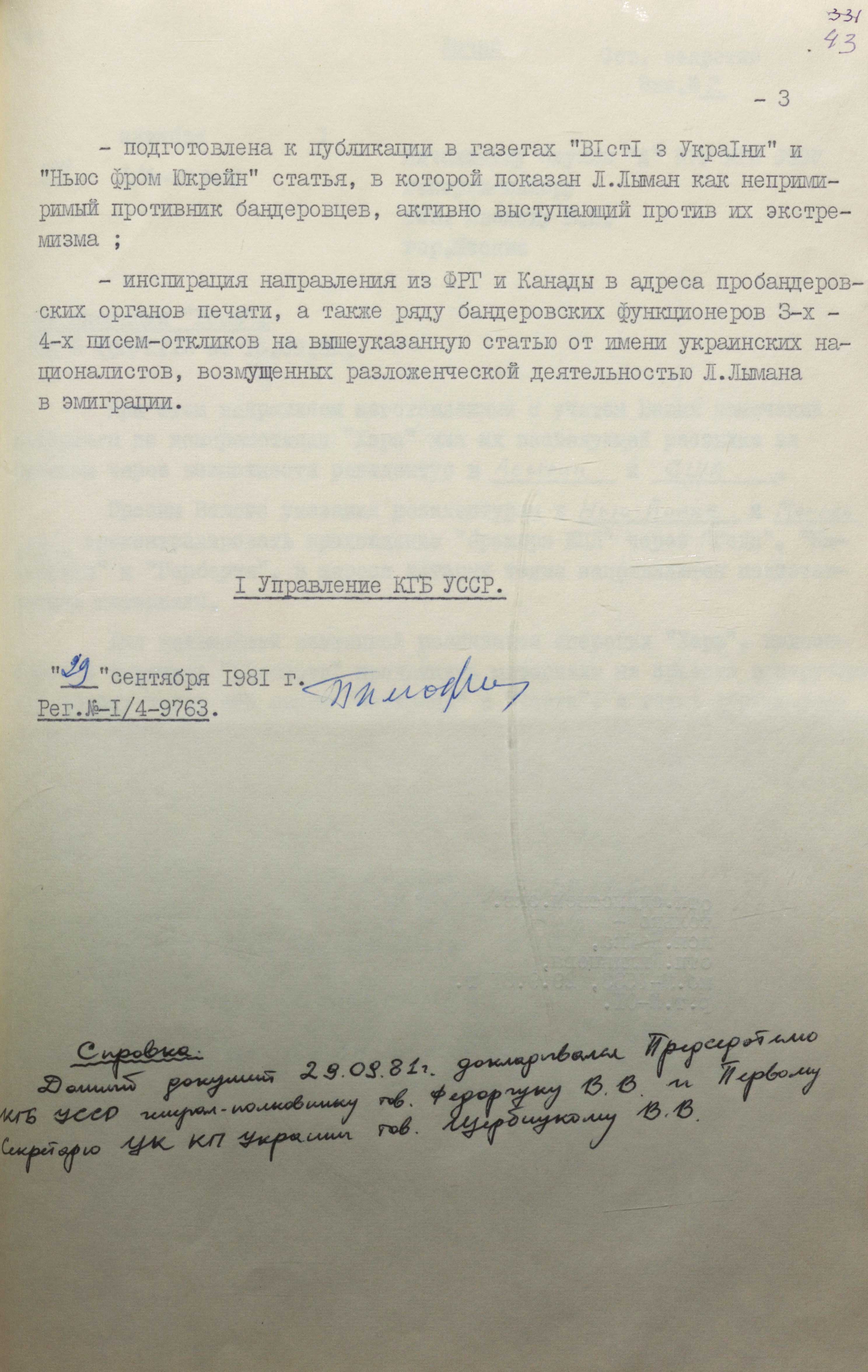
Therefore, it was decided to resort to a proven method – to compromise L. Lyman as an alleged soviet agent. They claimed that he corresponded with the editor of the “Ukraina” Society, reprinted articles from the soviet press in “Notatnyk”, and therefore collaborated with the kgb. They planned to produce and distribute such a leaflet on behalf of the Bandera wing of the OUN, whose supporters at that time were categorically opposed to contact with representatives of the Ukrainian ssr and the display of any achievements of the Ukrainian republic. But first, for greater credibility, they planned to create a certain basis for this idea. This is how it is reflected in one of the papers:
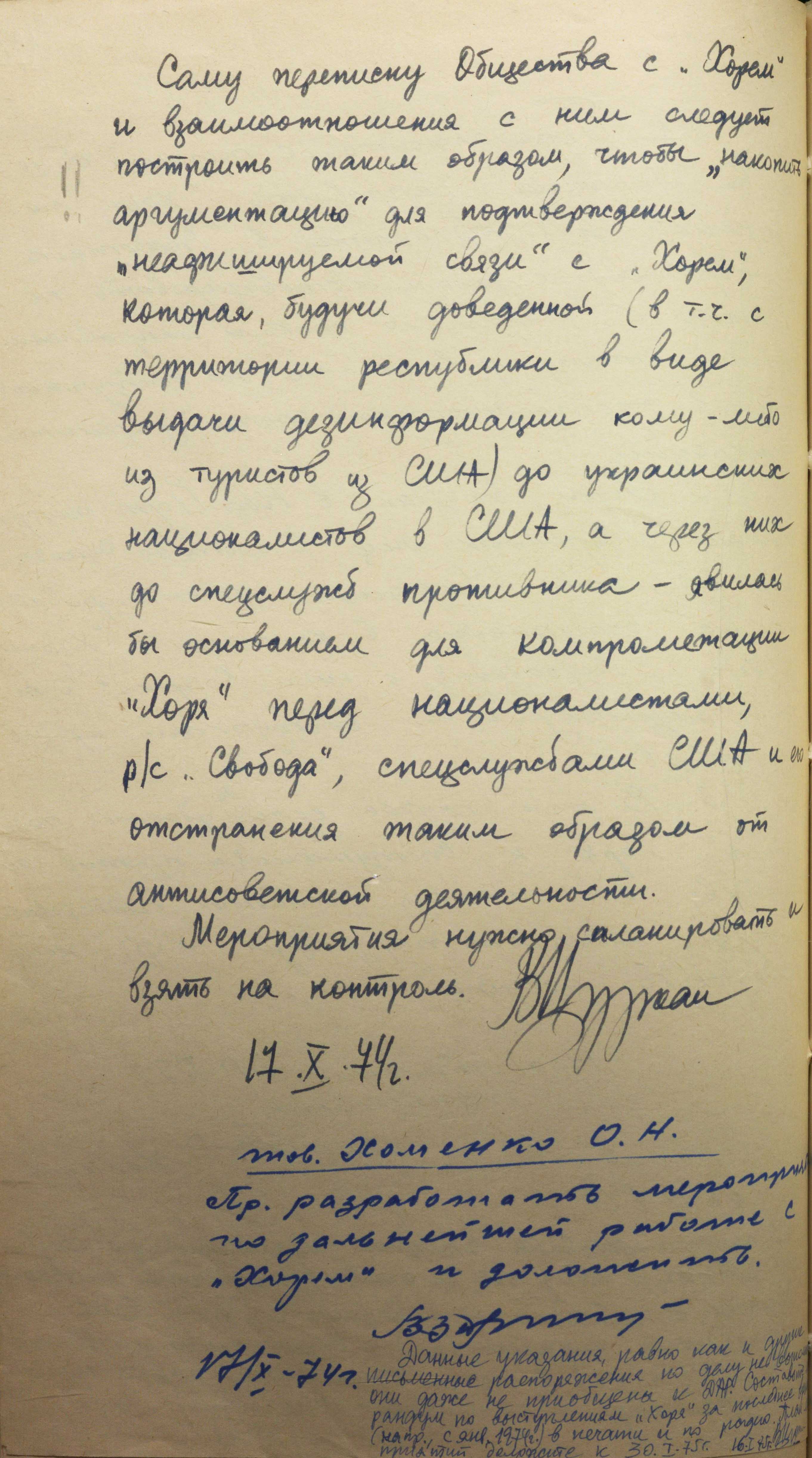
“Correspondence with “Tkhir” and relations with him should be structured in such a way as to “accumulate arguments” to confirm the “undeclared connection” with “Tkhir”, which, if reported (in particular, from the territory of the republic in the form of disinformation to one of the tourists from the USA) to Ukrainian nationalists in the USA, and through them to the enemy’s special services, would become a basis for compromising “Tkhir” in the eyes of nationalists, the “Svoboda” party, and US special services, and thus removing him from anti-soviet activities.” (FISU. – F. 1. – Case 15386. – Vol. 1. – P. 199).
But this method, which had worked repeatedly in situations with other individuals, did not work with L. Lyman. One of the kgb leaders made a resolution on the report, which stated: “This point involves a rather straightforward combination, which, again, does not have sufficient grounds”.
Thus, at that stage, the chekists concluded that no one would believe such “fairy tales”. However, they were not going to stop their efforts to force L. Lyman to renounce his position. An instruction came from the central kgb apparatus in moscow, to come up with something more convincing and substantial.
Over Simon Wiesenthal’s Signature. Forged
The kgb of the Ukrainian ssr drew up a plan for further action. The introductory part pointed out the mistakes made during the previous operational cultivation of L. Lyman. The essence was as follows: “Everything happened not as we planned, we were led by the nose, used for their own purposes”. This referred to representatives of the “Ukrainian national centers” who allegedly stood behind L. Lyman. In particular, it was noted that as a result of receiving and publishing a large amount of material from the Ukrainian ssr, “Notatnyk” managed to gain authority among similar publications in the USA, and more people began to read and subscribe to it. At the same time, critical comments on those texts allegedly made the bulletin a mouthpiece for anti-soviet forces.
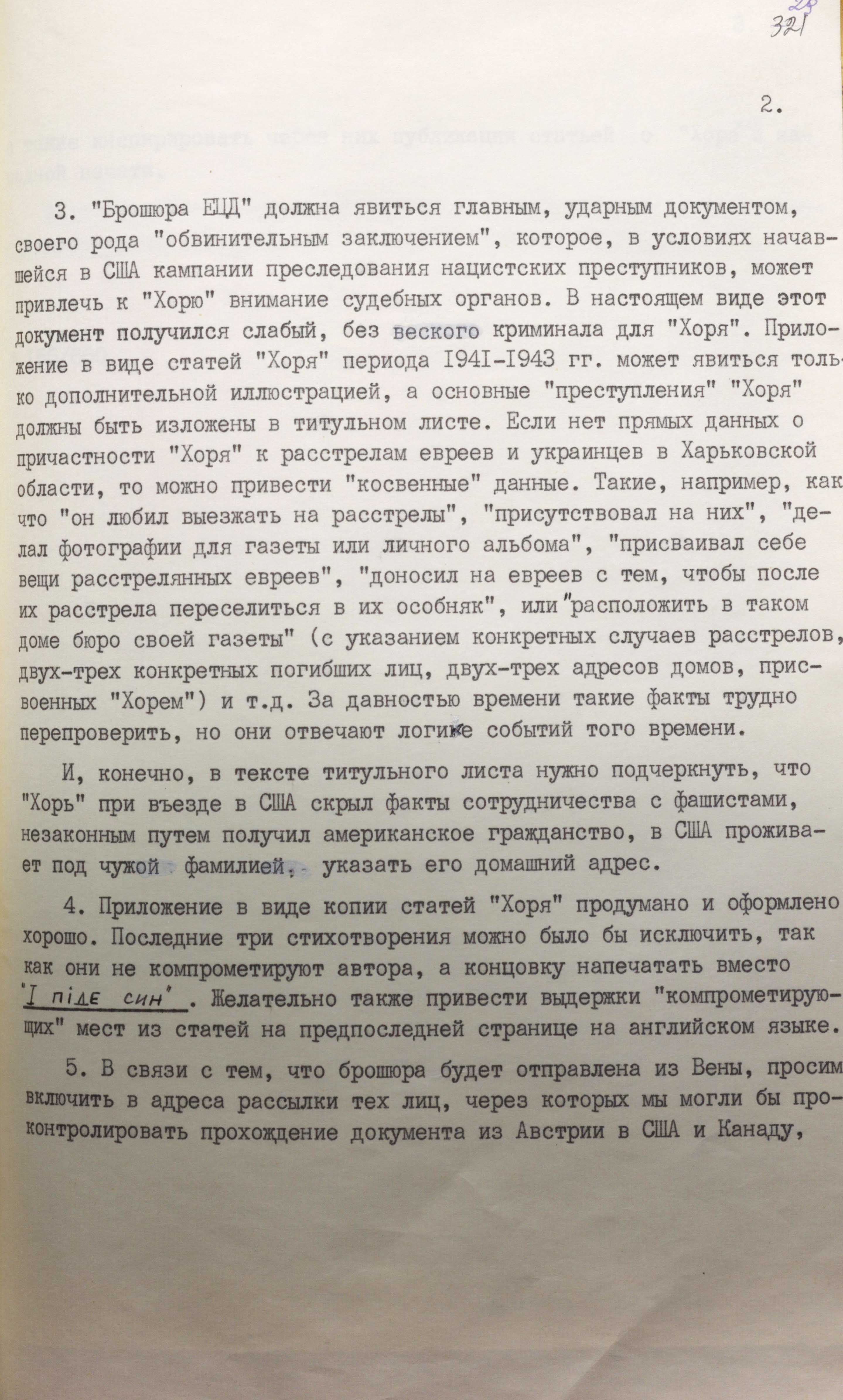
One of the miscalculations in the work was that, due to their desire to have L. Lyman as a useful person, they did almost nothing to collect information about him during his time under occupation during the war, which could have been used to compromise him if necessary. Now that such a need had arisen, the necessary materials were not available. No matter how hard the kgb tried, they could not find a single negative fact. They combed through practically all the newspapers in which he had been published during the war. But there were mostly sketches, correspondence, and stories about the unique soul of Ukrainians, the hard life under the bolsheviks, attempts to russify and re-educate, Ukrainian traditions, and everyday life. Here are just a few of the titles of individual publications: “Ukrainska Khata” (“Ukrainian Home”), “Ukrainian Song”, “The Heart Was Losing Peace”, “Violet Flowers”, “A Student’s Reminiscences”, “Sosnivtsi”, “Green Grove”. They also found and included poems. The following lines were highlighted in them:
“I saw: along thorny paths
They were driving the truth into mute Siberia,
Black clouds were floating above us,
A two-legged beast was gnawing at our souls.”
Or a poem entitled “And the Son Will Go...”:
“The father will embrace him, and the mother will cry,
And the son will say, “Farewell, I am leaving!”
Somewhere the sound of tanks will be heard,
And behind the village, cannons will roar.
So the day of parting and anxiety ripens,
The nights of steppe battles will begin.
The sons of Taras’ tribe
Will be led into battle by the idea of victory.
The father will embrace him: there are red flocks there.
The mother will cry: oh, executioners, executioners!
And the son will go. The morning of his land
Will be blooming in his heart
Like a rainbow.”
(FISU – F. 1. – Case 15386. – Vol. 2. – P. 54).
In some texts, phrases were highlighted in which L. Lyman critically commented on representatives of other nationalities among the local bolshevik authorities, who were overly zealous in implementing the decisions of the communist party, causing Ukrainians to suffer greatly in their own land. This was immediately seized upon and decided to be exploited.
“Taking into account the information that the subject is currently working for Radio Liberty,” one of the points of the plan stated, “where there is a struggle between different national groups, prepare and send on his behalf to the editorial offices of “Shliakh Peremohy”, “Klych Natsii”, “Visnyk OOChSU”, and “Kanadiyiskyi Fermer, letters criticizing individual employees of the radio station who are of Jewish nationality. At the same time, send an anonymous letter with threats from radio station employees to “Tkhir”. Another point reads as follows: “Depending on the nature of the compromising materials collected on the subject, decide on the advisability of producing documents in his handwriting from the war years that would testify to his participation in actions to destroy persons of Jewish nationality or other collaboration with the fascists.” (FISU – F. 1. – Case 15386. – Vol. 1. – P. 211).
According to declassified archival documents, employees of the kgb of the Ukrainian ssr, despite their best efforts, were unable to find such information. They only had materials about his work as a correspondent for the newspapers “Nova Ukraina” and “Hadiatska Hazeta” and a number of clippings from his publications. They informed their supervisors in moscow about this. But the “A” service (conducting so-called “active measures”) of the first main directorate of the kgb of the ussr did not want to hear about it. They had already planned an operation to publicly expose the Ukrainian emigrant as a “war criminal”.
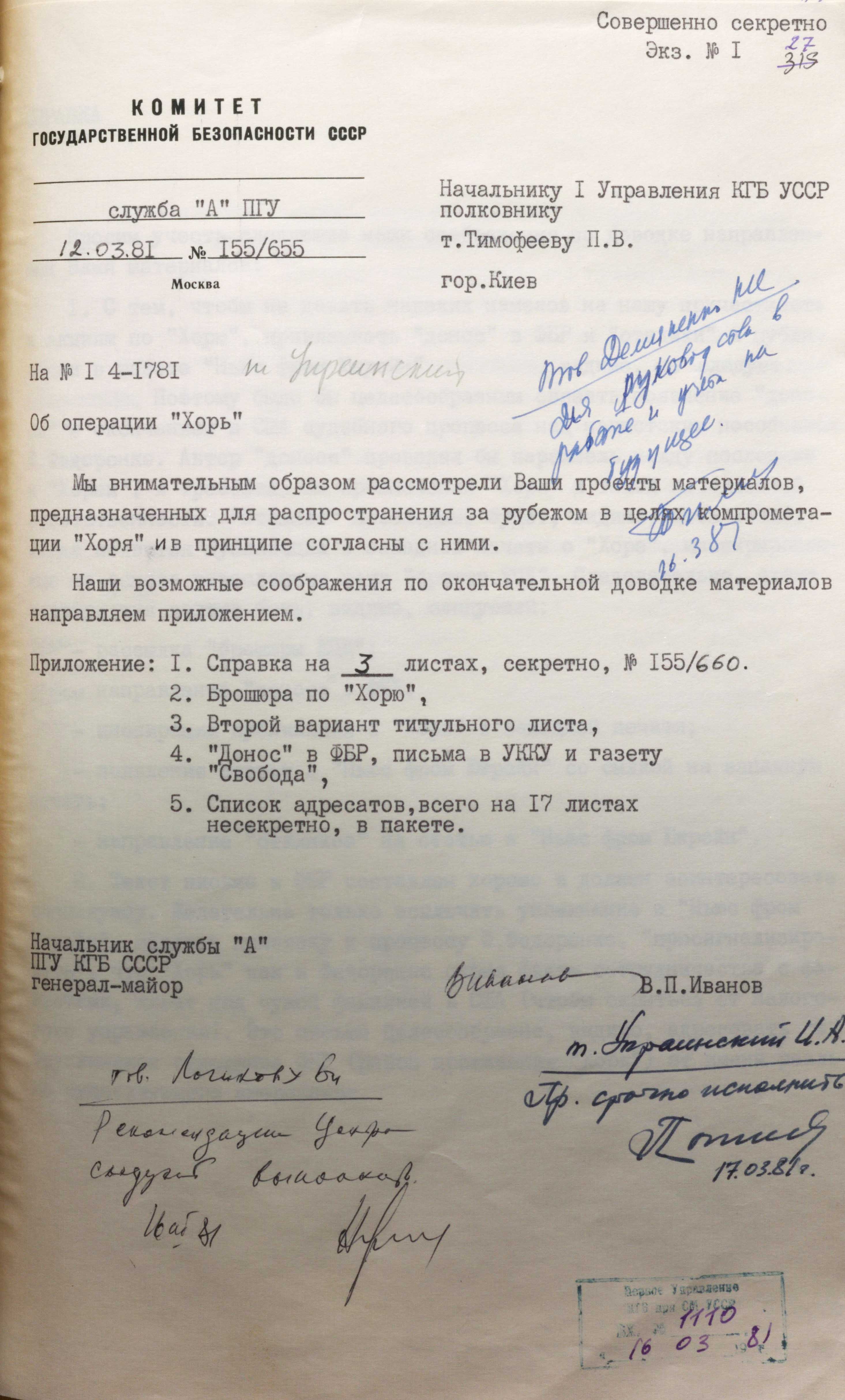
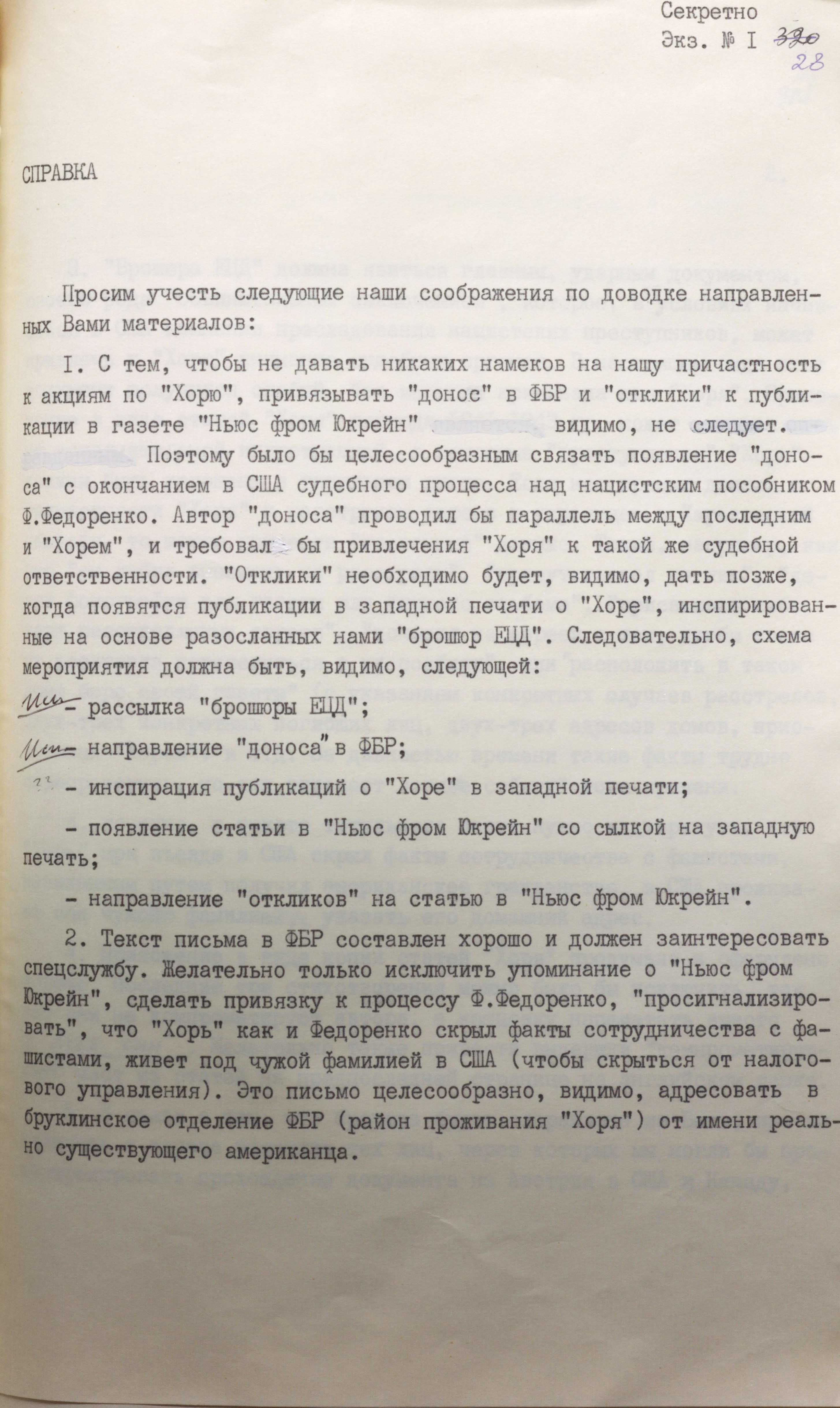
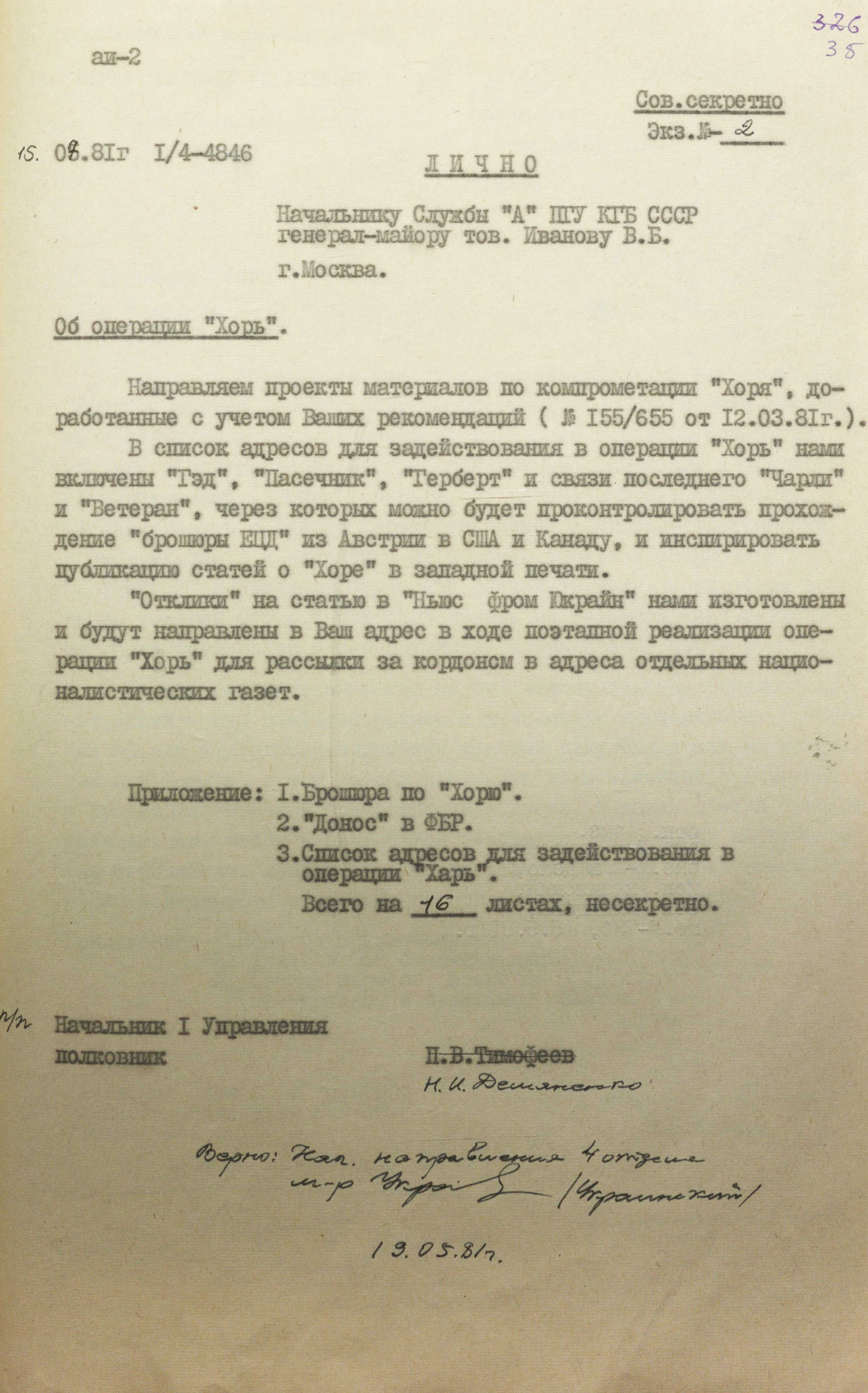
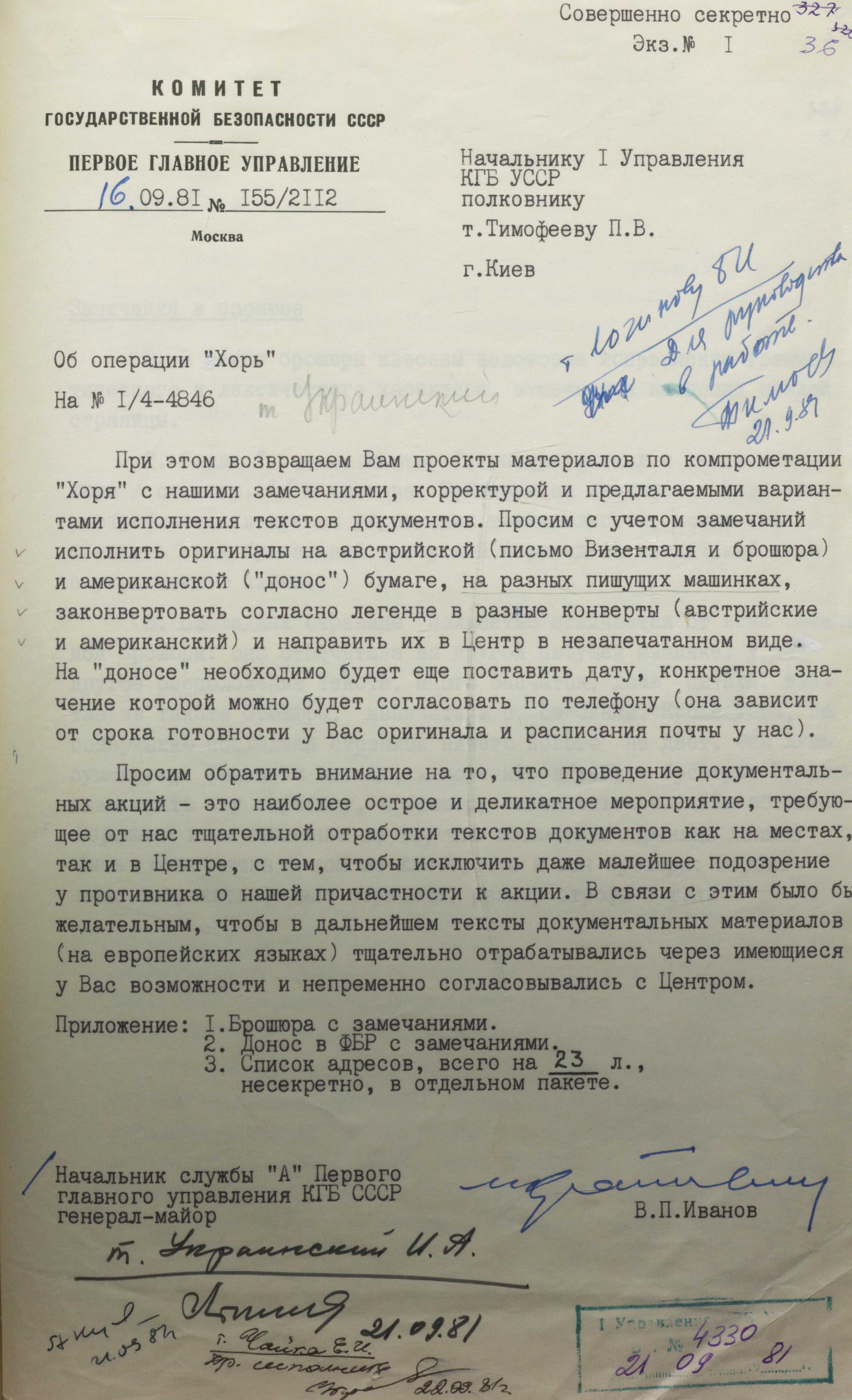
At the first stage, the kgb offices of the Ukrainian ssr prepared a text for a brochure about L. Lyman on behalf of the Jewish Documentation Center in Vienna (soon after, the Center was named after Simon Wiesenthal, known as the “Nazi hunter”). Through the operational capabilities of residenturas abroad, it was to be published in a number of newspapers in the USA and Canada, and then an investigation was to be initiated. But the brochure turned out to be somewhat unconvincing. In this regard, Service “A” wrote the following to Kyiv:
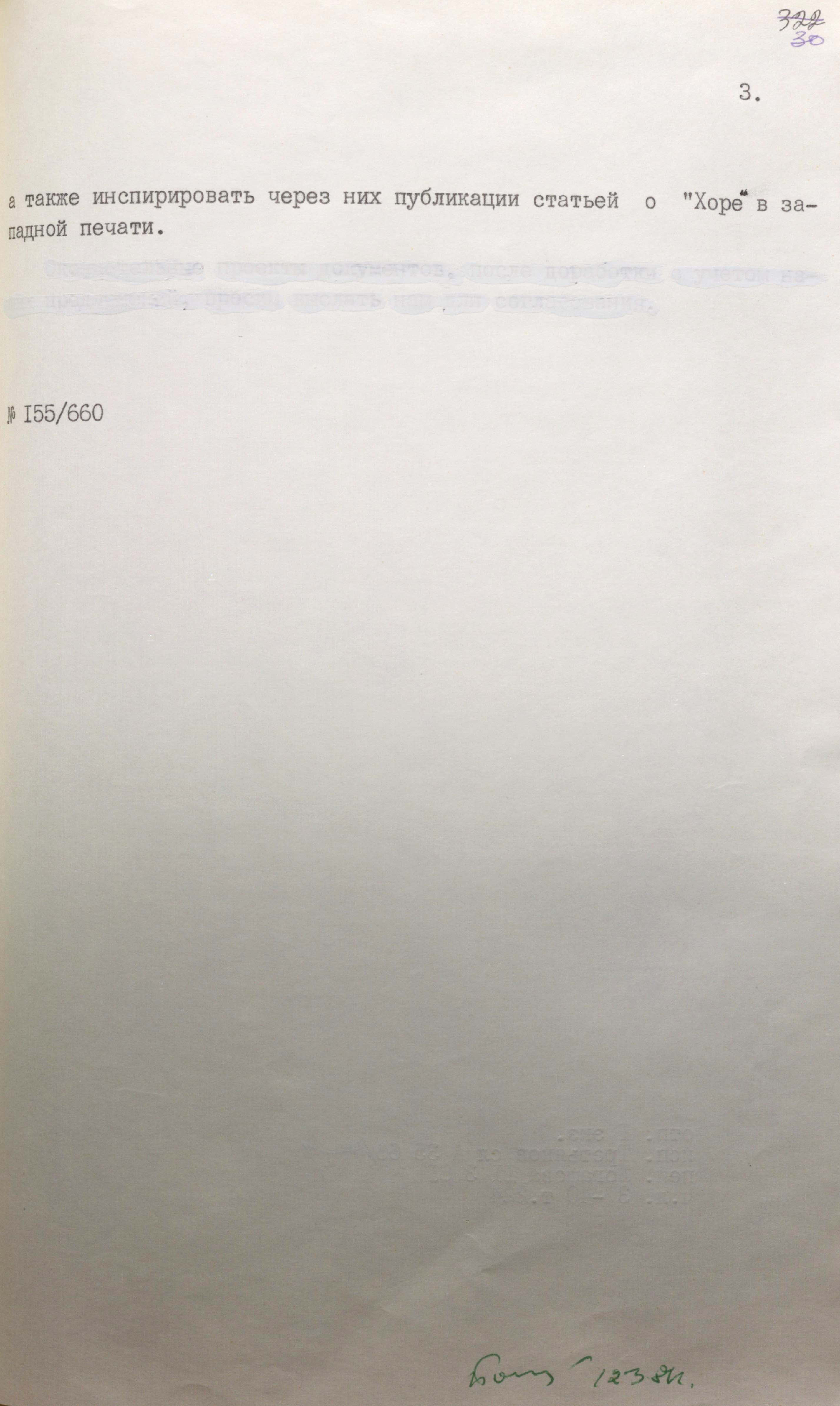
“The JDC’s brochure should become the main, striking document, a kind of “indictment” which, in the context of the campaign launched in the USA to prosecute Nazi criminals, could draw the judicial authorities’ attention to “Tkhir”. As it is, the document is weak, without any criminal charges... If there is no direct evidence of “Tkhir”’s involvement in the shooting of Jews and Ukrainians in Kharkiv region, then “indirect” information can be provided. Such as, for example, that he allegedly “liked to go to executions”, “was present at them”, “took photographs for the newspaper or his personal album”, “appropriated the belongings of executed Jews”, “he informed on Jews so that after their execution he could move into their homes” or “set up his newspaper’s office in such a house” (with specific references to executions, two or three specific victims, two or three addresses of houses appropriated by “Tkhir”), etc. Due to the passage of time, such facts are difficult to verify, but they correspond to the logic of the events of that time” (FISU. – F. 1. – Case 15386. – Vol. 2. – P. 321).
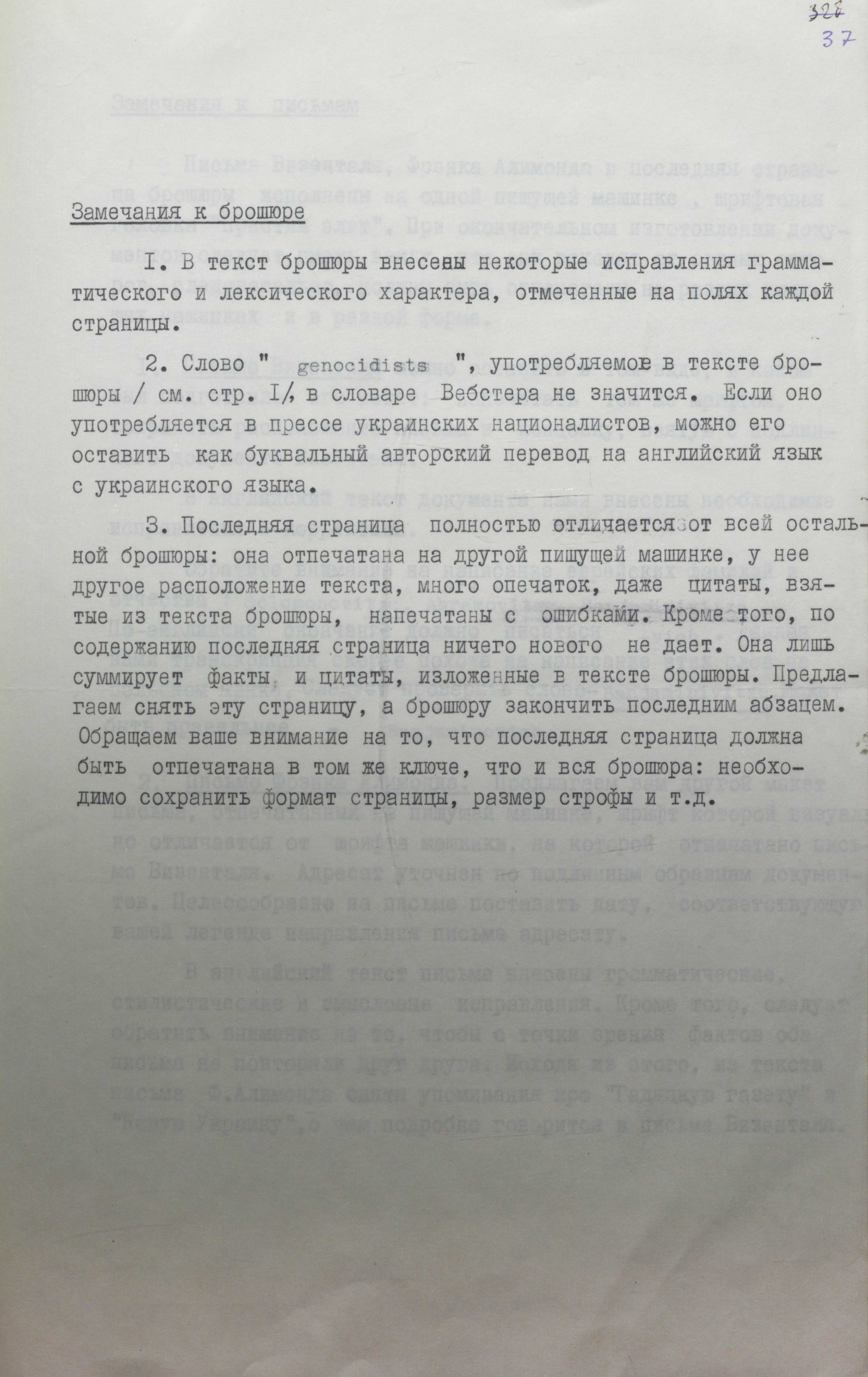
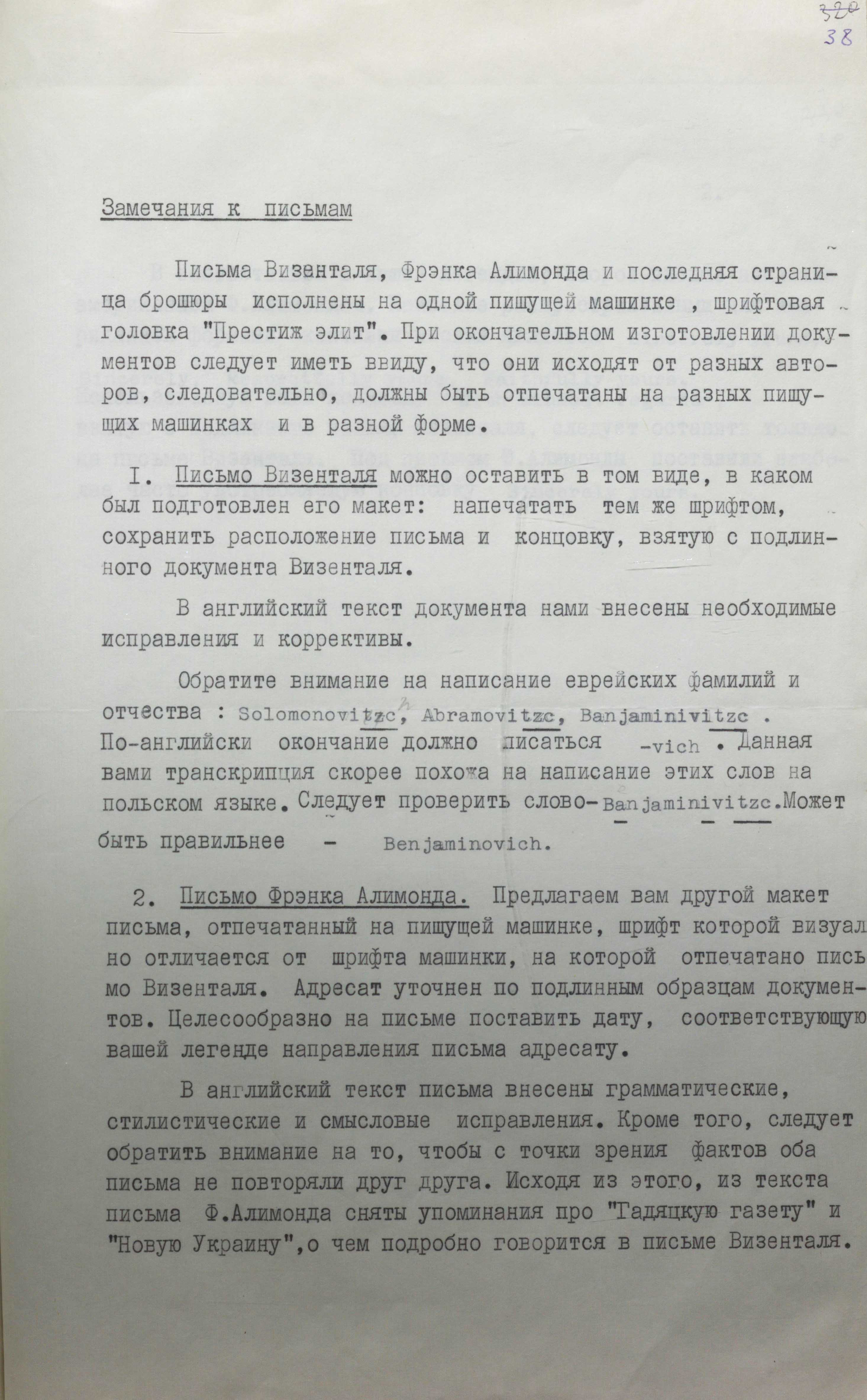
The last phrase is decisive. In other words, make everything up, just do it convincingly. No one will be able to verify anything anyway. And, come the need, you will manufacture additional evidence. The final version of the “JDC’ brochure” is not included in the case materials. There is only a description of how different texts and documents were forged. In particular, samples of JDC’s documents were sent from moscow to Kyiv so that they could be made identical. Since these were photocopies, the explanation stated that all the source details above the document date were in light blue, as was Simon Wiesenthal’s facsimile. The documents should be printed on thin white paper such as “Meteor Onion Skeen”.
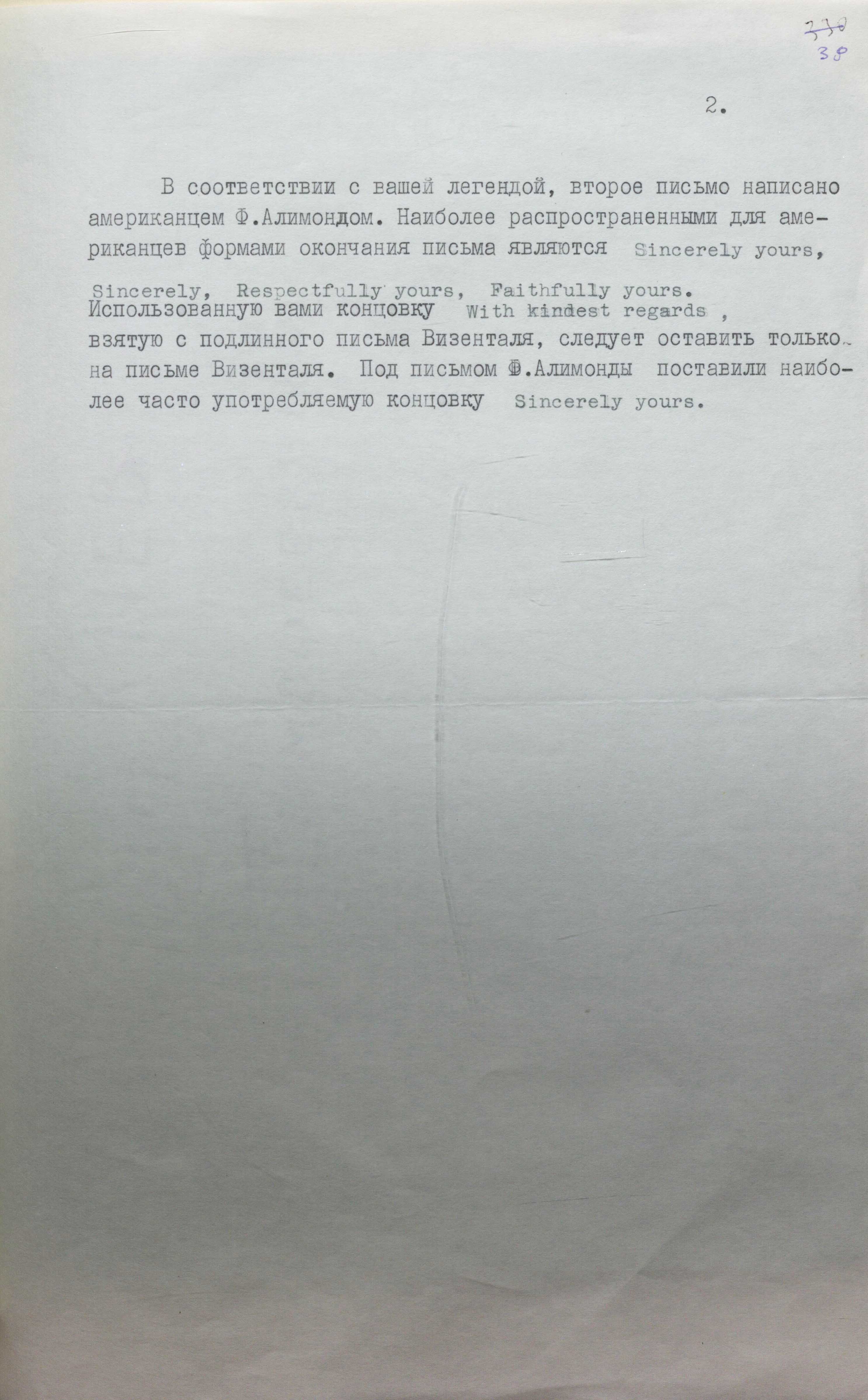
Variants of forged letters bearing Simon Wiesenthal’s signature were sent for approval before being sent to addressees in the USA and Canada. The corrected texts, which were returned for revision, were riddled with grammatical and factual mistakes. Attention was drawn to the fact that they were typed on the same typewriter, which was easy to notice. But that did not stop them. Only Simon Wiesenthal’s forged signature was not questioned.
Similarly, was manufactured an anonymous “denouncement” on L. Lyman to the US FBI on behalf of a member of one of the Zionist organizations, who, after reading the “brochure”, recalled that he had known the person and confirmed everything. Besides, he claimed that L. Lyman had allegedly changed his surname on purpose to hide his past and evade taxation. This statement was also intended to initiate a judicial investigation.
kgb residenturas in New York and Montreal were instructed to promote these materials through agents among journalists in print media. An interesting document in this regard is a coded telegram from moscow dated March 1982. It said that agent “Herbert” had not yet succeeded in publishing this in one of the American newspapers through an acquaintance who was a journalist. For some reason, they were not publishing it, they were having doubts. The date on the telegram indicates that at that time, the kgb had been investigating into L. Liman for 16 years. After that, the investigation continued for another five years. According to archival documents, it was unsuccessful.
Throughout that period, L. Lyman worked as a commentator for Radio Liberty. He did not change his position or place of residence. Nor did he spoil his relationships with his colleagues, who were of different nationalities. He resigned from his job in 1987, at the age of 65, and became a pensioner. Meanwhile, the kgb reported that as a result of “active measures” taken against him (the active phase of which took place in 1982!), they had succeeded in getting him fired from the radio station. And once again, they sinned against the truth.
So the case was closed and sent to the archives. Apparently, they realized that they had wasted so much time and effort to no avail. First, in trying to involve him in propaganda activities in favor of the ussr, and then in compromising him as an enemy of the soviet people, which he never was. Moreover, he did not even participate in the political life of Ukrainian emigration. At the same time, the kgb believed that people like him had to be backed by certain nationalist centers or foreign special services.
After Leonid Lyman was left alone, he lived for another fifteen years. He passed away on October 31, 2003, in New York. A year earlier, the Kyiv publishing house “Zadruha”, edited by Ukrainian literary scholar R. Dotsenko, published a book of L. Lyman’s works entitled “Memory” (poetry and prose).