“Spanish Children” in the ussr. Return to Their Motherland... Through Cooperation with the kgb
12/18/2025
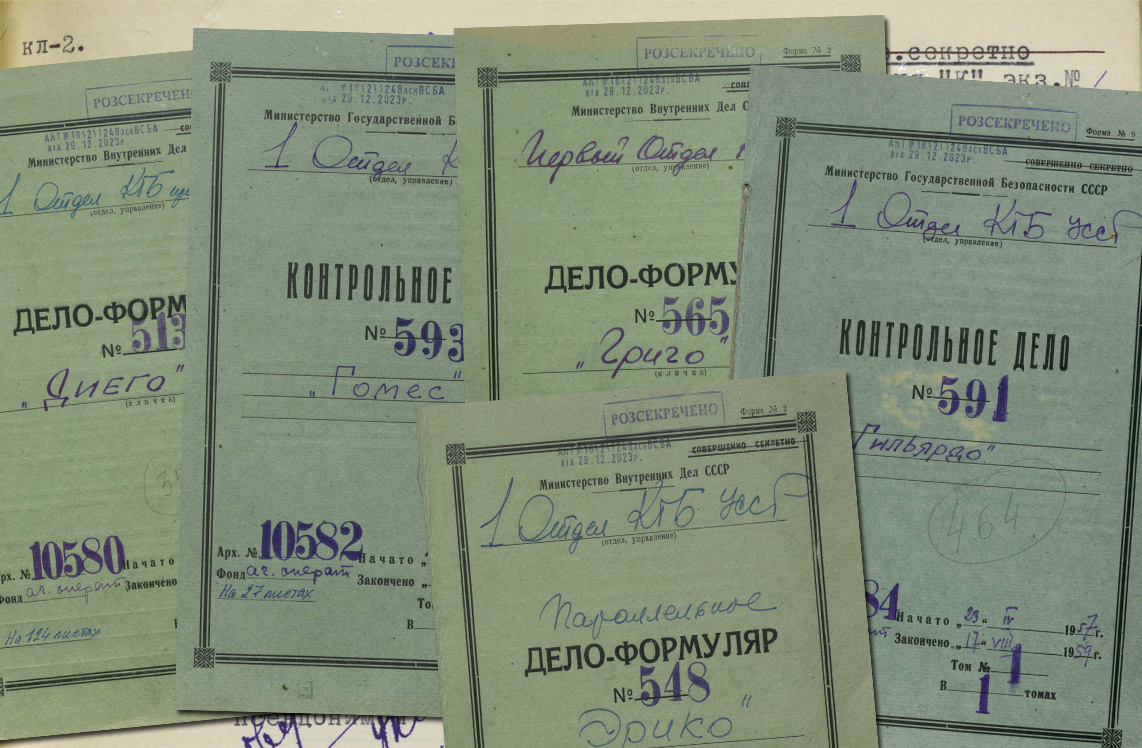
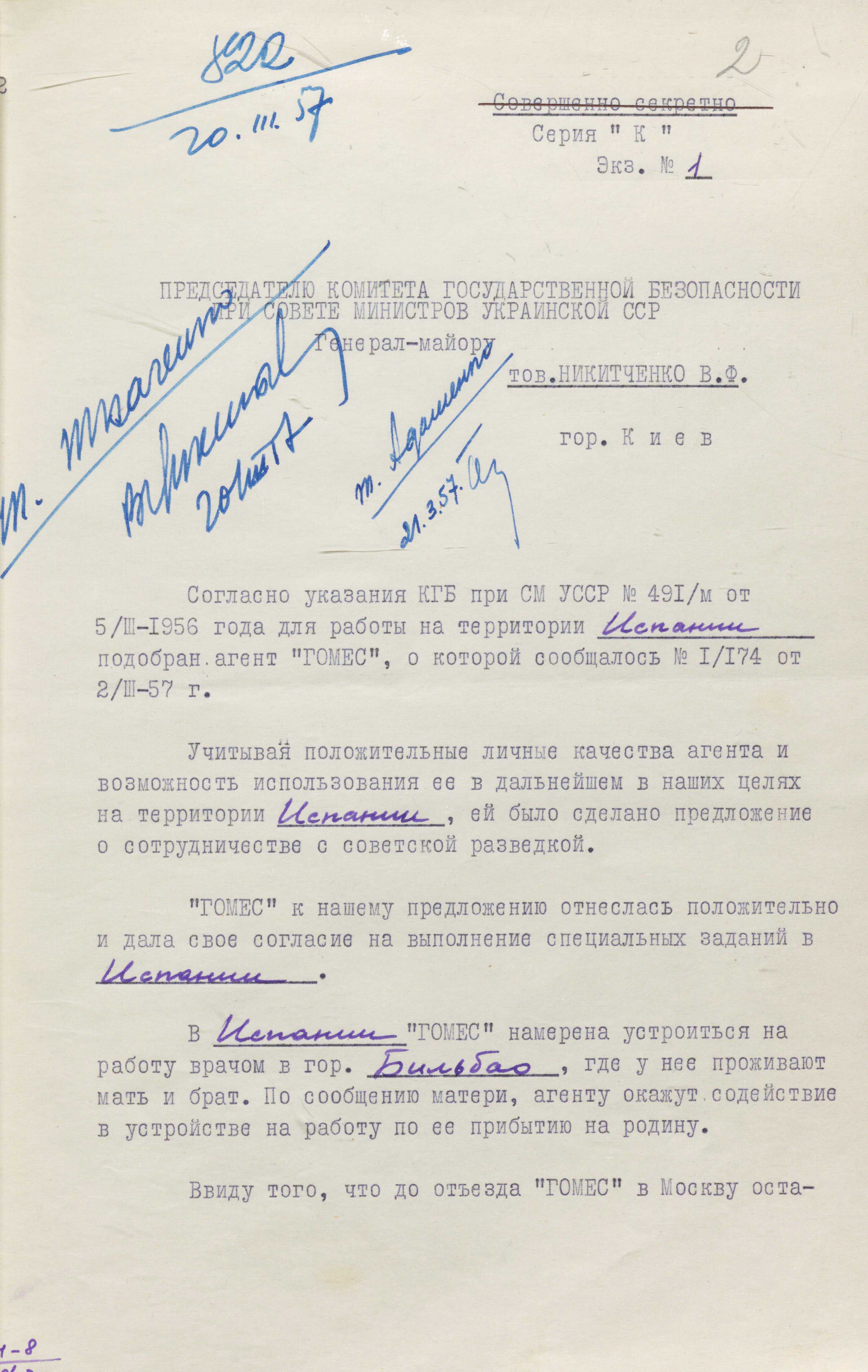
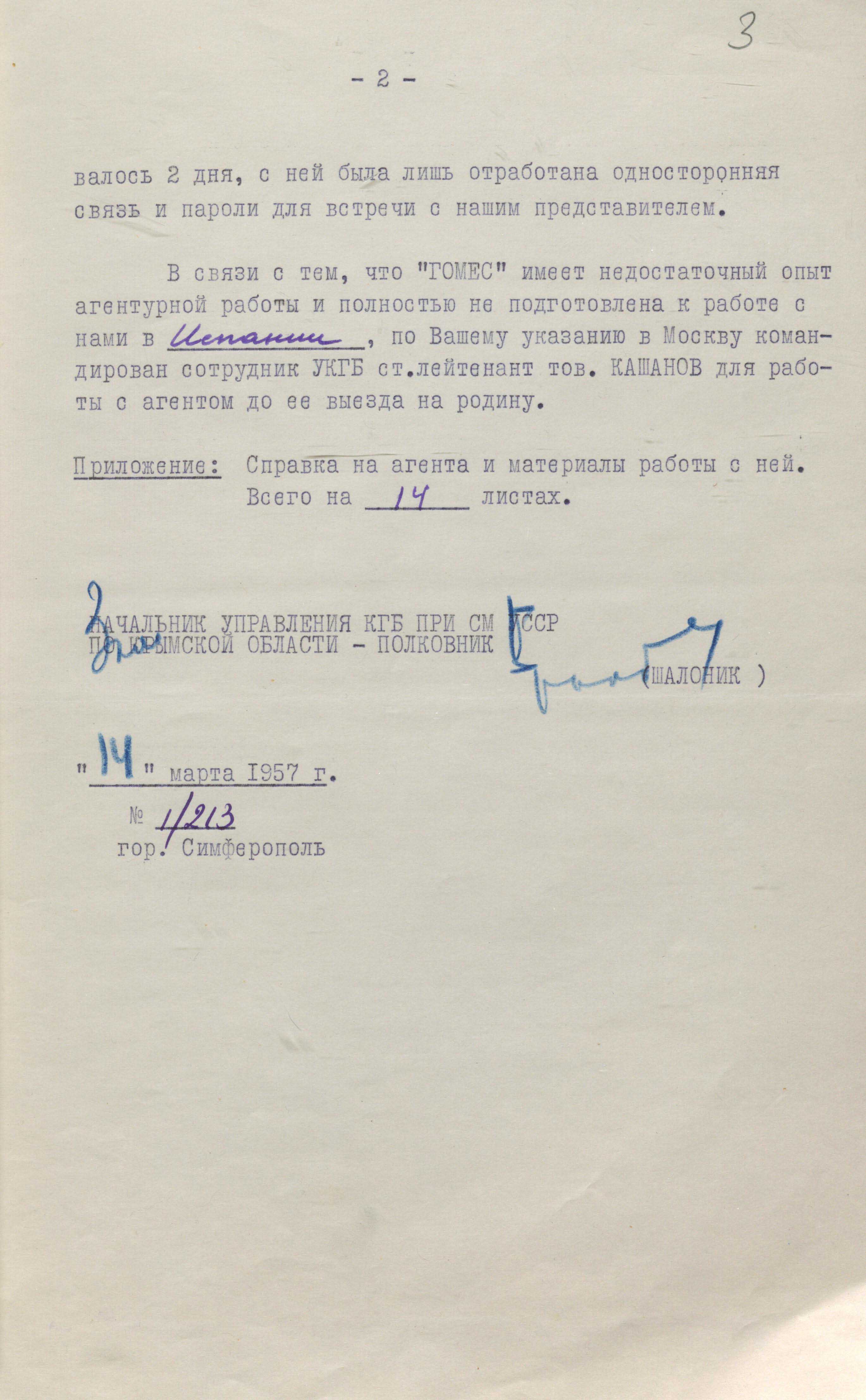
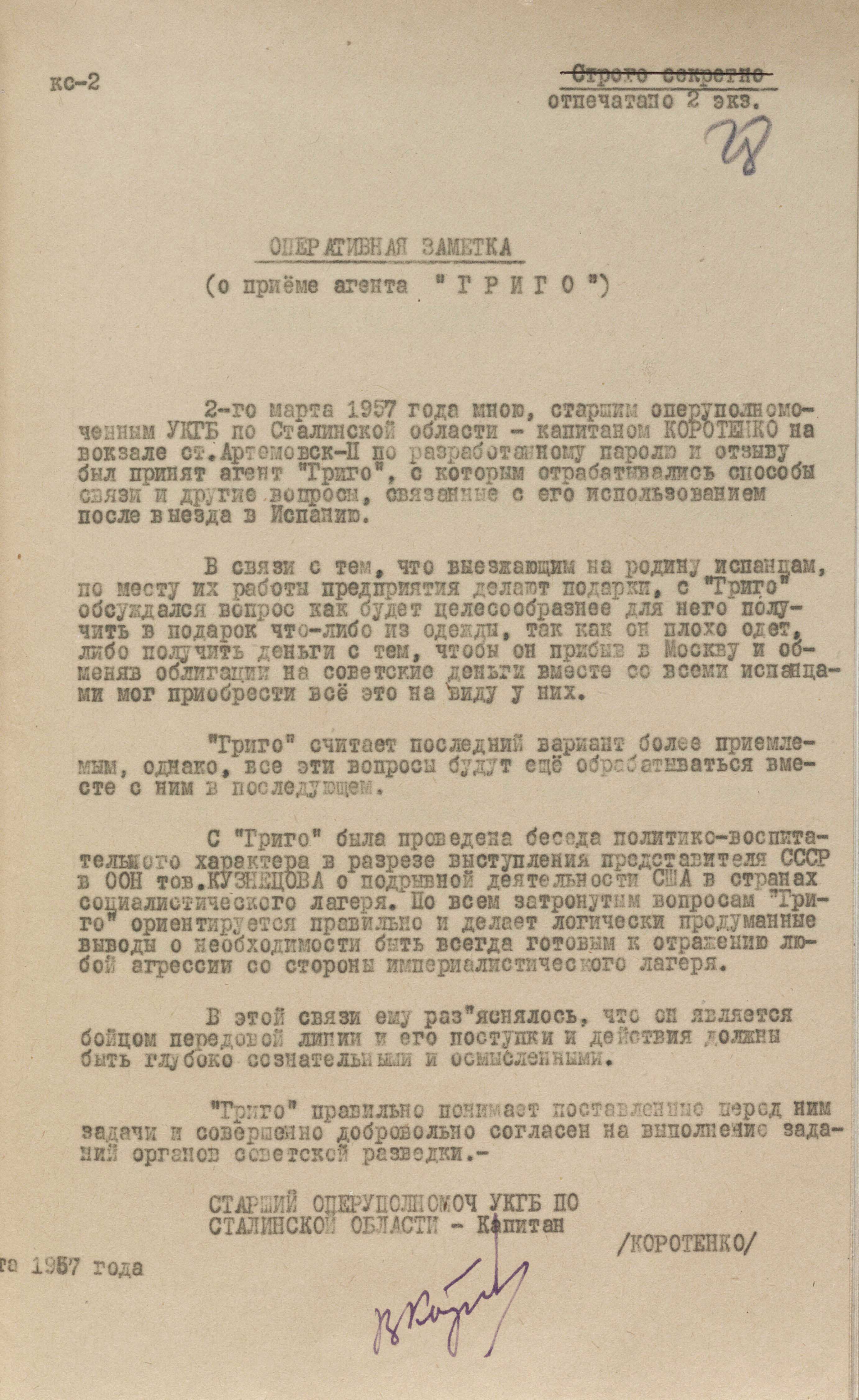
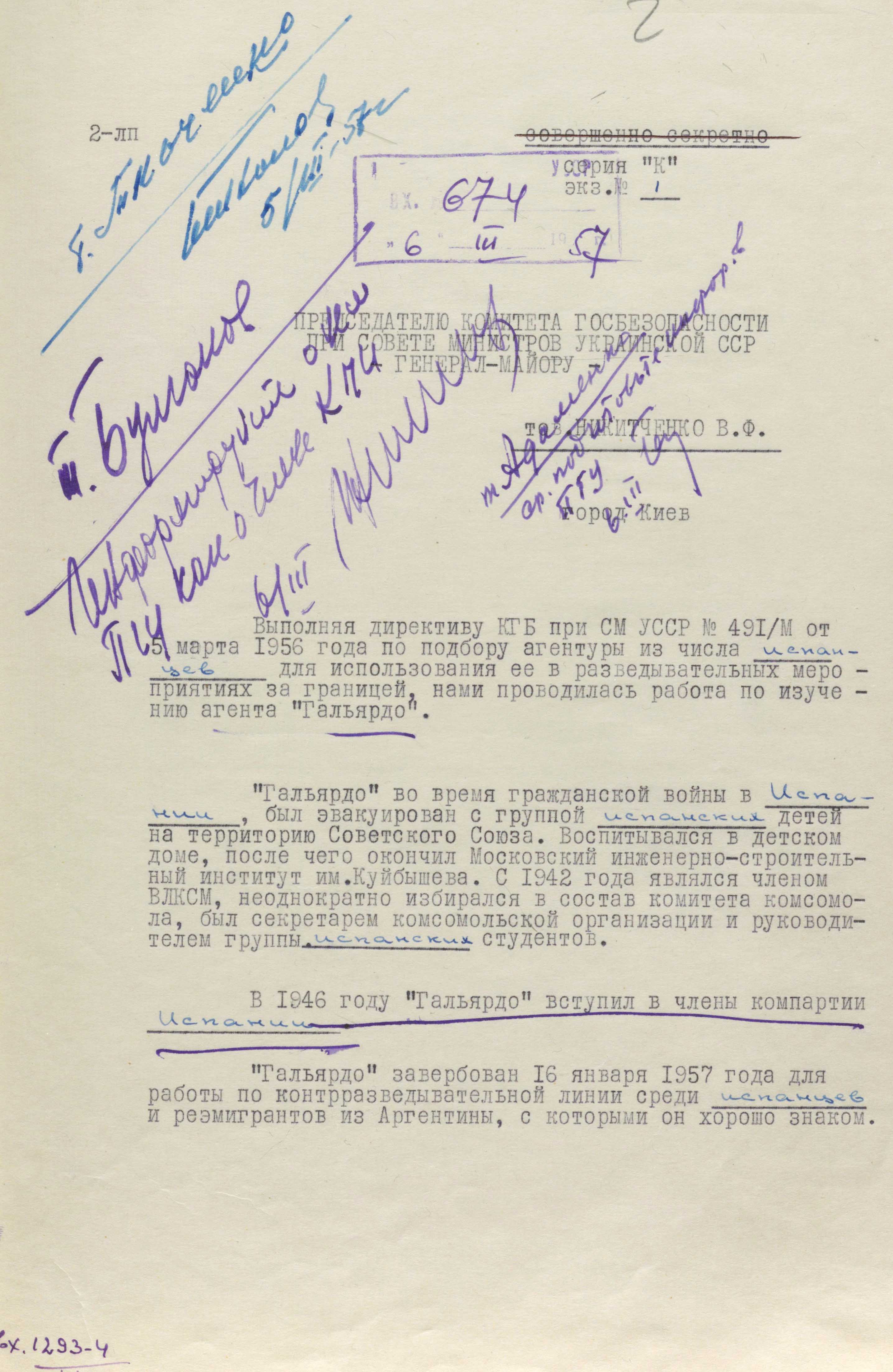
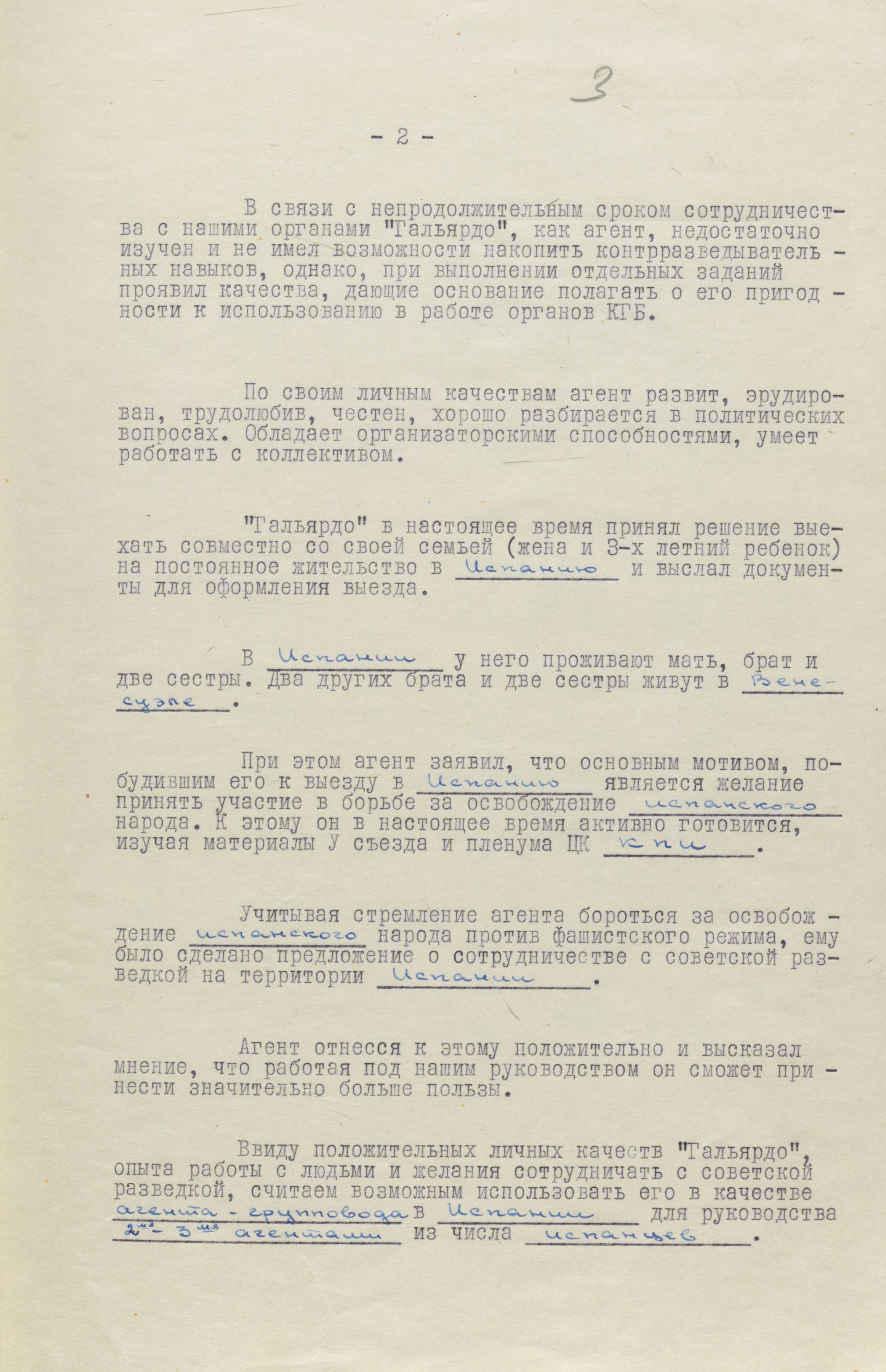
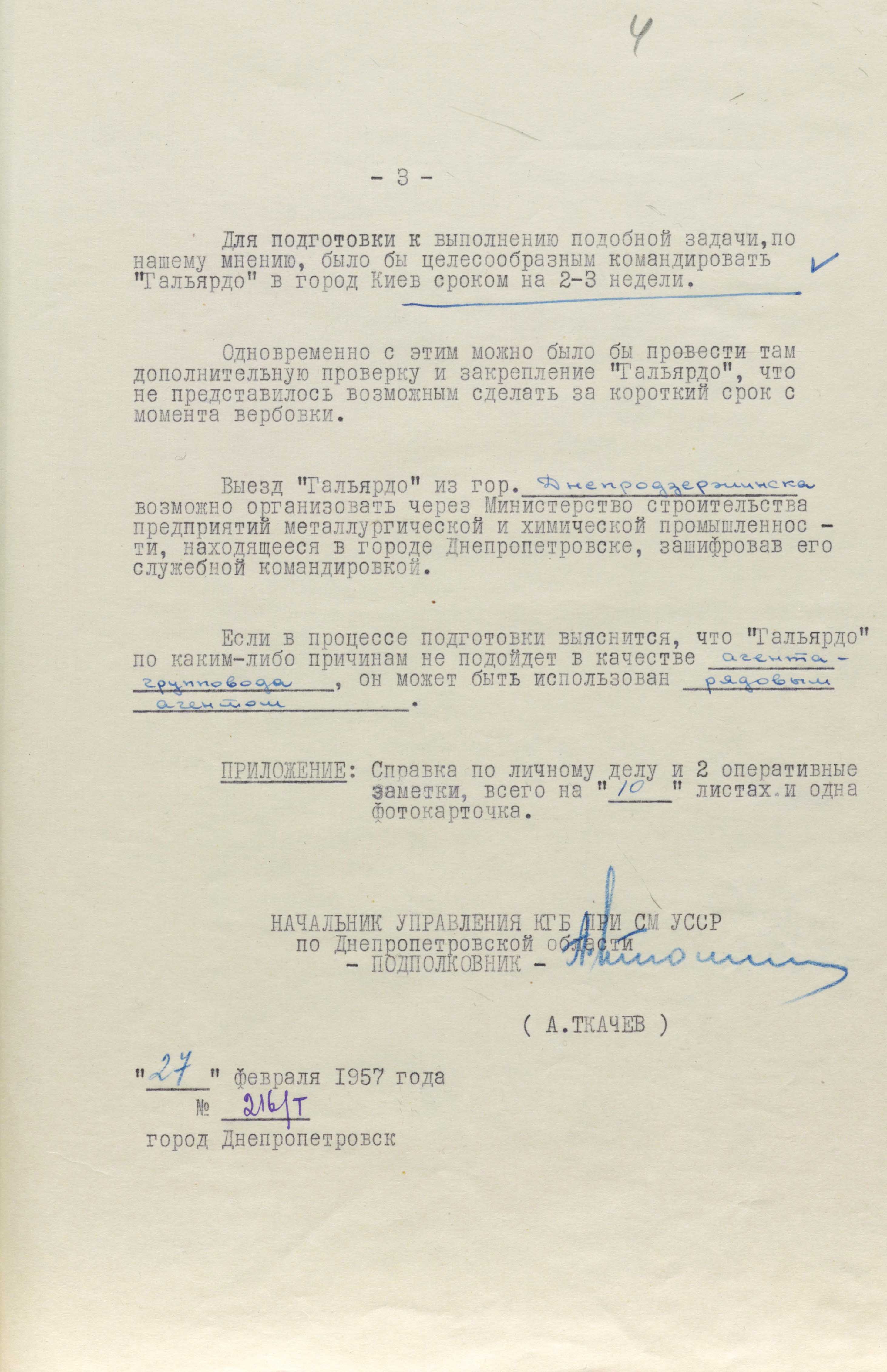
A number of cases involving former “Spanish children” who were taken from Spain to the ussr in 1937–1938 to escape the war have been found in the archives of the Foreign Intelligence Service of Ukraine. The files date back to the mid-1950s, when they were repatriated to their homeland. According to declassified documents, shortly before their departure, many of those young men and women, now adults, met with kgb officers, who established operational contact with them, persuaded them to cooperate, taught them the basics of illegal work abroad, worked out passwords and methods of communication, gave them tasks, and paid them money.
“Real” was summoned to the Simferopol city military commissariat in March 1957 to verify his military registration documents. Prior to that, he had served in the soviet army from 1955 to 1956 as a driver in a motorized battalion, and participated in the “suppression of the counterrevolutionary uprising in Hungary”. This was mentioned in his service record. He did not serve until the end of his term because his father requested early demobilization from the army because of the family’s application for repatriation to Spain.
At the military commissariat, a man approached him, introduced himself as a kgb employee, and proposed going for further discussion to the office of the kgb of the Ukrainian ssr in Crimean region. It was there that he was given the code name “Real”. This was obviously because the young man was an avid fan of the Madrid football club “Real”. He was also fond of boxing. His coach was a distant relative, a former boxing champion of Spain. This circumstance added “pluses” to his characterization, which had been compiled by the kgb in advance. At the same time, there were other advantages that drew attention to him.
“Real” was taken to the ussr as part of one of the first groups of Spanish children. This happened shortly after the start of the Spanish Civil War (1936–1939). It was an armed bloody conflict between the republican government of communists, socialists, and monarchists, supported by the ussr, and the right-wing nationalist forces led by General Francisco Franco, supported by Germany and Italy. The brutal confrontation resulted in about half a million deaths and hundreds of thousands of people forced into exile.
Among those who were taken out of the country, there were more than 34,000 children, mostly aged five to fifteen. Most of the children ended up in France, Belgium, and Great Britain, where they were placed with local families offering more or less comfortable living conditions. Several hundred people went to Switzerland, Denmark, and Mexico. About three thousand children were taken to the ussr. The soviet government actively supported the Spanish communist party at the time. It supplied the republican army with tanks, aircraft, and artillery, created international brigades, and sent to Spain the nkvd representatives, who organized numerous covert operations in the country, including provocations and assassinations. Spaniards paid for military and political assistance with their gold reserves. Taking advantage of the republicans’ desperate situation, the kremlin leadership organized the secret shipment of about 510 tons of gold to the ussr by ships. The cargo was delivered to Odesa and then – to moscow. From there, the gold never returned to Spain.
The ships with the children arrived at the ports of Leningrad, Odesa, and Yevpatoria. From there, they were taken to children’s homes (state-run orphanages – Transl.). More than a dozen of such orphanages were created: five in the Ukrainian ssr (Odesa, Yevpatoria, Kherson, Kharkiv, Kyiv), and the rest – in the Russian Federation. Spanish and soviet professionals served as teachers and educators. Over time, teaching in russian became predominant, as did soviet education, narratives, and assessments of events in the country, in the world, and in Spain itself. Love for the ussr as the most advanced and humane country in the world, for everything soviet, gratitude for salvation, was cultivated, and joseph stalin was glorified as the savior and best friend of Spanish children.
For another two years, until the defeat of the Spanish republican government and the end of the war, children would be taken to various congresses, forums, plants, and factories, led into halls with raised fists, greeted with loud applause, and then reports on those events would be published in all the newspapers. Soon, they began to be gradually forgotten, less money was allocated for the maintenance of such orphanages, and numerous cases of crime among Spanish children, their convictions, and even their serving sentences in the GULAG were hushed up.
When the children came of age, the question of their citizenship arose. This problem was also hushed up by soviet propaganda. Appropriate work was carried out and conditions were created to force them to renounce their Spanish citizenship and accept the soviet one.
“Real” arrived at the ussr at the age of two with his parents. Despite this, he was also placed in a children’s home. First in moscow region, then in Yevpatoria. In 1955, he graduated from high school in Simferopol and was already living with his parents. The case files do not indicate where they had been before that or what they had been doing. They only mention that his father had been a party official in Spain under the republican government, had been involved in the work of the military court, and had fought on the side of the republican forces.
In a conversation with kgb officers, “Real” said that his father had responded to the call of the communist party of Spain to return to his homeland in order to join the fight against General Franco’s regime. His father received permission from the Spanish government to repatriate their family. The process of obtaining all the necessary documents was underway.
At this stage, the chekists received confirmation of the reviews and characteristics of the young man that they already had at their disposal. So they did not put the matter on the back burner but immediately made an offer of secret cooperation. “Real” replied that he would be happy to fulfill any task assigned to him by the kgb and considered it his duty, as he well remembered the oath he had taken in the soviet army, in which there were the following words: “I swear... to be loyal to my people, my soviet motherland, and the government of the ussr to my last breath”.
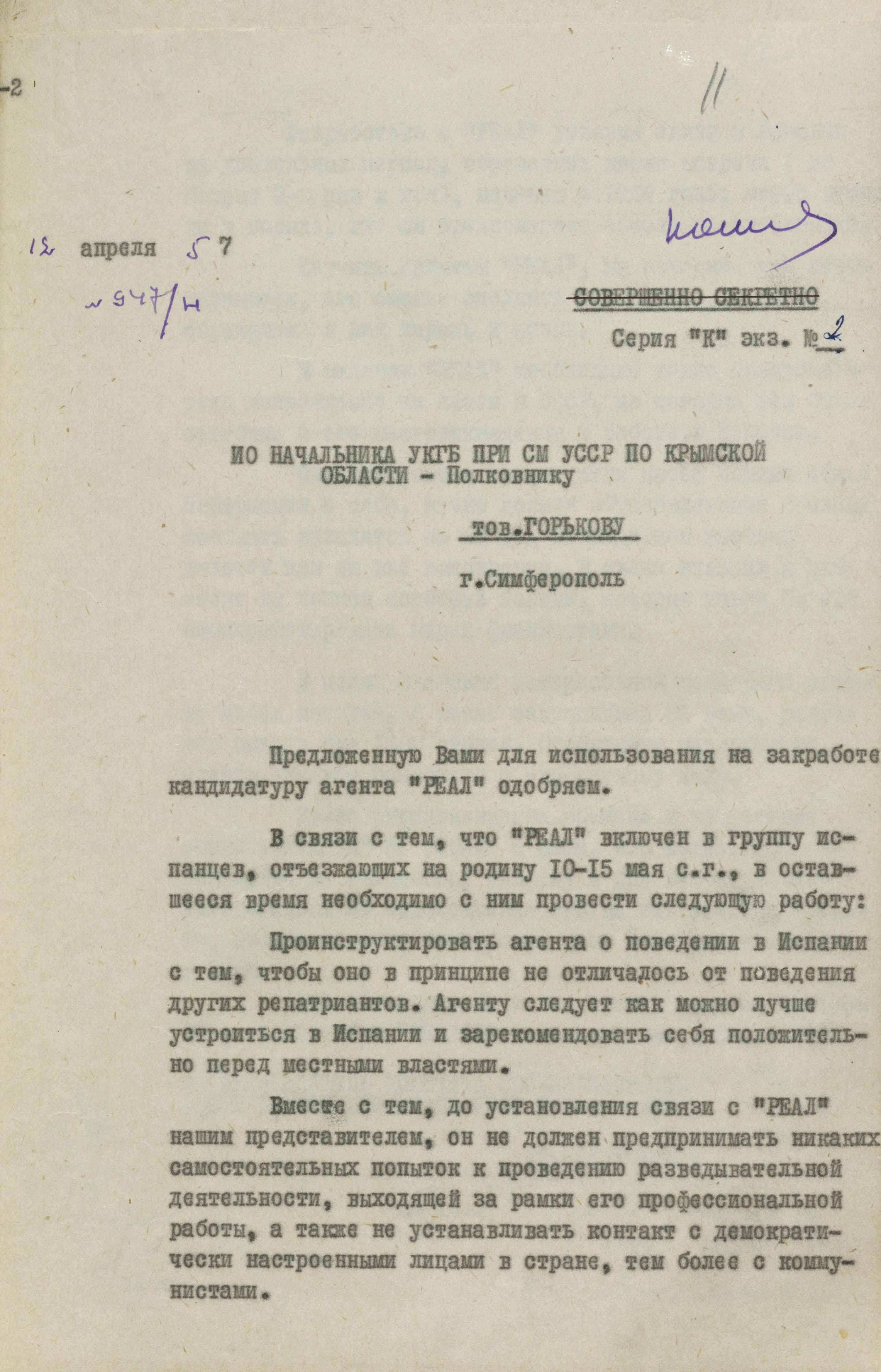
The kgb report on the conversation points out that he “stated that he had been ready for underground work in Spain for a long time, as soon as his father made the decision to repatriate, and that his father and his communist friends had taught him the methods of underground work. Now, having expressed his voluntary desire to assist the kgb, he is aware of the full responsibility and danger of the task entrusted to him, but despite all the difficulties, he is ready to carry out any tasks assigned to him by the kgb, even if it means armed struggle against the Francoists.”( FISU. – F. 1. – Case 10577. – P. 6).
In further reports and characterizations, kgb officers emphasized that “Real” sympathized with the soviet union, considered it his second homeland, and would do anything he was asked to. At this stage, he was sent to moscow for an “inspection”. There, all previous measures were approved, and instructions were given to prepare him for agent work abroad.
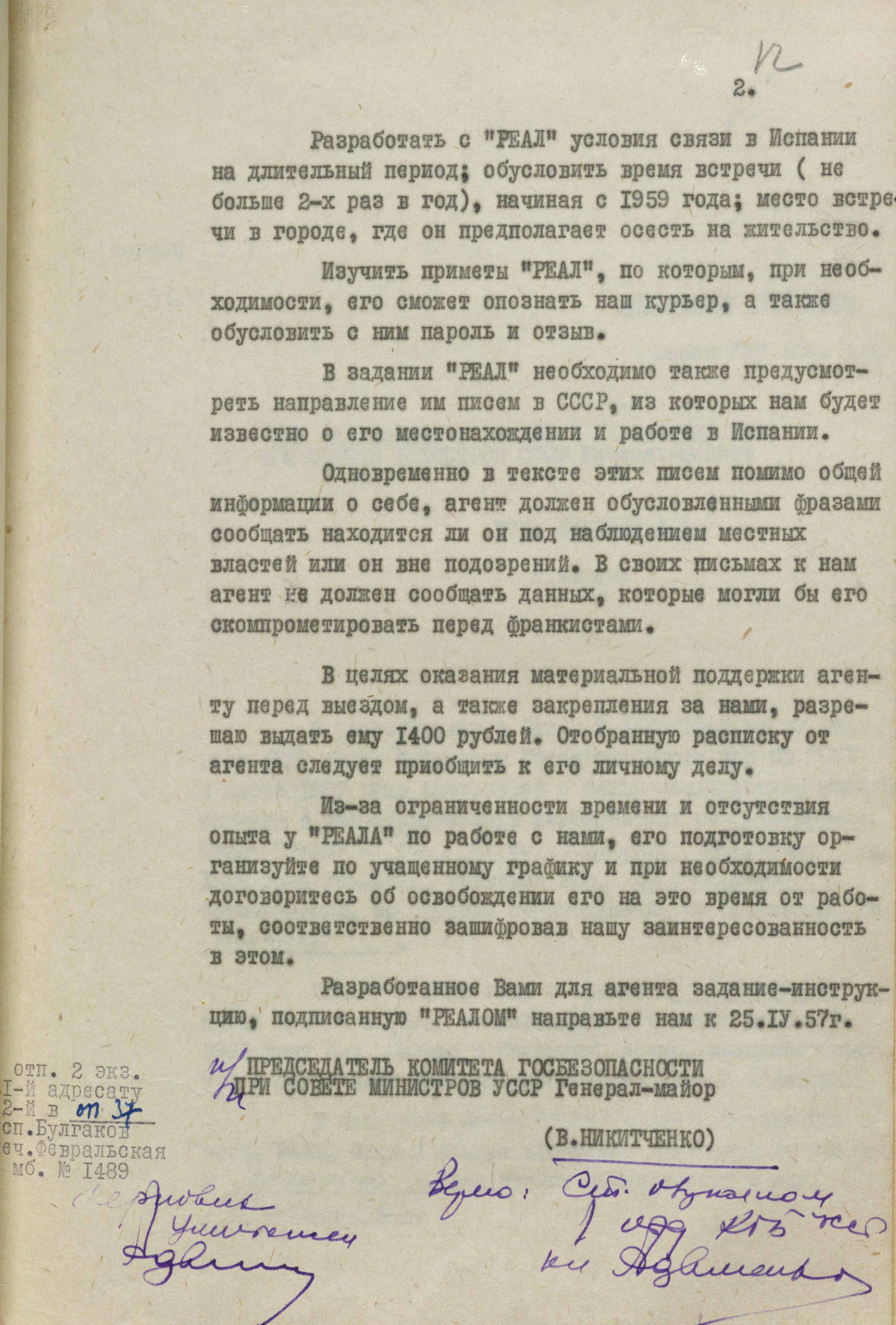
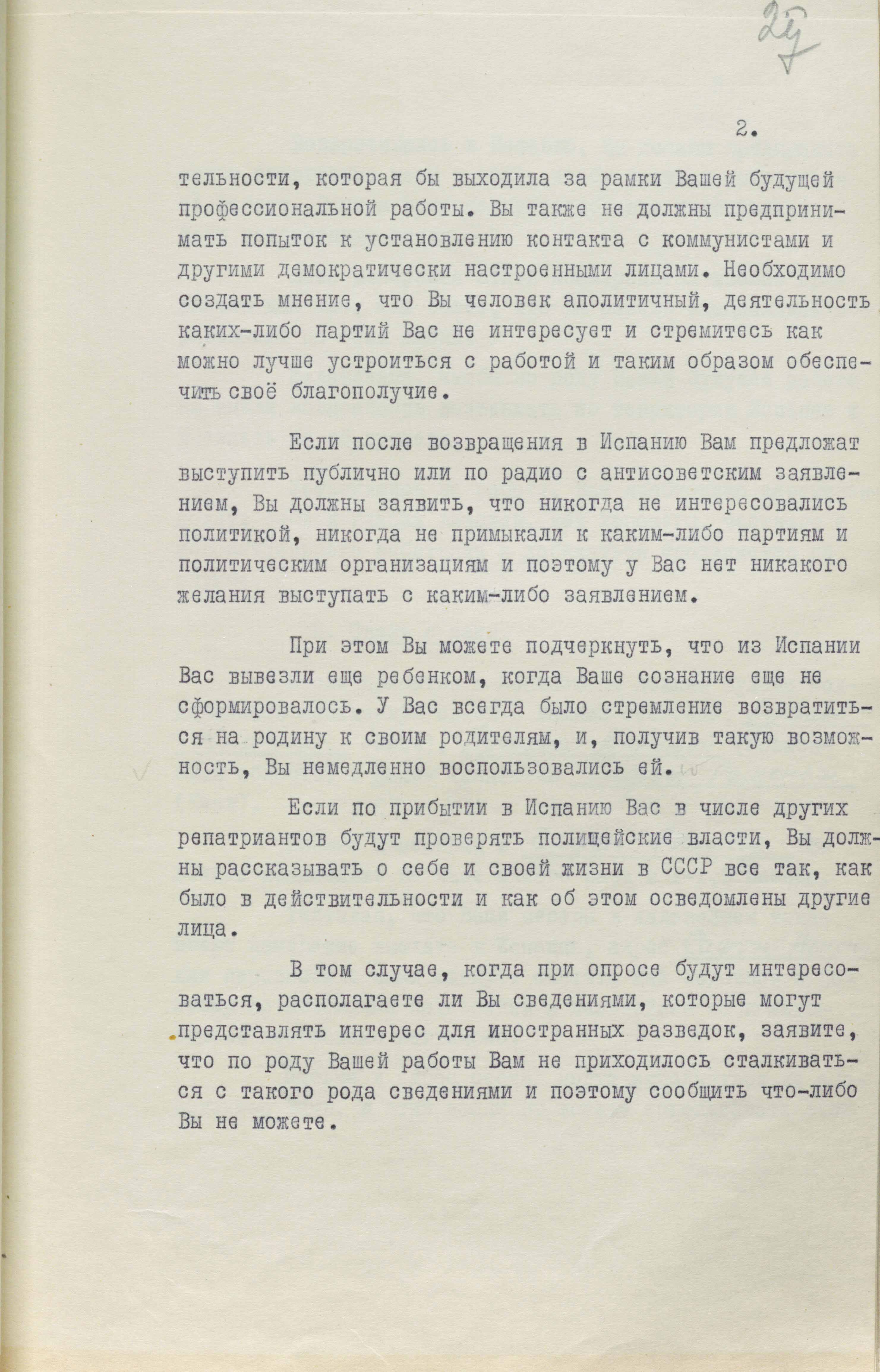
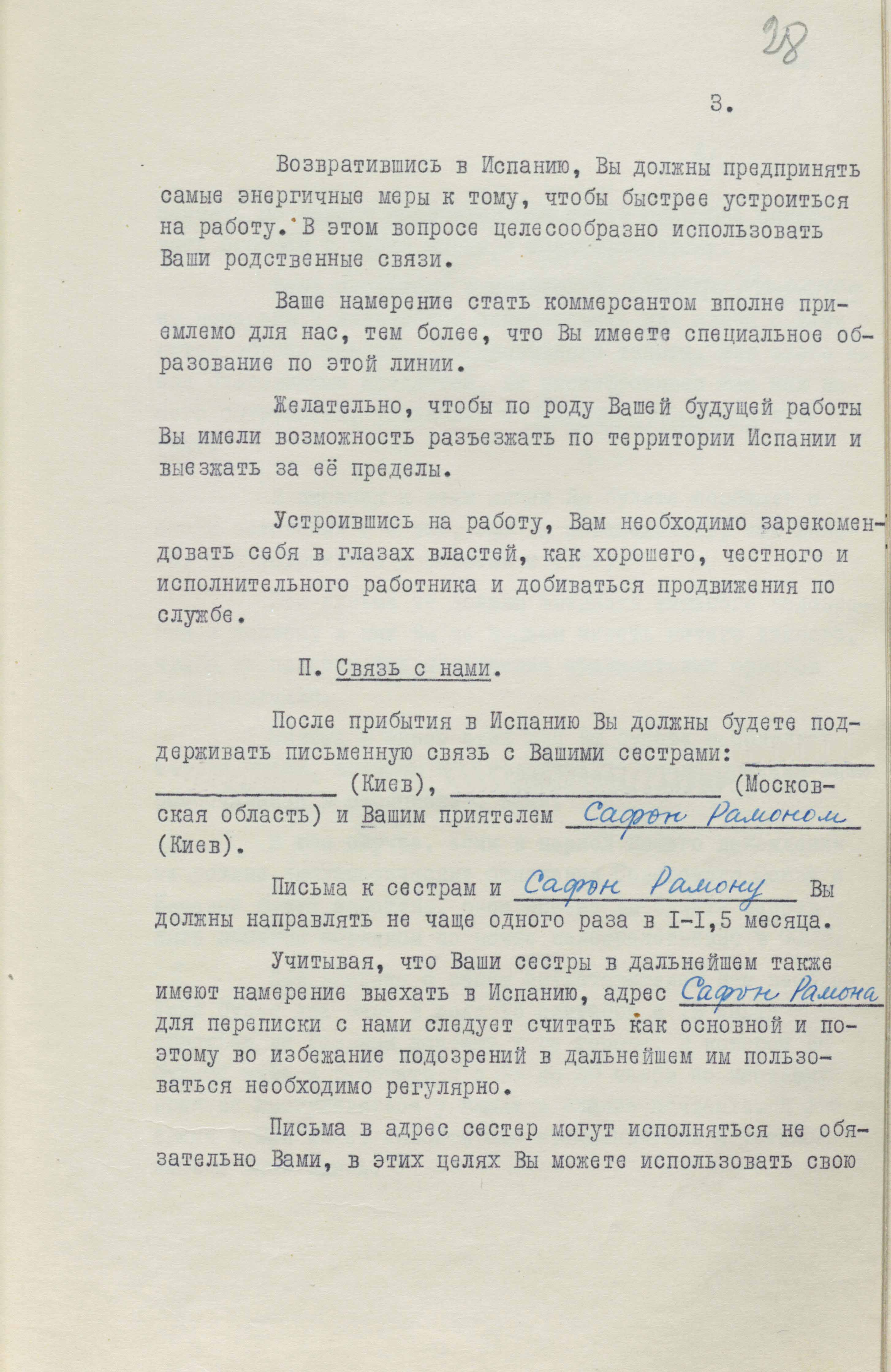
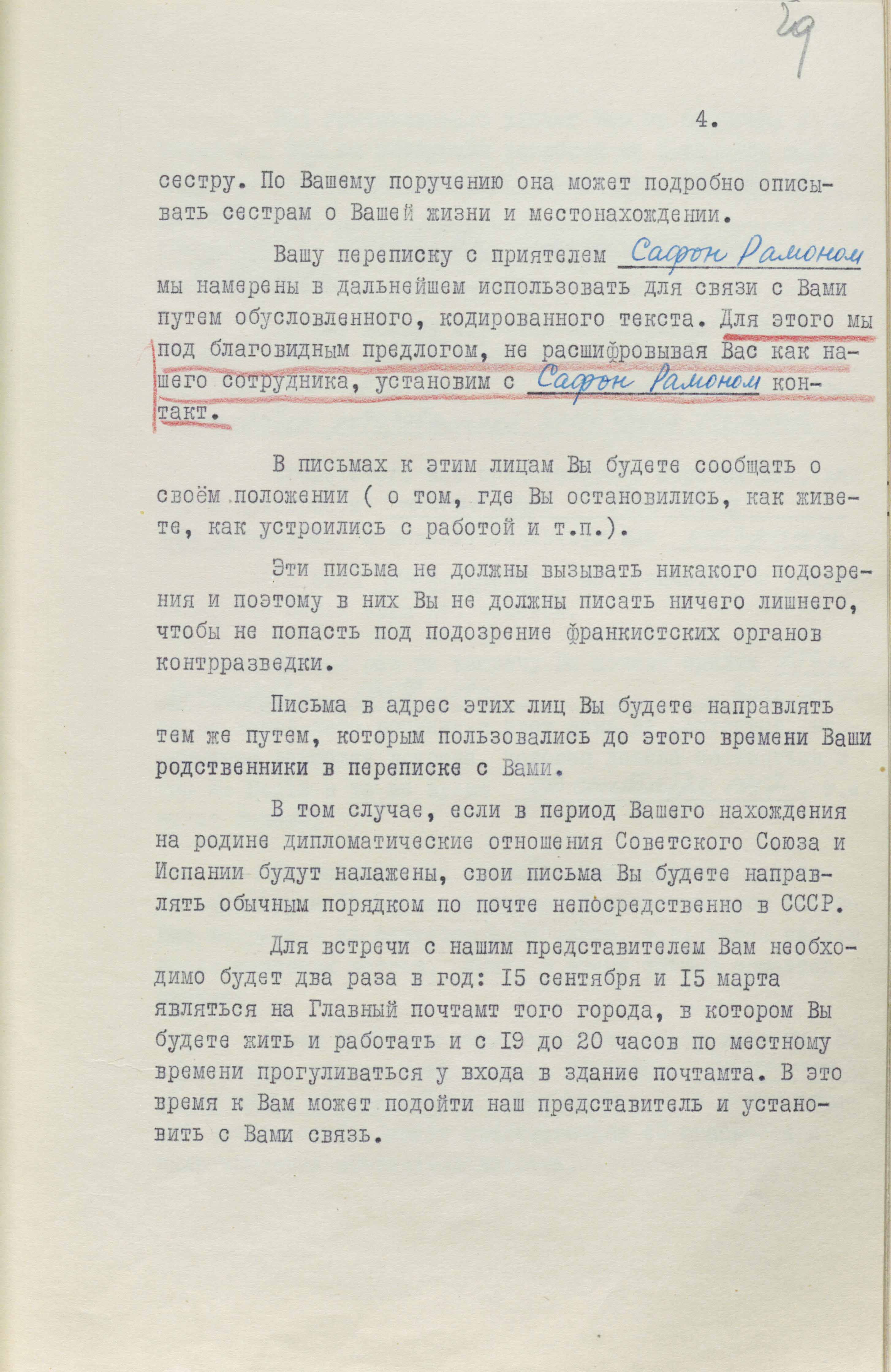
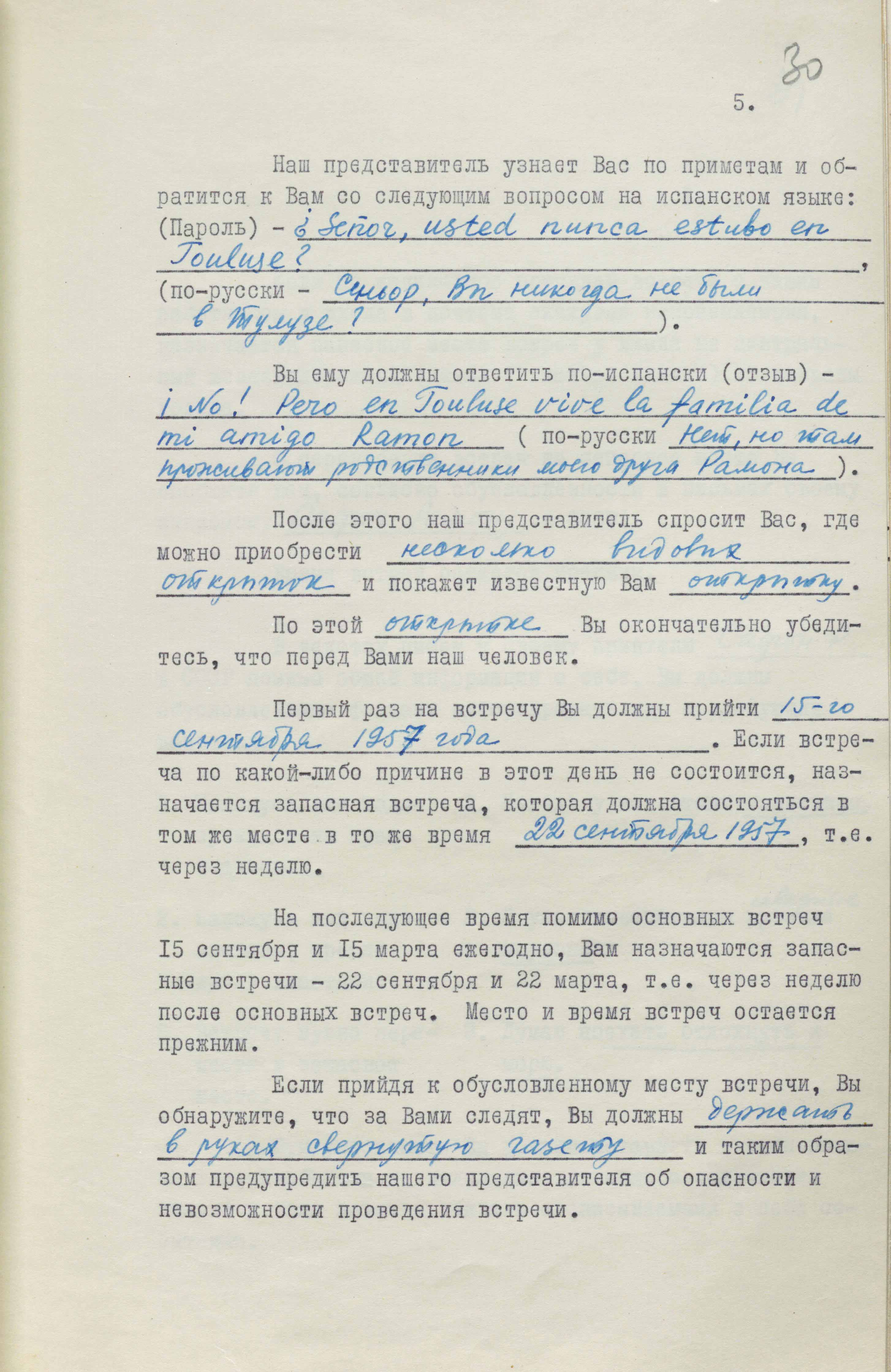
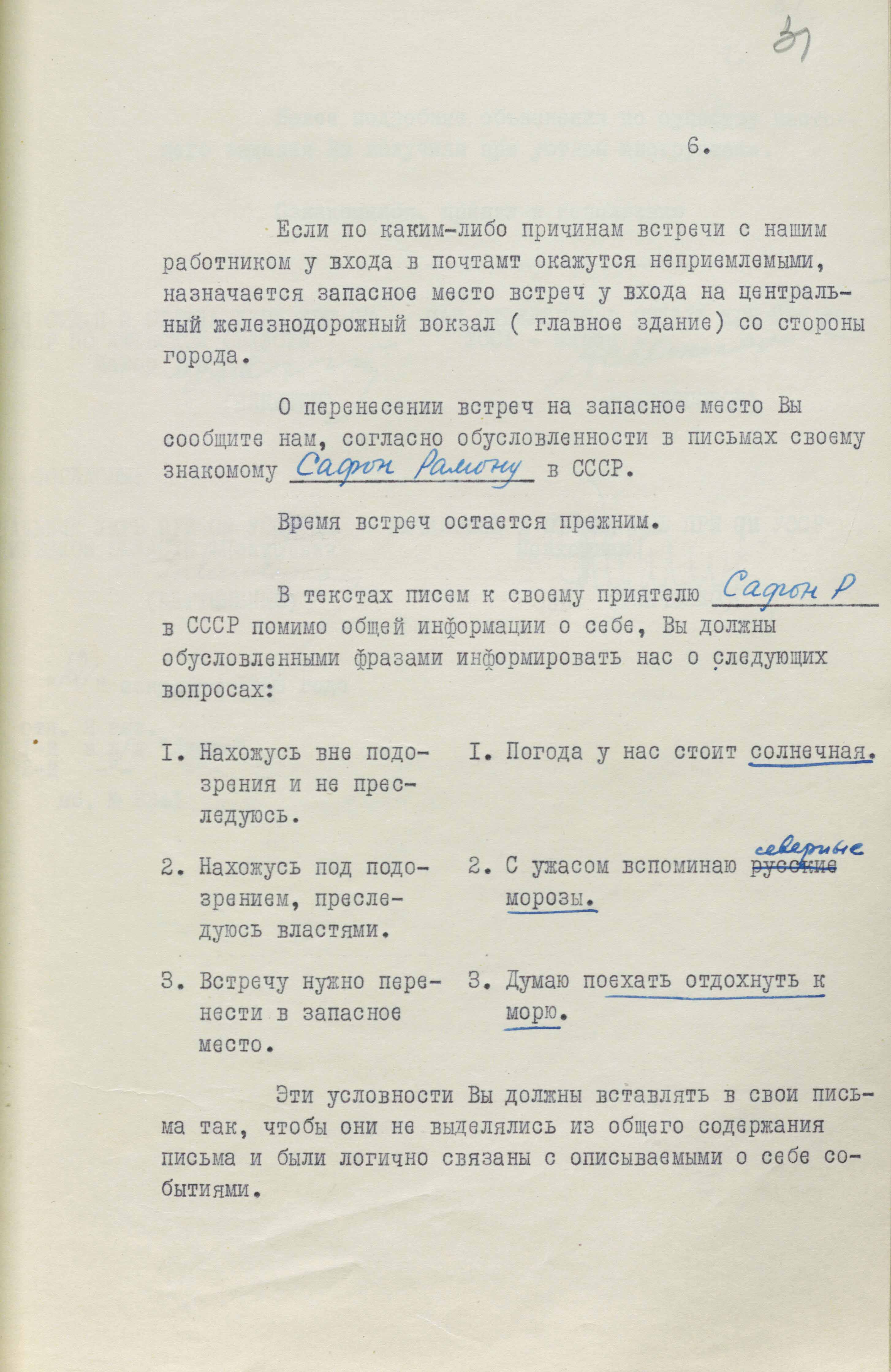
For a short time, he was trained in methods of conspiracy and told how to behave in various situations, including during conversations with police and counterintelligence officers. He was advised not to participate in party activities, not to speak out against the Franco regime, and not to praise living conditions in the ussr. They worked out methods of communication, code words in letters about the state of affairs or danger, and passwords for meetings with kgb officers. Such meetings were to take place twice a year, starting in 1959.
“Every second Sunday in March and November,” the assignment instructions stated, “at exactly 12 noon local time, you must approach the main entrance to the central post office for five minutes. You must have a book with a green cover in your hand.
Choose a place to wait that is crowded enough, where you are clearly visible, and where there are no police nearby.
To meet our representative, you will be given the following password and response:
Password: “Excuse me, aren’t you a boxer?”
Response: “I am an amateur boxer.”
Password: “Do you know a boxer Pedro?”
Response: “Yes, I do. Pedro is my uncle. I can introduce you to him.”
(FISU. – F. 1. – Case 10577. – P. 20–21).
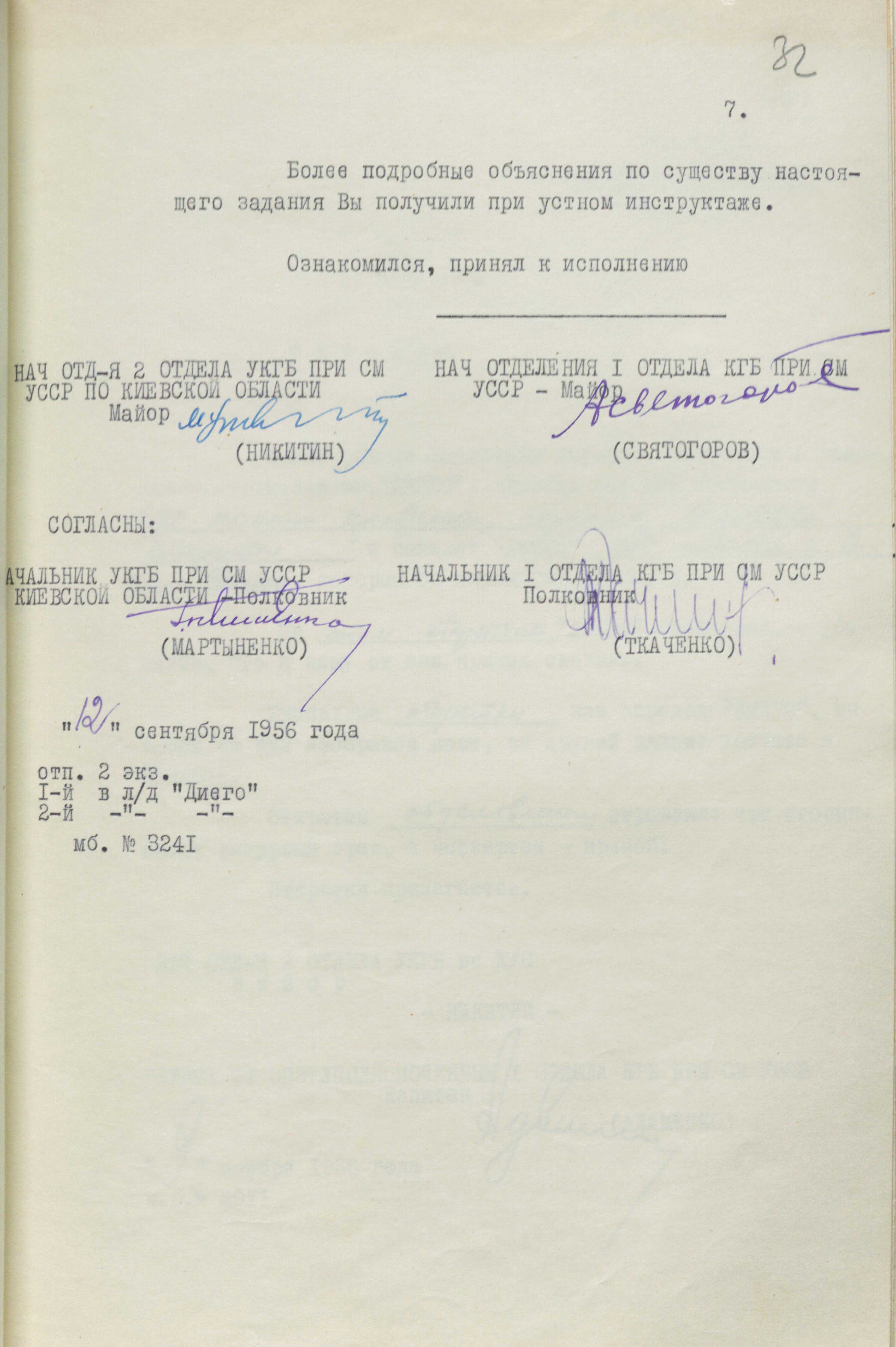
Training and briefings took place in a room of a hotel in Alushta where “Real” was staying before leaving. His travel and hotel expenses were paid from the kgb budget, and he was also given 1,400 rubles. Having completed his training, he signed a task–instruction and was forced to write a new agreement on covert cooperation with the kgb. It stated that he “promises to honestly and conscientiously assist soviet intelligence, that through his secret struggle against the Francoists he will help the cause of the peoples’ struggle for peace, and that through his work for soviet intelligence he will contribute to the Spanish people’s struggle for independence and the establishment of a democratic order in the country” (FISU. – F. 1. – Case 10577. – P. 23–27). The kgb had many such pompous phrases for all tastes and for every individual situation.
The last document attached to the case states that “Real” left for Spain and that all materials on him were transferred to the First Main Directorate (foreign intelligence) of the kgb under the ussr council of ministers, which would carry out all measures related to his case in the country of residence.
kgb employees acted in approximately the same manner with regard to other “Spanish children”. As declassified documents show, that was a purposeful work. The first reports attached to the cases began with the following sentence: “In the process of implementing the kgb of the Ukrainian ssr’s Directive No. 491/M of March 5, 1956, on the training of agents among Spaniards leaving the soviet union, in order to use them in intelligence activities abroad, we have recruited...”.
Apart from “Real”, the kgb recruited “Servantes”, “Diego”, “Madrid”, “Gomez”, “Grigo”, “Sasha”, “Eric”, “Galyardo”, and many others. This work was carried out by the Crimean, Poltava, Dnipropetrovsk, Kyiv, Kharkiv, and Stanislav kgb directorates. Each case has its own dramatic story.
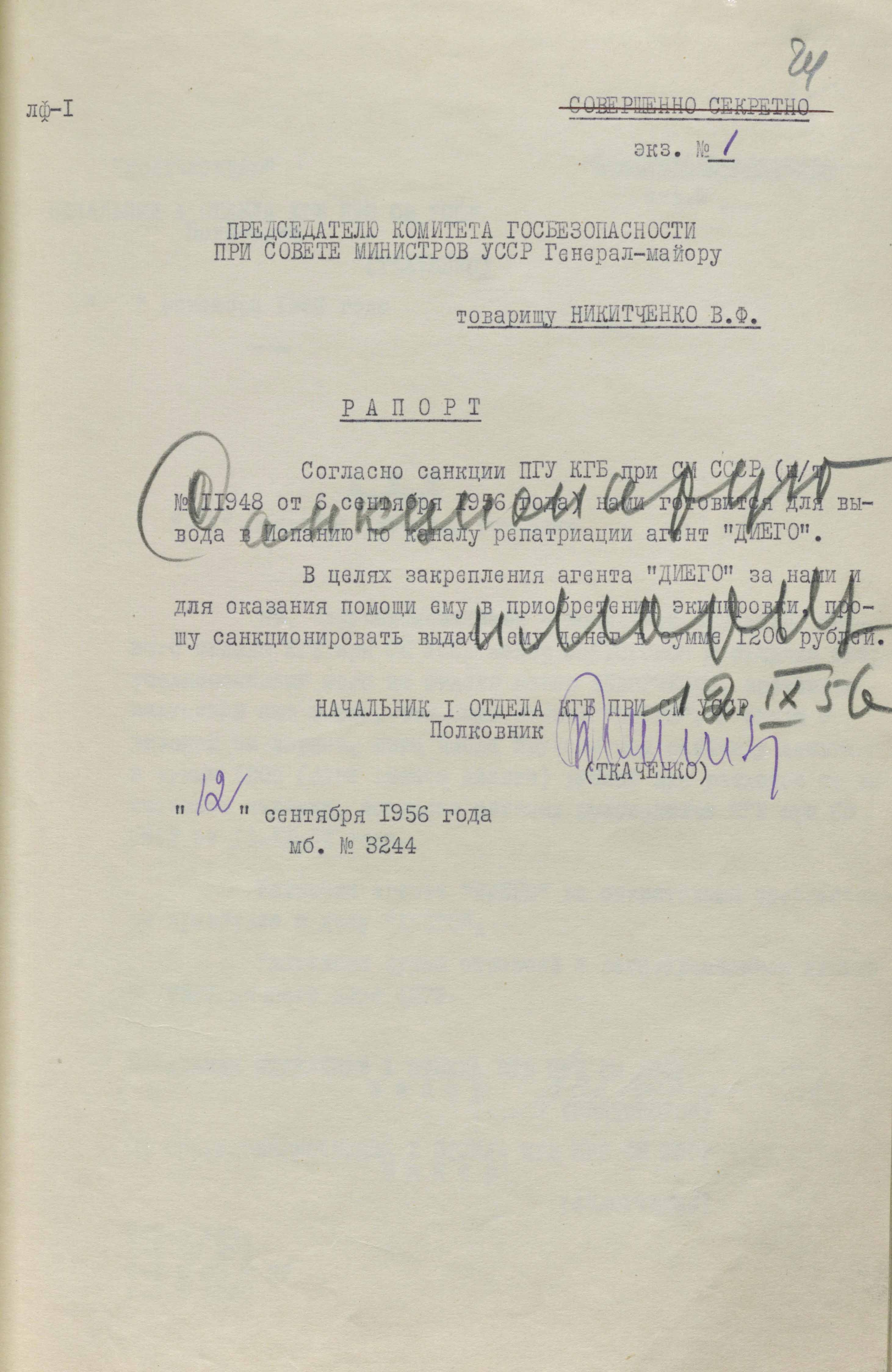
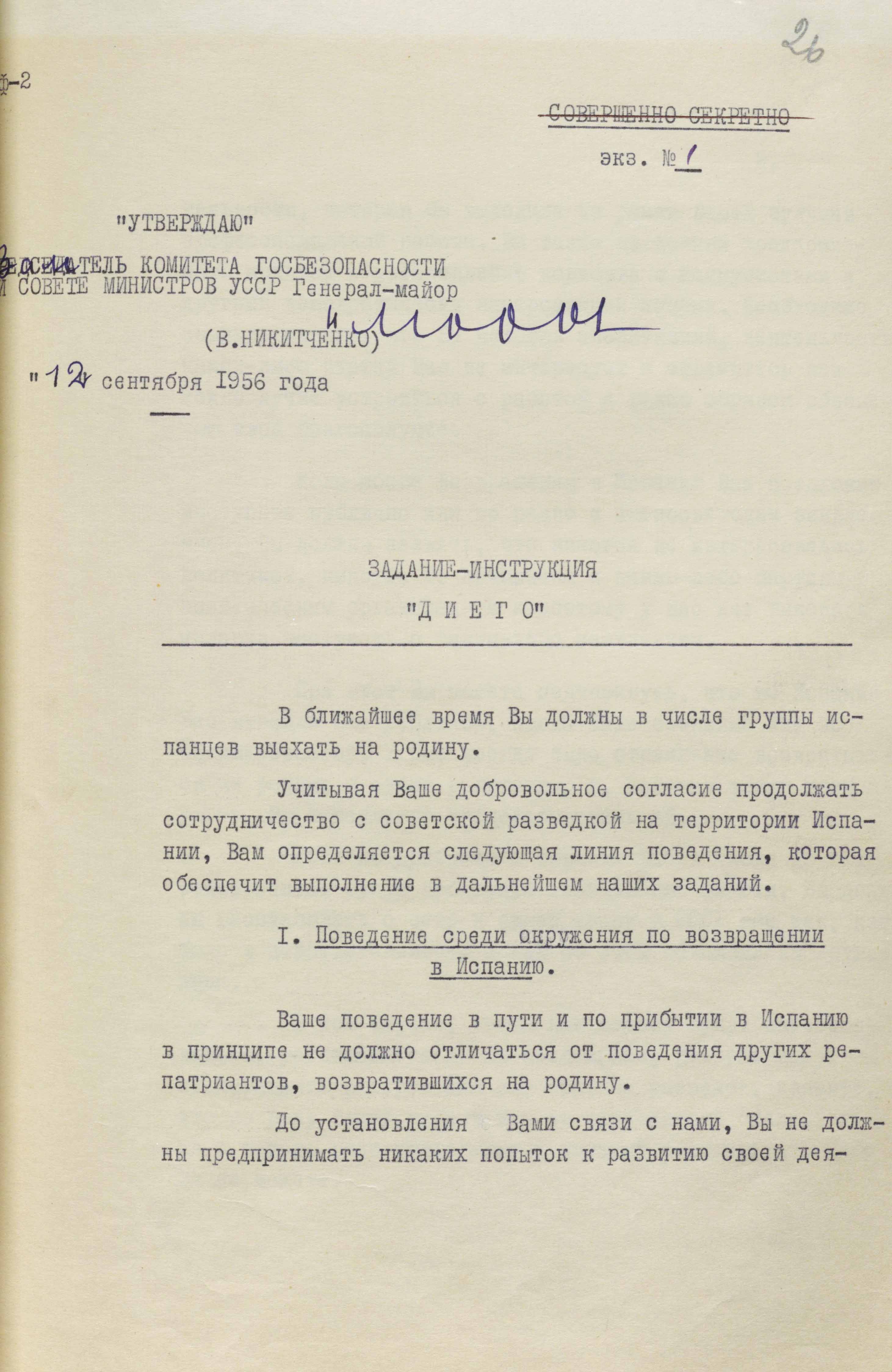
For example, “Diego” was taken to the ussr in 1937. He was raised in a children’s home near Leningrad. During World War II, in 1942, together with other “Spanish children”, at the age of 17, he joined a special forces unit of the nkvd of the ussr. After the war, he graduated from military school in the rank of lieutenant. The kgb obtained information that his father had been shot dead by supporters of General Franco in 1939. So, they decided that the son could somehow avenge his father. In 1956, he was recruited.
After a few meetings and political and educational discussions, “Diego” assured them that he was ready to fulfill abroad any task assigned to him by soviet intelligence. “In our opinion,” the recruitment report stated, “it is advisable to use “Diego” in Spain to cultivate Ukrainian and russian emigrants, obtain information about the existence of foreign intelligence schools, identify their personnel, and collect other political and intelligence information in the country.” (FISU. – F. 1. – Case 10580. – P. 17).
So, he was tasked with becoming a merchant in order to be able to travel around the country freely. He went through crash courses in the basics of intelligence work abroad and methods of communication, and was given 1,200 rubles.
“Servantes”, who was already a member of the komsomol, said after conversations with kgb officers that he was ready to do whatever the soviet intelligence wanted and “wishes to help his people, who were under the yoke of Franco’s regime and American violence”.
“When asked how he imagined our work, the agent could not give a specific answer but stated that he imagined it as a secret war between different states and that he would like to participate in the struggle against the reactionary forces of America, which had finally enslaved Spain,” reads one of the reports (FISU. – F. 1. – Case 10578. – P 9). He was warned that he could be arrested, interrogated, and tortured. He replied that he considered himself to be quite strong and courageous and would behave with dignity. He received 1,500 rubles for expenses.
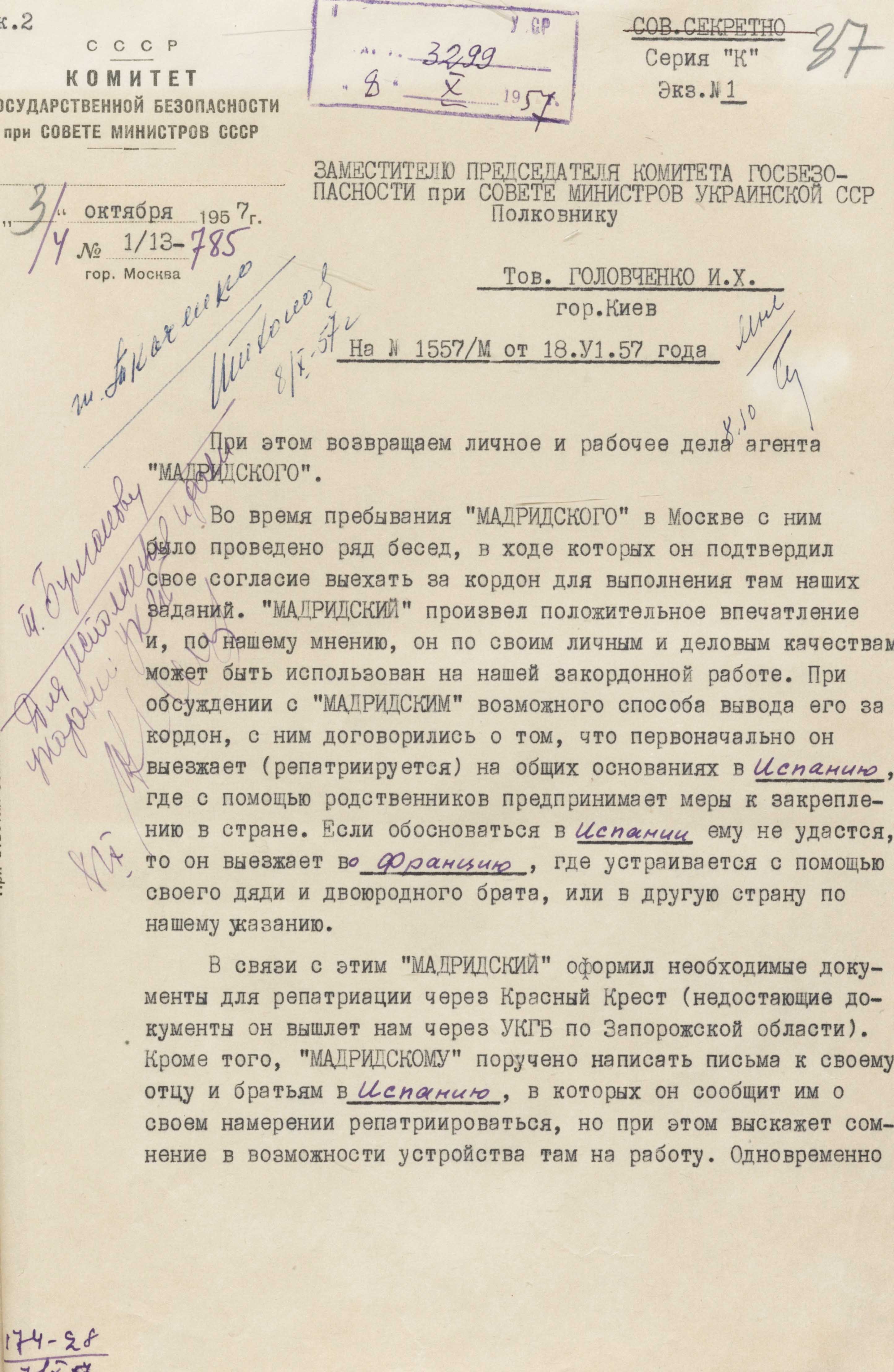
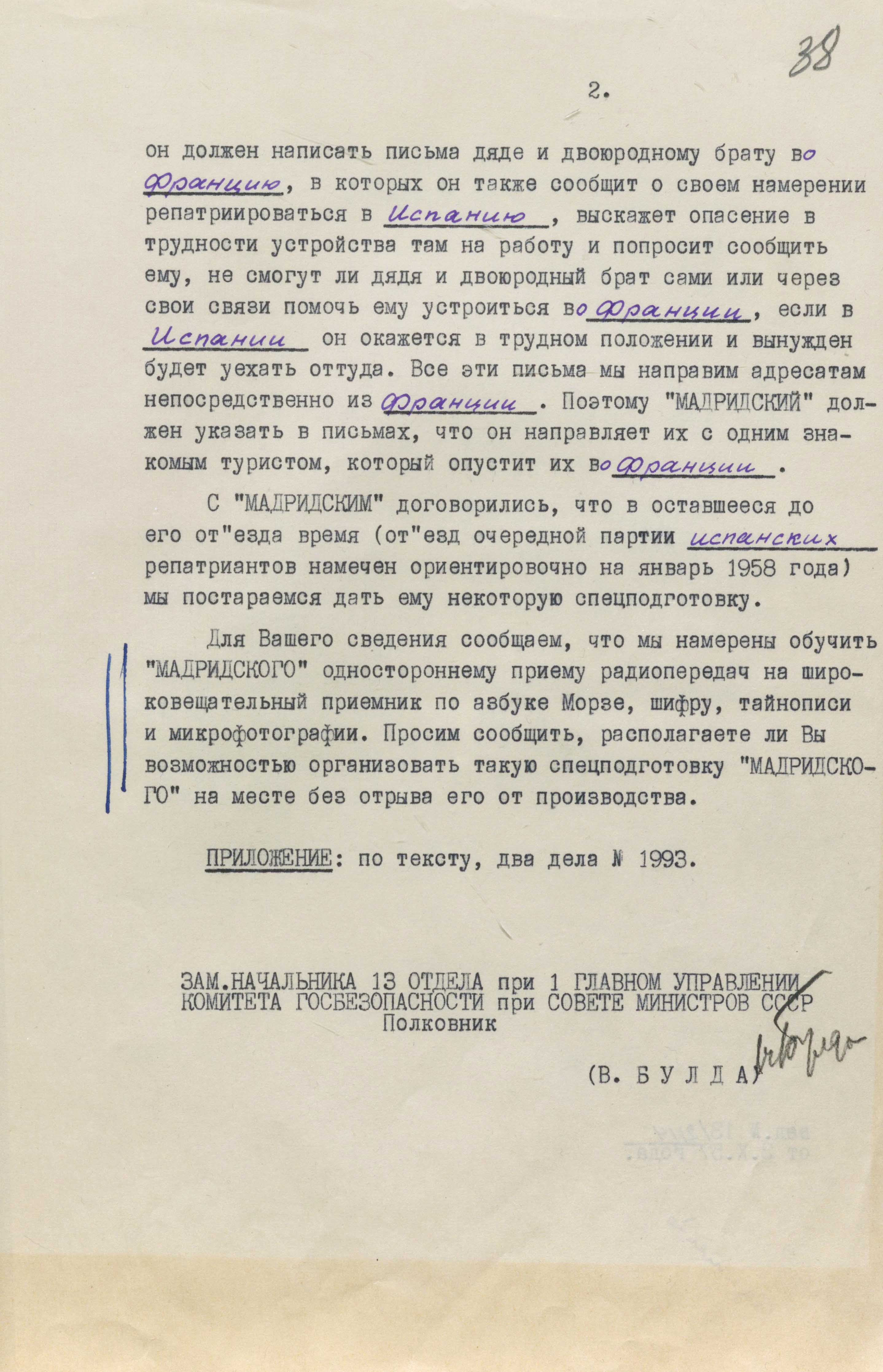
“Madrid” was the oldest. In Republican Spain, he had managed to become a member of the communist party. However, he stated that he was afraid to return to his homeland. Because of this, he was offered to go to one of the Latin American countries to conduct intelligence from illegal positions. He agreed and was sent to moscow for special training.
Many “Spanish children” did not want to return to their homeland for various reasons. One kgb report states that as of March 30, 1956, 13 Spaniards were found in Zaporizhzhia region. They were brought to the ussr in 1936–1938. A series of interviews were conducted with them, and it turned out that they did not want to go anywhere. According to open sources, between 1956 and 1960, 1500 to 1900 children returned to Spain. There is no information on how many of them were recruited by the kgb. Similarly, there is no information on the nature of the intelligence or sabotage tasks they performed in Spain.
All further agent contacts were carried out exclusively through the kgb’s central office in moscow. It is only known that the kremlin could not come to terms with its defeat in Spain in 1939 for a long time and actively carried out intelligence, information and propaganda activities, and special operations against the then Spanish government in the following decades: they supported the communist party, trained personnel in comintern and nkvd schools, prepared saboteurs and radio operators, conducted agent operations in the Spanish diaspora, and organized the work of the Spanish editorial office of “Radio moscow” and other pro-soviet channels.
In general, conducting active intelligence work in Spain was complicated by the strict counterintelligence regime there. Therefore, in the mid-1950s, the kgb decided to rely on “Spanish children”. This category of people was cynically used to be turned into obedient soldiers of the secret front. At first, taking them to the ussr was declared as “humanitarian aid”, “an act of mercy”, and “protection from bombing”. Then they were used in propaganda campaigns and their national identity was deliberately erased. Finally, through all kinds of special services’ practices and levers, they were led to believe in the need to “repay such care” and carry out any task of the soviet intelligence abroad.