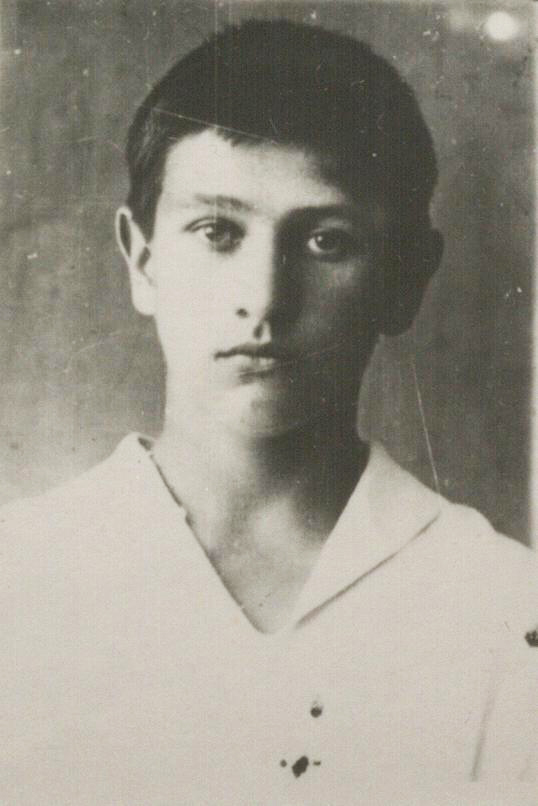
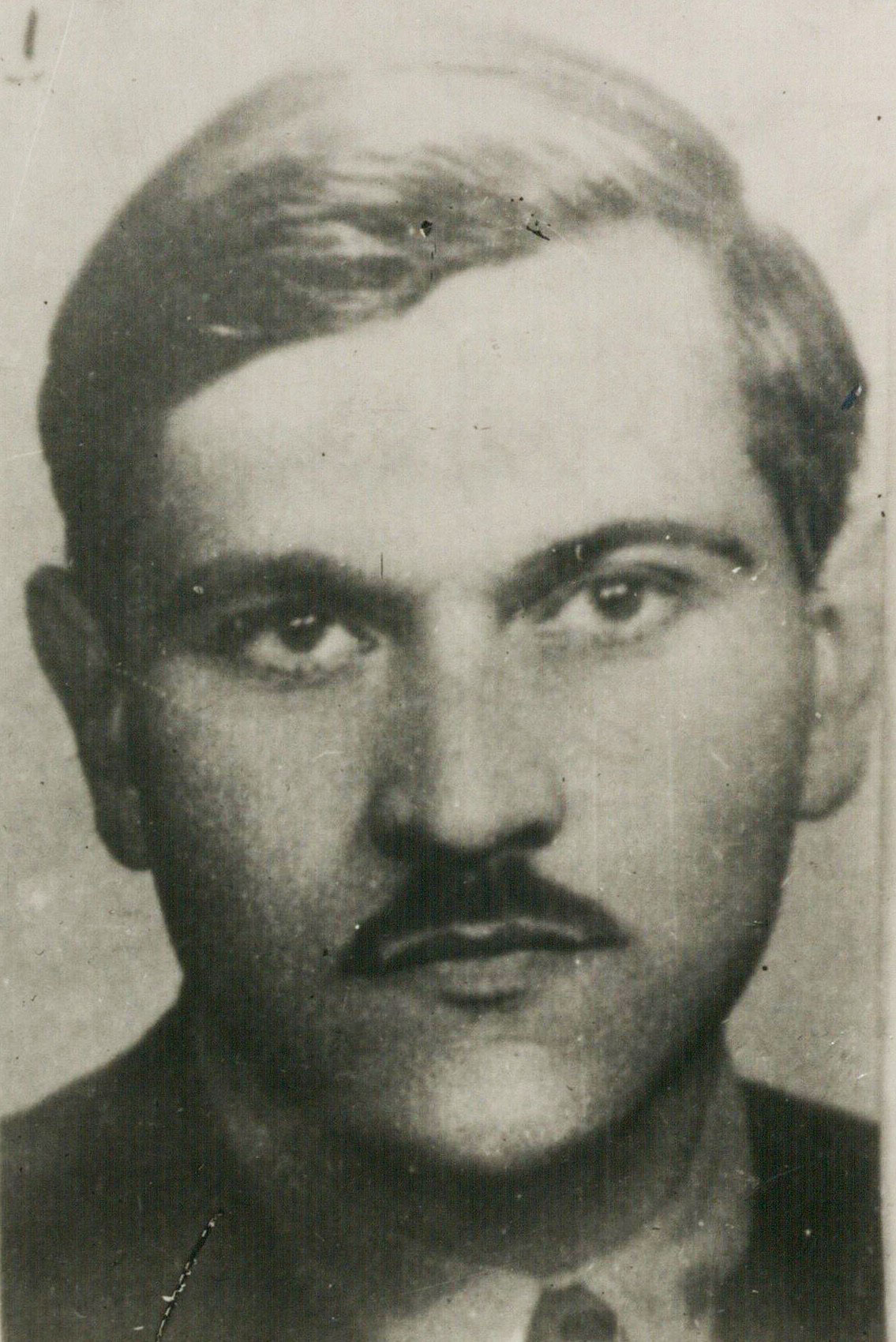
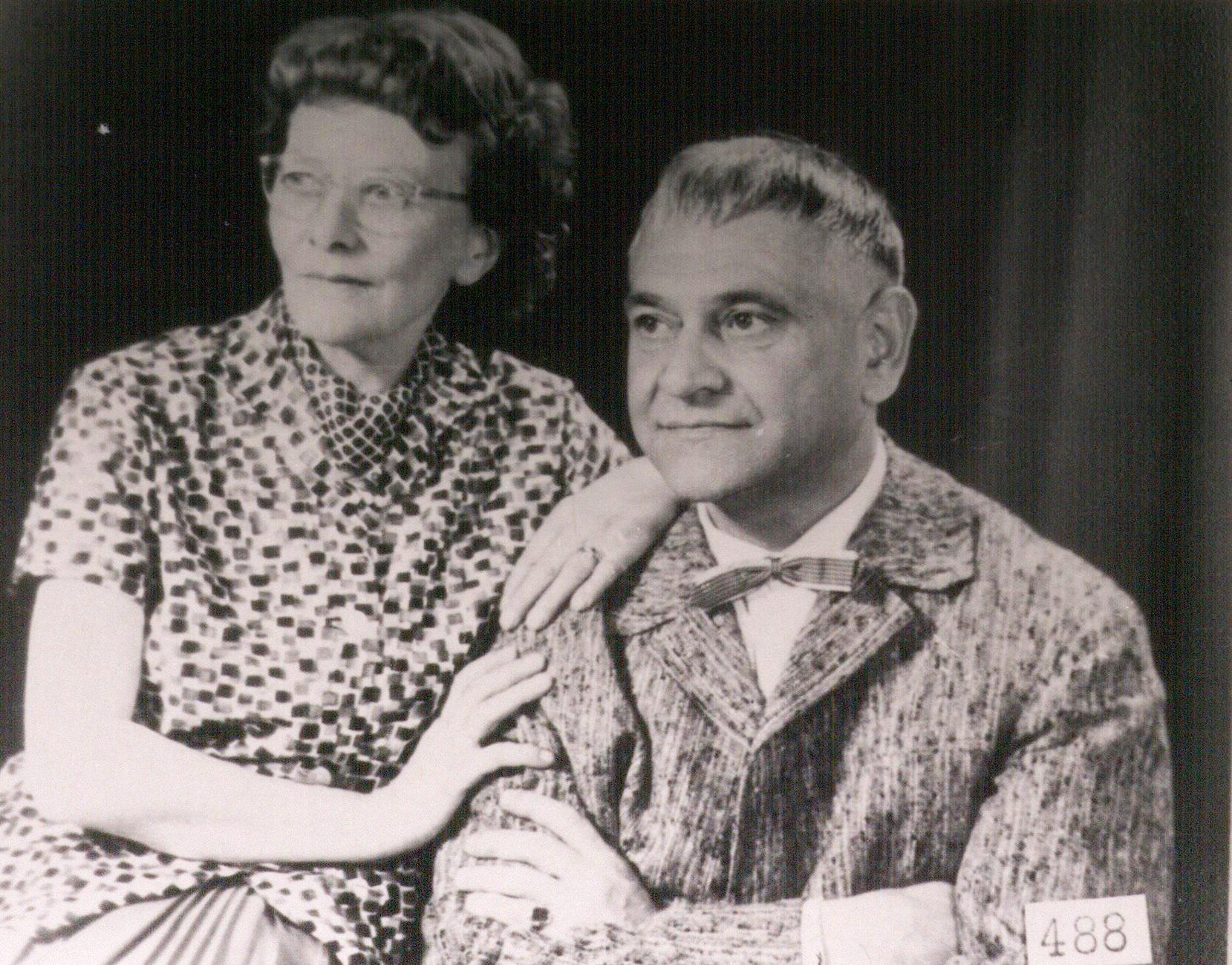
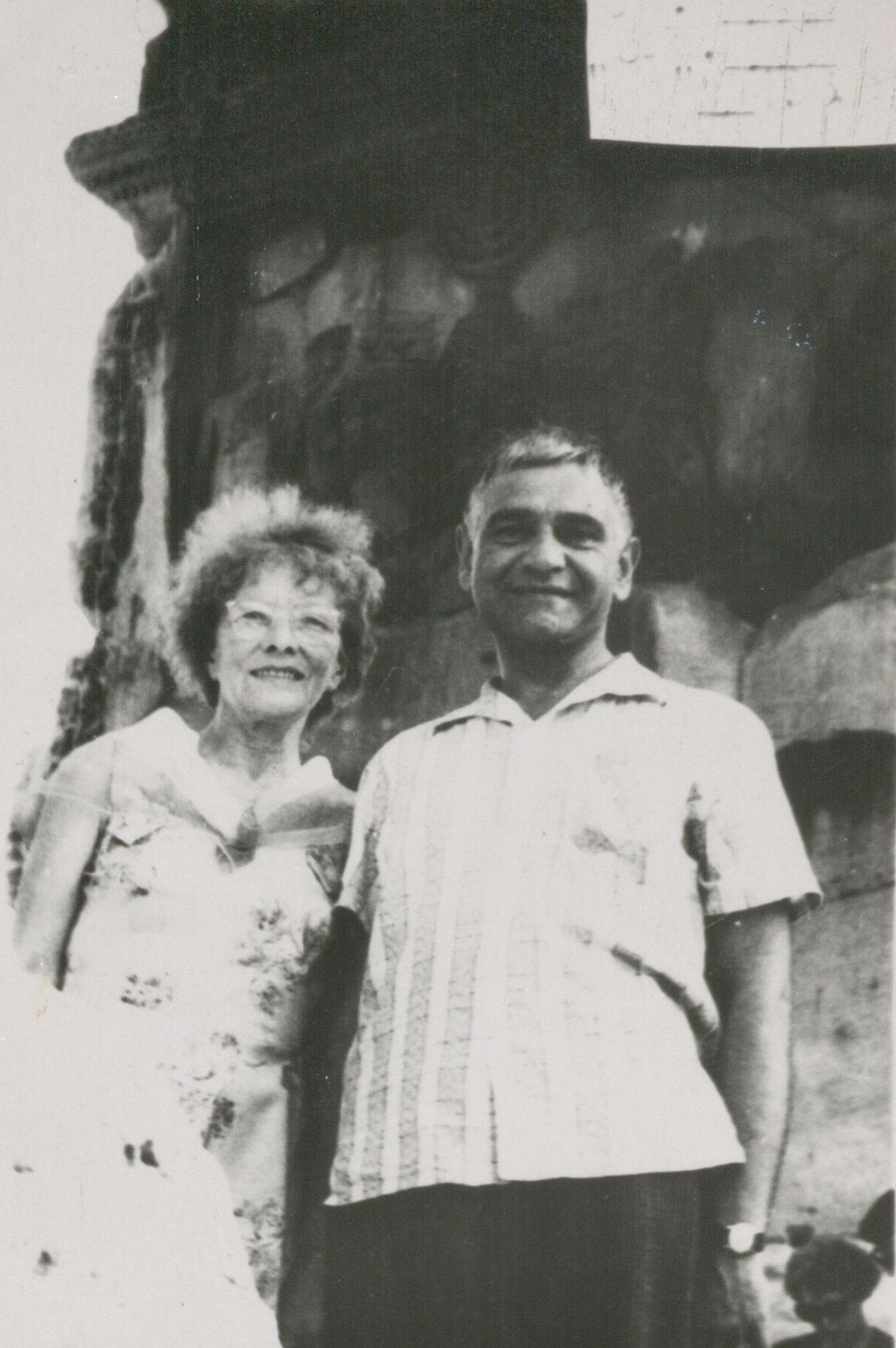
Writer Ihor Kostetskyi. The kgb Tried to Catch Him, but Failed…
3/26/2026
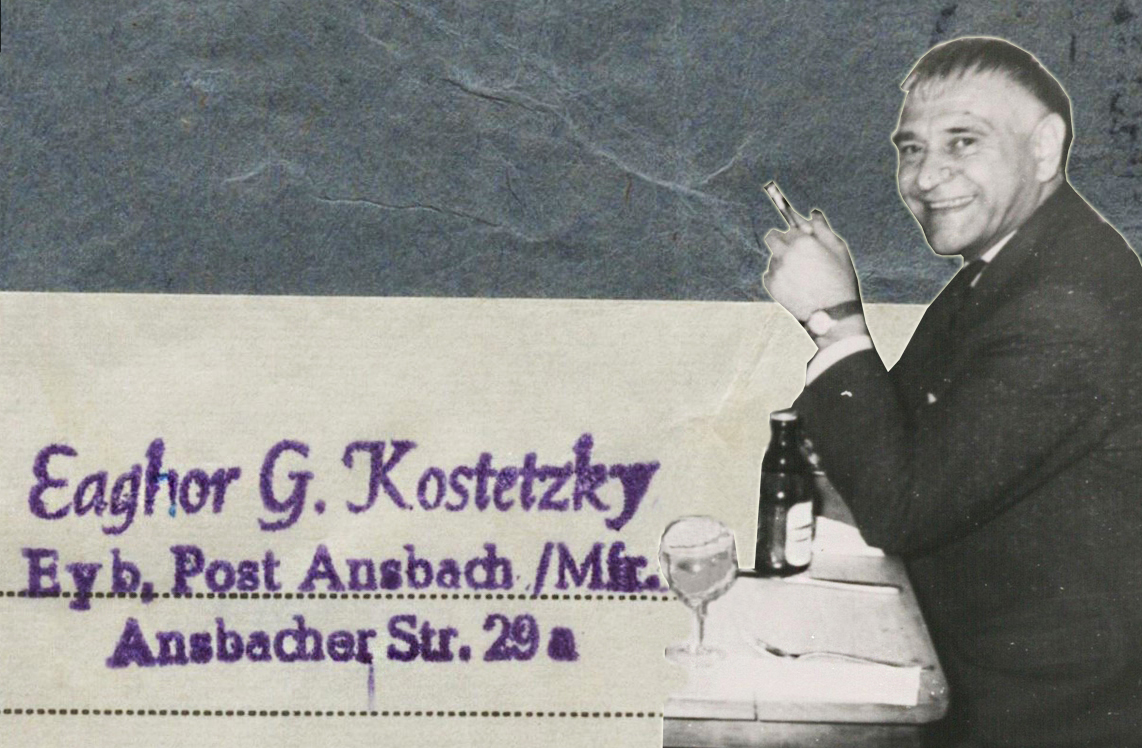
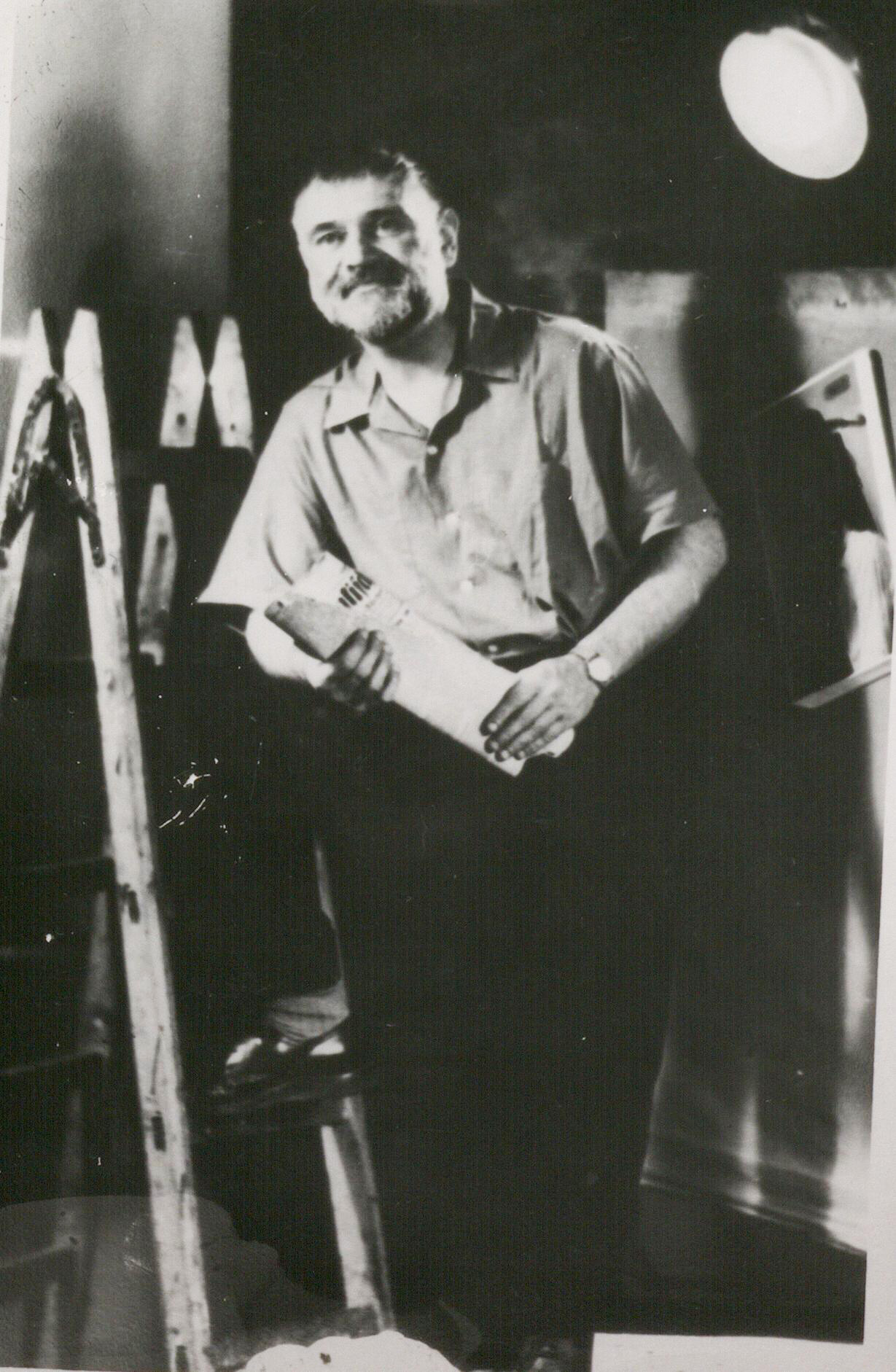
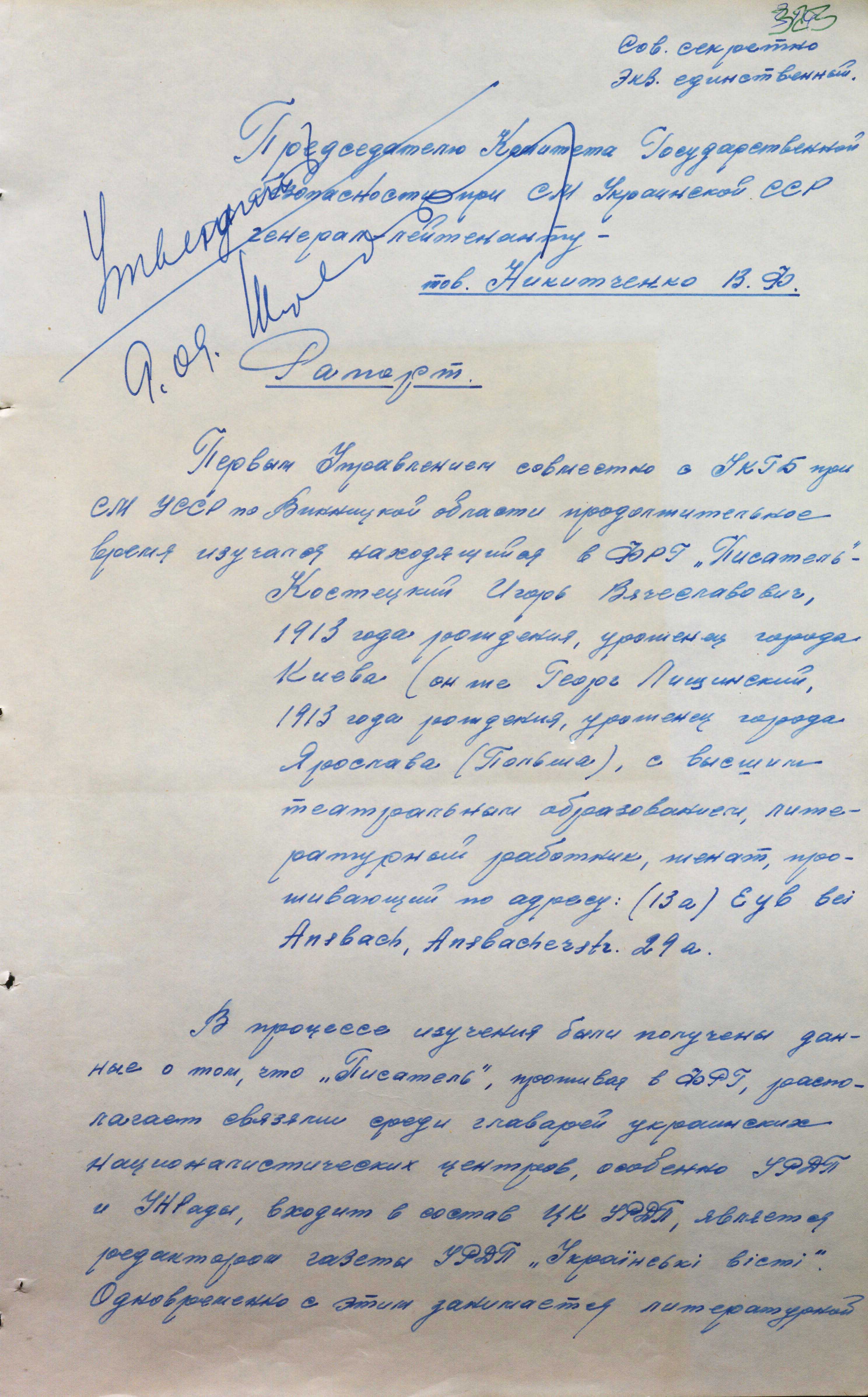
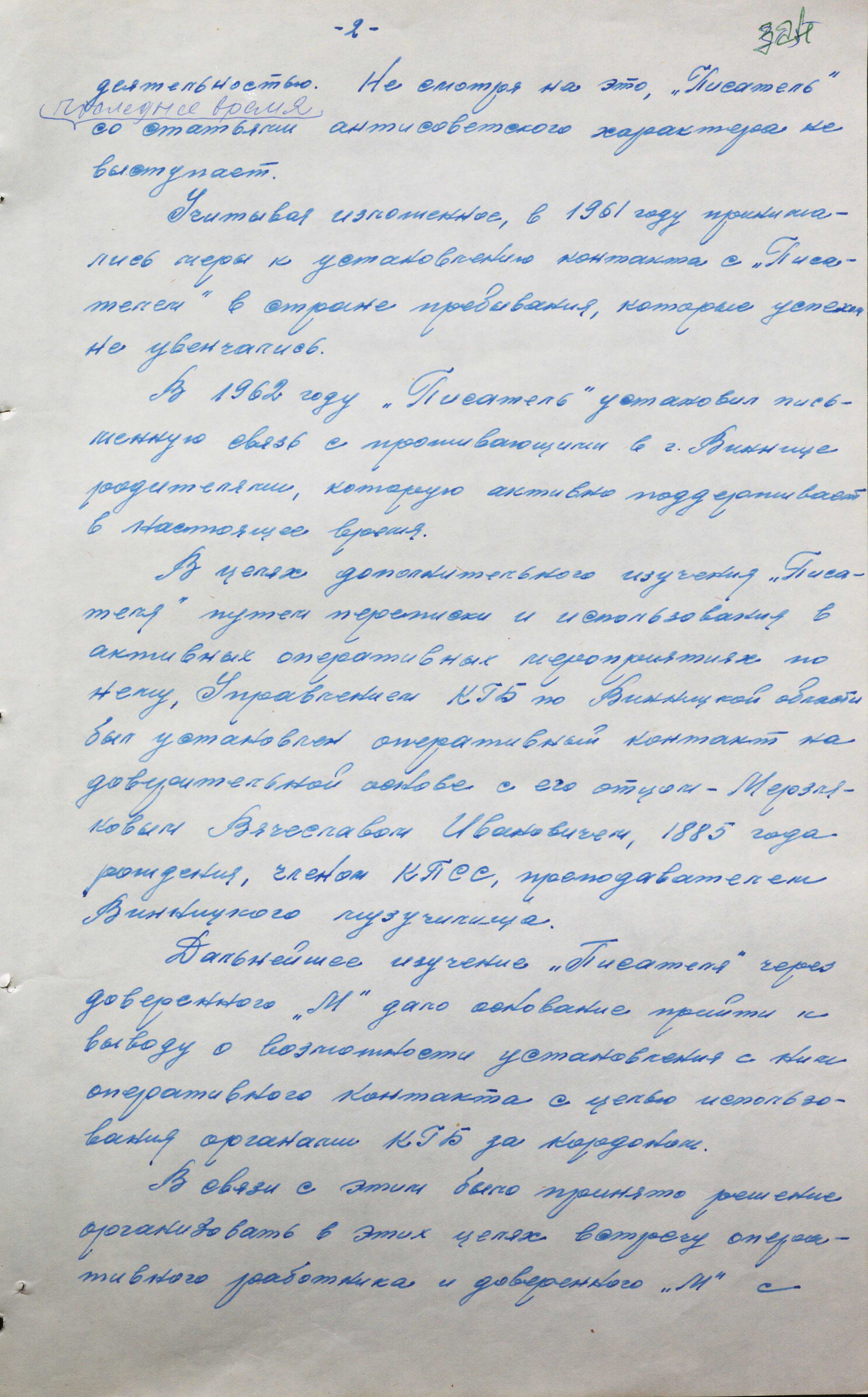
The archives of the Foreign Intelligence Service of Ukraine contain numerous intelligence files in which the intrigue lasts until the very last pages. Among them – a four-volume case file on the Ukrainian writer, translator, critic, literary scholar, director, and publisher Ihor Kostetskyi, which the kgb initially codenamed “Writer.” It documents the kgb agents’ numerous attempts to win over this extraordinary, extravagant, provocative, and ambitious modernist writer and recruit him to participate in active information and propaganda campaigns. Declassified documents and other sources reveal the methods used at that and what remained behind the scenes of the special operation.
Agent “Ivanov” Reports
After World War II, the soviet union’s ministry of state security (mgb) launched a campaign to track down individuals who had been under occupation, engaged in anti-soviet activities, and were forced to emigrate abroad. The goal was to establish their whereabouts, forcibly return them to the ussr through repatriation or other means, initiate criminal proceedings, and impose punishment. If this proved impossible, the plan was to open intelligence and operational cases, conduct surveillance, and carry out special measures aimed at compromising or assassinating them. Using various methods, they tried to persuade a specific group of individuals to return to their homeland or atone for their guilt by obtaining their consent to cooperate. In other words, to become agents of the kgb of the ussr and carry out assigned tasks abroad within the Ukrainian émigré community.
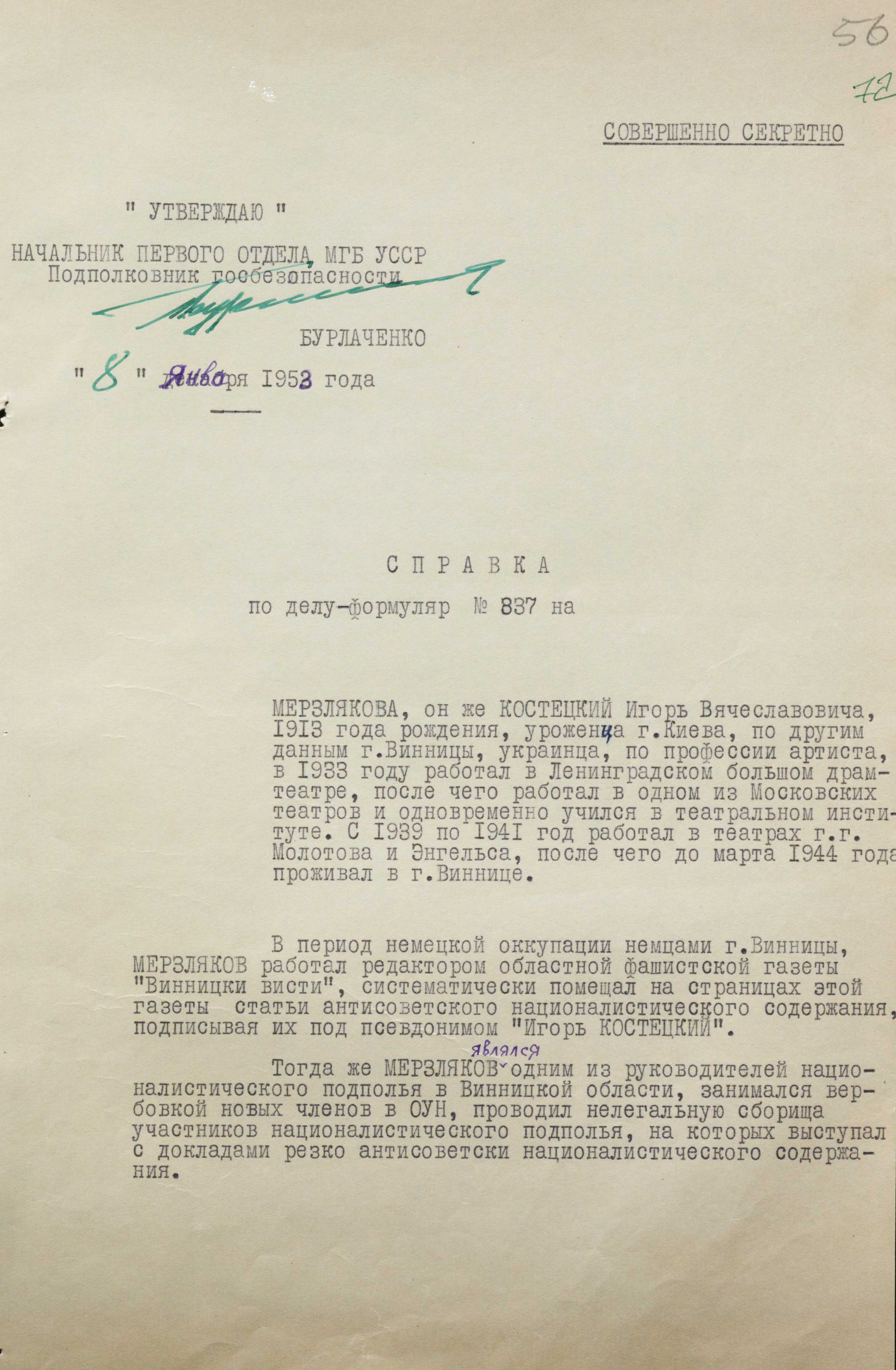
In 1946, the mgb of the Ukrainian ssr in Vinnytsia region issued a warrant for the arrest of Ihor Viacheslavovych Merzliakov. Documents stated that during the Nazi occupation, he lived in Vinnytsia, served as the head of the regional Provid of the OUN(B), took an oath “of loyalty to Ukrainian nationalism”, developed guidelines for underground activities for members of the Organization, distributed nationalist literature, and called on people to study Ukrainian history, remain faithful to the cause of their ancestors, and unite around the Ukrainian idea. In addition, he was the editor of the regional newspaper “Vinnytski Visti”, on the pages of which he systematically published articles of “anti-soviet nationalist content” signed “Ihor Kostetskyi”.
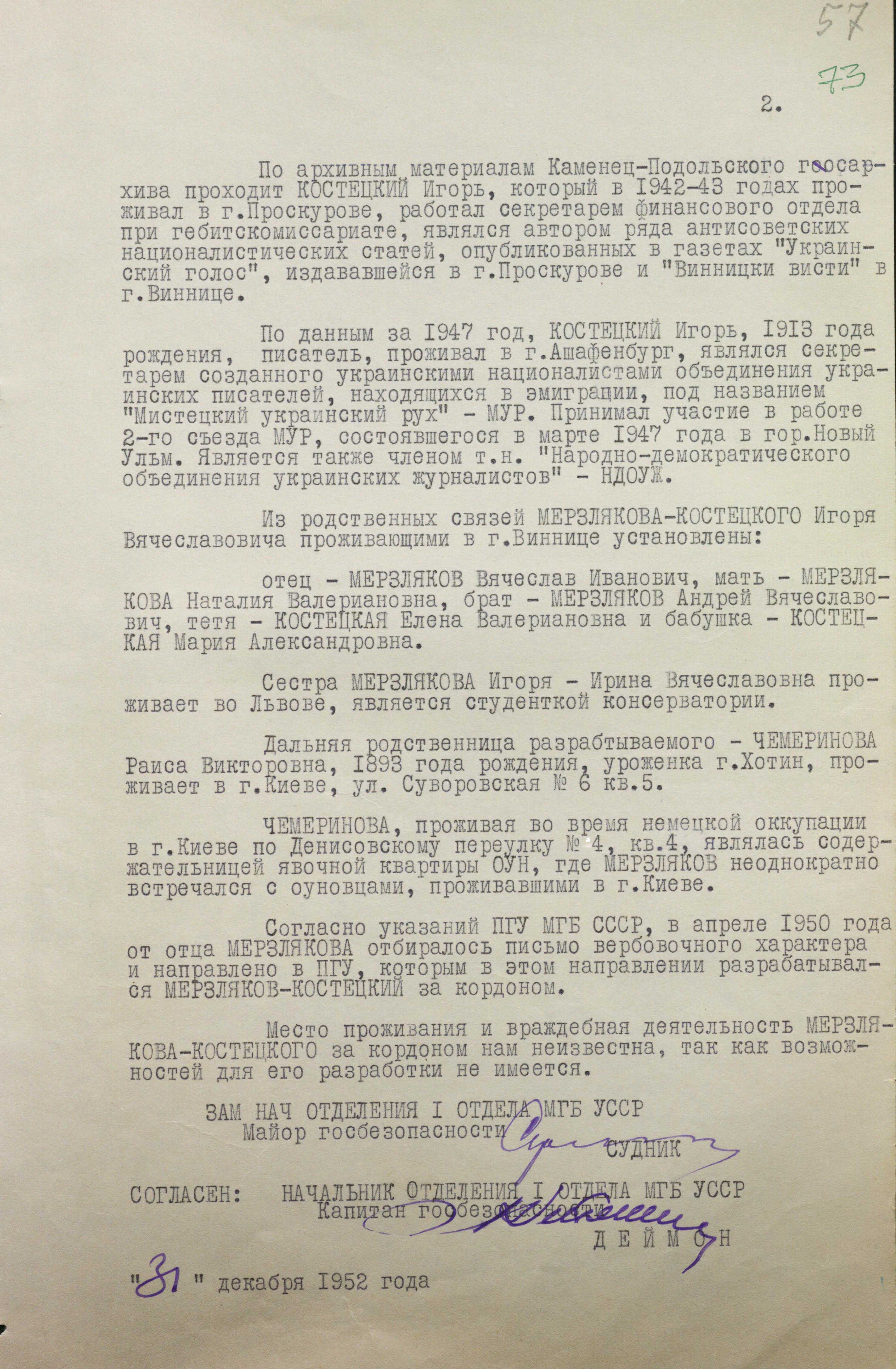
Kostetskyi – that was his mother’s maiden name. mgb agents soon identified the address where she lived with her husband and the entire family in Vinnytsia. And they did more than just identify. “On the instructions of the mgb of the Ukrainian ssr, lieutenant general comrade Kovalchuk,” one of the documents said, “the 2nd department of the umgb of Vinnytsia region is preparing materials for the deportation of the close relatives of Merzliakov-Kostetskyi Ihor Viacheslavovych.” The plan was to deport to Siberia, Kazakhstan, or other remote regions of the ussr. That was a common practice at the time for repressive measures against relatives of “enemies of the people”. But there were other options.
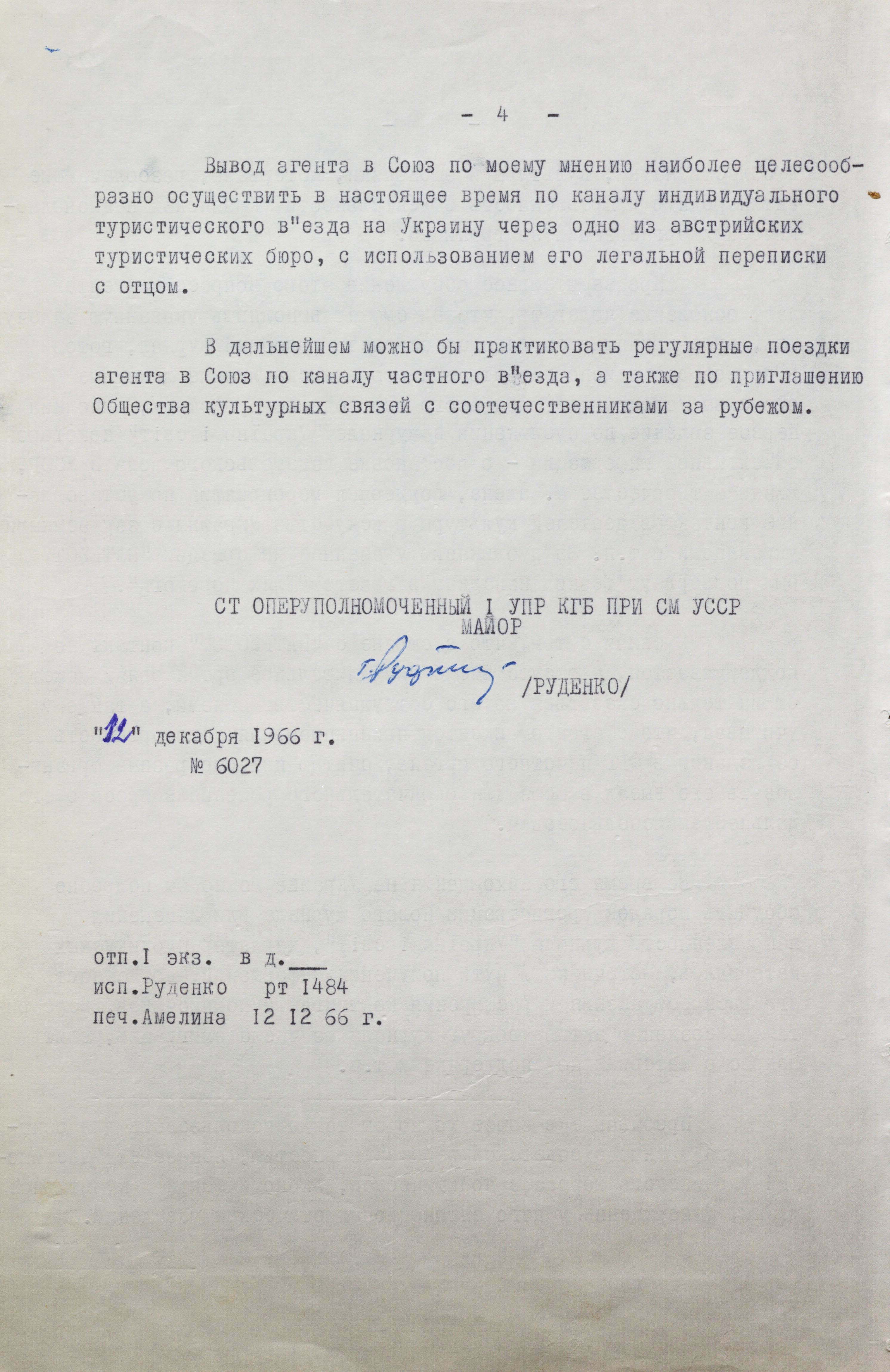
So, before a final decision was made, they continued to gather materials on I. Kostetskyi under the case file “Writer”. One of the first intelligence reports arrived in May 1949 from agent “Ivanov” (Viktor Petrov). It arrived three weeks after V. Petrov himself had been secretly transported from West Germany to the territory of the ussr. He, too, had been sought for a long time. But there were other reasons for that. V. Petrov, a writer, philosopher, historian, archaeologist, cultural studies scholar, and literary critic, had been recruited as early as the interwar period. In the first months of the war, he underwent special training and was sent behind enemy lines on a certain intelligence mission. Following the German troops, he himself retreated to the West, where he remained to live. All of this was part of carrying out his assigned mission. In 1949, the kgb found him and reestablished contact with him.
At that time, V. Petrov was on friendly terms with I. Kostetskyi. In those years, the trio of writers, which also included Yurii Kosach, was often seen together. They enjoyed spending time engaged in intellectual discussions and debating new works; they were regarded as innovators and modernists, sought to create an original aesthetic system, rejected established literary canons, and offered their own alternative perspective on literature. Together, they were members of the initiative committee for the creation of the Ukrainian Artistic Movement (UAM) – an organization of Ukrainian writers living in German camps for displaced persons who championed the idea of creating great literature and preserving Ukrainian spirituality in writing.
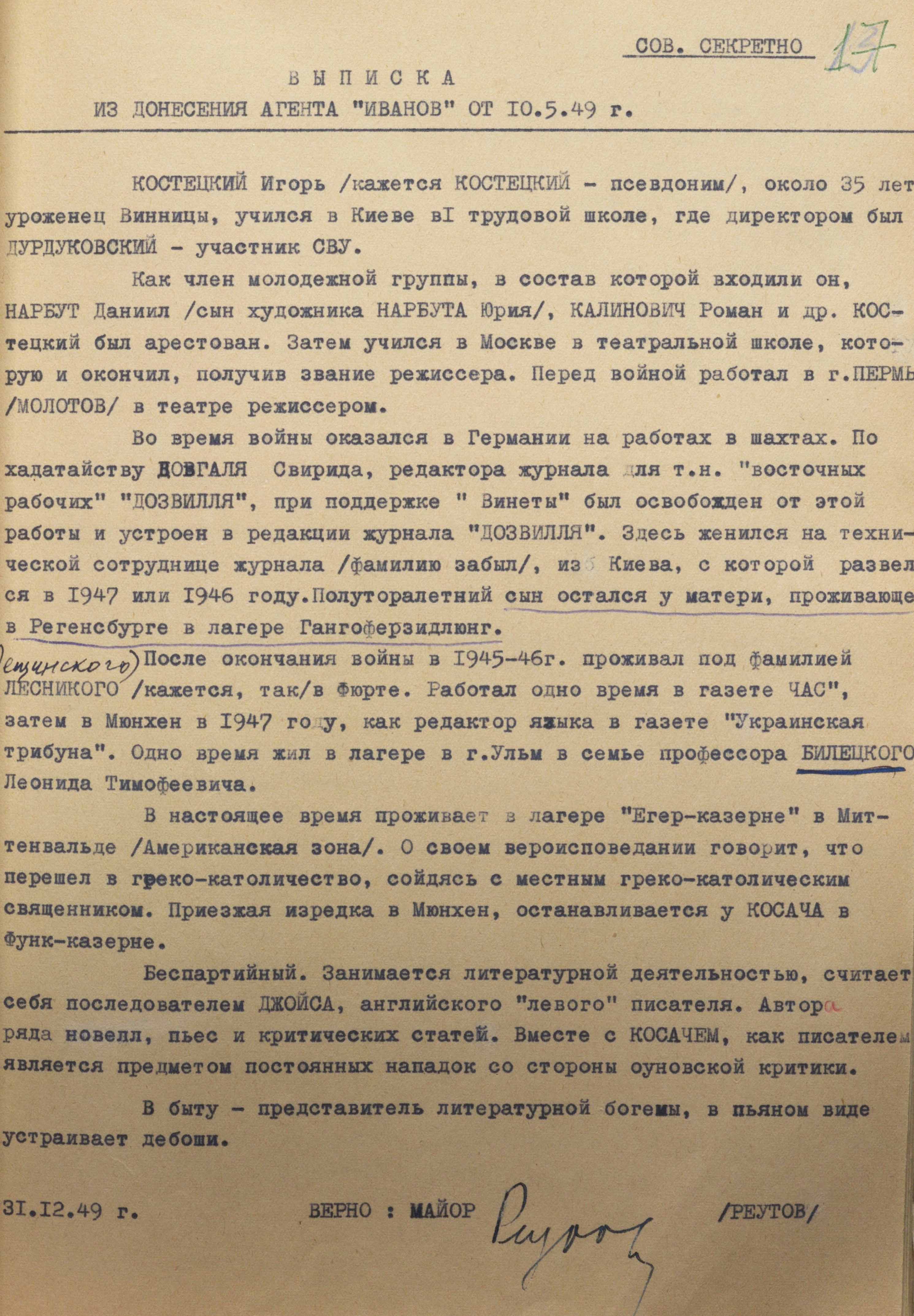
The three of them met for the last time at V. Petrov’s flat on April 14, 1949. Just three weeks later, at the office of the representative of the ussr mgb in the German Democratic Republic, “Ivanov” wrote a report on his stay abroad and, at the request of his supervisors, provided character references for those he knew. He wrote about I. Kostetskyi that the latter was about 35 years old, had studied at a vocational school in Kyiv, then at a theater school in moscow (in fact, at the state institute of theater arts, which he did not graduate from, and before that – in leningrad at a creative studio affiliated with the bolshoi drama theater), and was a director by profession. Before the war, he worked in perm, russia, where he led a drama club. During the war, he was deported to Germany, where he worked in a coal mine. At the request of editor of the magazine “Dozvillia” Svyryd Dovhal, he was transferred to work in the editorial office. After the war, he lived under the surname lishchynskyi and worked for the newspapers “Chas” and “Ukrainska Trybuna”.
“When he occasionally visits Munich,” the report stated, “he stays with Kosach… Non-partisan. He is engaged in literary activities and considers himself a follower of Joyce, the English ‘leftist’ writer. Author of a number of short stories, plays, and critical articles. Along with Kosach, as a writer, he is the target of constant attacks by OUN critics. In his personal life, he is a representative of the literary elite; when intoxicated, he causes disturbances” (FISU– F. 1. – Case 12033. – Vol. 2. – P. 17).
Additional information obtained by the chekists on I. Kostetskyi from other sources created a mixed impression of him. On the one hand, it indicated his rapprochement with members of the OUN(b) during the war, his collaboration with the nationalist underground, and his postwar work at the magazine “Ukrainska Trybuna”. On the other hand, there were reports of his departure from that political movement and even certain conflicts, as well as his shift toward supporters of the Ukrainian Revolutionary Democratic Party (URDP) led by Ivan Bahrianyi and his subsequent work at the party’s newspaper “Ukrainski Visti”. But he didn’t stay there long either; he withdrew from politics, occasionally spoke favorably of events in soviet Ukraine, took up translation work, and founded the publishing house "Na Hori”, where he published his own works, as well as those of his wife – the German translator Elisabeth Kottmeier – and other authors.
All of this forced the kgb to change their plans and redirect their operational efforts in a different direction.
How “Writer” Became “Patriot”
In April 1950, following a new directive from M. Kovalchuk, mgb of the Ukrainian ssr, the measures to evict I. Kostetskyi’s family were suspended until further notice. The chekists learned that the writer cherished his family ties deeply and was worried about his parents, brother, and sister. So, they decided to play on this and try to recruit him – that is, to obtain his agreement to cooperate in exchange for a promise to leave his parents alone.
First, in Vinnytsia,they met with his father, a Professor and teacher at a music school. They told him about his son, his “hardships” and “difficult life” abroad. At this, they offered to send him a letter urging him to return to his homeland. In operational documents, this was called a “recruitment letter”. The text had already been drafted by mgb employees. The father only had to copy it out in his own handwriting.
“Dear son,” the letter read, “I am well aware of your past, and yet I cannot believe that you have broken ties with your homeland, your father, your mother, your brother, and your sister; that deep down you have not remained a soviet person; and that you do not long to return home to your family.
With this short letter, I do not intend to persuade you – you are an adult man – but I still want to remind you: be sensible, listen to the voice of a father who loves you and wants to know who you are with and whether we can count on your return home.
I beg you, Ihor, to carefully examine your feelings, after which I hope that through the person who will deliver this letter to you, you will give a positive answer to a question that is quite important for our entire family”.
(FISU. – F. 1. – Case 12033. – Vol. 1. – P. 58–60).
According to the plan, the letter was to be delivered by an employee of the mgb’s foreign residentura, who would conduct a conversation and, depending on the situation, propose cooperation with soviet intelligence. I. Kostetskyi’s wife, Elizabeth, opened the door for him but did not let the stranger into the flat. After asking who he was and what he wanted, she asked to see his identification document. Having seen the soviet diplomatic passport, she began to complain loudly that such visits could only bring trouble for her and her husband, claiming it was some kind of provocation. Consequently, she did not take the envelope. That was the end of it.
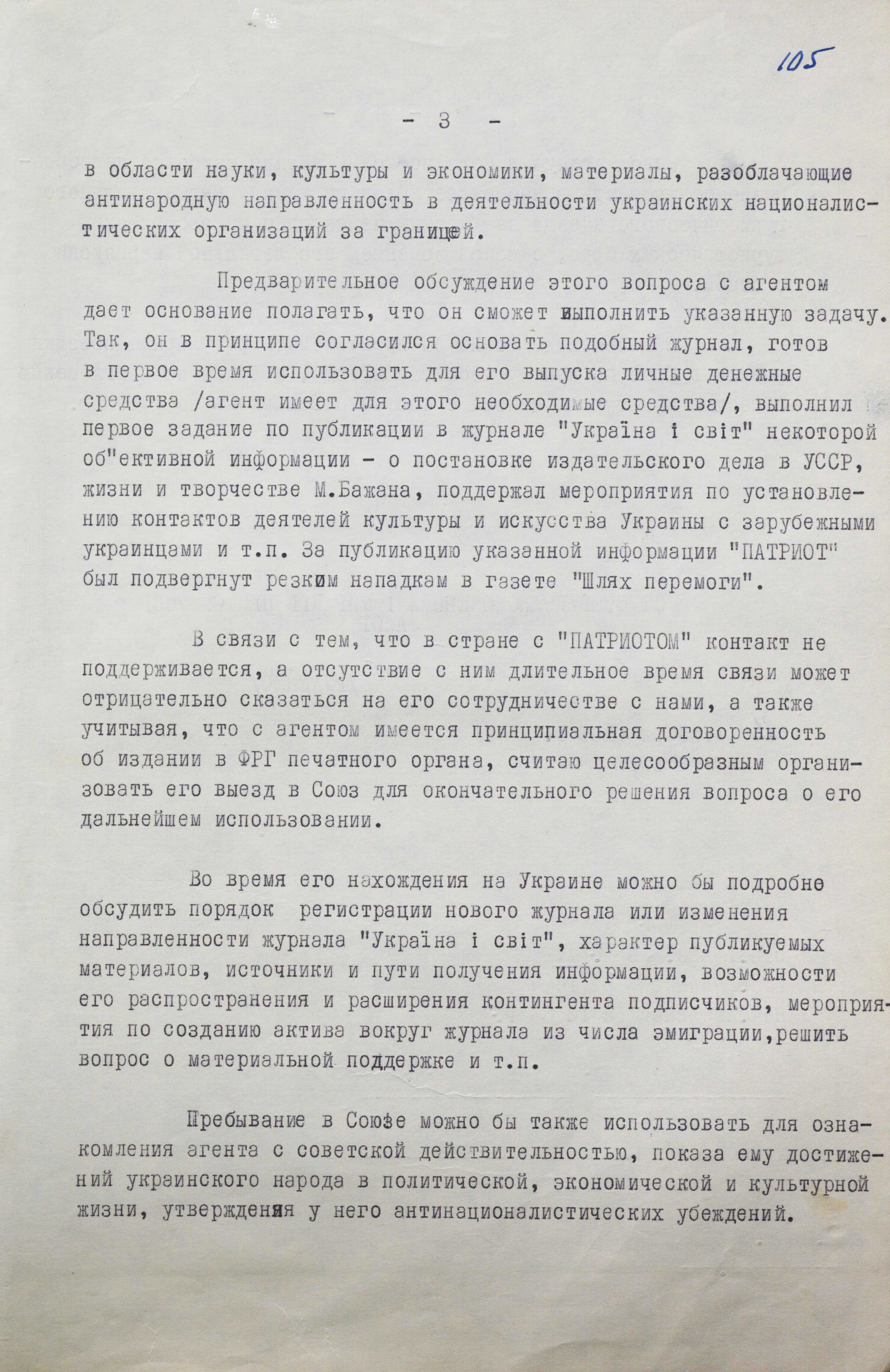
Despite this failed attempt, the authorities continued to systematically collect information on I. Kostetskyi. One of the reports, dated 1964, pointed out: “According to the information we have, ‘Writer’ is one of the leaders of the Ukrainian nationalist organization URDP and periodically contributes to its official publication, the newspaper ‘Ukrainski Visti’. He has a wide network of contacts among active members of various nationalist groups of interest to us. According to information from foreign intelligence sources, ‘Writer’ is not a fanatical nationalist; he cooperates with anti-soviet organizations primarily for material gain. “In terms of his personal qualities, he is an erudite, quite capable journalist, cunning, and easily establishes contact with individuals who interest him” (FISU. – F. 1. – Case 12033. – Vol. 1. – P. 274–275).
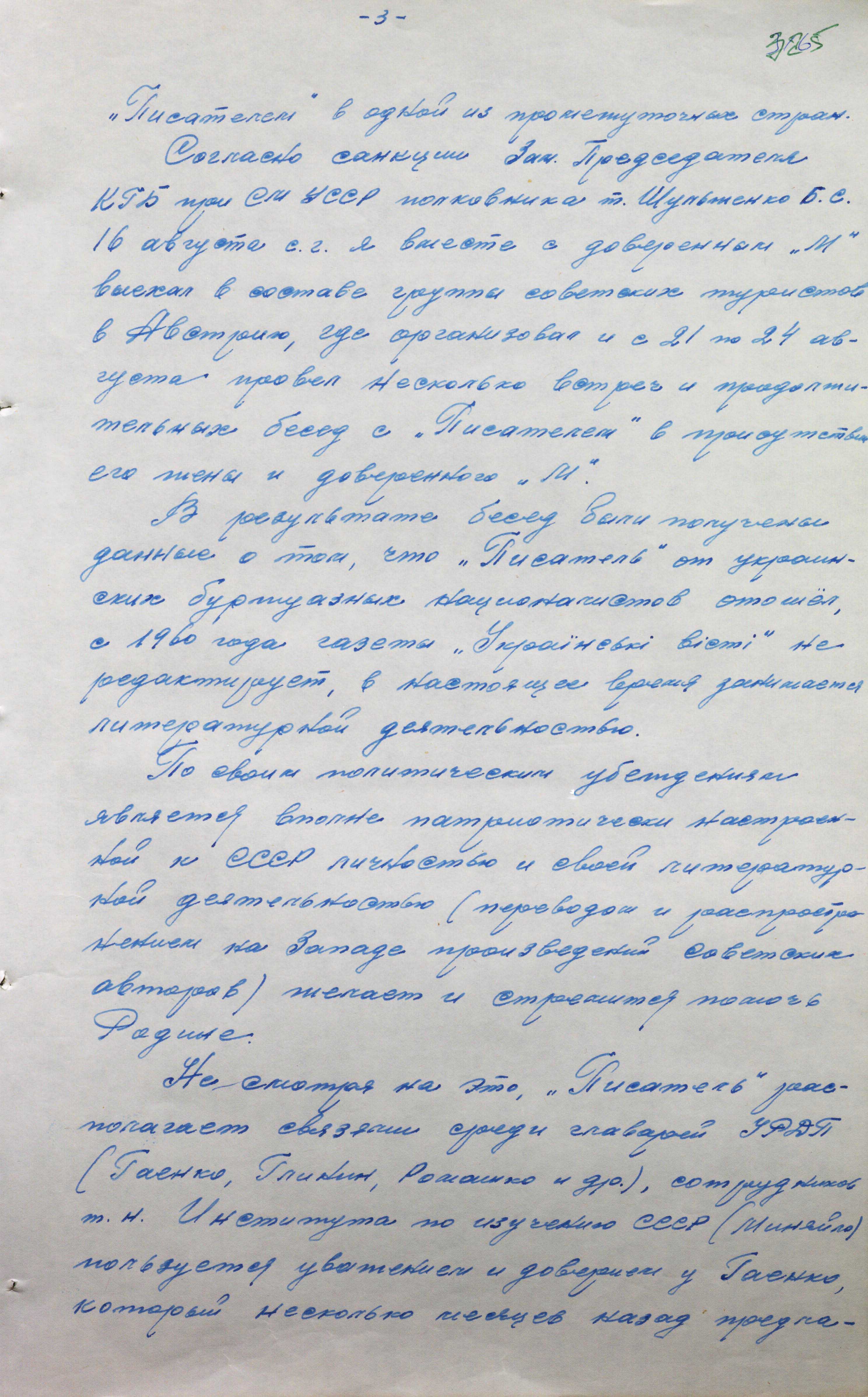
By that time, I. Kostetskyi had already tracked down his parents in Vinnytsia on his own and begun corresponding with them. But first, those letters were read by the kgb, which had evolved from the mgb but had not changed its focus, aims, or methods of operation. All previous work remained intact. So, they retrieved the case from the archives and continued it, taking into consideration the new realities. Soon they developed an operational plan that involved including I. Kostetskyi’s father in a tourist group traveling to Austria in August 1964. It was in Austria, not West Germany, that they intended to arrange a meeting with “Writer” to avoid coming under the scrutiny of West German intelligence agencies and representatives of the security services of Ukrainian political emigration centers.
The father was accompanied on the trip by a kgb officer from Vinnytsia. According to the cover story, he was an “engineer” whose daughter was supposedly studying at a music school. After the tour group arrived in Vienna, the father immediately sent a telegram to his son, informing him that they could meet in Linz – the next stop on the trip. On the appointed day, Ihor and his wife Elizabeth did indeed manage to arrive there. There were joyful embraces and tears. The kgb man watched all that from a distance. The next day in Salzburg, he joined the conversation.
According to a detailed report by the kgb operative officer, I. Kostetskyi spoke at length about his life under occupation and after the war. In particular, he spoke about his collaboration with the OUN, his arrest by the Nazis for participating in the nationalist underground in Vinnytsia and his two-month stay in prison, his deportation to Germany for forced labor, and his subsequent life in exile. He said that after the war ended, he considered returning home, serving 10–15 years in prison, and “becoming a full-fledged soviet citizen”. But he feared he might be shot. So, he decided to stay in the West. At the registration point, he said his name was Georgii Lishchynskyi, a native of the Polish city of Yaroslavl. This soon saved him from forced repatriation to the ussr.
Under this surname, he had been living in West Germany ever since, holding no citizenship. At the same time, he chose the literary pseudonym “Ihor Kostetskyi”, under which he published his works and translations. He pointed out that he closely followed literary developments in soviet Ukraine, regularly read the magazine “Vsesvit,” and greatly valued young Ukrainian poets Lina Kostenko, Ivan Drach, Mykola Vinhranovskyi, Vitalii Korotych, and planned to do a great deal in the near future to translate soviet authors in order to popularize them in the West. Meanwhile, his wife stated that she intended to publish a book of translations of Lina Kostenko’s poems into German.
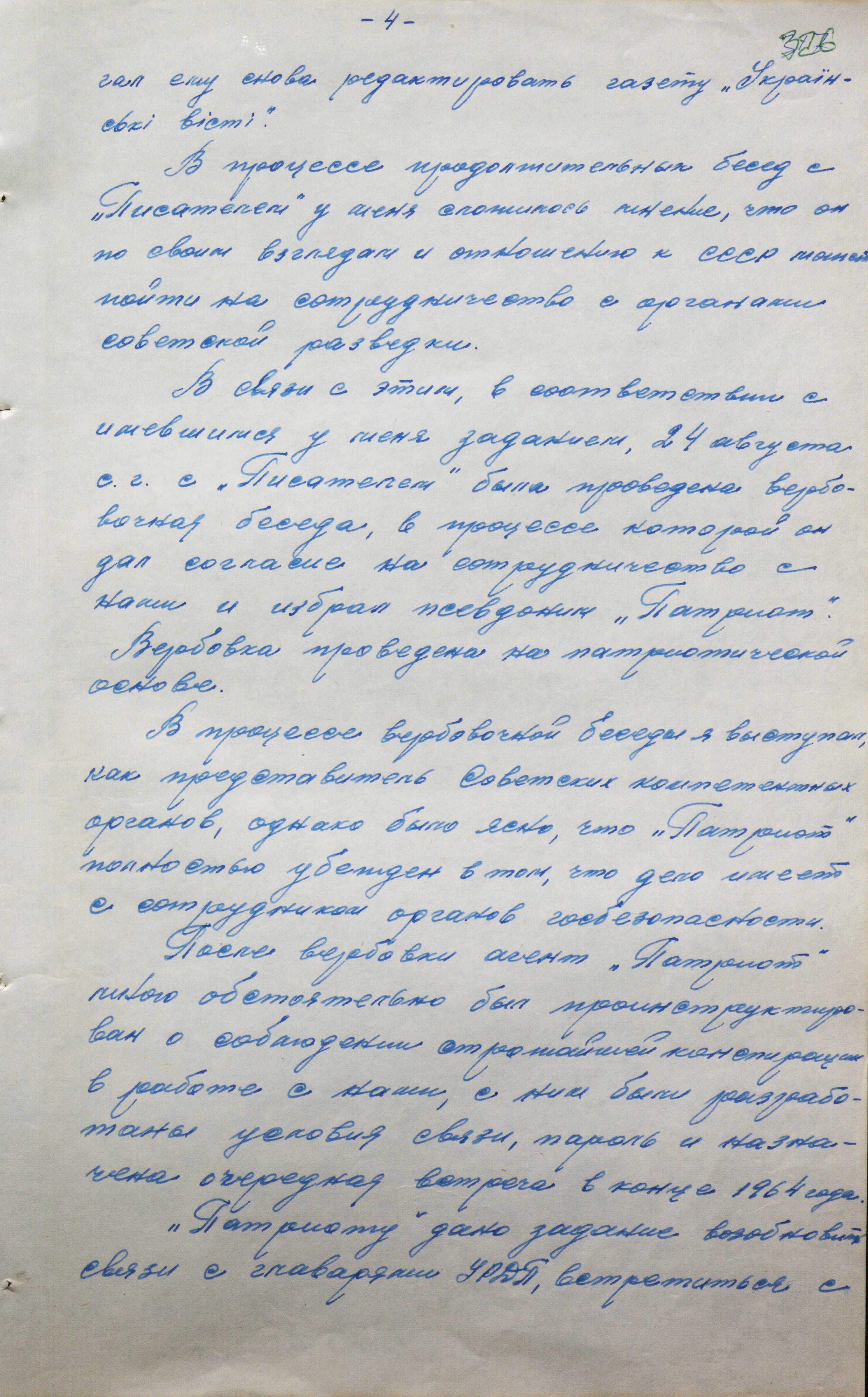
At the request of the operative officer, the father repeatedly emphasized during their conversation that he owed him a great deal, both for this trip and for many other things. The trip report pointed out that I. Kostetskyi apparently realized at that point that he was not dealing with an ordinary “engineer”. He became even more convinced of this when the man suggested discussing certain matters in private. This conversation lasted until morning. From the very beginning, the “engineer” admitted that he was in fact a “representative of competent soviet authorities” and that the aim of his visit was to secure his agreement to cooperate. In other words, the plan was for I. Kostetskyi to provide information about the situation within the Ukrainian émigré community, particularly within the URDP, to reestablish his past contacts among OUN activists, and to resume editing the newspaper “Ukrainski Visti”.
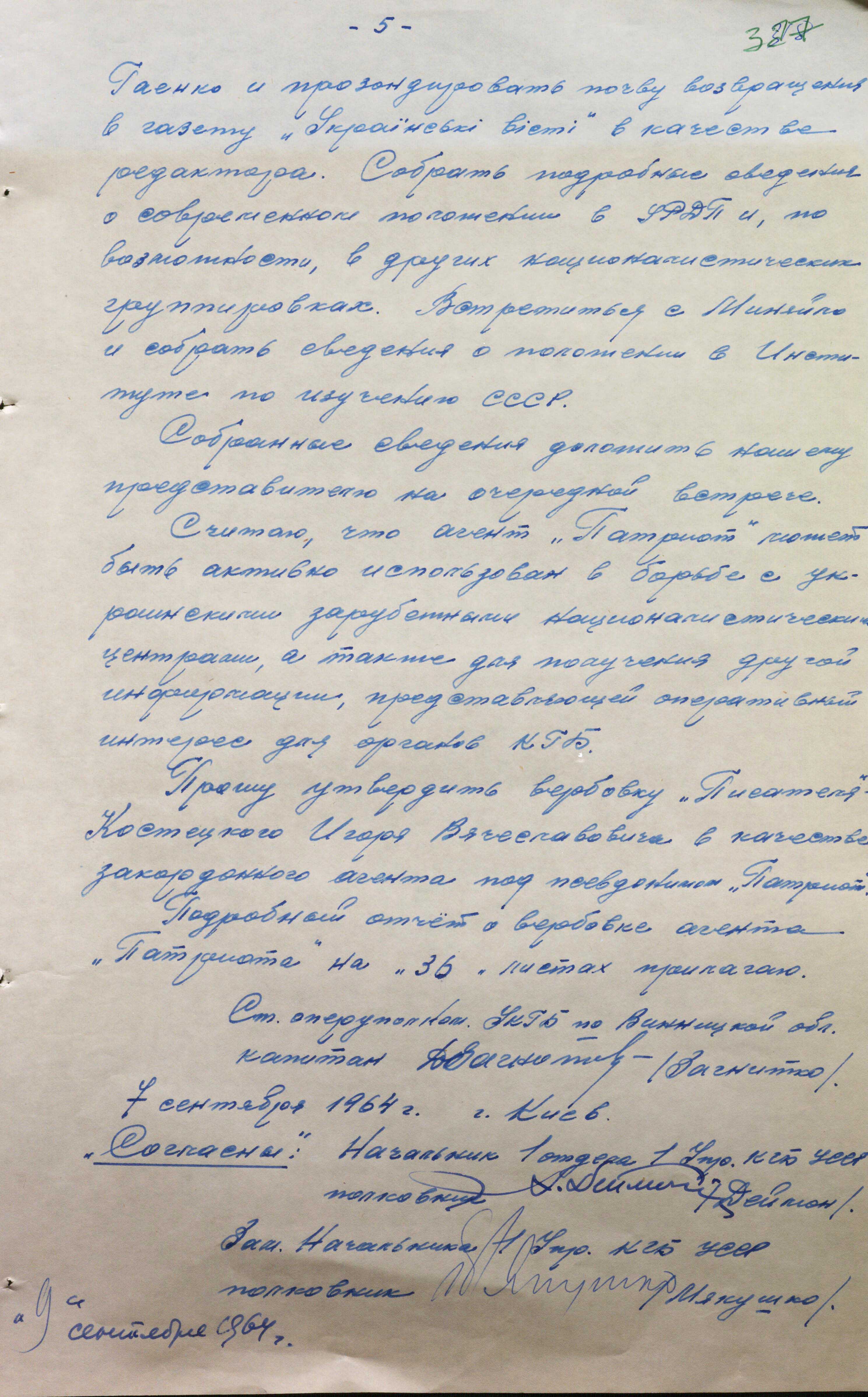
As the kgb officer wrote in his report, I. Kostetskyi allegedly took the proposal quietly and even discussed how he might return to the circle of party activists from which he had already distanced himself, and what else he could do abroad for soviet Ukraine and to showcase its achievements, particularly in the fields of literature and culture. Finally, when asked to choose a code name for covert communications, he said, “Let it be ‘Patriot’.” He did not sign a cooperation agreement, nor did he send any messages. There was never a suitable opportunity to do so due to the constant presence of his wife and other bystanders.
The only thing the kgb agent managed to do was discuss methods of communication. The next meeting was scheduled for December 1 of that same year in Vienna, near the monument to Prince Eugene of Savoy on the Square of Heroes. I. Kostetskyi was to be there from 1:00 p.m. to 1:30 p.m. with a book in his hands. The password was the phrase: “Please tell me, where is a good bookstore?” The response: “What books are you interested in?” “I’m interested in the works by Shakespeare and Greene,” the stranger was to say. I. Kostetskyi’s next phrase – “Who am I?”. The reply had to be “Patriot”.
The mention of W. Shakespeare in the password was no accident. I. Kostetskyi himself had suggested it. By that time, he had translated all of Shakespeare’s sonnets into Ukrainian in the style of Ukrainian Baroque, as well as the play “Romeo and Juliet.” Besides, he studied that English playwright and poet’s works, wrote literary articles about him, and was a member of the so-called Shakespeare Society in West Germany. In other words, he had a fairly deep understanding of the dramaturgy of those epic plots. And he was also an actor and director himself.
Long before this unexpected meeting in Linz, I. Kostetskyi had published an essay entitled “Three Masks” in the journal “Theater”. In it, he outlined his vision of dramaturgy and art. He believed that the “masked person” must be both conventional and artistic, and must be able to live by the laws they themselves have created in order to withstand the horrors of the surrounding world. That is, to try on different roles and personalities, to clown around, to pretend, to act. He argued that an actor has no future, only the present, since his role is constantly changing; yet this is a blessing, as it allows him to live thousands of lives.
He often embodied these ideas not only in his work but also in his own life.
To Be or Not to Be?
I. Kostetskyi did not show up for either the scheduled main meeting or the backup one. He later explained that he was late. The next meeting, which had been arranged with him in a letter, was canceled for some reasons by the staff of the kgb residentura in Vienna. It was not until April 1965 that such a meeting took place in the Austrian capital. As evidenced by the report on that meeting, the kgb officer persistently kept asking whether “Writer” had managed to reestablish contact with figures in foreign nationalist centers, resume leadership of the newspaper “Ukrainski Visti,” or obtain any important information. In response, I. Kostetskyi explained that he could not take on the role of editor; he could not contact the people he was interested in because he lived in a rural area far from Munich and was also very busy with his literary work.
They recommended that, he, at least, publish his own articles in the newspaper that would “expose the Bandera followers and their policies”, as well as include calls to develop contacts with the ussr. They promised to provide him with theses for such publications. In addition, they warned him not to allow his articles to in any way contribute to the newspaper taking on an anti-soviet slant. During the meeting, they also discussed how to use the magazine “Ukraina i Svit” edited by I. Kostetskyi, in the interests of the ussr and give it the necessary direction.
“‘Patriot’ has assured us that he fully understands this necessity,” pointed out a kgb officer in his report, “and will do his best. At the same time, he asked us to bear in mind that, due to the remoteness of his place of residence, his meetings could not be frequent, and that he was not sure he would be able to provide the information we needed in the volume required. Furthermore, his connections with the Banderites were impossible, since he had previously alienated many of them. I agreed with ‘Patriot’s’ final arguments and assigned him the task regarding Banderites- by speaking out in the press to shape public opinion against them” (FISU. – F. 1. – Case 12033. – Vol. 3. – P. 26).
The kgb officer also insisted that I. Kostetskyi should write his first intelligence report in person – to solidify the contact. He did so, but did not sign it. This report was, in fact, the only one for the entire duration of the case. In it, the writer outlined proposals for strengthening the propaganda work that the ussr was to carry out in capitalist countries. The essence of the proposals boiled down to the need to expand cultural, creative, and sporting contacts, publish books, and arrange meetings of writers and journalists. In particular, he proposed organizing a tour in the West by the Kyiv Franko Theater with a production of “King Lear”, and, in the event of Cardinal Josyf Slipyj’s return from Rome to his homeland, to find appropriate forms of coexistence with the Greek Catholic population of Ukraine’s western regions, so as to counter criticism from reactionary circles within the diaspora.
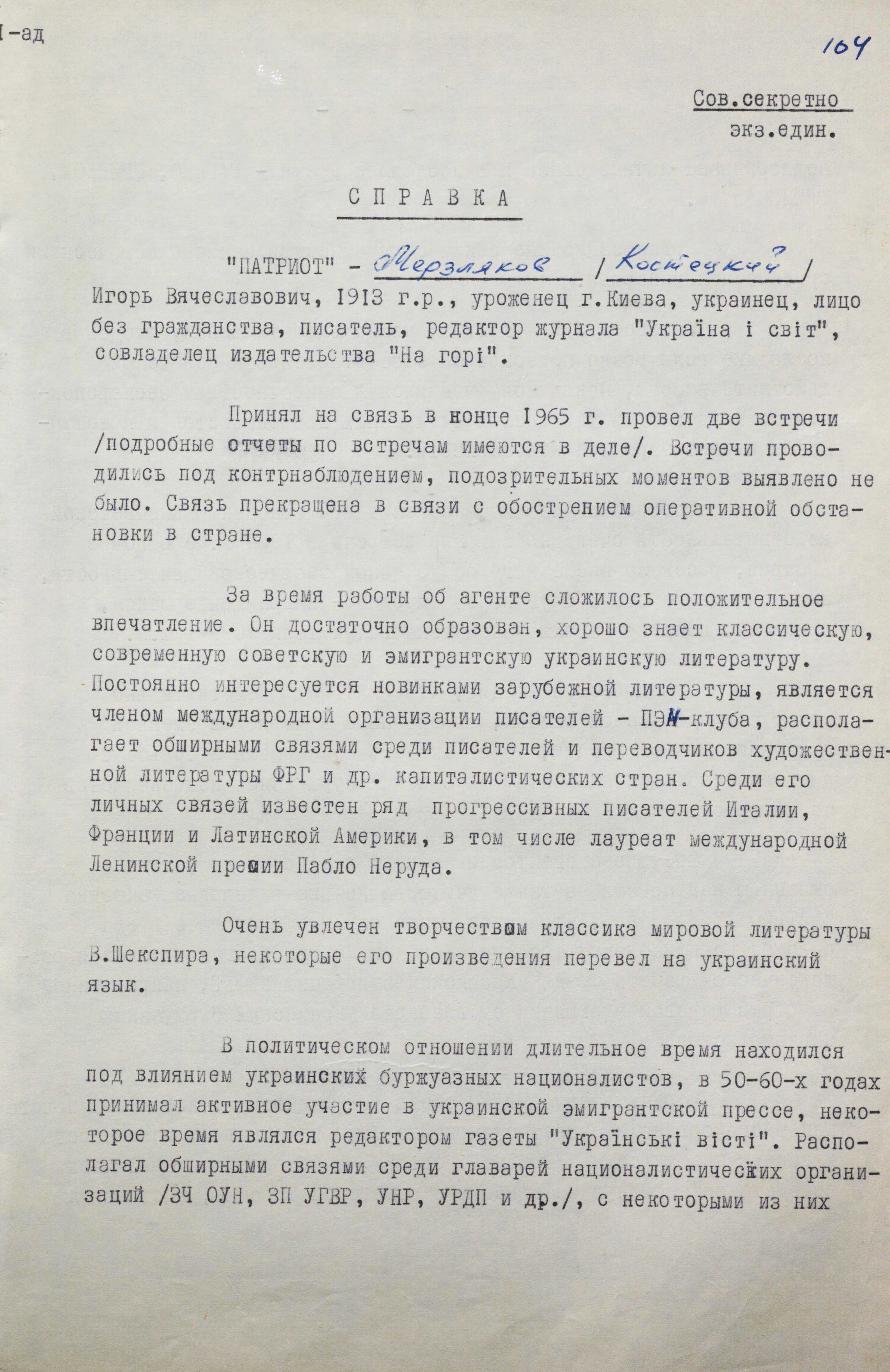
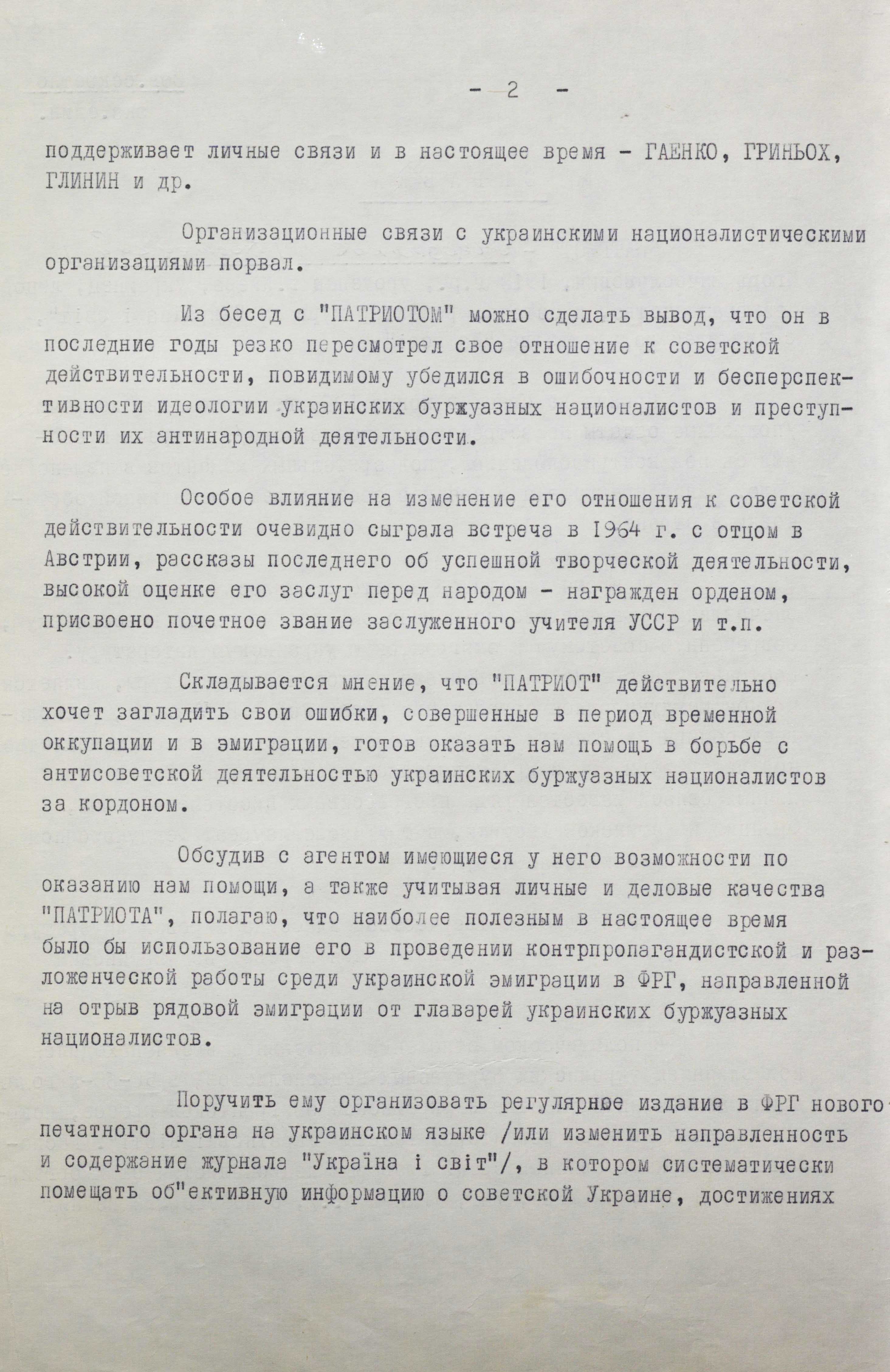
There are no comments, explanations, or resolutions regarding this report. Evidently, the supervisors did not like it, as they had expected something different. In general, based on the results of two meetings during that period, they drew the following conclusion: “No information has been received that would give cause to doubt his honesty toward us. The impression is that he has truly become disillusioned with the ideas of Ukrainian nationalism and views his connection with us as a path to his rehabilitation” (FISU. – F. 1. – Case 12033. – Vol. 3. – P. 47).
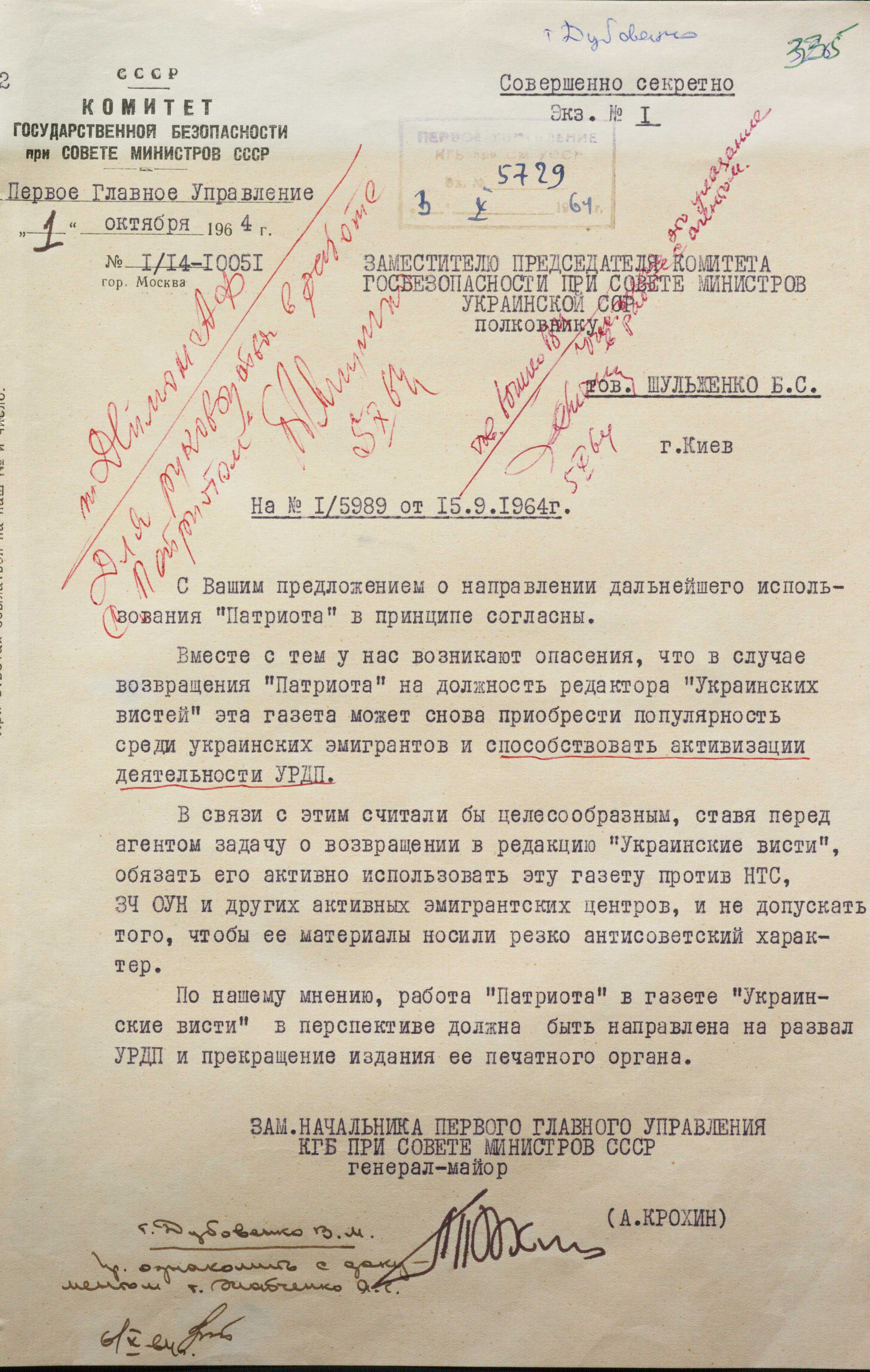
Soon, instructions arrived from moscow to study the possibility of establishing a progressive Ukrainian-language newspaper or magazine in West Germany, headed by I. Kostetskyi. The idea was that such a publication would be able to influence the younger generation of the Ukrainian diaspora and ordinary members in the desired direction, divert them from the influence of the “reactionary nationalist press”, and also promote the achievements of the ussr and disseminate other favorable information. It was noted that I. Kostetskyi would be perfectly capable of explaining to friends and colleagues where he had obtained the funds for such a publication. Supposedly, these were royalties from numerous translations. And he did indeed translate a great deal. Plus, it was recommended that arrangements be made for him to visit the ussr so that this issue could be discussed in detail on the spot, and so that the necessary educational influence could be exerted on him to definitively “reinforce his anti-nationalist ideas”.
This methodology was applied within the activities of service “A” in the central apparatus of the kgb of the ussr, which was engaged in carrying out so-called active measures – long-term special operations aimed at establishing legal public platforms in Western countries – in particular, newspapers, magazines, and publishing houses – to spread desired information and influence public opinion. “Patriot”, in the opinion of kgb officials, was ideally suited for that. Moreover, they had already done him a huge favor – they had suspended the deportation of his close relatives, whose fate he deeply cared about.
Meanwhile, after a few meetings – which were already infrequent, occurring only once or twice a year – contact with I. Kostetskyi ceased. First, he failed to show up for a scheduled meeting in Vienna. The residentura attributed that to bad weather. Then he wrote in a letter that he would be unable to attend the newly scheduled meeting because he had work-related trips to other countries planned for that time. Then there were some international translators’ forums, the release of another book, and other reasons. This continued from 1966 to 1969. During those five years, not a single meeting was held with him. Finally, in 1970, contact with him was reestablished.
At that meeting with a representative of the Bonn residentura of the kgb of the ussr, I. Kostetskyi, as shown by archival documents, spoke about how much had changed in the world and in his life in recent years, that he was constantly busy with work, rarely traveled anywhere, and met with no one, devoting himself exclusively to translations. He suggested sending his translations by mail directly to the address of the soviet embassy. “If you have any questions,” he said as a parting remark to the visitor who had come to his home, “I’d be happy to see you here. Just give me a call in advance.”
Having returned to the residentura, the kgb officer prepared a report, at the end of which he pointed out: “To summarize the conversation, I got the impression that ‘Patriot’ had guessed the true aim of my visit and used this to make it clear that he did not wish to continue cooperation with us. In light of this, I would consider attempts to reestablish contact with him as an agent to be futile” (FISU. – F. 1. – Case 12033. – Vol. 3. – P. 305).
But was that cooperation at all? What did I. Kostetskyi actually think and do after he realized back in 1964 that he was dealing with a kgb officer? What lay behind the chosen code name “Patriot”, the careful discussion of communication methods, the meetings in different cities in Austria and West Germany, the promises to publish newspapers, and the publication of a series of articles, after which representatives of the OUN(b) subjected him to a smear campaign? Did he ask himself Hamlet’s question: “To be or not to be?” And who to be, or with whom to be? What role did he play, and what masks did he use in the process?
The multi-volume case file contains no answers to these questions. At the same time, the memoirs of Stepan Mudryk, one of the leaders of the Security Service of the OUN’s Foreign Units, shed light on this situation. Officially, he was considered the deputy head of the OUN(b) Security Service and the long-time head of OUN intelligence, a position he held from 1951 until the end of the 1980s. In the book “The Security Service of the Revolutionary OUN in the Struggle Against the nkvd-nkgb-mgb-kgb”, S. Mudryk recounted that after an unknown man visited I. Kostetskyi’s flat and then delivered letters from his father, he realized that the kgb was using this method to gain access to him. And so, through his friends, he turned to the Security Service of the OUN(b) for help.
“It was agreed,” pointed out S. Mudryk, “that the Security Service would help I. Kostetskyi, and if necessary, would even transport him to another country. All this would be done on the condition that he would keep us fully informed and strictly follow all instructions given to him by the Security Service. Special attention was paid to his behavior and manner of speaking.”
S. Mudryk wrote that when I. Kostetskyi’s father arrived in Austria in 1964, accompanied by a kgb officer, the Security Service of the OUN(b) had already devised a series of measures that even included providing security for the writer. He was advised to agree to everything, as they feared that if he refused to cooperate, “his family in Vinnytsia would face trouble”. S. Mudryk then recounted in detail in his memoirs the content of the writer’s subsequent conversations with kgb officers. About how I. Kostetskyi was advised to get closer to Banderites and later write negative articles against them, and how he was strongly urged to make the magazine he edited, “Ukraina I Svit”, pro-soviet and a mouthpiece in countering Banderites.
Following the recommendations of the OUN Security Service, I. Kostetskyi wrote such critical articles, passed them on to an employee of the kgb Bonn residentura, who made the necessary edits and additions, returned them for printing, but they never appeared in the magazine. In his defense, I. Kostetskyi explained that the publisher Illia Sapiha, to whom he reported, rejected those materials. In his comments on this situation, S. Mudryk emphasized that the Security Service of the OUN(b) had to make considerable efforts to “prevent writer I. Kostetskyi from using his pen to engage in political subversion against Ukraine’s independence”. And to demonstrate at least some positive aspect of the relationship, I. Kostetskyi, on the recommendation of the Security Service of the OUN(b), told his kgb curators that he would “collaborate with left-wing writers and poets in the international union of communist writers”. And he actively collaborated for many years.
All of this was not easy to do, since in that complex, long-term operational game, they had to stall for as long as possible, maintain the appearance of some cooperation with the kgb, and at the same time avoid any missteps. After all, there were fears for the safety of I. Kostetsky and his family in soviet Ukraine, which was constantly held hostage. It became somewhat easier to stick to the planned course of action when I. Kostetskyi’s father, mother, and aunt – whom he cherished deeply – died in Vinnytsia.
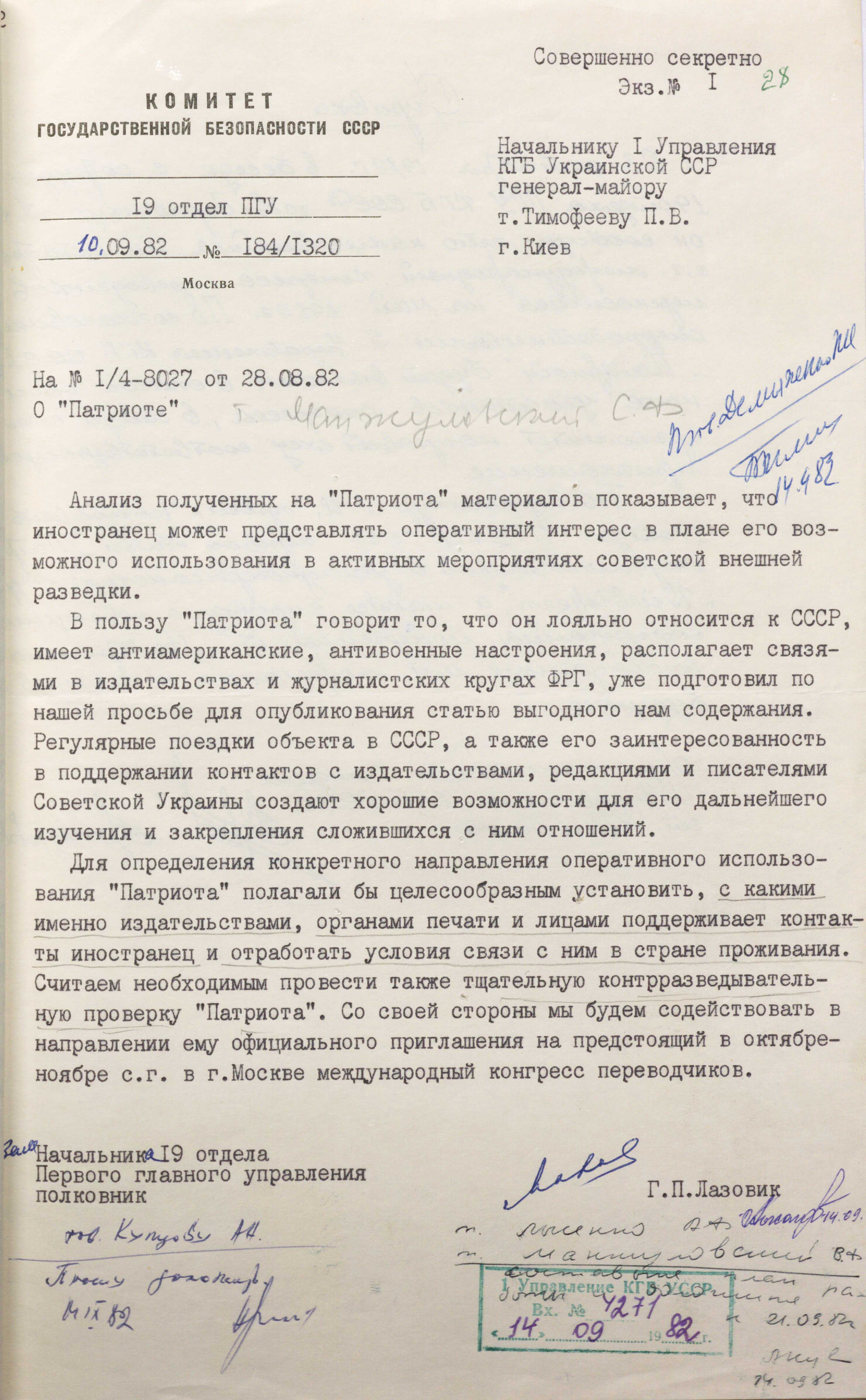
In 1979, the writer decided to travel to moscow for an international conference of translators. Two years later, he visited the ussr through the union of soviet writers. In 1982, he visited Kyiv at the invitation of the “Ukraina” society. Each time, kgb agents met with him. In reports on those meetings, he was already referred to as a subject to operational surveillance and, at the same time, a former foreign agent codenamed “Patriot”, who held “ideological positions close to ours”. During those brief encounters, he was offered the opportunity, upon his return to West Germany, to write and publish counter-propaganda articles in the German press about his stay in the ussr – that is, to report on the soviet leadership’s peace-loving initiatives, various achievements, and the smooth organization of conferences. He did write a few things. The kgb of the Ukrainian ssr attached those publications to the case file and reported to moscow on the successful implementation of active measures.
In the spring of 1983, a letter arrived in Kyiv from the central office of the kgb of the ussr stating that I. Kostetskyi had been included on the official list of invitees to the next international meeting of translators of soviet writers. But he could not attend. The writer suddenly fell ill and died in June 1983. It was then that the Security Service of the OUN(b) decided to shed light on the entire story.
Regarding this, S. Mudryk wrote the following at the conclusion of his memoirs about I. Kostetskyi: “For over 20 years, kgb agents were convinced that Ihor Kostetskyi was one of their men. The Security Service learned that kgb agents had decided to publish a book about the ‘soviet patriot’ Ihor Kostetskyi. The Security Service believed that it would be unfair to I. Kostetskyi to classify him as a “soviet patriot”, since it was well known that he disliked the moscow imperialists. Therefore, in 1984, it was reported that I. Kostetskyi was not the person the kgb had portrayed him to be.
S. Mudryk’s revelations regarding the situation with I. Kostetskyi and other Ukrainian figures whom the kgb attempted to recruit and direct their talent, experience, and skills against the Ukrainian national liberation movement became an important addition to understanding the essence of the operational case and the conclusions that in such a complex confrontation, on one’s own, without the involvement of relevant specialists, it is not easy to make the right decisions and fight back.
On this subject, in his other book entitled “In the Struggle Against moscow’s Agents”, S. Mudryk wrote: “Thus, our struggle against the muscovites is waged for our national state, and this requires the political and statehood building development of our entire people, their strong resistance to hostile schemes, and an awareness of the constant danger. For when the enemy cannot deceive or lead those who fight astray, it destroys them physically. Ordinary citizens cannot wage war against the enemy’s organs of terror and provocation. To do so, we must train professionals who can unravel the enemy’s plans and expose them. For we are dealing with a treacherous and vile enemy…”.