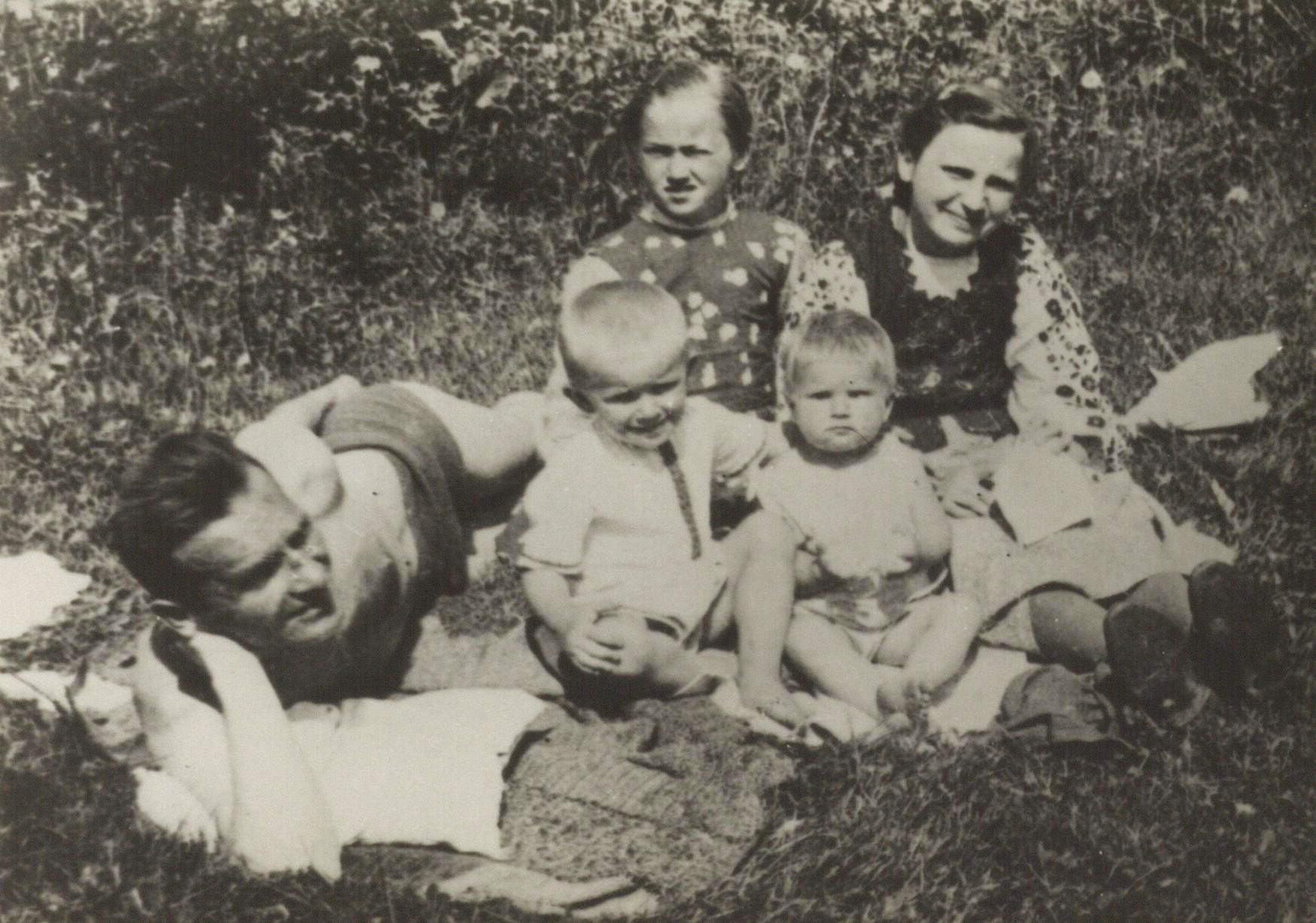
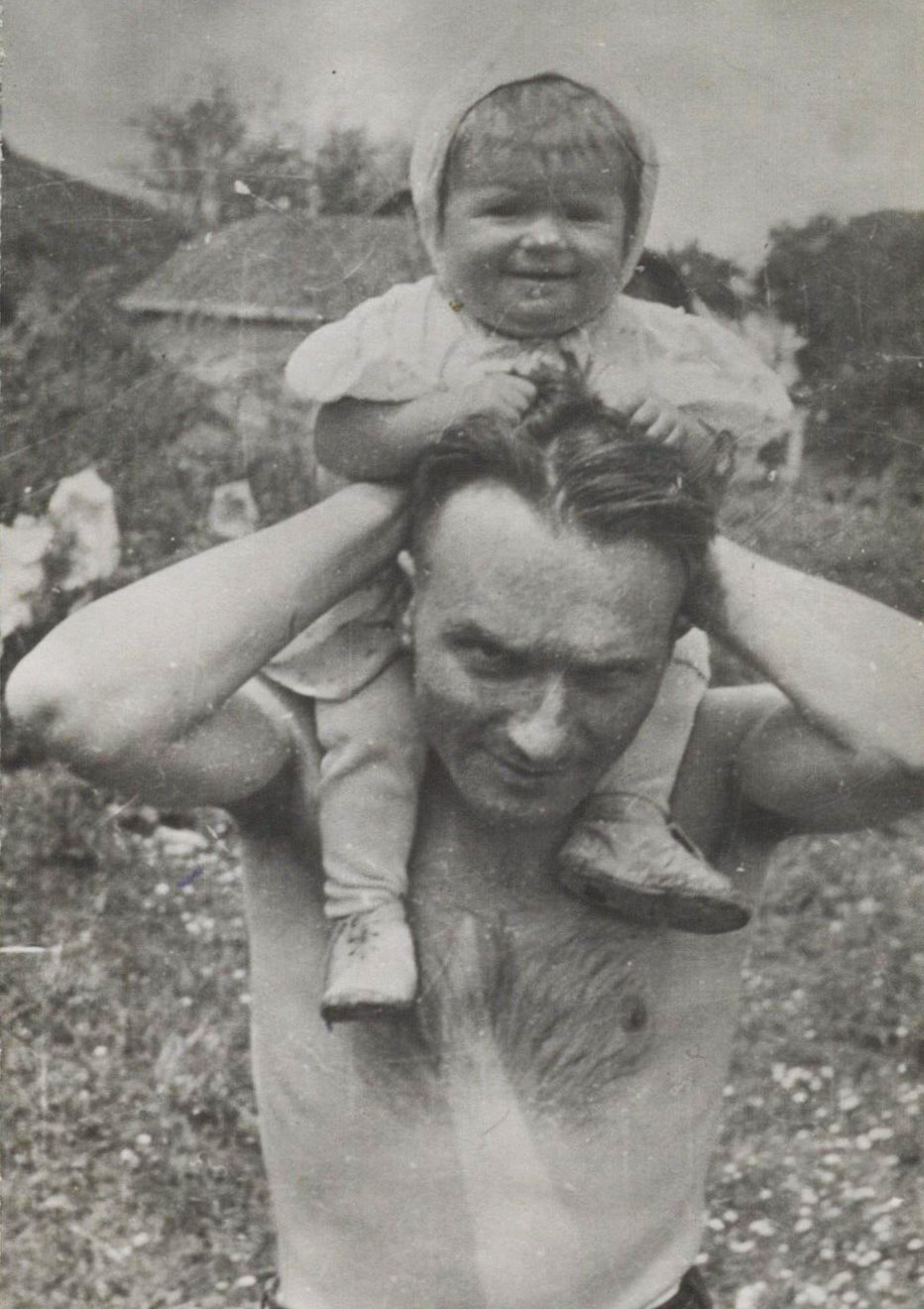
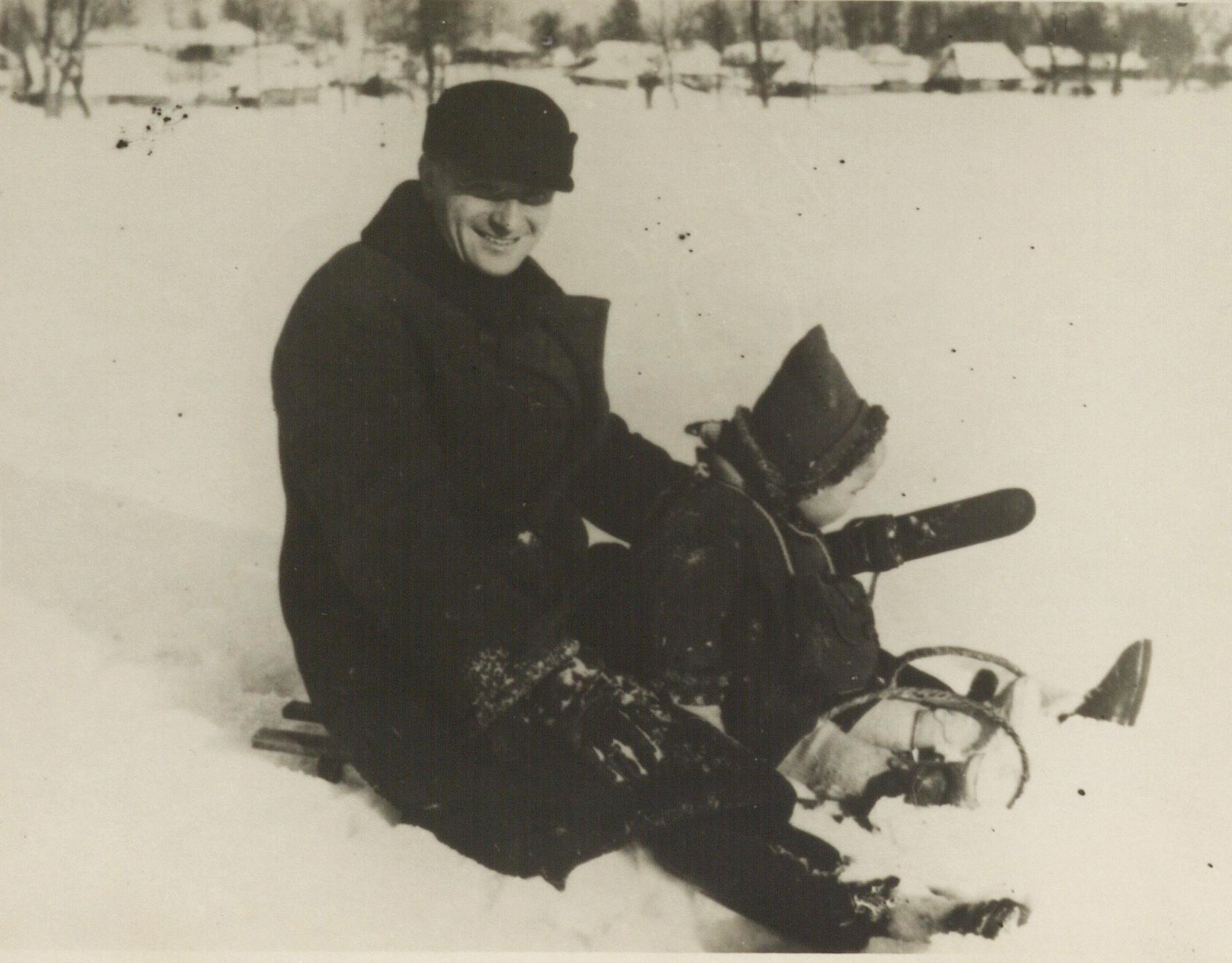
Yaroslav Haivas. Prominent OUN Figure, Intelligence Officer, Journalist
6/15/2026
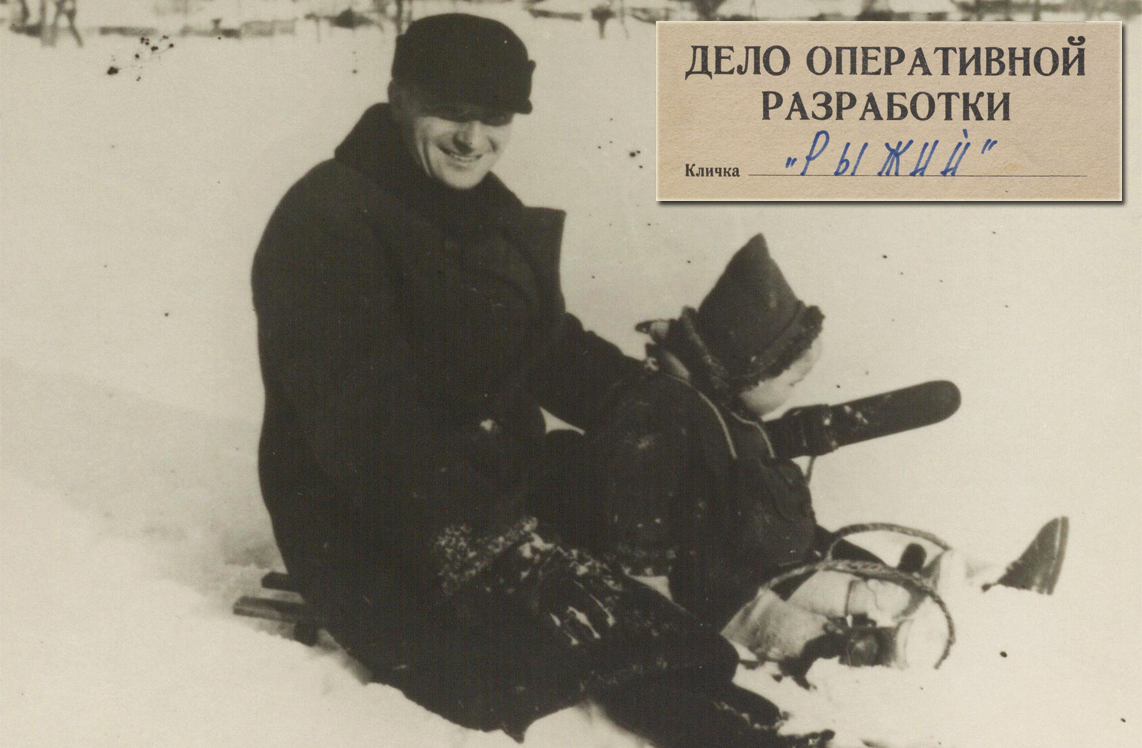
At various points in his life, Yaroslav Haivas served as Roman Shukhevych’s deputy in the Self-Defense Committee; during the German-soviet War, he led one of the OUN-M’s expeditionary groups in the occupied territories of soviet Ukraine, later headed the Provid of the Central East of Ukraine, and during 1944–1945 even served as acting leader of the OUN. After the war, he headed the OUN’s intelligence service, then edited the newspapers “Svoboda” and “Shlyakh Peremohy”, and wrote a series of books about his participation in the liberation struggle. His activities were constantly monitored by the nkvd/kgb, as evidenced by a three-volume case file held in the archives of the Foreign Intelligence Service of Ukraine.
At the Head of “Odynka” – the Intelligence Service of the OUN-m
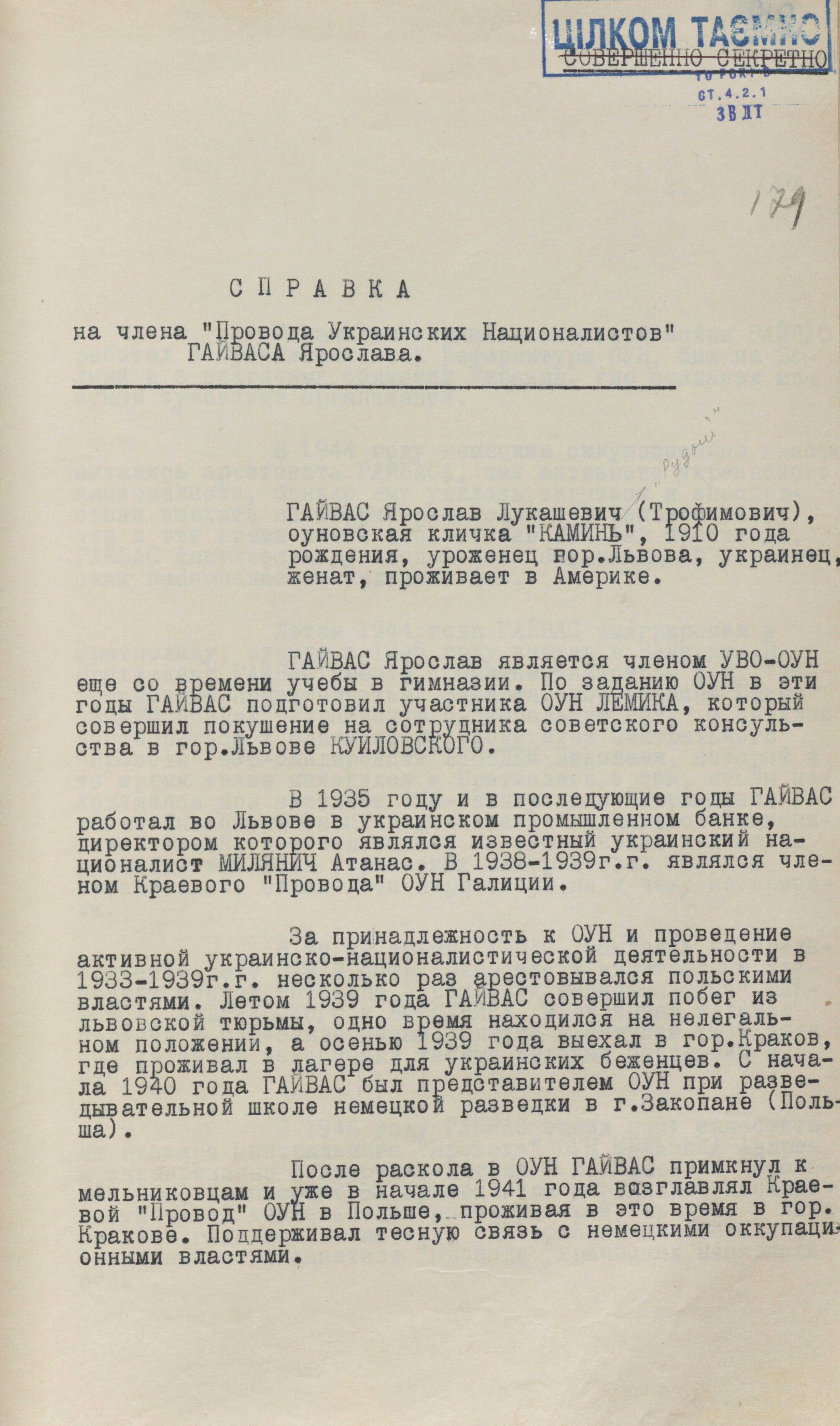
As shown by declassified documents, Yaroslav Haivas belonged to a special category of targets for operational cultivation by the nkvd/kgb – ideologic, committed, intelligent, well-prepared for underground work, with good education and rigorous school of struggle, conspiracy, and imprisonment in jails and camps. Such individuals, in the opinion of the checkists, could neither be recruited nor persuaded to renounce their anti-soviet activities. Therefore, they had to be kept under surveillance, and ways had to be devised to minimize their activity.
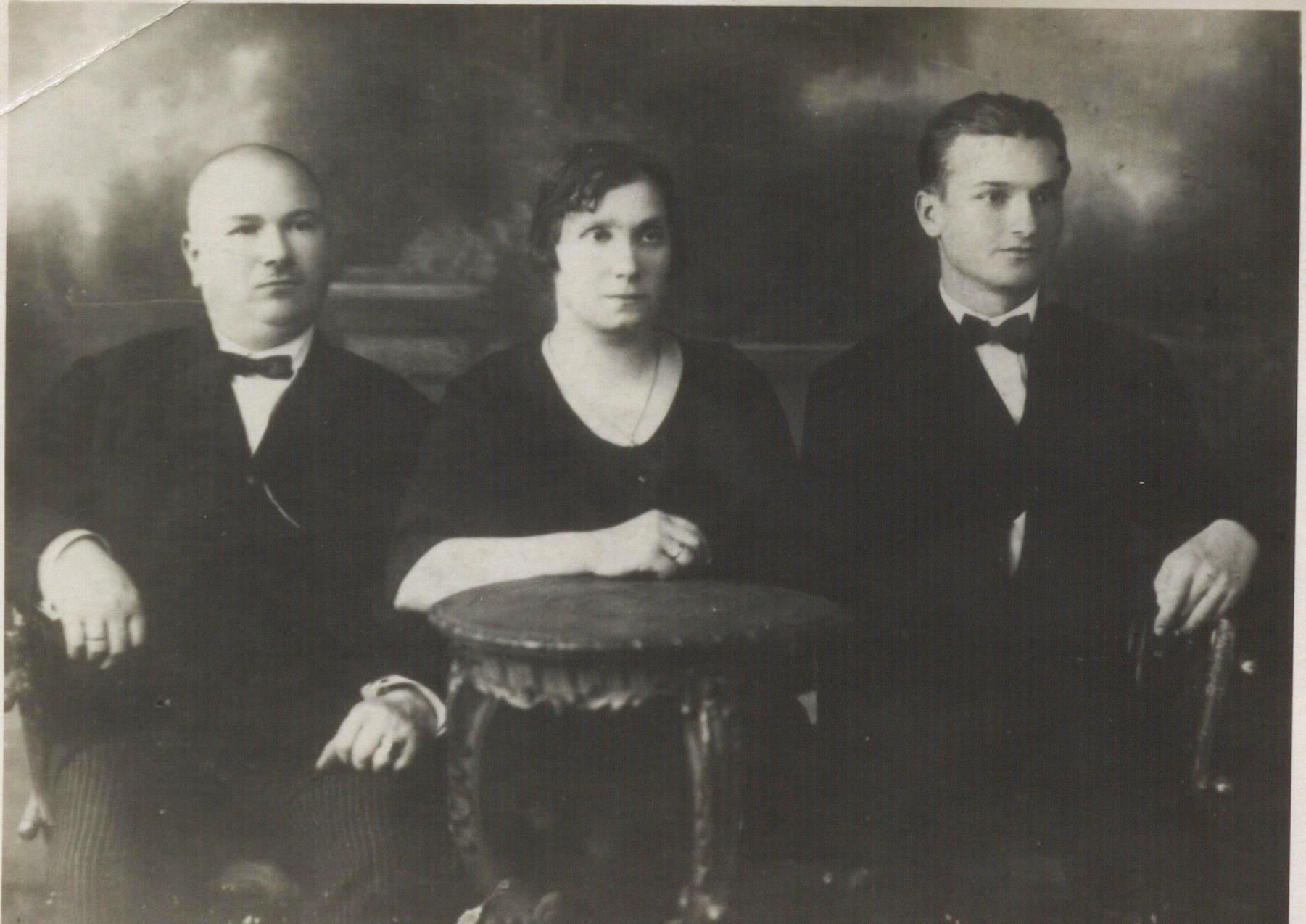
Ya. Haivas was born on January 8, 1912, in the village of Sokolivka, Zolochiv povit (now Zolochiv district, Lviv region). He attended a gymnasium in Yavoriv and a branch of the Academic Gymnasium in Lviv. He was a member of Plast. At that time, he also joined the Ukrainian Military Organization (UVO), and shortly thereafter – the Organization of Ukrainian Nationalists (OUN). Only fragmentary information about that period remains in the case file, specifically that in 1930–1931 he allegedly led the “Black Hundred” across the state border to fight against soviet rule in the Ukrainian ssr. In 1934, he was sentenced to two years in prison “for training OUN member Lemyk, who carried out an assassination attempt on an employee of the soviet consulate in Lviv.” This is mentioned in one of the kgb reports.
The report also states that Ya. Haivas worked at the Ukrainian Industrial Bank in Lviv starting in 1935. In the following years, he was a member of the OUN’s regional executive in Western Ukraine. After the arrival of soviet troops in Western Ukraine, he left for Krakow, where he lived in a camp for Ukrainian refugees. During that period, he underwent training to conduct intelligence activities within the OUN Security Service.
In one of the interrogation transcripts dated October 1940, arrested OUN member Hryhorii Chubatyi admitted that Ya. Haivas headed the intelligence department of the OUN’s Krakow Executive. In this department, under his command, Bohdan Pidhainyi allegedly oversaw domestic intelligence, while Mykola Lebed handled foreign intelligence.
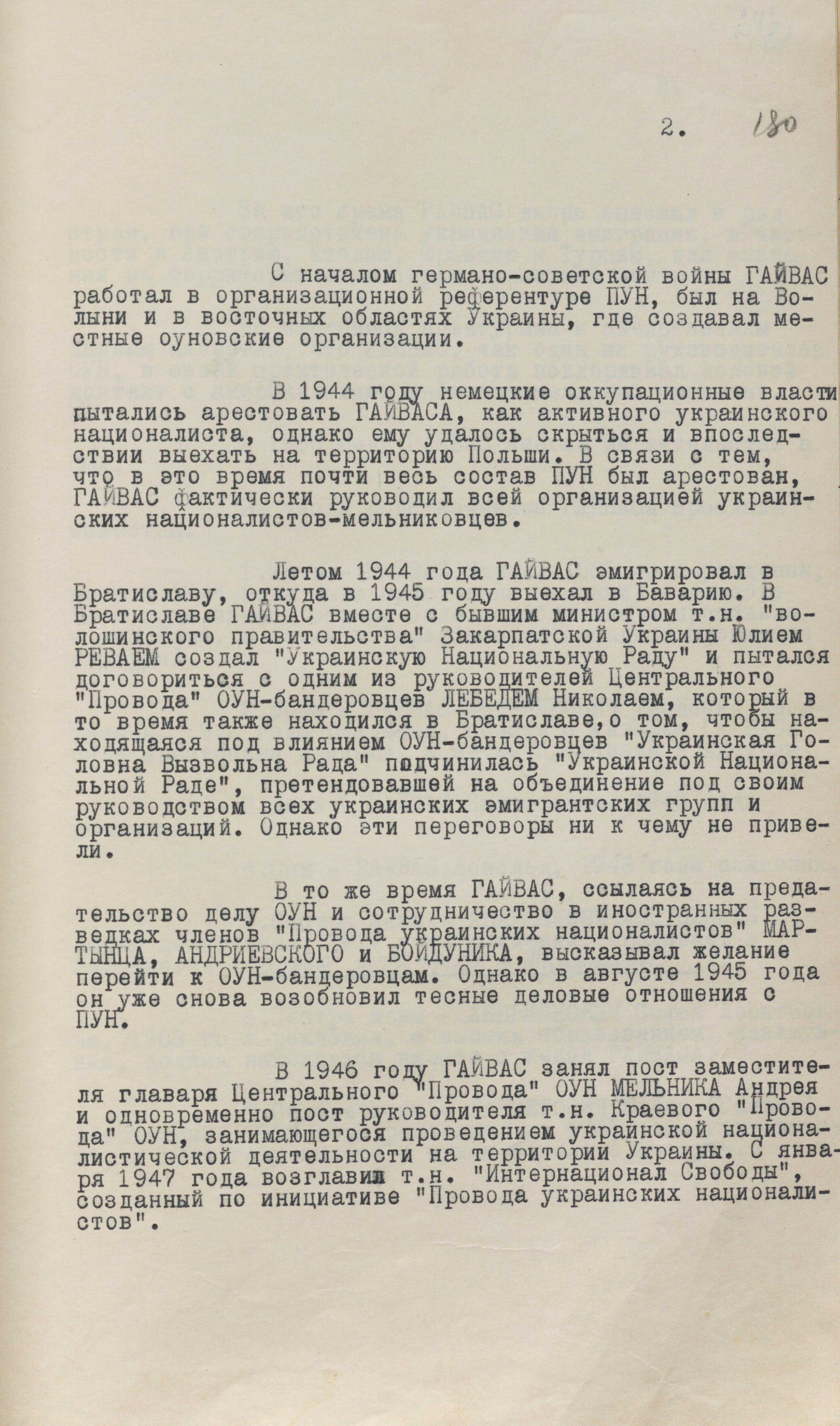
After the split in the OUN, Ya. Haivas sided with Andriy Melnyk. At the outbreak of the German-soviet War, the nkvd of the Ukrainian ssr had information that he “worked in the organizational referentura of the Provid of Ukrainian Nationalists, was in Volhynia and eastern regions of Ukraine, where he created local OUN organizations.”
In the postwar period, the mgb of the Ukrainian ssr persistently tried to find some compromising evidence against Ya. Haivas and publicly accuse him of collaborating with the Nazis. Instead, they received testimony to the contrary – that he had opposed the occupation regime and defended the idea of Ukrainian statehood. For this, he was persecuted by the Nazis, as detailed in archival documents.
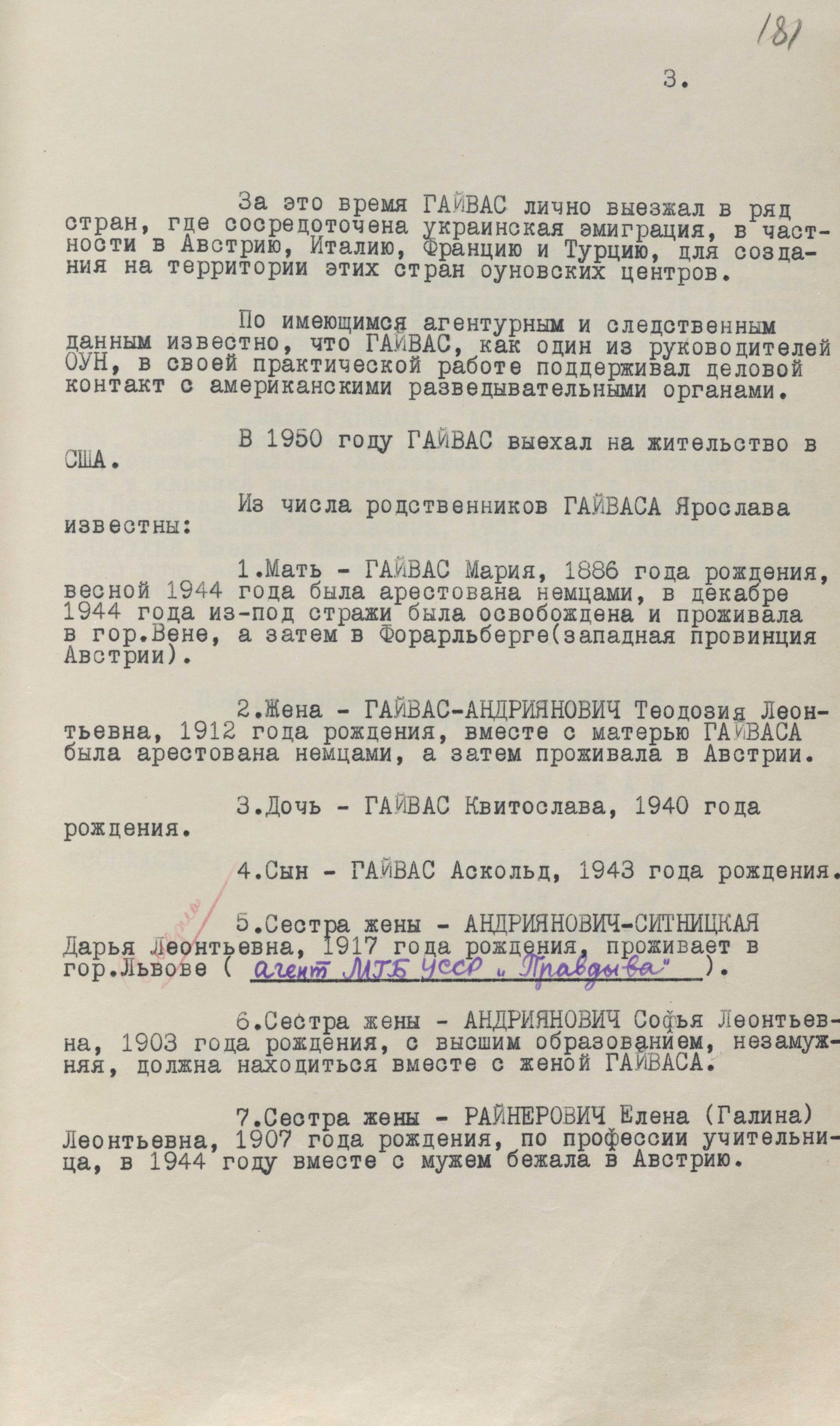
One report states that “in 1944, the Gestapo tried to arrest Haivas at his flat; however, upon the Gestapo’s arrival, he jumped out the window and disappeared. Not finding Haivas in the flat, the Gestapo arrested his wife and mother, leaving two young children at home” (FISU. – F. 1. – Case 13901. – Vol. 1. – P. 59).
After escaping, Ya. Haivas immediately went to a relative on his wife’s side, Bohdan Sytnytskyi, and asked him to take the children and hide them at his home. Sytnytskyi readily agreed and, together with his wife, carried out the plan that very same day. During the Hitler troops’ retreat from Lviv, Ya. Haivas sent the children, along with B. Sytnytskyi’s wife, to another location, where he visited them on multiple occasions. In July 1944, he took the children, along with his wife’s sister, to Czechoslovakia, and from there to Vienna. In September of that same year, they were joined by Ya. Haivas’ wife and mother, who had been held in a Nazi concentration camp. Ukrainian activists had persistently lobbied for their release.
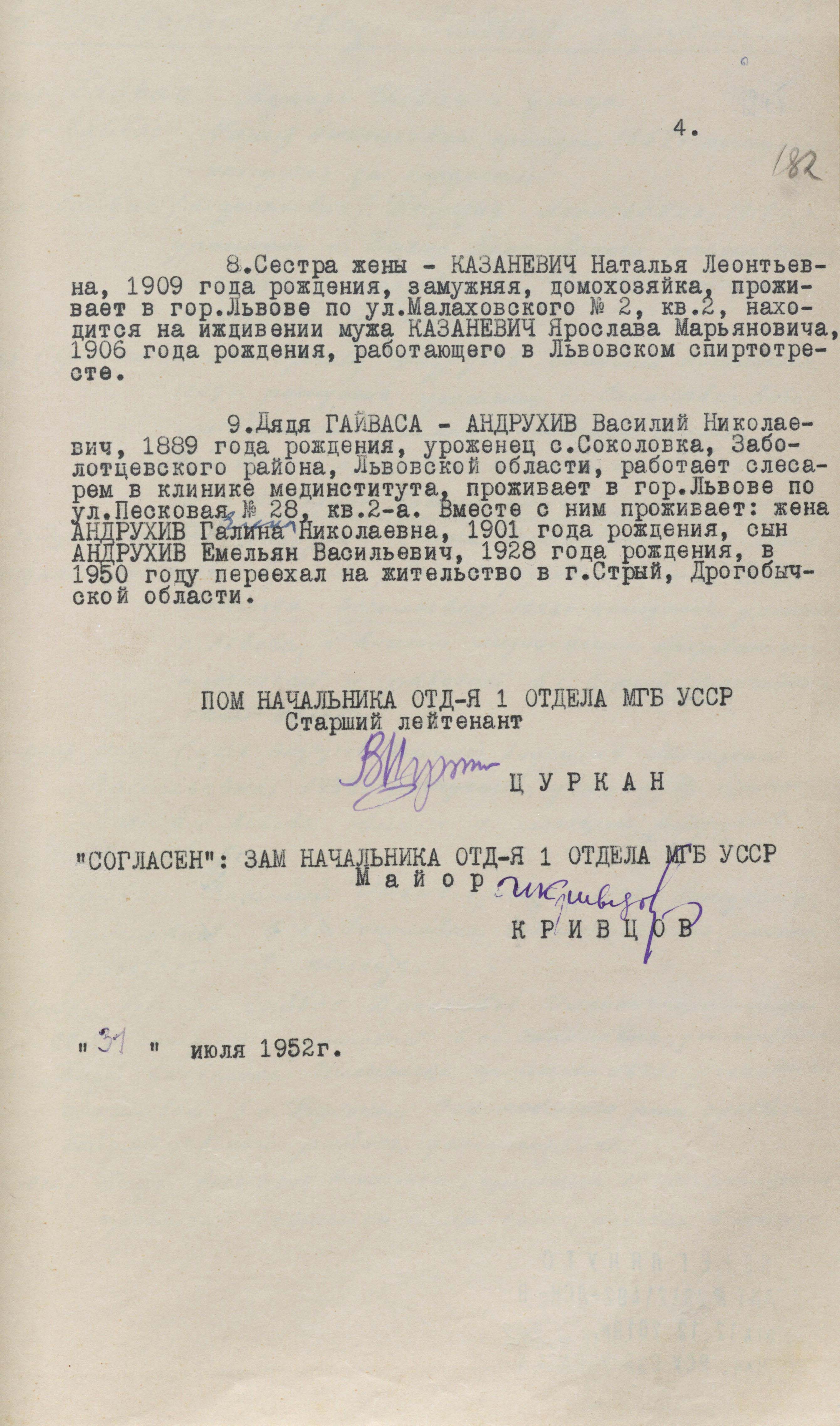
B. Sytnytskyi did not get away with this story. In 1948, employees of the Lviv regional department of the ussr mgb arrested him for membership in the OUN. His brother Andrii was also found in a prisoner-of-war camp near moscow. He was accused of serving in the “Halychyna” Division and fighting against red army units. Chekists tried to use both of them to infiltrate Ya. Haivas’ inner circle abroad, but nothing came of it.
Meanwhile, the following information was received on Ya. Haivas: “…In early 1946, the first department – or, as it was called, ‘Odynka’ – was established within the Provid of Ukrainian Nationalists (PUN). The task of the first department – ‘Odynka’ – was to direct the activities of the underground organizations of the OUN-Melnyk faction in the Krai, that is, in western regions of the Ukrainian ssr. The first department of the PUN – ‘Odynka’ – was headed by PUN member Yaroslav Haivas. Somewhat later, this first department of the PUN was reorganized into the Regional Provid of the OUN, which retained its former name ‘Odynka’” (FISU – F. 1. – Case 13901. – Vol. 1. – P. 23).
Another document points out that as of 1947, Ya. Haivas was the head of the OUN Regional Provid (“Odynka”) and a member of the PUN, residing with his family in Berchtesgaden, though he spended most of his time in Munich among Ukrainian nationalists of the Melnyk faction. His physical description was provided: above-average height, sturdy build, red-haired, has three upper gold teeth on the left side, ruddy complexion, normal nose, blue eyes, speaks slowly and quietly, walks with a waddle (FISU. – F. 1. – Case 13901. – Vol. 1. – P. 24). Evidently, because of these distinguishing features of the subject under investigation and the case itself, the chekists gave him the corresponding code name “Rudyi”. Ya. Haivas also had the pseudonyms “Andrukh”, “Bystryi”, “Kamin”, and “Rudyi” in the OUN.
During that period, another event prompted the ussr mgb to intensify its efforts to cultivate Ya. Haivas. A special report entitled “On the Creation of the ‘International of Freedom’ (IF) at the Initiative of the Melnyk Faction of the OUN” pointed out that the OUN Central Provid had begun to carry out active organizational work in Europe. In this way, the Melnyk faction, in contrast to the Anti-Bolshevik Bloc of Nations created by the OUN-B, allegedly sought “to secure for themselves not only a leading role among Ukrainian émigrés, but also among émigrés of other nationalities”. To this end, they established a new anti-soviet, interethnic émigré organization called the “International of Freedom”. Its main goal was declared to be the fight against bolshevism and the defense of the civil liberties of peoples in the countries of the communist bloc. In addition to Ukrainians, the IF included Albanians, Belarusians, Bulgarians, Georgians, Chinese, Lithuanians, Poles, Romanians, Slovaks, Slovenes, Croats, Czechs, and Hungarians. It was noted that the organization published its own newspaper, “Za Samostiynist”, and that Ya. Haivas was allegedly placed at the head of the IF.
In reality, the “International of Freedom” was headed by Orest Zybachynskyi at that time. But the chekists did not delve too deeply into such details, as they had information from their agents that all such activities were carried out under the supervision of Ya. Haivas, who had also taken the position of head of the PUN Andrii Melnyk’s deputy.
Operational Cultivation from the US Perspective
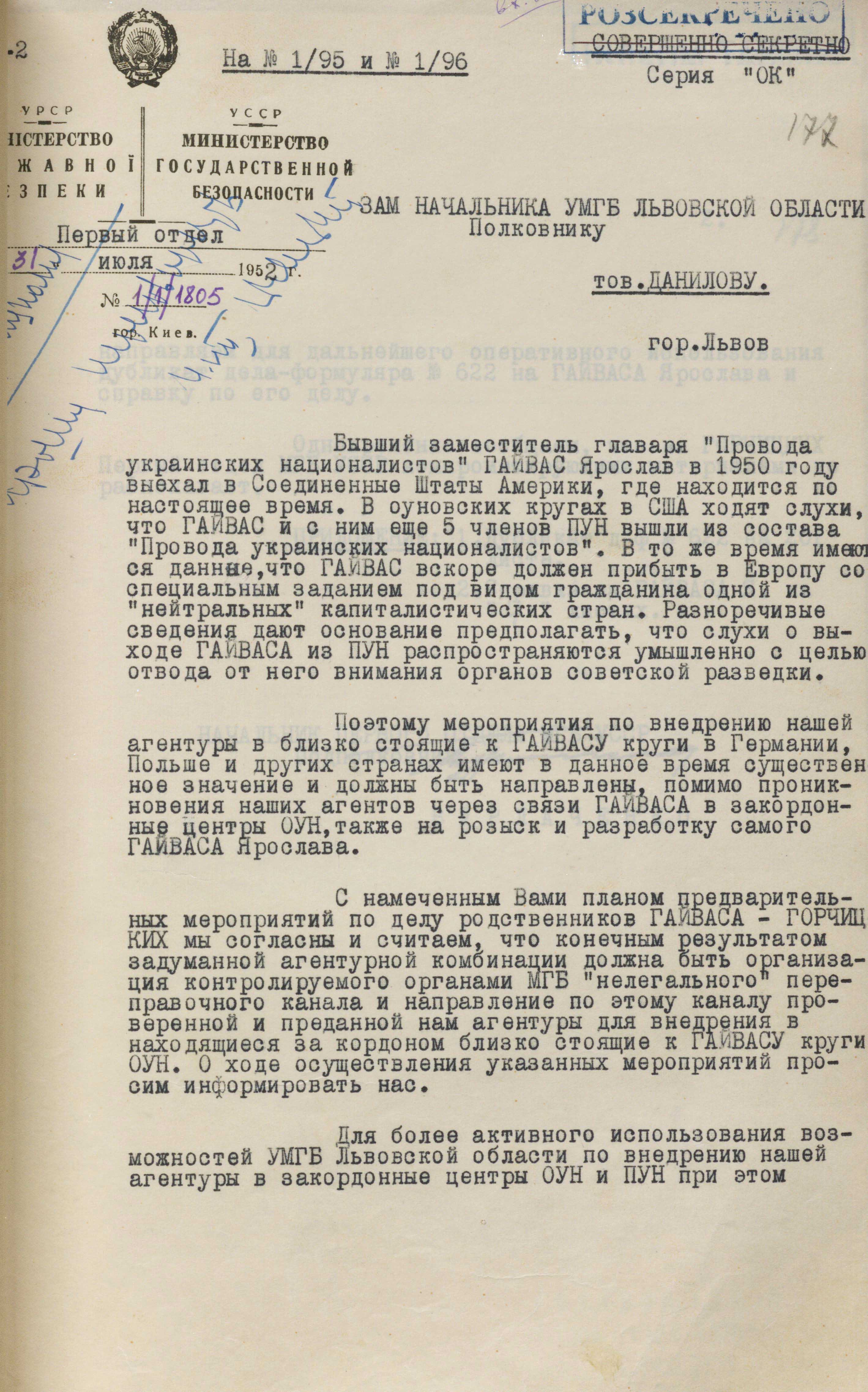
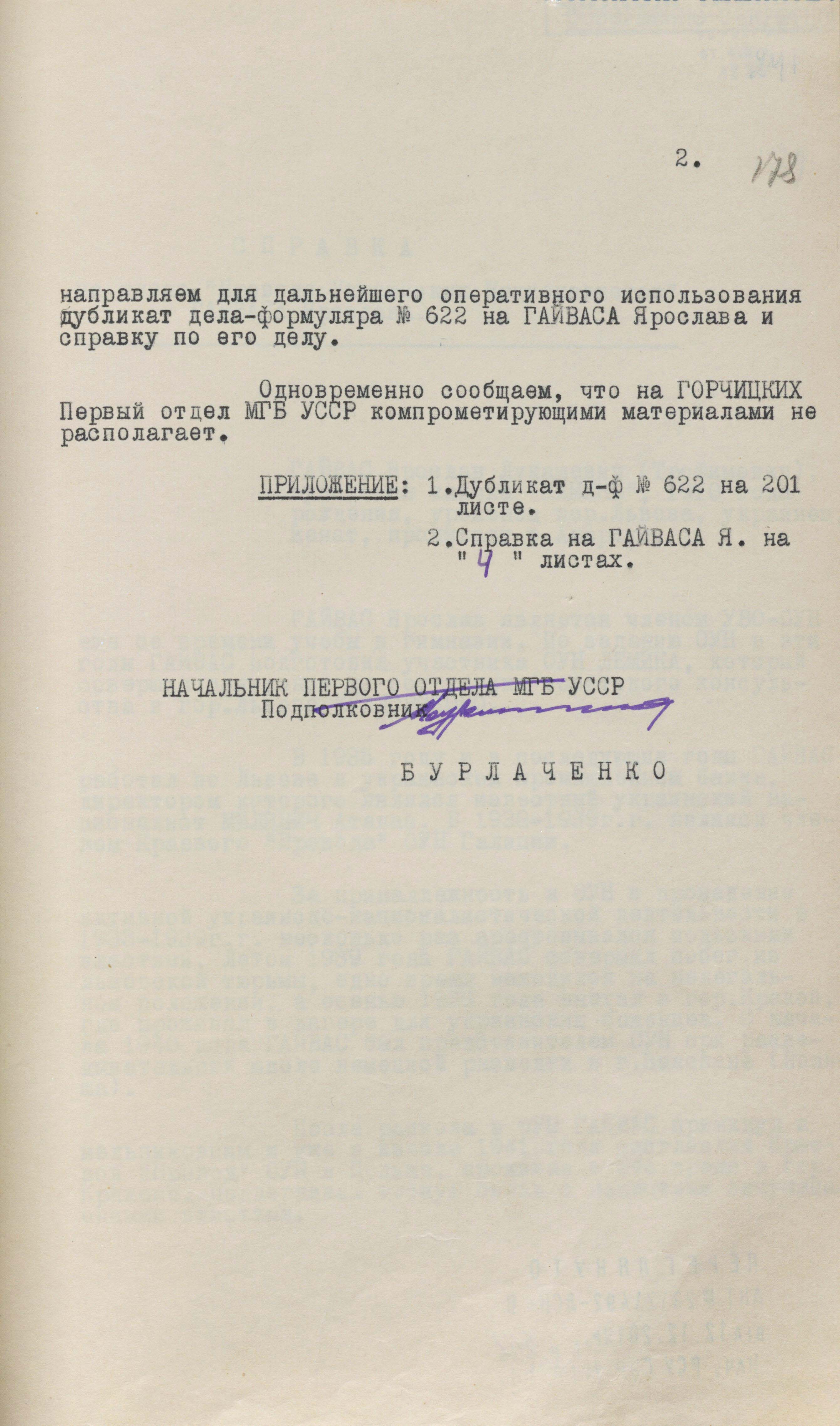
In 1950, the mgb received information that Ya. Haivas had moved to the United States to take up permanent residence. In this regard, it was noted that “measures to infiltrate our agents into the circles of figures close to Haivas in Germany, Poland, and other countries are now of significant importance and must be directed, in addition to infiltrating our agents through Haivas’ connections into the OUN’s foreign centers, but also toward locating and cultivating Yaroslav Haivas himself… The ultimate result of the planned intelligence operation should be the organization of an “illegal” smuggling channel controlled by the mgb and the use of this channel to send verified and loyal agents to infiltrate OUN circles close to Haivas abroad…” (FISU. – F. 1. – Case 13901. – Vol. 2. – P. 177).
As testified by archival documents, the mgb/kgb had been seeking ways to approach Ya. Haivas for over a decade and a half. Eventually, they chose the candidate “Ivan”, a former OUN member recruited by officers of the Lviv mgb directorate of the Ukrainian ssr back in 1946. One of the reports points out that the chekists were dissatisfied with his work as an agent; “Ivan” sensed this, so, fearing arrest, he fled to Poland and from there traveled to Germany. There he made contact with Ya. Hajvas, prepared a report at his request on the state of affairs in soviet Ukraine, but did not admit to his recruitment. He subsequently became Ya. Hajvas’ courier in Europe.
In 1948, while carrying out one of the assignments, “Ivan” was detained in Czechoslovakia and handed over to the ussr mgb. During the investigation, he allegedly offered his services in infiltrating OUN centers abroad and even expressed a willingness to personally participate in capturing Ya. Haivas alive. But for some reason, chekists did not agree to that at the time. Instead, agent “Ivan” was sentenced to 25 years in prison. In 1963, he was released under an amnesty, and contact with him as an agent was soon reestablished. On the chekists’ orders, he got in touch with some of his acquaintances abroad. In his letters, he asked about Ya. Haivas’ fate and sent a photo of himself so that Haivas could recognize him. But the story did not develop further. So, the kgb of the Ukrainian ssr decided to employ other methods.
A series of reports attached to the case repeatedly emphasized that Ya. Haivas had extensive experience in underground work and had previously been involved in intelligence and counterintelligence activities, making it very difficult to safely introduce agents to him. One document, citing agent “Krit”, pointed out that Ya. Haivas was “a man of strong will who has extensive experience in underground struggle, particularly against the German Gestapo”. So, the kgb decided to focus on compromising him.
At that time, Ya. Haivas was the Executive Secretary of the Ukrainian Congress Committee of America, the leading organization of the Ukrainian diaspora in the United States. At the same time, he was a candidate for the position of the Head of the Provid of Ukrainian Nationalists, was an active publicist, wrote the books “When an Era Ends” and “Freedom Has No Price”, and participated in editing the Ukrainian newspapers “Svoboda” and “Shliakh Peremohy” in the USA.
The New York residentura of the ussr kgb closely studied the contents of those publications. Reports on the most dangerous anti-soviet articles were sent to moscow. A separate report was dedicated to one such publication by Ya. Haivas in the January 1974 issue of the newspaper “Svoboda”, entitled “The Assistance Alone Is Not Enough”. It was noted that, based on an analysis of the role of émigré circles in the matter of upholding rights and freedoms in soviet Ukraine, the author wrote that “the duty of Ukrainians around the world is not only to help the Ukrainian people in their daily struggles and fight, but also to actively take on various obligations and tasks. We need to reevaluate our role and our capabilities and stop being merely a supporting factor; we must become active participants… Therefore, we must move from a platform of assistance to a platform of active intervention… The diaspora’s transition to a higher stage of political activity in the world is inevitable; though it will be difficult, it is not impossible” (FISU. – F. 1. – Case 13901. – Vol. 3. – P. 19–20).
From the point of view of the kgb leadership in moscow, this was quite radical. Consequently, they instructed the republican kgb to draft an article discrediting Ya. Haivas “as a German agent and collaborator”. Such an article was published in 1973 in the magazine “Ukraina” under the title “Mr. Haivas Leaves a Trail”. It used unsubstantiated, formulaic accusations that had nothing to do with what Ya. Haivas had actually been doing during World War II. Over the following years, other articles of a similar nature were prepared in the kgb offices.
The summary reports attached to the case file stated that the expected effect had been achieved through such publications. At the same time, it was noted that the operational cultivation of Ya. Haivas in terms of recruitment was futile; there were no opportunities to intensify it, nor were there any relevant agent capabilities; he had no close relatives or connections within the Ukrainian ssr, and he corresponded with no one. Thus, the case was closed in 1982 and archived with a note that, should a favorable opportunity arise and new possibilities emerge, active cultivation of “Rudyi” would be resumed.
But the matter was never revisited. Meanwhile, Ya. Haivas remained active in political, social, and journalistic activities for years. He passed away on June 15, 2004, in Parsippany, New Jersey, USA.