
Bloody Elections Under “False Flag”: The kremlin Is Planning Terror Attacks in the Temporarily Occupied Territories to Blame Ukraine and Derail the Peace Process
9/10/2026
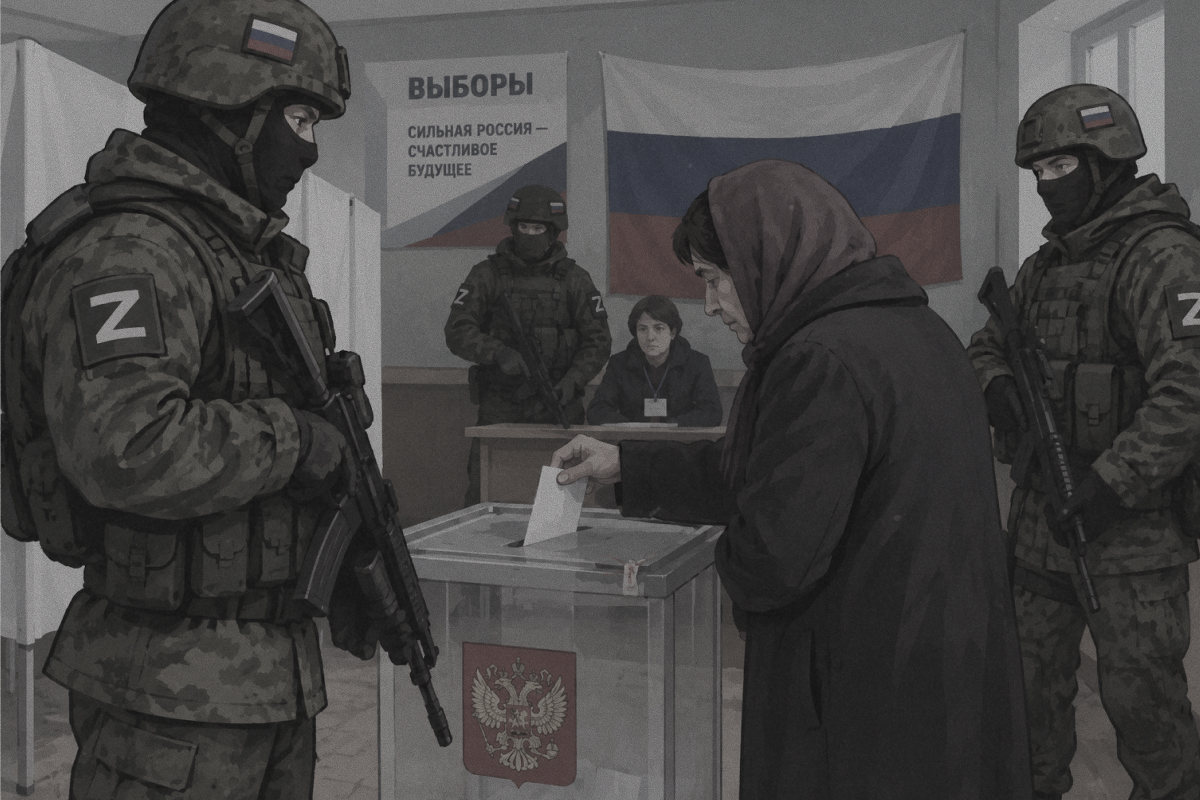
The Foreign Intelligence Service of Ukraine warns of a high probability that russian secret services will carry out high-profile provocations and terrorist acts under the “flag of Ukraine” during the days of the illegal state duma elections and the forced “early voting” in temporarily occupied territories of Ukraine to justify repressive policies against the local population and the need for another wave of mobilization in the rf.
The kremlin’s main aim is to derail the U.S.-mediated peace process through artificial escalation, the discrediting of Ukraine, and demonstrating to Western partners the alleged “futility” of the diplomatic track.
The use of bloody provocations during elections or events considered sacred by the leadership of the rf is a practice russia’s authorities have employed for decades. Traditionally, the kremlin uses these measures to exert psychological pressure, legitimize occupied territories, and create pretexts to justify further escalation or repression.
Explosions in residential buildings in russia (1999): a series of terrorist attacks in moscow, volgodonsk, and buynaksk on the eve of and during the parliamentary campaign, as well as against the background of the escalation of the second chechen war. At that time, the rf’s authorities used these tragedies (officially blaming the Chechens, although there is ample evidence of the fsb’s involvement) as the main pretext for tightening the screws and bolstering putin’s support in the elections.
The hostage-takings in dubrovka (“nord-ost,” 2002) and beslan (2004): bloody terrorist attacks, which took place on the eve of key political dates, were consistently used by the kremlin to justify the curtailment of democratic institutions, the rewriting of domestic legislation, the restriction of civil liberties, and the centralization of state power under the banner of an “existential counterterrorism struggle”.
Provocations in the occupied territories in 2014–2024 (pseudo-referendums and “russian presidential elections”): In the years leading up to the full-scale invasion, the puppet administrations in the temporarily occupied Donbas regularly carried out car bombings, mortar attacks on civilian infrastructure, and staged “assassination attempts” right on the eve of important diplomatic negotiations or votes in order to derail peace processes and blame Ukraine. And during previous illegal campaigns in the temporarily occupied territories, dozens of local explosions were recorded near “election commissions” – explosions that the occupiers themselves organized to cause minimal damage but maximum media coverage, promptly blaming Ukrainian special services.
During the active voting days (September 18–20) in the temporarily occupied territories of Zaporizhzhia, Kherson, Donetsk, and Luhansk regions, as well as in Crimea, there is a high probability that the following scenarios will unfold:
1.Bombings of polling stations or ballot collection points during non-business hours (to avoid mass casualties among key russian propagandists, but still obtain the desired image of a “destroyed polling station”).
2.Sabotage of transport or infrastructure used to transport members of election commissions, followed by accusations against Ukrainian drones or sabotage groups.
3.High-profile assassination attempts on collaborators – heads of the occupying election commissions or parliamentary candidates who actively demonstrate their loyalty on camera.
Important for residents of the temporarily occupied territories: To protect their lives and health, the Foreign Intelligence Service of Ukraine advises avoiding, to the greatest extent possible, any places where people gather – such as so-called polling stations, administrative buildings involved in the voting process, and the occupiers’ military infrastructure – during the period from September 17 through 21, 2026.
The Foreign Intelligence Service of Ukraine warns: russian secret services do not hesitate to cause civilian casualties if it serves their current political objectives. Any gathering of people in the temporarily occupied territories during these days is a potential target for provocations by kremlin propaganda.