Major russian Exporters Are Stashing Foreign Currency Abroad for Fear of Having Their Businesses Confiscated
9/1/2026
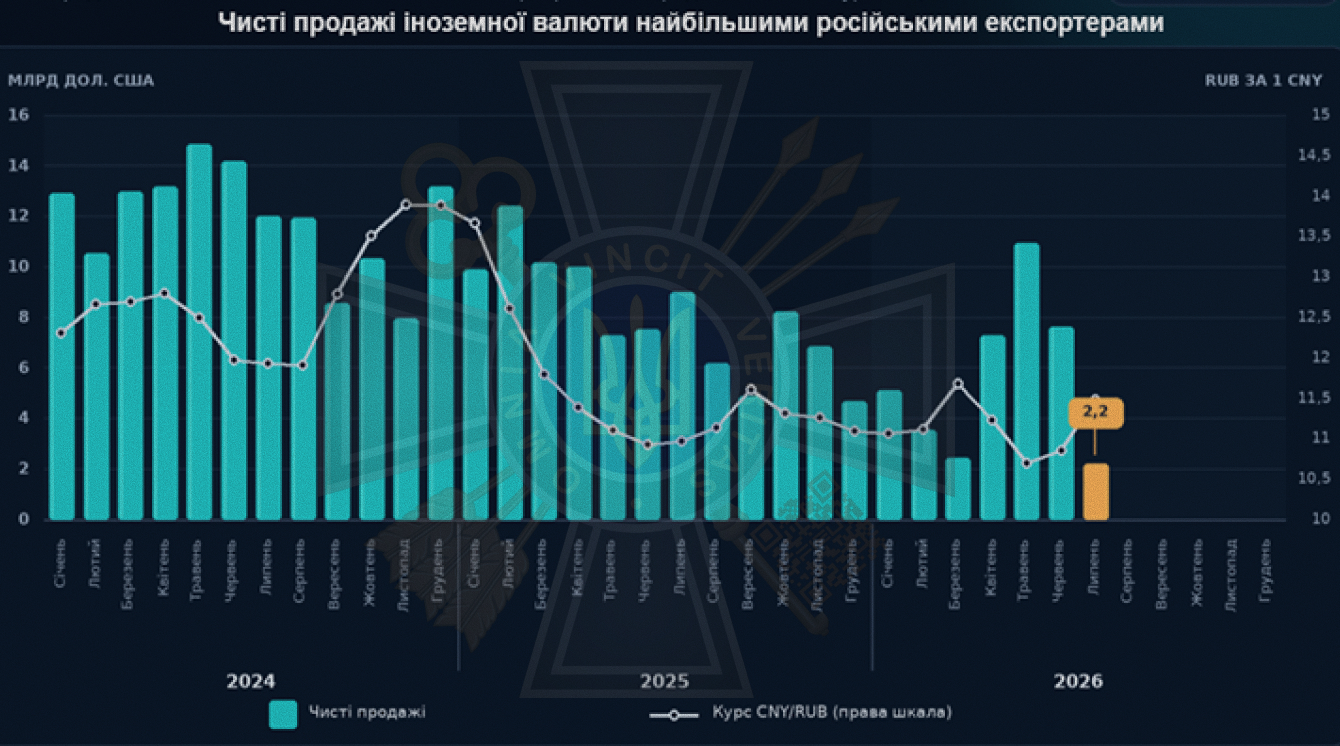
The 43 largest russian exporters – which include state-owned corporations and companies owned by the country’s wealthiest billionaires – sharply reduced their net sales of foreign currency on the domestic market in July. Sales totaled just $2.2 billion – 3.5 times less than in June ($7.6 billion) and 3.7 times less than in July 2025 ($8.1 billion). By comparison, in July 2024, this figure reached $12 billion.
This trend indicates a return to the practice of accumulating export proceeds outside of russia. Large companies have compelling reasons not to hold liquid assets within the country. In 2025, the authorities seized assets worth approximately $51.5 billion. From January through August 2026, assets worth at least $6.7 billion were transferred to state control in the largest court cases alone.
For the foreign exchange market, this means a reduced supply of foreign currency from exporters. Since the beginning of summer 2026, the exchange rates for the dollar, euro, and yuan have risen by more than 20%. The euro exceeded 100 rubles, and the dollar approached 90 rubles.
The weakening of the ruble increases the cost of imports and creates additional inflationary pressure. For the central bank of the rf, this also means less room to cut rates and ease monetary policy.
If the budget deficit continues to grow, the kremlin may tighten control over export proceeds – ranging from requirements for their repatriation to additional taxation or an increase in mandatory dividend payments. In that case, the bulk of the cost of supporting the ruble will effectively fall on exporters.