
Prices for Medicines in russia Are Growing Faster than Inflation
1/2/2026
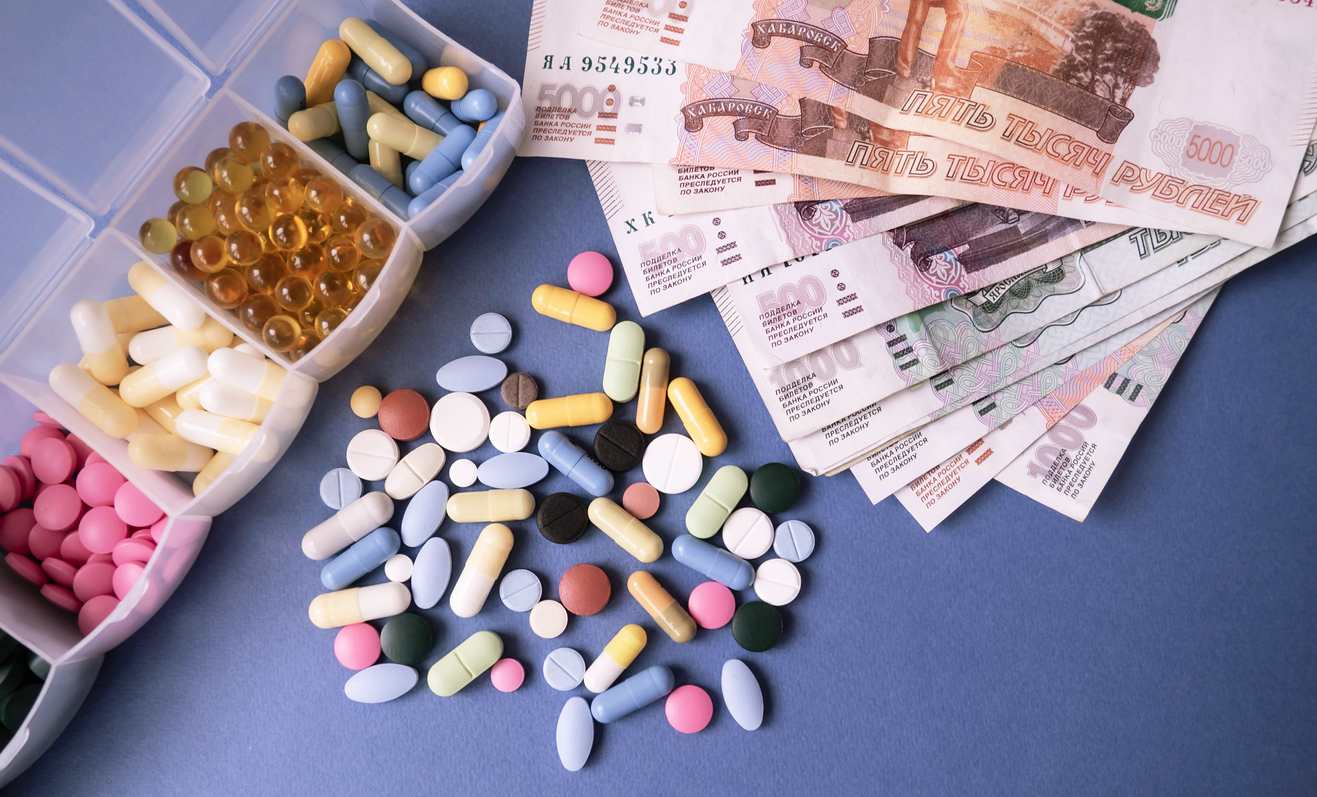
The kremlin continues to systemically facilitate the enrichment of pharmaceutical business owners, shifting the financial burden onto ordinary russians. The key driver of growth in the industry in 2025 was government procurement, which increased by 22.7 %. It was budget money that enabled co-owner of “Promomed” petr belyi, to join the billionaires’ club – he is the fifth person in russia to have amassed a fortune in pharmaceuticals. Earlier, this status was achieved by viktor kharitonov, yegor kulkov, aleksei repik, and vikram punia.
The pharmaceutical boom is happening against a background of rapidly rising prices for the population. Over the past five years, the average cost of a package of medicines in russia has doubled, from 207 to 416 rubles, which significantly exceeds the total inflation of 52.55 % for this period. Some medicines have risen in price even more sharply: for example, Corvalol – 2.3 times.
The price increase did not stop in 2025. From January to November, medicines rose in price by about 8 %. At this, prices are rising against the background of the ruble strengthening by almost 40 % against major currencies, which should make imported raw materials cheaper and reduce production costs.
Even the dominance of “generics”, which currently account for up to 62 % of the market, does not alleviate the situation. According to pharmacists’ estimates, the effectiveness of a significant portion of these medicines is low. In parallel, russians are increasingly avoiding public healthcare: while 52 % of the population visited public clinics in 2006, only 41 % did so in 2025.
Despite this, the authorities insist on further “import substitution”. The healthcare development strategy stipulates that by 2030, 90 % of medicines for the healthcare system should be produced in russia on a full cycle, and the share of local medications in the list of essential medicines should increase to 90 %. The reality is different: at least 28 foreign pharmaceutical companies have completely left the market, and the range of imported medicines has shrunk, but as of October 2025, they still accounted for 51 % of sales in monetary terms and 34 % – in physical terms.
An additional blow to the availability of medicines may be dealt by an increase in the tax burden from January 1, 2026. The authorities risk provoking a wave of bankruptcies and mass closures of pharmacies, especially in small towns and remote areas, where they are often the only point of access to medicines. The situation is exacerbated by the removal of 20 medicines from the list of vital ones due to the cessation of their supply.
As a result, the kremlin’s policy creates comfortable conditions for the enrichment of a narrow circle of pharmaceutical oligarchs, while russians are forced to pay more and more – with money, health, and loss of access to treatment.