
russians Withdrawing Money from Banks at a Record Pace
7/1/2026
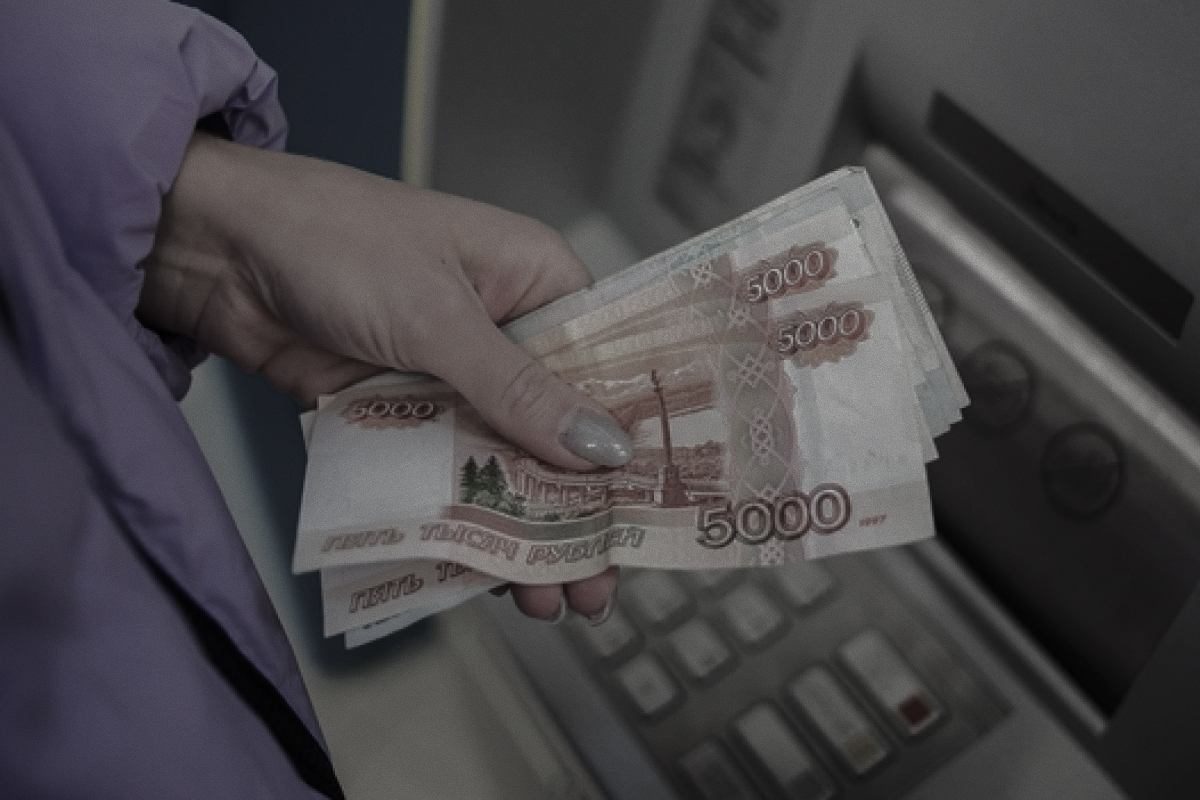
In the first half of 2026, russians and russian businesses rushed to withdraw money from banks. The amount of cash in circulation increased by $17.2 billion – the second-highest figure after the pandemic-stricken year of 2020, when the increase was $18.6 billion.
There are several reasons for this.
First – confidence in cashless payments has wavered: the digital payment infrastructure is glitching, while oversight of banking transactions has tightened to such an extent that people prefer to keep their money under the mattress. Second – bank deposits have become (significantly) less attractive. After the central bank of the rf began easing monetary policy, the average maximum interest rate on ruble deposits at the ten largest banks fell from 15% in January to 12.97% in early June. The incentive to keep money in the bank disappeared, and some depositors switched to cash savings.
Small and medium-sized businesses are acting on their own terms: increased tax pressure is forcing entrepreneurs to settle accounts in cash to avoid fiscal scrutiny and reduce operating costs. Another factor is sanctions. Since russian bank cards are virtually unusable abroad, people traveling abroad are stockpiling cash in advance to purchase foreign currency.
The impact on the banking system is already being felt. The structural liquidity deficit of credit institutions has risen by 200% – from $8.02 billion at the beginning of the year to $24.07 billion as of June 24. Banks’ funding base is rapidly shrinking, and this is directly affecting lending: consumer loans have declined by approximately 2% year-on-year, while lending to small and medium-sized businesses has fallen by 7%.
The key problem for the kremlin is that the central bank of the rf no longer controls the real cost of credit resources. Even if the regulator continues to lower the discount rate, banks will maintain a cautious lending policy, as they are forced to preserve liquidity and account for the risk of loan defaults. A formal easing of monetary policy simply does not translate into accessible loans for businesses and the public.
There is also an additional risk which moscow is unwilling to acknowledge: a mass shift to cash transactions is pushing the economy further into the shadows. Businesses trying to preserve their working capital will increasingly resort to gray-market schemes, which means a drop in tax revenues and even greater opacity in the financial system of a country waging a war of aggression.