
Sanctions and China Are Killing russia’s Metallurgical Industry
12/17/2025
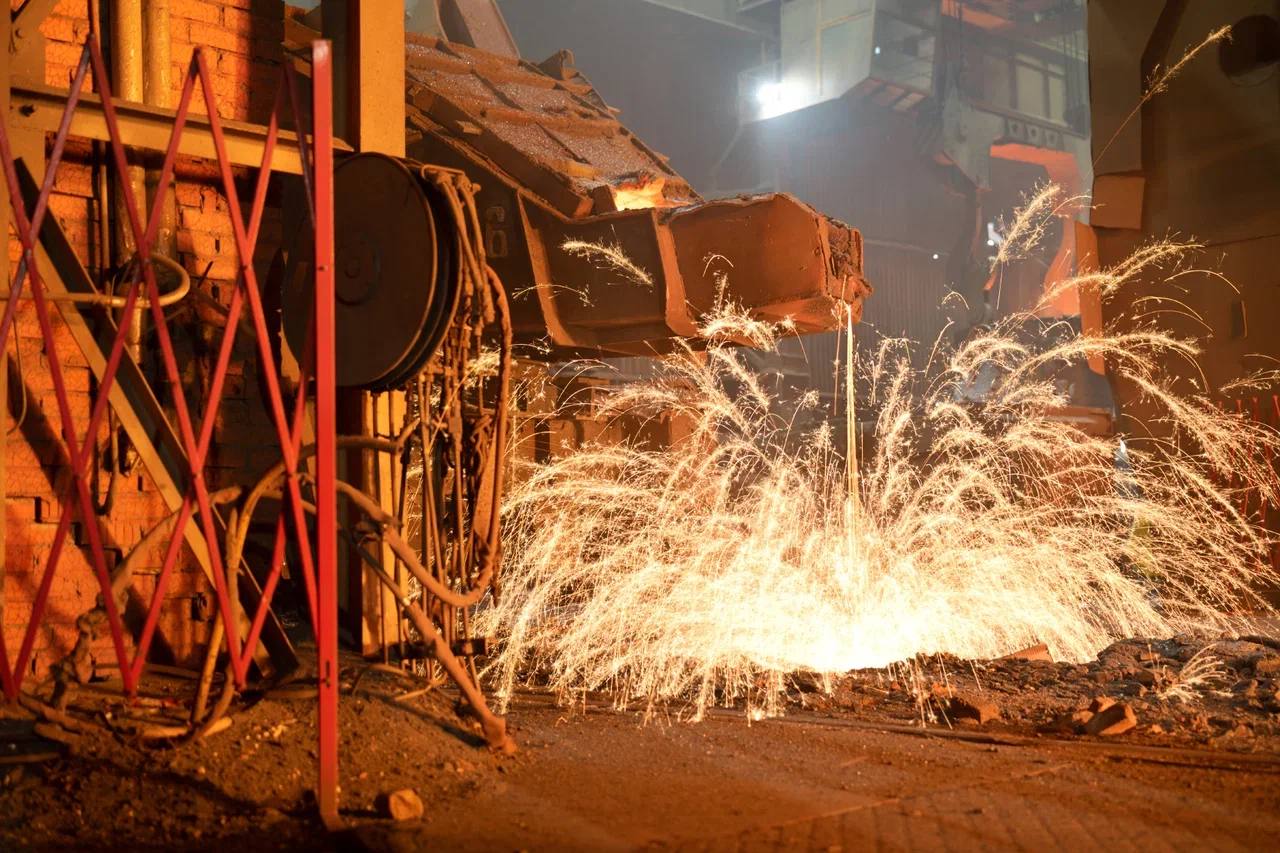
Throughout 2025, the rf’s metallurgical industry has been steadily declining, and the prospects for its further deterioration are becoming increasingly apparent. Steel production will have declined to 66.5 million tons by the end of this year – minus 6 % year-on-year, while domestic consumption will decrease by 12 % – to 38.9 million tons. A return to pre-crisis levels is possible no earlier than 2027 and only if there are profound structural changes in the economy of the rf, which are not currently in sight.
Current data for January–October 2025 confirm the deepening crisis in the ferrous metallurgy industry. Pig iron production decreased by 5.6 % – to 41.8 million tons, and alloy steel production dropped by 15 % – to 11.2 million tons. The production of rolled products decreased by 5.3 %, of pipes and metal structures – by 11.9 %. This indicates not temporary disruptions, but a systemic nature of the decline.
The key factor remains the loss of export markets due to sanctions. Before the sanctions were imposed, the EU accounted for up to 17 % of russia’s steel exports, while the total losses are estimated at approximately US$9 billion. Attempts to reorient towards Asia, Africa, and Latin America did not compensate for these volumes and only deepened dependence on low-margin markets.
Tight monetary policy is creating additional pressure. Despite the key rate being lowered to 16.5 % in 2025, the cost of loans for businesses remains at 18–25 %, which is holding back demand for metal products and investment in construction and industry. Against this background, global steel prices are under pressure from excess supply from China: its exports in 2024–2025 exceeded 110 million tons per year, which is by 5–10 % more than before and led to an average price decline of 10–20 %.
Fiscal pressure is exacerbating the financial problems of producers. The excise tax on liquid steel remains in place, while the cost of production – about $435 per ton – significantly exceeds the “cut-off price” of $300 (the minimum price of products below which the excise tax does not apply). As a result, the industry is facing conservation of capacities and structural stagnation.