
The kremlin Is Pushing Young People Toward Vocational Schools Over a Catastrophic Labor Shortage
12/25/2025
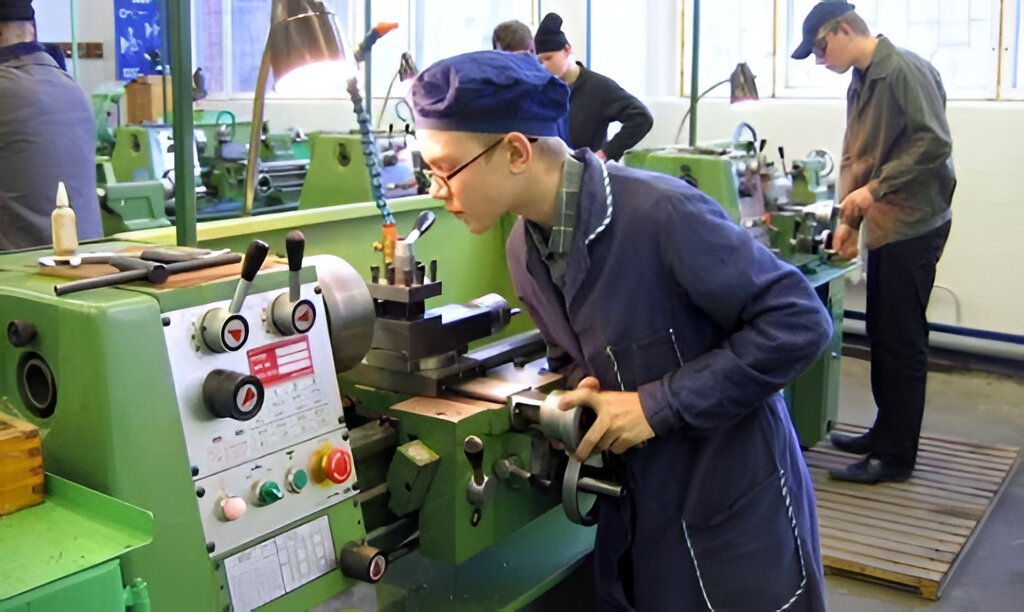
In 2025, a record 63 % of ninth-grade school leavers in russia chose secondary vocational education – the highest figure in the last 50 years – while the total number of students in technical schools and colleges reached 3.9 million. The largest increase was recorded in moscow, st. petersburg, and moscow, chelyabinsk, tyumen, and novosibirsk regions. Against the background of a catastrophic labor shortage in the russian economy, this trend appears to be the education system’s forced response to the acute shortage of skilled workers for industry and other key sectors.
The rise in popularity of secondary vocational education began in the mid-2010s, when russians’ real incomes began to fall and the costs of preparing for higher education and student life became unaffordable for many families. While in 2017, 54 % of ninth graders continued their education in high school, by 2024 this figure had decreased to 44 %, with only 34 % of schoolchildren in rural areas reaching 11th grade, compared to 47 % in cities. The constant increase in the passing scores for the unified state exam, the high cost of tutors and accommodation for non-resident students effectively close the door to universities, although, according to sociological data, 79 % of russians would like their children to get higher education.
The kremlin began actively supporting this shift in 2024 by launching the federal project “Professionalitet” and, in 2025, a campaign within the national project “Kadry” (“Cadres” – Transl.). An update to the classification of in-demand professions and another increase in the minimum state exam scores are planned for 2026. At the same time, the authorities are intensively promoting college education, while concealing the real prospects for graduates, in particular the risk of mobilization into the army. In the 2026-2027 academic year, the number of paid places in higher education institutions will be reduced by 13 %, or approximately by 45,000, first of all at non-state universities, where every fifth place will be cut, and in the humanities, which have been officially declared unneeded.
Under these conditions, the trend toward blue-collar and mid-level specialized professions will only intensify, as the economy is in dire need of workers, but instead of investing in quality education and reforms, the state is choosing administrative restrictions, deepening the crisis in higher education and driving the country into even greater dependence on most sought-after personnel.