
The rf’s Education Policy Has Turned into Bubble
12/5/2025
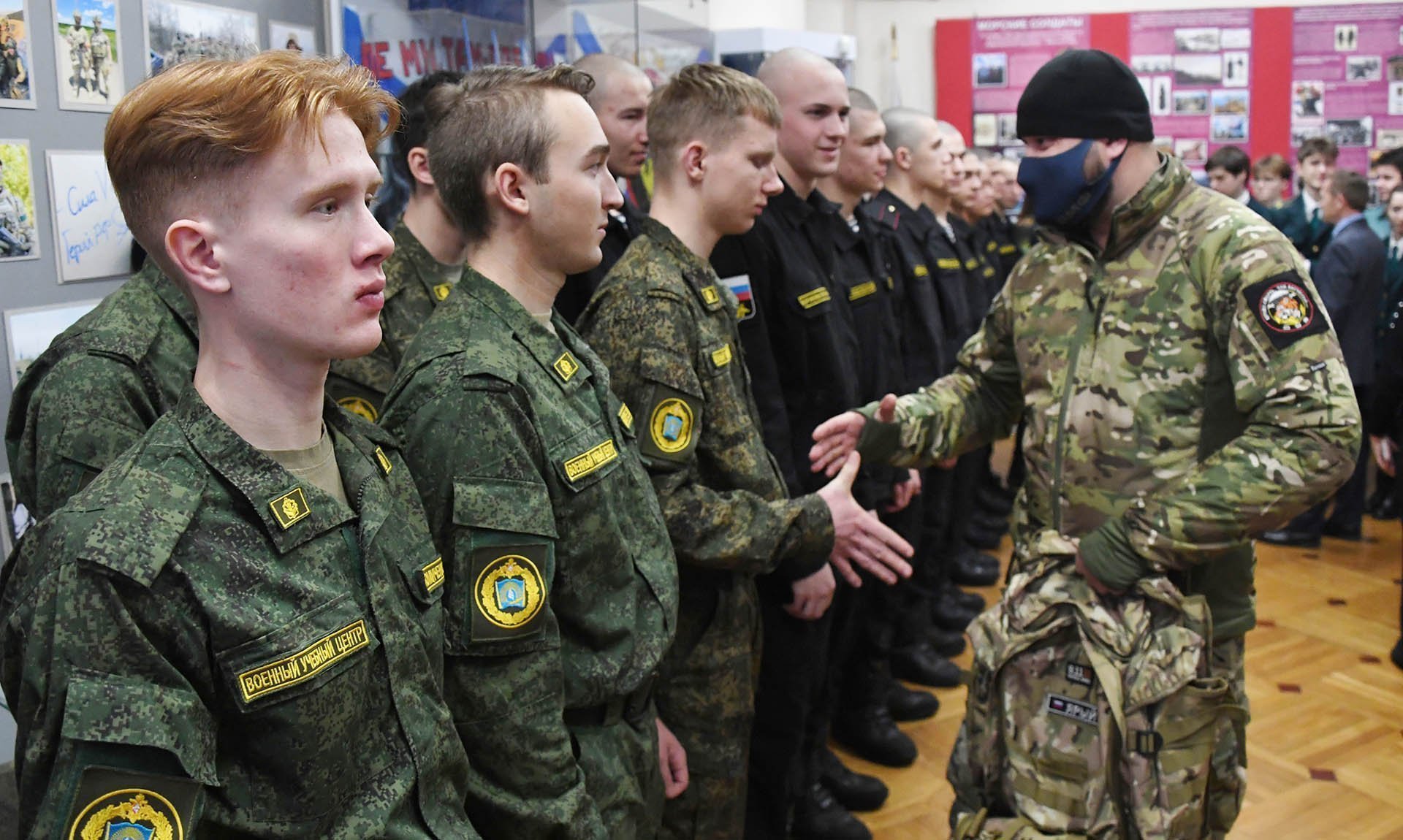
russia’s education system is rapidly deteriorating, turning into a mechanism for giving priority to members of the so-called “special military operation” and their families, which only exacerbates the chronic shortage of qualified personnel. The number of students in this category in state-funded places at universities has been growing for the fourth year in a row: from fewer than 2,000 in 2022 to 9,000 in 2023 and 15,000 in 2024. In 2025, the figure increased to 28,700, with another 20,000 enrolling in colleges. Legislative changes further consolidate their right to free re-entering the secondary vocational education (SVE) system and a 10 % quota in all educational institutions; a law on guaranteed places for widows of deceased military servicemen is also being prepared.
In 2025, 3,000 state-funded places at 18 leading russian universities were given to participants in the “special military operation” and their children – many of whom were admitted without exams or with scores significantly lower than the passing grade. This displaced some applicants with high scores on the Unified State Exam. A telling example is the case of Dmitry Zherlitsin, who applied twice to the Moscow Institute of Physics and Technology with 127 points (the passing score is around 290) and was expelled both times after the first session. However, current regulations do not limit the number of times the applicants can submit documents for entering.
In parallel, the government choses to send large numbers of schoolchildren into the vocational education system. In 2025, 1.3 million people enrolled in colleges and technical schools, while the total number of vocational education students reached 3.9 million – the highest in half a century. Following putin’s order to sort out the shortage of young specialists, schools began to deny ninth-graders’ enrolling in the 10th grade, encouraging them to enroll in technical schools; admission rules were also simplified.
Despite these measures, the structural shortage of personnel is only getting worse. By the end of 2024, it will reach 2.6 million people (+17 %), mainly in industry, trade, and transport. By 2035, russia will be short of another 3.6 million specialists with secondary vocational education. The training system is increasingly failing to meet the needs of the economy, while educational preferences are guided not by competence but by political and administrative priorities.