
Ukraine and the World – Against russia’s Aggression. Sanctions in Action
12/1/2025
Ukraine and Norway are launching the joint production of drones.
“It looks complicated. We don’t see any concessions from russia. They are not ready to agree to a ceasefire. Since March, Ukraine has been ready for a full or partial ceasefire, but russia has not,” said Minister of Foreign Affairs of Finland Elina Valtonen on a potential peace agreement.
President of Moldova Maia Sandu has condemned russia’s night attack on Ukraine on November 29 and pointed out that this obviously does not indicate the kremlin’s readiness to end the war.
President of France Emmanuel Macron will soon visit China to persuade the PRC’s authorities to influence russia to end the war against Ukraine.
NSATU Deputy Commander General Mike Keller has assured that despite political processes, the NATO Security Assistance and Training Initiative for Ukraine (NSATU) is operating smoothly, providing Ukraine with the necessary materials.
Minister of Foreign Affairs of France Jean-Noël Barrot believes that peace in Ukraine is “entirely achievable, provided that putin gives up his crazy dream of recreating the soviet union”. Barrot predicts that a decision on the use of frozen russian assets in favor of Ukraine will be made before the end of this year. At the same time, he has commented on the alarming predictions of European military officials regarding a possible large-scale conflict with russia: “...we must take into account the changes taking place in the world and russia’s large-scale rearmament. Our ability to eliminate the threat depends on our internal, military, and moral strength. Let us be realistic and realize that from now on, peace has its price.”
“I would like to remind our allies that NATO was created to protect the West from soviet aggression, that is, from russia. And its foundation was solidarity, not selfish interests,” said Prime Minister of Poland Donald Tusk.
Finland, together with the United Kingdom, has begun military exercises near the border with the rf.
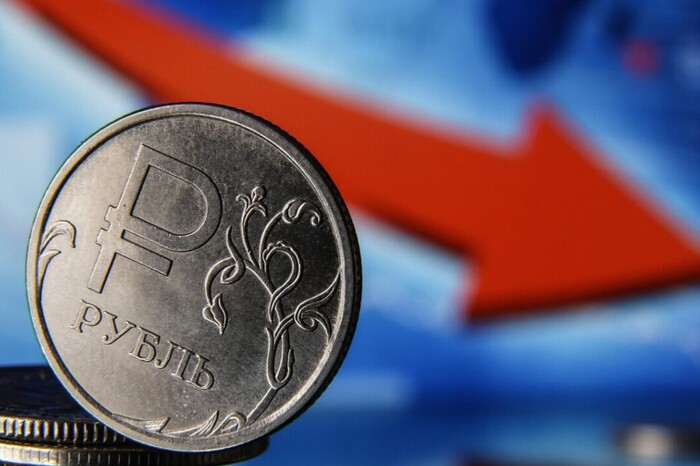
russia has passed a law on the budget for 2026 and the next three years with a deficit of 3.78 trillion rubles, or 1.6 % of total GDP. The largest expenditures are for war and security forces: 16.84 trillion rubles, or 40 % of the budget.
Authorities of the PRC have significantly tightened control at border crossings for russian citizens following the introduction of a visa-free regime.
In November, oil and gas revenues to the russian budget decreased by 35 %. In total, from January to November 2025, hydrocarbon sales brought the rf less than 8 trillion rubles (by 22 % less than in the same period in 2024), while according to the ministry of finance’s plans, such revenues were supposed to amount to almost 11 trillion rubles.
Due to a severe shortage of workers, the rf’s cabinet of ministers is forced to set a new quota for attracting foreign workers from “visa” countries in 2026 – almost 279,000, which is approximately by 19 % more than a year earlier. The largest number of workers is expected in the food, woodworking, textile, and clothing industries – more than 71,000 people. Starting in 2027, russia may switch to organizational recruitment of migrant workers.
In russia’s retail shops, markups on fish reach 200 % of the cost of its harvesting and processing. In 2026, wholesale prices will rise by another 10-25 % for mackerel, cod, and haddock.
The average price of russian champagne rose by 10.2 % over the year.
moscow authorities will raise 2.6 times the cost of a license for taxi drivers working in the city – from 3,400 rubles to 9,000 rubles per month.
russia has banned the import of right-hand drive and hybrid cars into the country. The national union of motorists has already responded that such a ban will affect residents of the Far East and Siberia, where 73 % of cars are of this type, and will cause social discontent and protests.
russian citizens who are eligible for free housing from the state will be automatically removed from the waiting list if they change their place of residence, move to another municipality, or if false information is found in their documents.
The russian “yandex” services, in particular the “Alisa” smart speakers, experienced a major failure: service outage, no connection, and inability to get any responses from the assistant.
From January to October, industrial production in belarus dropped by 1.3 % compared to the same period last year. Industry fell in half of the regions: in Vitebsk (-4.5 %), Mogilev (-2.8 %), Gomel (-2.2 %) regions, and in Minsk (-2.4 %). In Vitebsk region, which is experiencing the most severe decline, industry led to a decrease in total gross domestic product, which shrank by 1.1 % over 10 months.
The share of belarusians’ spending on food in the third quarter decreased even further, accounting for 37.2 % of total consumer spending (1,907.2 rubles).
From December 1, belarus will see another increase in cigarette prices – by 30 %.