How the KGB Tried to Obstruct Events Honoring Yevhen Konovalets
8/14/2026
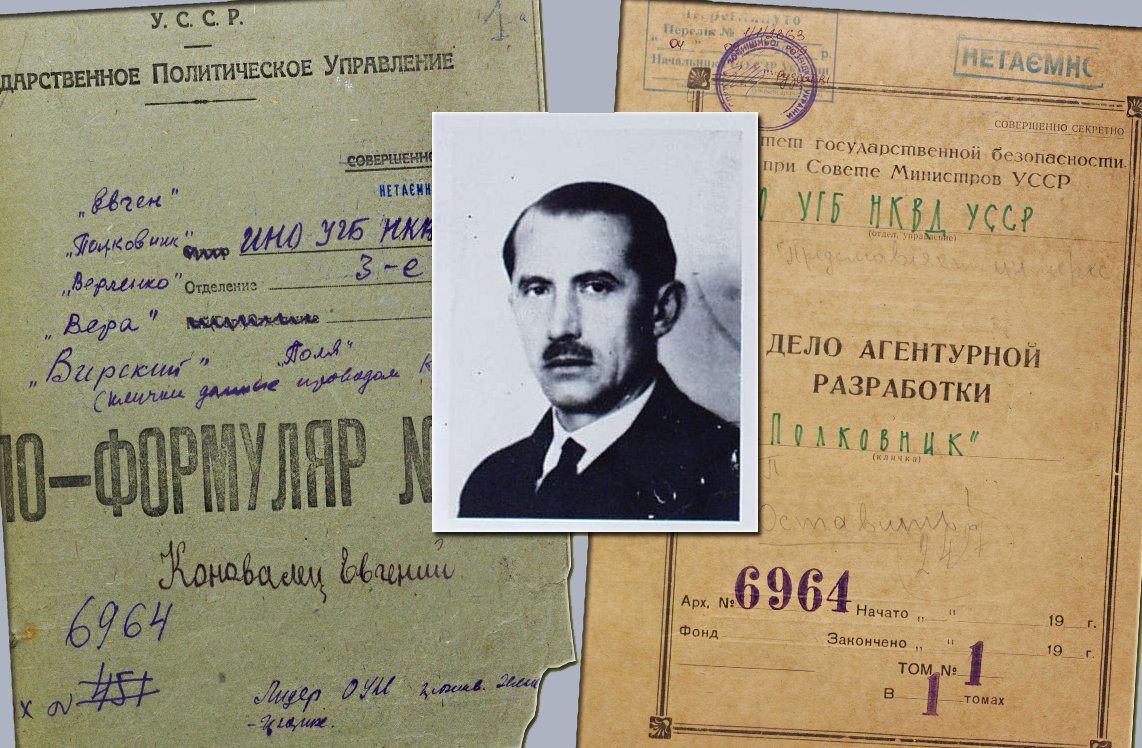
A series of documents has been discovered in the archives of the Foreign Intelligence Service of Ukraine detailing how the kgb of the ussr, at various times, monitored events organized by the Ukrainian diaspora to honor the memory of OUN leader Yevhen Konovalets and attempted to obstruct them in every possible way.
In particular, in early 1958, the kgb received information that a meeting had taken place in Munich dedicated to preparing events for the 20th anniversary of Yevhen Konovalets’ death. A report citing the newspaper “Ukrainskyi Samostiynyk” pointed out that that was a meeting of former comrades-in-arms of the OUN Providnyk (Leader – Transl.), as well as representatives of military organizations and Ukrainian community centers based in Germany and the Netherlands. Among those present were Andrii Melnyk, Stepan Bandera, Myron Konovalets, Dmytro Andriyevskyi, Mykola Kapustianskyi, Osyp Boidunyk, Yaroslav Stetsko, Stepan Lenkavskyi, Daria Rebet, Volodymyr Stakhiv, and other prominent figures. The event was significant because it brought together leaders and representatives of various factions of the OUN.
It was reported that the participants in the meeting formed a committee to commemorate the memorable date, electing A. Melnyk as its chair. The events were scheduled for late May 1958, timed to coincide with the date – May 23, 1938 – when P. Sudoplatov, an officer of the nkvd of the ussr, assassinated Ye. Konovalets. The fatal explosion in Rotterdam marked the culmination of a long-standing, large-scale operation, the implementation of which had been personally ordered by stalin.
One intelligence report pointed out that a street demonstration would take place in Rotterdam, and that A. Melnyk, S. Bandera, and other leaders would speak at the Kruisweg Cemetery. Furthermore, committee members intended to use the gathering as a basis for future negotiations on consolidation. moscow issued instructions to closely monitor those events and take measures to prevent any unification.
In accordance with the kgb’s plans, foreign agents were tasked to monitor commemorative events. Among the archival documents there is a report on Agent “I”’s trip to Rotterdam. It noted that the agent was part of a delegation of Ukrainian émigrés from Belgium, which numbered 100 people.
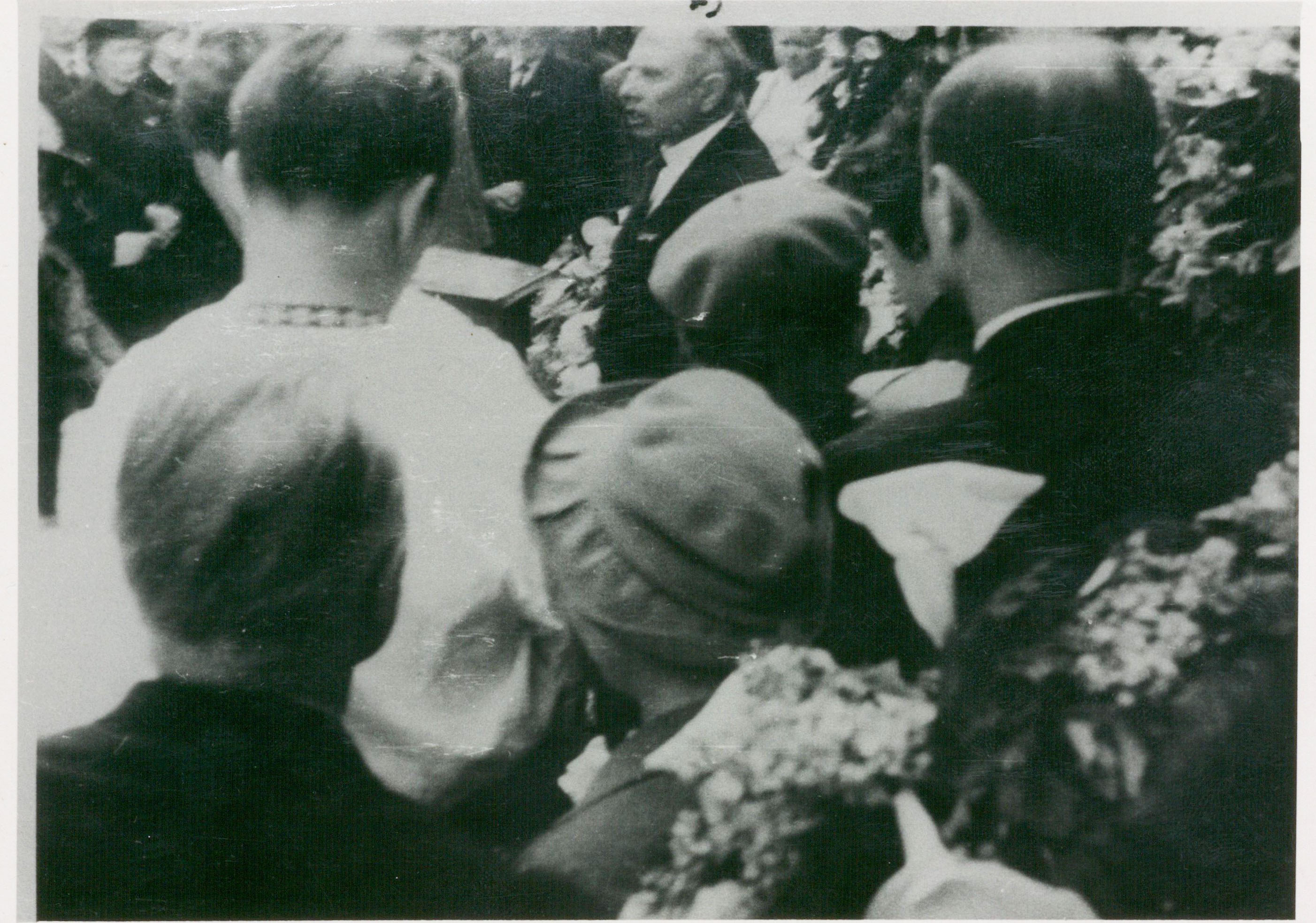
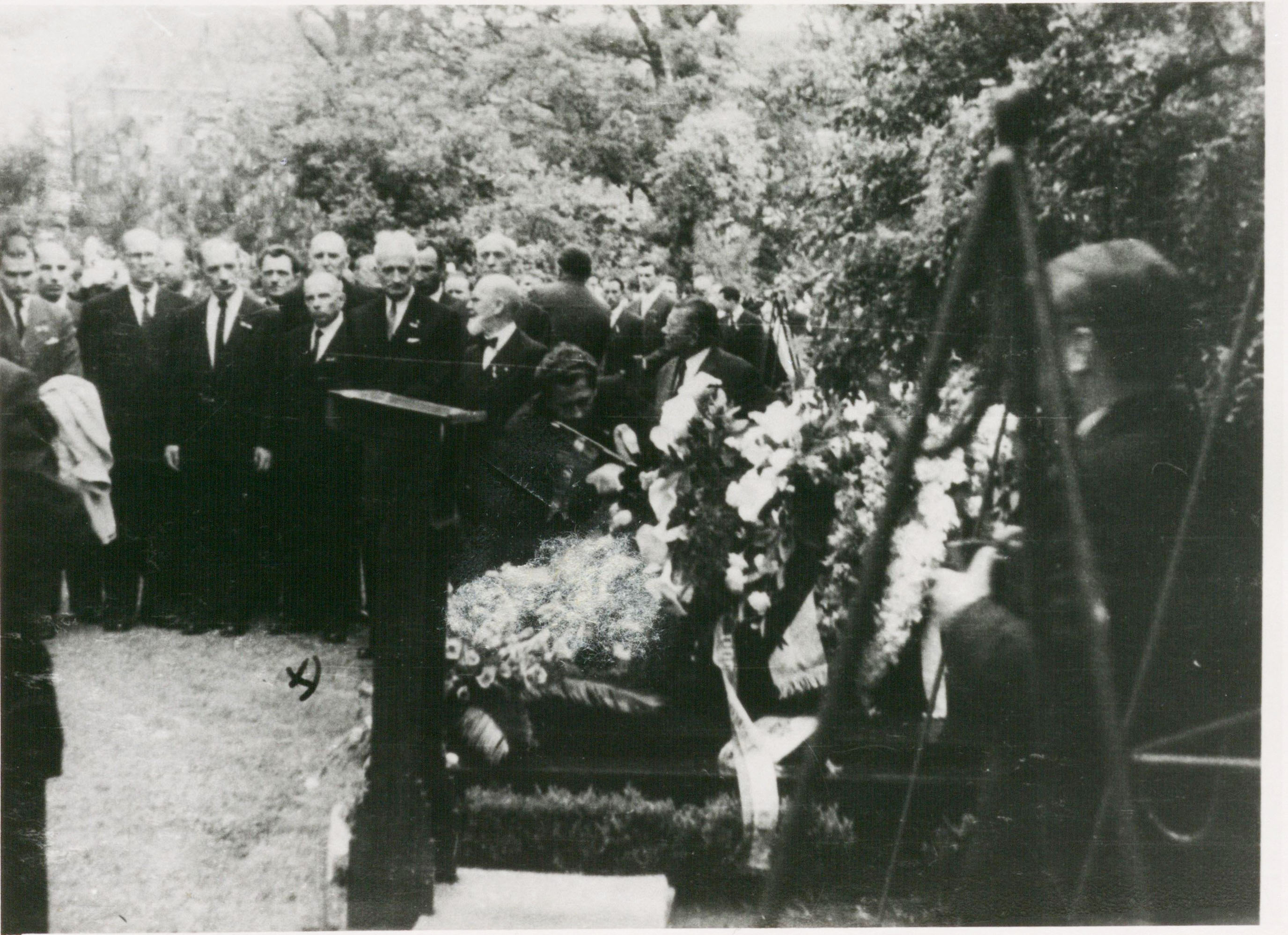
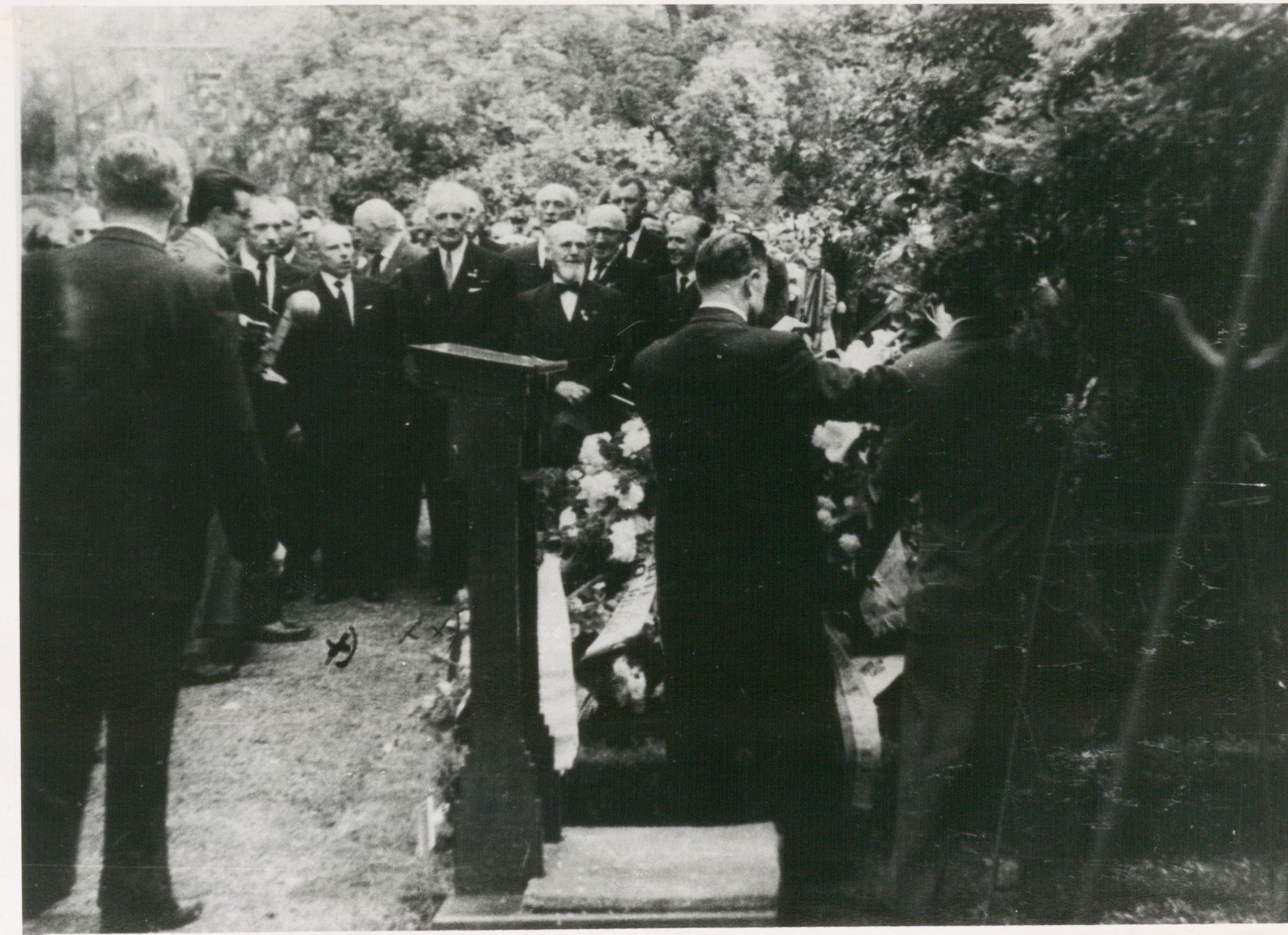
“‘I’ participated in all the official ceremonies,” the report stated, “and took photographs of Ukrainian nationalists for us. About 500 Ukrainian nationalists were present at the gathering, including Stepan Bandera, Andrii Melnyk, General Kapustianskyi, Andriyevskyi, and others… Bandera behaved with particular wariness. “I” points out that during the march through the city to Konovalets’ grave, Bandera did not walk in the main column with the Ukrainian nationalists but tried to walk along the pavements, blending in with the Dutch. He was accompanied by a security detail of three people” (FISU. – F. 1. – Case 10876. – Vol. 6. – PP. 54–55).
Regarding the program, the agent reported that on that day, May 25, at 9:00 a.m., a service was held at St. Anthony’s Church, conducted by Father Ya. Perridon with the participation of a Ukrainian choir led by M. Antonovych. After the service, a procession proceeded to the site where Ye. Konovalets was killed; there, a wreath was laid, and the procession continued on to the cemetery. At 1:30 p.m., a memorial service was held, followed by the laying of wreaths on the grave. Clergymen Perridon and Dubytskyi delivered speeches, followed by Stepan Bandera, Daria Rebet, and Sotnyk Vasyliv. The event concluded with the singing of the Ukrainian national anthem. After a memorial lunch, a memorial gathering was held. At the gathering, A. Melnyk spoke about the life and work of Ye. Konovalets. The event concluded with the choir singing Ukrainian songs.
In addition to the report, Agent “I” provided several photographs of the cemetery that he had taken himself. They are kept in one of the archival files and supplement the photographs taken officially by participants in the march and those obtained by kgb agents through other means.
On the eve of the 30th anniversary of Yevhen Konovalets’ death, a document arrived in Kyiv from moscow stating that Ukrainian nationalists were preparing larger-scale events in Rotterdam. It was reported that three academic conferences dedicated to the first head of the OUN had been held, and that 50 manuscripts of memoirs about him and 500 photographs had been collected for a compilation. There was also mention of preparations in the United States for a delegation to travel to the commemorative events. The delegation members allegedly also intended to visit London, Rotterdam, Luxembourg, Paris, Madrid, and Lisbon, as well as pay their respects at the graves of A. Melnyk and S. Petliura. In reporting this, the kgb’s central office issued instructions to develop a plan to counter those events.
According to other reports from the kgb’s foreign residencies, a total of about 1,000 Ukrainians from different countries were expected to arrive in Rotterdam. To prevent this, kgb officers, through the ussr’s embassy in the Netherlands, provided local authorities with fabricated information suggesting that this mass gathering could be accompanied by clashes and even terrorist attacks. A report on the implementation of this “operation of influence” pointed out the following:
“As a result of disinformation campaigns carried out by our bodies, the Rotterdam authorities have been led to believe that a nationalist rally could trigger mass unrest in the city. Consequently, the cemetery has been cordoned off and is under heavy police guard. Search operations involving mine detectors are underway near Konovalets’ grave, and anyone who approaches the area is being monitored. In light of the above, members of the organizing committee express concern that the city authorities may ban the demonstration they have planned altogether” (FISU. – F. 1. – Case 14487. – Vol. 5. – P. 85).
Another document provides direct confirmation that the kgb was indeed behind this operation. A report from the first main directorate (foreign intelligence) of the kgb of the ussr, sent to Kyiv and dated May 28, 1968, pointed out that such actions by the police of the Netherlands were the result of measures carried out by the kgb residentura.
Despite the Ukrainians’ fears, the ceremonies honoring Yevhen Konovalets did take place on Sunday, June 2, 1968, as planned. Evidently, local law enforcement authorities had assessed the situation and did not fall for the kgb’s provocation.
At the same time, the kgb did not limit itself to these disinformation measures alone. As in previous years, it organized special propaganda campaigns aimed at discrediting Yevhen Konovalets and the entire Ukrainian national liberation movement. On instructions from moscow, the kgb of the Ukrainian ssr prepared a series of “exposé articles about Ukrainian bourgeois nationalists”.
The archives of the Foreign Intelligence Service of Ukraine contain a handwritten memo stating: “In 1968, OUN organizations were preparing to commemorate the 30th anniversary of Yevhen Konovalets’ death in Rotterdam. In accordance with instructions from the Centre, we prepared measures to discredit the actions of OUN members. To this end, we requested photocopies of documents regarding Konovalets’ anti-soviet activities from the central state archives (leningrad). These documents were used in articles published in the newspaper “Visti z Ukrainy” with the aim of discrediting Konovalets” (FISU. – F. 1. – Case 6964. – P. 149).
In this way, the kgb sought not only to obstruct events honoring Ye. Konovalets but also to eradicate any memory of him altogether. After all, even in death, he continued to fuel the spirit of the struggle for the restoration of Ukraine’s independence.
See declassified documents from the archives.