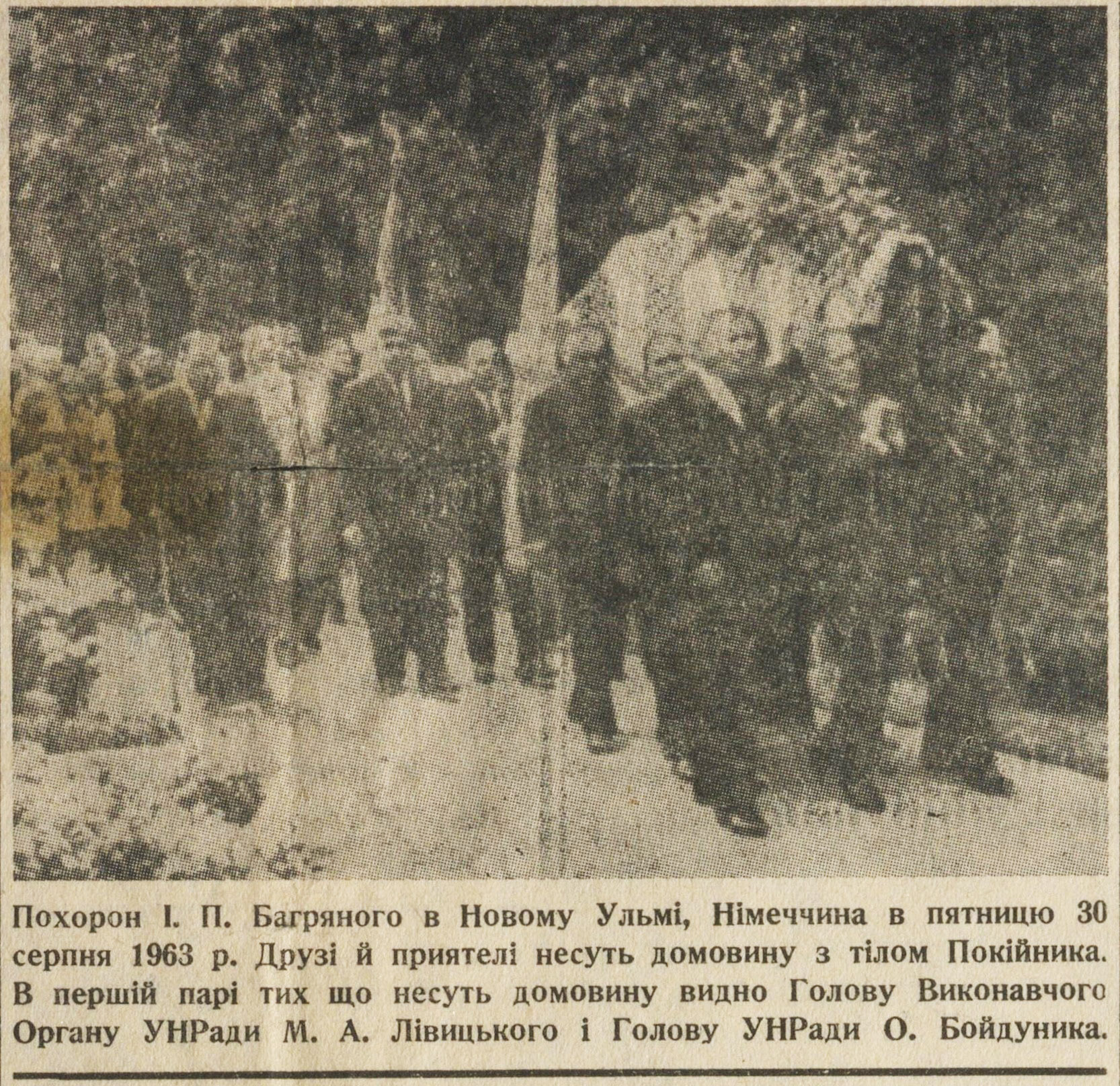
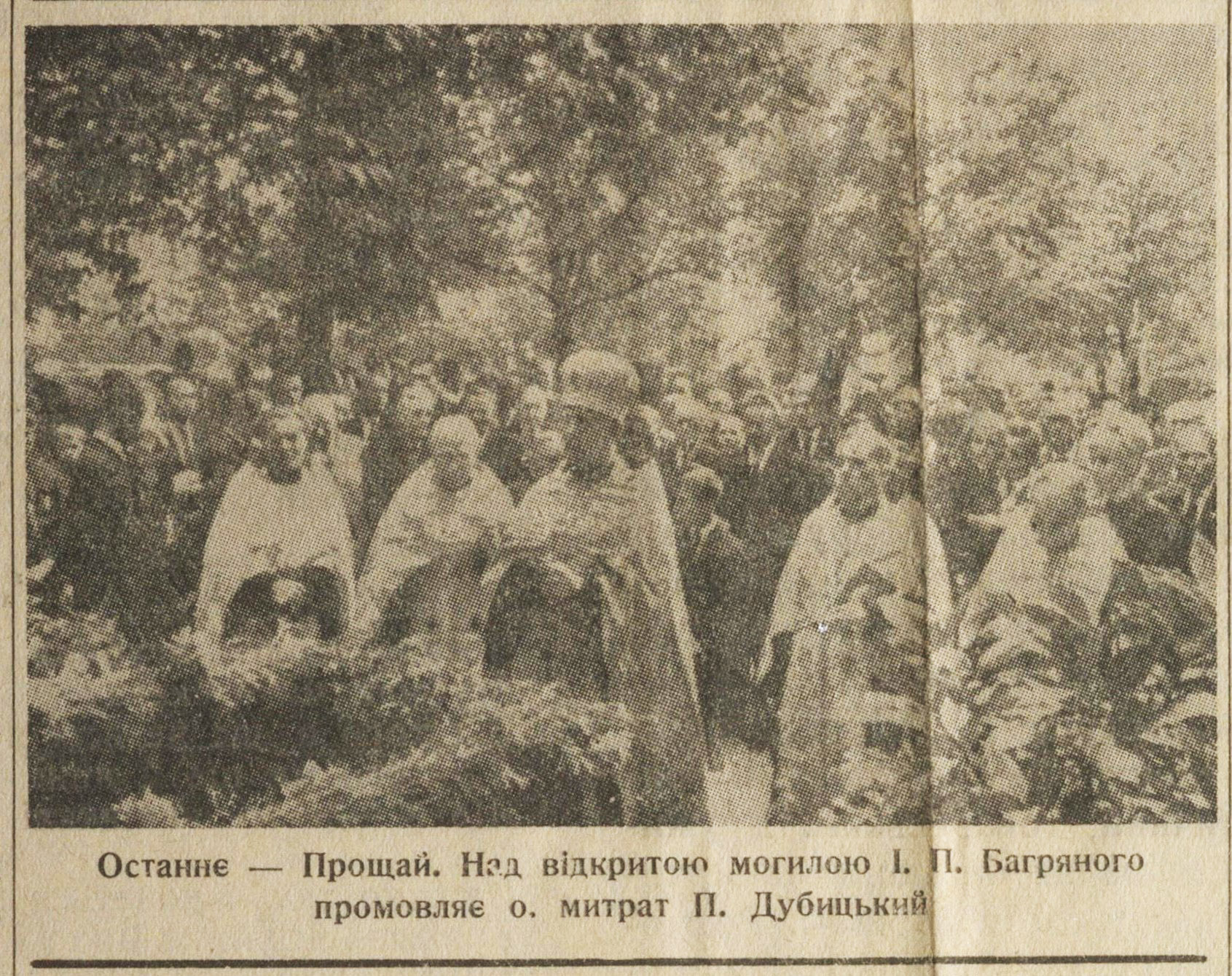
Ivan Bahrianyi. In the First Person (To mark the 120th anniversary of his birth)
10/2/2026
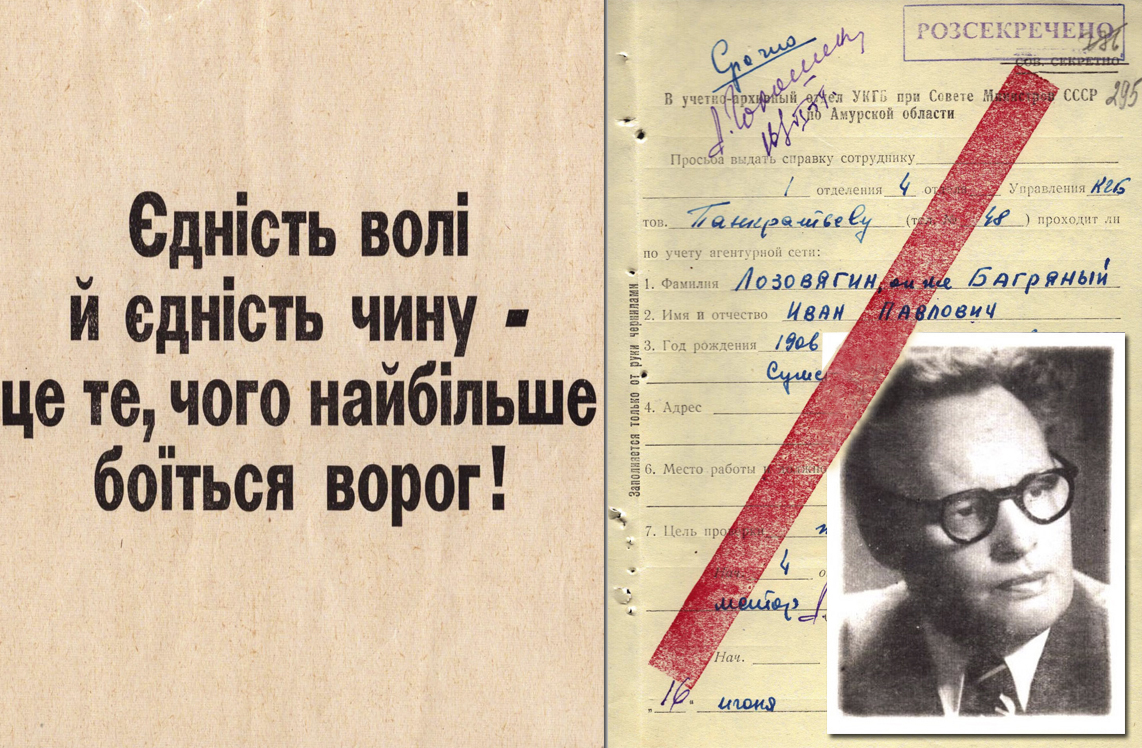
A review of the declassified documents relating to the renowned political figure and writer Ivan Bahrianyi (October 2, 1906–August 25, 1963), held in the archives of the Foreign Intelligence Service of Ukraine, every time reveals little-known facets of this extraordinary individual. Particularly revealing are his personal testimonies, explanations, memoirs and comments on his own actions and surrounding events, which are recorded in interrogation transcripts, reports from the nkvd / mgb / kgb of the ussr, agent reports, handwritten explanations and journalistic sketches, which were meticulously collected by the chekists and added to the case file in an attempt to win him over to their side. But they never succeeded.
Even whilst under arrest and under investigation in the 1930s, Ivan Bahrianyi was not afraid to speak openly about his views and convictions. This is who he was in a nutshell – open, emotional, impassioned, unpredictable, straightforward, courageous, unyielding, uncompromising, sharp-tongued and free at heart.
This is what is said in the “Statement on Counter-Revolutionary Activities by the Arrested I. P. Lozov’yahin (Bahrianyi)”:
“In mid-1925, I left the komsomol; having broken away from the komsomol, I became fascinated by poetry; I wrote screenplays, dramas and novellas. Finding myself outside the organization, I immediately thought that it was possible to be a communist without being a member of the komsomol, but I was already “without a rudder or sails”.
At first I worked as a teacher (teaching art at the Okhtyrka kindergarten); then left that and began to travel, “enriching myself with experiences”. I visited Crimea and the Kuban, and worked in Kamianets-Podilskyi at the editorial office of the newspaper “Chervonyi Kordon”, where I was a reporter and illustrator and published my poems.
…In the autumn of 1926, I passed entrance examinations and enrolled at the Kyiv Art Institute, moving to Kyiv to live.
Since then, my views have changed”
(FISU. – F. 1. – Case 10812. – Vol. 1. – P. 160).
nkvd investigators questioned Ivan Bahrianyi separately about his views. The case file contains the following confessions from him:
“In 1928, I moved to Kharkiv and held the following convictions at that time:
1. I must work first and foremost for Ukrainian culture, and my works must be national not only in form but also in content.
2. National policy is being implemented incorrectly… russian culture is given preference and better conditions are created for it, and at our expense, russian culture dominates. We are dependent on it”.
3. In our cultural development, we must look to Europe, not to moscow.
4. Very narrow limits have been imposed on Ukrainian culture… I wanted to write, be published and promote my views and sentiments to the masses. My mission is to remain a Ukrainian writer to the very end, awakening ‘national consciousness’ through my works”.
(FISU. – F. 1. – Case 10812. – Vol. 1. – P. 54).
For such convictions and for his works published as of 1932 – “nationalist in content, clearly counter-revolutionary” – namely “The Shadow”, “Vendée”, “Gutenberg”, “The Whip”, “Ave Maria”, “Skelka” and others, Ivan Bahrianyi was exiled from Ukraine for a period of five years, following a decision by the special council at the collegium of the ogpu of the Ukrainian ssr. He vividly described his escape from an nkvd special convoy whilst travelling through the taiga in his novel “Tyhrolovy” (“Tiger Trappers”, published in English as “The Hunters and the Hunted”–Transl.). At the same time, that was a fictionalized account of the events.
Against this background, another version of the escape – which, according to his own account, was recounted by his fellow villager and distant relative Ivan Semenovych, also known as mgb agent “Dolia” – remains quite intriguing and hitherto unknown. In an intelligence report drawn up as part of an operational case against Ivan Bahrianyi, he stated the following:
“One day, in the early days of the German occupation of Okhtyrka, a source had a conversation with Ivan Pavlovych Bahrianyi-Lozovyahin. The source asked him to recount his life during his period of exile. He recounted the following:
‘In 1932, I was sentenced to five years’ exile in remote camps. I was taken to a camp situated on the banks of the Amur River, not far from a large city the name of which I cannot recall, but which was apparently Khabarovsk...
One day, all the camp prisoners, including me, were taken out to swim in the Amur. As I was a good swimmer, I dived into the water and swam underwater with the current. Thanks to the river’s swift current, I was carried a long way, and I surfaced beyond the camp’s boundaries, found my hidden clothes, changed, and found myself in the city as a free man – that is, as Ivan Pavlovych Bahrianyi. And the next day, the camp newspaper published an announcement that Ivan Pavlovych Lozovyahin had drowned whilst swimming. That is how I began a new life…’”
(FISU. – F. 1. – Case 10812. – Vol. 3. – P. 55).
A few years after the end of the German-soviet War, the mgb agent ‘Dolia’ was tasked by the chekists with crossing the border illegally, travelling to the town of Neu-Ulm, tracking down his old acquaintance Ivan Bahrianyi there, and arranging a meeting with him. The agent was to persuade Bahrianyi to renounce his anti-soviet activities and to cooperate with the mgb. The meeting took place in October 1952. At that time, Ivan Bahrianyi was the leader of the Ukrainian Revolutionary Democratic Party (URDP), which he had founded, and edited the newspaper “Ukrainski Visti” as the party’s official publication. Besides, he was Head of the executive body of the Ukrainian National Council (UNRada) and Deputy President of the Ukrainian People’s Republic (UPR) in exile.
One evening “Dolia” turned up at Ivan Bahrianyi’s flat. When asked how he had ended up there, he admitted that he had been sent from moscow. Without further ado, he stated straight away that representatives of the soviet authorities wanted Bahrianyi to agree to cooperate, after which, he was told, he would be given the opportunity to return to his homeland. The report describes this dialogue as follows:
“Bahrianyi: Well, what exactly are they offering me? What do they want from me?
Source: Here’s what. They say that you currently hold a fairly high position amongst the leadership of the russian and Ukrainian émigré communities, that you are personally acquainted with the leaders of certain groups, that you know what they are doing and what they are planning against the soviet union, and that you yourself lead one of the groups – or, as you call it, a party. So, they need to know what you’re up to here and what you’re planning.
Bahrianyi: Well, they know all that already; they read our newspapers, they know our program, and so on.
Source: All your public appearances pose no threat to them. They are, of course, aware of them, but what is dangerous is what you are doing behind the scenes – in secret…
Bahrianyi: Are they offering me the role of a petty spy?
Source: Why the role of a petty spy? They say it’s an honourable job – to be a representative of soviet authorities amongst their enemies and to warn them in good time of the enemies’ plans. They’re even allowing you, for the time being, to remain in the role you currently hold, to continue writing in the newspapers in the same vein, to deliver the same speeches and to behave exactly as your plans dictate. But you must report all of this in a timely manner.
Bahrianyi: No, Ivan Semenovych, I won’t agree to that. If you return to them, then tell them this: Ivan Pavlovych will not engage in petty secret police activities; he has more important matters to attend to – namely, the fate of the Ukrainian people…’
(FISU. – F. 1. – Case 10812. – Vol. 3. – PP. 170–172).
As shown by archival documents, following this and subsequent meetings, which took place under the supervision of URDP security service officers, Ivan Bahrianyi stated resolutely: “Tell them that I do not agree to their proposal and will not agree even if they threaten to destroy me. Well, if they kill me, then so be it. There will be other people who will continue my work” (FISU – F. 1. – Case 10812. – Vol. 5. – P. 51).
After this response, the kgb devised a series of measures to discredit Ivan Bahrianyi in the eyes of the Ukrainian émigré community. Yet this did not make him give up his political activities or his criticism of the soviet regime. On the contrary, his criticism became even more scathing. Attached to the case file is his address to the participants of the International Congress of the Free Press, which took place in Berlin. In it, he vehemently protested against the oppression of all peoples in the modern russian empire. In particular, he stated the following:
“…The moscow-imperialist-communist union is nothing other than the embodiment of russian fascism.
During the heyday of this union, the meaning of the term “proletariat” and its “dictatorship” in the ussr became highly nuanced. The russian proletariat is the dominant force, whilst, for example, the Ukrainian proletariat is expected to obey its ‘big brother’ unquestioningly. The same applies to culture. In the ussr, there is a law – specifically, an unwritten law – according to which russian culture stands above all others, because ‘the russian proletariat carried out the revolution’. Under this law, other cultures – those of other nations – are deemed bourgeois cultures which, at best, need radical purification ‘for the good of humanity’.
The russian language is considered to be the superior language, the dominant language; the languages of other peoples of the soviet union are viewed as bourgeois languages. The union of leninist-stalinist communism with resurgent russian imperialism constitutes an aggressive union of russian fascism. Driven by imperialist motives, this union prevents the culture of non-russian peoples from developing. For example, in the case of Ukraine, red moscow pursues a colonial policy not only towards the Ukrainian proletariat and peasants, but also towards Ukrainian culture”.
(FISU. – F. 1. – Case 10812. – V. 5. – P.168).
The kgb persistently gathered information about Ivan Bahrianyi’s travels, his speeches and publications, and continued to spread compromising materials in various newspapers abroad. He was under surveillance, and they tried by any means to bring him back to the ussr, realizing that his voice carried great weight abroad. Aware of this, he – as his close friends claimed – carried a vial of potassium cyanide sewn into the lapel of his jacket, so as not to be abducted by the chekists and end up back in soviet camps.
At the same time, Ivan Bahrianyi, although he was a rather ambitious party leader and often engaged in fierce public battles with his opponents, proved himself to be a true democrat and a wise statesman at one of the defining moments of the Ukrainian government-in-exile. This is evidenced by the following statement he made to the press, as recorded in the archive file:
‘Following the death of President of the Ukrainian People’s Republic, A. M. Livytskyi, I hereby bring the following to the attention of all members of the Ukrainian National Council and the entire Ukrainian public.
In accordance with the current provisional law on the reorganization of the State Centre (Article 22), in case of the President’s death, his rights and duties are transferred to the Head of the UNRada, who automatically becomes President of the UPR.
Having been transferred in writing all the rights and duties of the late Dr B. Ivanytskyi, pursuant to Article 11 of the aforementioned provisional law, I have hitherto been the Head of the UNRada and, in accordance with the provisional law, should now assume the full weight of the President’s duties.
At the same time, given the current situation, guided by good intentions in resolving the Ukrainian question and in order not to stir up tensions amongst certain political circles, I am giving up my right, as provided for in Article 22 of the provisional law on the reorganization of the State Centre.
I believe that the question of a new President should be resolved at the third session of the UNRada, taking into account the full complexity of this issue.
Ivan Bahrianyi, Head of the UNRada.
January 18, 1954”
(FISU. – F. 1. – Case 10812. – Vol. 5. – PP. 269–270).
All of Ivan Bahrianyi’s statements, speeches, poems, journalistic articles and pamphlets are permeated with angry tirades directed at the oppressors, sorrow for the fate of the Ukrainian people and, at the same time, faith in their bright future. Here is an extract from the poem “The Sword-Bearers”, dated 1932:
“Blessed be the day and the hour,
And our Motherland with us!
Let them all go to the devil,
With despair and tears.
We were not born alone
And blessed the day –
For our forefathers knew – we shall be!
And they left us the Sword.
Blessed, then, be the day and the hour,
And these storms, and these downpours,
And the mother who gave birth to us,
So that we could take up the Sword.
And the flashes of lightning, and all that there is –
Blessed thrice over!
Accept life as it is,
And look it in the eye.
Everything in this world has a purpose –
These prisons, these bars,
And we, who have just arrived,
To tear them down.
So lay your heavy hand upon the Sword,
Attach it across your shoulder…
We’ve only just been born!
Stand shoulder to shoulder with me.
We’ve only just been born
And we know whose children we are.
Blessed be this day and hour –
There is a lot of work for us to do here.
So lay your heavy hand upon the Sword
And do not waver in battle!
We shall be dying with pride
But we shall not die with you.
We are, we were, and we shall be Us!
And our Motherland with us!
Let them all go to hell
With despair and tears”
(FISU. – File 1. – Case 10812. – V. 4. – P. 97).
And here is a quote from the pamphlet “Shame on the Slave-Owners”, published in 1955:
“Have hope! The time will come, after all, when the sun of freedom and happiness will rise over the ocean of the people’s suffering and humiliation! It will rise over the countless mass graves of the tortured, but also over the total ruins of the slave-owners’ prison, from which free and unchained people will rise. It will rise, after all!”
(FISU. – F. 1. – Case 10812. – V. 5. – P. 442).
There are many such messages from Ivan Bahrianyi in the first person in the archival documents. Proclaimed both, during the most tragic years of stalin’s repressions and whilst in exile in Europe, they remained consistent in their direction, boldness and power of expression. It is therefore no surprise that he was such a threat to the kremlin leadership, and that the kgb continued to monitor him until the very end of his life. In the ussr, his works were banned. They were only included in the school curriculum after Ukraine declared its independence.
See declassified documents from the archives.