The Assassination of Stepan Bandera: The Secret Mission of kgb Agent “Liuks”
10/15/2026
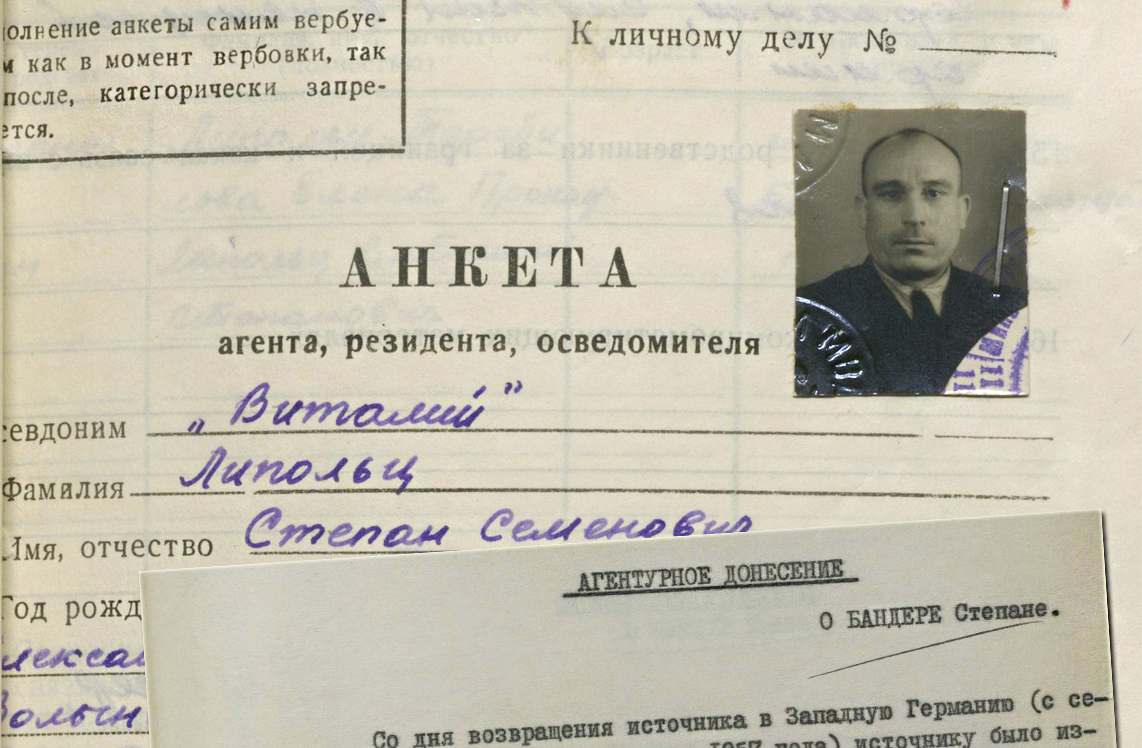
Immediately after Stepan Bandera’s assassination on October 15, 1959, in Munich, the kgb of the ussr launched a large-scale disinformation campaign aimed at misleading the international community regarding the circumstances of this high-profile crime, as well as its masterminds and perpetrators. One of those involved at every stage of this special operation – monitoring the OUN leader, creating conditions for his liquidation, and diverting attention from the real killer – was an agent codenamed “Liuks”, who had been recruited back in 1932. This is revealed in previously unknown documents from the archives of the Foreign Intelligence Service of Ukraine.
Press Conference in East Berlin
On Friday, October 13, 1961, in East Berlin, the Press Office of the Chairman of the Council of Ministers of the German Democratic Republic – but in reality the East German secret police, the Stasi in collaboration with the kgb of the ussr, urgently convened a press conference at which journalists were promised the release of new, sensational information regarding the circumstances of Stepan Bandera’s assassination two years earlier. The haste was explained by the fact that Bohdan Stashynskyi had fled to West Berlin two months earlier. Officials in moscow feared that he might confess to the police that he had committed the murder on orders from the kgb. The soviet leadership urgently needed, once again, to divert suspicion from itself and throw the international press off the trail. Stepan Lipolts, who was supposedly a direct witness to and participant in the events of that time, was chosen for this manipulation.
Stepan Lipolts, a kgb agent codenamed “Liuks” was secretly brought from Kyiv to East Berlin to take part in the operation. According to the cover story developed by the kgb, he claimed to be from Volyn, where he was born into a family of German colonists. After 1939, he and others were included in an “exchange” and ended up on Reich territory. During World War II, he served in the Wehrmacht as an interpreter and allegedly studied at a special school of the Army High Command, headed by Reinhard Gehlen – the future head of West Germany’s intelligence. At that time, he was tasked with establishing contact with Ukrainian circles.
At a press conference and in interviews with journalists, he recounted that after the war, under the name Stefan Libholz, he settled in Munich, managed to secure a loan, and opened a restaurant that quickly became a regular meeting place for Ukrainian émigrés. Thanks to this, he gained the trust of leaders of the Bandera wing of the OUN and met Stepan Bandera himself. It was then that he was allegedly recruited by members of Reinhard Gehlen’s organization – that is, West Germany’s intelligence.
Stepan Lipolts again voiced the thesis of the kgb that Gehlen’s intelligence financed Ukrainian emigrant organizations through the Federal Ministry of Refugee Affairs, which was headed by Theodor Oberländer. It was he whom the East German press, at the instigation of the kgb, accused back in 1959 of organizing the assassination of Stepan Bandera. Allegedly, the OUN leader had blackmailed the Minister with compromising information, specifically regarding his Nazi past and his involvement in the murder of Jews in Lviv during the war. A political scandal erupted in the FRG at the time. The court dismissed all charges, but Theodor Oberländer lost his position as Minister.
In October 1961, the kgb decided once again to revisit the “German connection”. According to Stepan Lipolts, members of Reinhard Gehlen’s organization were dissatisfied that Stepan Bandera refused to fully subordinate the OUN to German interests or to reveal his Organization’s communication channels with soviet Ukraine. Instead, he shifted his focus toward cooperation with Great Britain. Consequently, West German intelligence allegedly decided to remove him and put other people at the helm of the OUN.
Stepan Lipolts stated that as early as January 1957, a representative of Gehlen’s organization had handed him a white powder intended to poison Stepan Bandera. The representative also told him not to be afraid to use it, as the poison would not take effect immediately. He was advised to carry out the act at Bandera’s office at Zeppelinstraße 67. The idea was that this would allow the police to suspect the OUN members themselves of the poisoning. But the mission failed, and, fearing for his safety, he fled Munich. Instead, according to him, Stepan Bandera was ultimately poisoned on the orders of that same West German intelligence agency by Dmytro Myskiv, one of the OUN’s leading figures. Myskiv allegedly confessed this to him personally.
Here is how the newspaper of the OUN’s Foreign Units, “Shliakh Peremohy”, dated November 12, 1961, reported Stepan Lipolts’s words from a press conference in an article entitled “Report on the Failure of the Bolshevik Provocation”:
“…On Christmas 1959, I returned to the FRG, where I immediately visited Dmytro Myskiv in Munich. Myskiv made a pitiful impression on me. When asked about the reasons for his despondent mood, he replied that, on behalf of the German Federal Intelligence Service, he had murdered Stepan Bandera. When he told me that on the day of Bandera’s brutal death, he had served lunch to the head of the émigré community, I realized that he had acted in the very same way that I myself was supposed to have acted at the time…”
(FISU. – F. 1. – Case 10602. – Vol. 9. – P. 143).
At the end of his story, Stepan Lipolts claimed that, fearing for his safety, he had fled to the GDR to escape persecution by the FRG’s agents in order to “reveal the truth to the world”.
Who Was Stepan Lipolts in Reality?
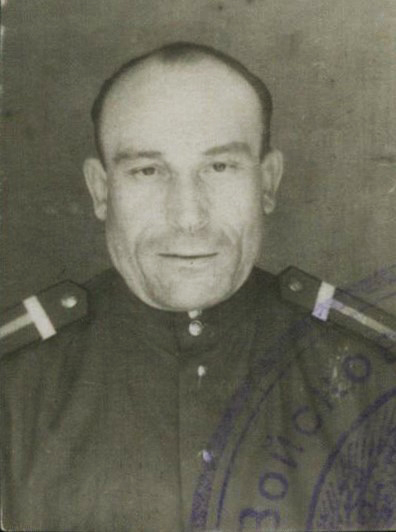
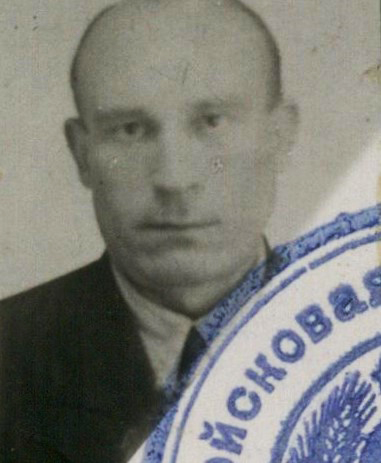
Declassified documents from the archives of the Foreign Intelligence Service of Ukraine reveal who recruited Stepan Lipolts, when he was recruited, and what tasks he had been fulfilling during his more than 40 years as an agent. From his autobiography, questionnaire, and kgb records, it is known that Stepan Semenovych Lipolts was born in 1907 in the village of Stara Oleksandrivka, Rozhyshche District, Volyn Governorate of the russian empire. His great-grandfather, along with other German colonists, had settled in those lands in search of a better life in the 19th century. During the turbulent years of World War I, Stepan and his family found themselves in Penza, and later – in Lokhvytsia, Poltava region. There he got his education and began working at a sausage factory.
In 1929, Stepan Lipolts was sentenced to two years of forced labor for embezzlement. In 1932, he was recruited by the gpu of the Ukrainian ssr “to infiltrate anti-soviet elements”. He chose the codename “Oleksa Marusenko”. He soon learned that in Volyn, which was then part of Poland, there was an unclaimed ancestral plot of family land. So, he illegally crossed the border and settled there. In 1939, after those territories were annexed by the ussr, he was arrested by the nkvd as a defector. He was soon recruited to infiltrate the Ukrainian nationalist underground under the codename “Oksentiy”. The case files point out that he proved to be a valuable agent and that several nationalist organizations were dismantled based on his reports.
In June 1940, Stepan Lipolts was sent abroad with the task of settling in Germany and conducting intelligence work on behalf of the ussr. At the same time, the nkvd authorities were unable to establish reliable contact with him at that time. At the beginning of the German-soviet war, he was drafted into the German army. He served as an interpreter in the 6th Department of the Imperial High Command and held the rank of non-commissioned officer. In 1942, he traveled to Lokhvytsia and found his wife. In March 1945, he was sent to the Berlin Intelligence School, but did not complete his training, as, along with other cadets, was sent to defend Berlin.
On April 28, 1945, Stepan Lipolts, as he stated in his testimony, went over to the soviet forces and informed representatives of SMERSH of his status as a soviet intelligence agent. He explained his service in Wehrmacht units by stating that, in order to fulfill his assigned tasks, he had intended to infiltrate Hitler’s army to collect intelligence and then, when the opportunity arose, pass on the information he had collected; however, such an opportunity never occurred. Despite this, he was arrested and sentenced to eight years “for serving in the German army and failing to carry out the nkvd’s assignments”.
While in the camps, Stepan Lipolts was used as a jail snitch. During that period, he went by the pseudonym “Vitaliy”. One of the reports notes that “based on his information, a number of prominent Ukrainian nationalists were exposed. In particular, ‘Vitaliy’ exposed President of the Ukrainian Supreme Liberation Council (UHVR) Kyrylo Osmak, who had been concealing his identity from investigators for three years and refused to testify. He helped expose UPA member and Ukrainian nationalist Semen Ukrainskyi and obtain detailed testimony from him. He assisted in exposing the American intelligence agent Dyshkant” (FISU. – F. 1. – Case 10602. – Vol. 2. – P.P. 144–149).
In light of these “merits” of Stepan Lipolts, at the request of the mgb of the Ukrainian ssr, he was released early from serving the remainder of his sentence in early 1951 and, a year later, sent to West Germany to infiltrate the circle of leading OUN figures. According to the legend, he was a German prisoner of war returning to his homeland under a repatriation program. At this stage, he chose a new codename – “Liuks”. His wife and son remained in the hands of the chekists; as noted in archival documents, “he was deeply attached” to them.
At Zeppelinstraße 67
After the necessary checks, Stepan Lipolts received documents in which he was already listed as Stefan Libholz. Besides, he was paid 3,000 marks as a former German soldier who had been held captive. He also received 5,000 marks from his mgb supervisors. With these funds, he purchased a small restaurant in Munich at Stephansplatz 1, where he included Ukrainian dishes on the menu. As a result, members of the Ukrainian community began to visit his establishment more and more often. Among them – quite a few individuals of interest to the mgb. This was exactly what he had counted on. To his guests, the owner presented himself as a German descended from former colonists who had lived in Ukrainian territories, and whose wife was Ukrainian. He attributed his perfect knowledge of the Ukrainian language, history, and customs to this background. He was hospitable and friendly, and was generous with complimentary treats on the house.
“‘Liuks” was widely known among the Ukrainian émigré community in Munich,” notes one of the operational reports. “He was personally acquainted with over 60 Ukrainian nationalists from the OUN-Banderites, OUN-Dviykars, the Executive Committee of the Ukrainian Supreme Liberation Council (UHVR), and the Ukrainian National Rada (UNRada). During meetings at his restaurant, at gatherings, and in other places, ‘Liuks’ managed to personally meet OUN leaders Bentsal, Kashuba, Stakhiv, Endyk, Mykola Livytskyi, Myskiv, and others, and, finally, Stetsko and Bandera. ‘Liuks’ established friendly relations with some of the above-mentioned individuals, in particular Stakhiv, Endyk, and Livytskyi” (FISU. – F. 1. – Case 10602. – Vol. 9. – P. 193).
Given such possibilities, Stepan Lipolts was assigned a fairly broad range of tasks. In particular, he was asked to uncover the communication channels between the leadership of the OUN Foreign Units and the underground in soviet Ukraine, plans to send emissaries into the territory of the Ukrainian ssr, and information about everyone who traveled to West Germany. In addition, he was to collect information on individuals whom the mgb might attempt to recruit as collaborators. He was also tasked with finding and setting up hiding places in Munich, Augsburg, and Neu-Ulm for stashing secret containers. He soon began placing packages of money in those hiding places for other kgb agents. To this end, he was handed 5,000 West German marks at one of the clandestine meetings. At the same time, he was given 2,000 marks for personal expenses. And there were quite a few such payments. At the same time, there were also special assignments.
One report, dated November 1954, said: “Get acquainted with Yaroslav Stetsko and establish a relationship of trust with him. Study his lifestyle, activities, and immediate circle. Find out his place of residence, as well as that of Mykola Lebed. Besides, find out which places Bandera visits in Munich and other cities in West Germany” (FISU. – F. 1. – Case 10602. – Vol. 4. – P.39).
The mgb’s plan of action for 1955 read as follows: “…through ‘Liuks’ prepare and carry out a special operation targeting one of the active leaders of the Ukrainian nationalists, Ya. Stetsko, or someone else” (FISU. – F. 1. – Case 10602. – Vol. 4. – P. 1).
In the operational practice of the mgb at that time, the phrase “carry out a special operation” meant liquidate. The materials in the archival case contain no information regarding Stepan Lipolts’s carrying out such a special operation. At the same time, the documents indicate that he was being persistently trained for this. In particular, in 1957, he was again assigned the task of monitoring Yaroslav Stetsko. In one of his reports, the agent pointed out that he had finally met him, and that during their meetings they shook hands and joked. However, he was unable to get any closer to him.
During the same period, “Liuks” reported on his first meetings with Stepan Bandera. This took place on October 12, 1954. One of his acquaintances mentioned that the OUN leader would be visiting the editorial office of the newspaper “Shliakh Peremohy” at Zeppelinstraße 67 that day, and that it would be possible to at least catch a glimpse of him from a distance. Having accepted the invitation, the agent went to the editorial office and watched as Stepan Bandera arrived in a black car, accompanied by two armed bodyguards. The agent’s report described in detail each person present – who they were and what they were doing, how they entered the building, whom they met with, and what the editorial staff were doing at the time. He was unable to meet the OUN leader at that time. That happened later at one of the Easter events.
On another occasion, “Liuks” was tasked with providing detailed information about the building at Zeppelinstraße 67, which housed the printing press and editorial office of the OUN newspaper, as well as the offices of leading figures. Among other things, the chekists were interested in descriptions of the locking system, the procedure and method for locking the doors after work; security during the day and at night, and whether there was a night watchman; the location of card indexes and archives in editorial offices, a description of the cabinets in which they were stored – particularly regarding the OUN Security Service archive; and how one could gain access to a particular room from the street.
“Liuks”’s 35-pages report contained descriptions of the approaches to and entrances into the building, the doors, the locks, and each floor, complete with diagrams, as well as information about the employees’ work schedules and routines, and details on who was assigned to which room. In a photograph provided for identification purposes showing Stepan Bandera’s car, the agent confirmed that it was indeed his car, which he usually parked in the same spot in front of the building.
Fulfilling these tasks, Stepan Lipolts gradually gained closer access to the OUN leadership. At some point, his behavior caught the attention of OUN Security Service (SB) officers.
Under the OUN Security Service’s Suspicion
In early 1957, during a clandestine meeting with kgb operative Oleksiy Deimon, Stepan Lipolts reported that he felt he was under increased scrutiny from the chief of the OUN Security Service Ivan Kashuba. “Kashuba’s greatest distrust of the source,” “Liuks” emphasized, “became apparent after the source sold the restaurant and left Munich, while continuing to visit the city frequently. Rumors and direct warnings began to reach the source, suggesting that Kashuba was convinced that everything the source was saying about himself was not the whole truth – or, more accurately, the complete truth – and that he wanted to know everything about him. However, the biggest problem for Kashuba in all of this was that the source was not a Ukrainian émigré but a German, and he could not act as he would have liked” (FISU. – F. 1. – Case 10602. – Vol. 5. – P. 221).
He meant that the legend created for Stepan Lipolts by the mdb/kdb allowed him, as a West German citizen, to feel more confident and better protected legally than Ukrainian émigrés did. In this regard, he explained to Oleksiy Deimon that OUN Security Service agents would have long ago placed him in a separate special interrogation room if he were not protected by German laws.
These suspicions did not fade but only grew stronger. One day, Ivan Kashuba met Stepan Lipolts at the editorial office of the newspaper “Shliakh Peremohy” and asked him to answer frankly: who did he feel he was more – a true German or a bit of a Ukrainian? Lipolts replied that he was a true German and had sympathy for Ukrainians because his wife was Ukrainian. “Well, then be a German – that’s your good luck,” Ivan Kashuba replied.
After this incident, the kgb decided to play it safe and send Stepan Lipolts via East Berlin to the ussr for a vacation and to assess the situation that had arisen. This took place in April 1957.
Change the Place of Residence and Employment, and Grant a Personal Pension from the kgb
Upon his return to the ussr, Stepan Lipolts was given a vacation paid for by the kgb and was sent with his family to the “rossiya” sanatorium in Yalta. Meanwhile, they hastily concocted and documented a cover story explaining his prolonged absence. According to the story, from 1952 to 1957 he worked as a contractor at one of the military units, after which he was sent on assignment to Kyiv. In the capital of the Ukrainian ssr, he was given a flat and soon appointed manager of a bread shop. They decided not to send him abroad anymore due to well-grounded suspicions about him on the part of the OUN Security Service. At the same time, they did not remove him to the archives.
A number of documents point out that Stepan Lipolts “was actively used in operations to discredit Ukrainian nationalists abroad”. Here’s how it happened. In late 1959, the kgb was developing a series of measures to divert attention from the accusations against it regarding the murder of Stepan Bandera. At this, they tried to convince the international community that this had been done either by West German intelligence agencies or by rivals within the OUN. Their aim was to discredit the entire Ukrainian liberation movement. In this context, “Liuks” was also mentioned.
“The plan of measures to undermine and discredit the Western Branch of the OUN,” said a document from moscow to the kgb of the Ukrainian ssr, “calls for the preparation and publication in the Western press of a letter in the name of your agent ‘Liuks’, exposing the terrorist activities of nationalist leaders. In our opinion, the author of the letter should present himself as a German chauvinist who had the misfortune of being closely associated with the Bandera followers in Munich, was subjected to persecution on their part, and was therefore forced to go into hiding from them outside the Federal Republic of Germany. This letter is intended to portray the OUN Foreign Units to the West German public as an organization hostile to Germans and to turn the population of West Germany against Ukrainian nationalists. At the same time, “Liuks”’s letter should highlight the lack of unity within the leadership of the OUN Foreign Units… in order to intensify the contradictions between individual nationalist organizations and the discord among the OUN leadership” (FISU. – F. 1. – Case 10602. – Vol. 8. – P. 1).
Such a letter was drafted and sent to the newspaper “Die Welt”. But the editors did not publish it. They clearly saw that all the accusations were flimsy. The next step was Stepan Lipolts’s participation in a press conference on October 13, 1961, in East Berlin. His identity was revealed to the Western public, with some adjustments made to his cover story. In particular, alongside the actual facts of his biography, other – but quite significant – details were concealed, namely that he was a kgb agent and had carried out special missions abroad.
Meanwhile, in the ussr, the kgb took extensive measures to conceal information about this press conference and Stepan Lippolts’s secret trip to attend it. First and foremost, they took immediate action to remove from circulation the October 14, 1961, issue of the newspaper “Neues Deutschland”, which featured an interview with him following the press conference and his photograph. Two days later, 1,600 copies of the newspaper – which had been delivered from the GDR for subscribers and retail sale – were confiscated at Zhuliany Airport.
At the same time, in addition to reports in the foreign press, information about the press conference also appeared in the soviet newspaper “Pravda”. Distancing himself from the infor- mation contained therein, Stepan Lipolts, following instructions from kgb officers, explained to his relatives and acquaintances that the article was not about him. He claimed that there were many German colonists in Volyn with the surname Lipolts, that his surname was spelled with a single “p” (as opposed to the double “pp” in the newspaper), and that abroad it was spelled Libholts; furthermore, his name was Stepan, not Stefan, as stated in “Pravda”.
Besides, a document with the following content arrived in Kyiv from moscow, signed by first deputy chairman of the kgb under the council of ministers of the ussr Petr Ivashutin: “Agent ‘Liuks’ fulfilled an important task for the kgb under the council of ministers of the ussr in October of this year. Given that ‘Liuks’ was previously known to many Ukrainian nationalists, and that foreign intelligence services may be paying attention to him, future work with the agent must be directed toward preventing any possible leakage of information abroad regarding his family, work, and whereabouts, which could be exploited by foreign intelligence services for hostile purposes. Therefore, it is advisable to relocate agent “Liuks” and his family (wife and young child) to another city that is off-limits to foreigners, providing him with a separate two-room flat there and securing employment for him” (FISU. – F. 1. – Case 10602. – Vol. 9. – P. 33).
Despite this, the possibility of a minor change to his last name – from Lipolts to Libolts – was considered in order to further conceal his identity. But it never came to that. At the same time, all other measures were carried out, and, by chief of the kgb of the ussr Yurii Andropov’s decision, a personal pension of 100 karbovanets was established for him. Despite this, he continued to be closely monitored; surveillance was established over the mail of his inner circle; restrictions were imposed on his contact with individuals who might identify him; and measures were developed in case of retaliation against him for his involvement – albeit indirect – in the planning of Stepan Bandera’s assassination. These measures were intensified following Bohdan Stashynskyi’s confession to the murder of the OUN leader. By then, it had become clear to everyone that both the groundless accusations against Dmytro Myskiv and the press conference organized in Berlin on October 13, 1961, featuring Stepan Lipolts, were the work of the kgb, and that he himself was their agent.
In this regard, the Ukrainian émigré newspaper “Svoboda”, commenting on those events, immediately drew the correct conclusions. Its October 26, 1961, issue, which was included in the case file, pointed out: “As for Lipolts himself, while in Munich, he did indeed try at all costs to gain the trust of the circles of the OUN Foreign Units. However, he did not succeed, and after several attempts to poison prominent Ukrainian figures, he disappeared from Munich. His recent appearance in East Berlin has confirmed the suspicions of relevant figures in the Ukrainian émigré community that Lipolts had been sent to Munich by the bolsheviks with specific instructions, and that for this purpose he had opened the restaurant “StephansKlause” and was seeking friendships with certain prominent figures and journalists” (FISU. – F. 1. – Case 10602. – Vol. 9. – P. 168).
Now, however, documents found in the archives of the Foreign Intelligence Service of Ukraine make it possible not only to confirm the conclusions that Ukrainian figures in exile had drawn at the time regarding the circumstances of those events, but also to see how everything actually unfolded according to the kgb’s scenario orchestrated in moscow. Furthermore, Stepan Lipolts has been identified as the kgb agent “Liuks” whose codename and numerous reports appear in a number of other archival files concerning prominent Ukrainian figures. Until the very end of his life, he lived in hiding, changing jobs and places of residence, fearing retaliation from representatives of the Ukrainian diaspora – the very people to whom he had once posed as a sincere Ukrainian and a fighter for a better future for Ukraine.
Regarding the fate of Stepan Lipolts himself, the case files state that he died on November 29, 1974; he had a difficult personality and experienced numerous conflicts and misunderstandings with his wife and children; he repeatedly left his family and then returned; and during meetings with kgb officers, he expressed his intention to commit suicide. However, he never expressed regret or remorse for what he had done on orders from the kgb.
See declassified documents from the archives.