
The kgb Against the Commemoration Abroad of the Day of Creation of the Ukrainian Insurgent Army (UPA)
10/14/2026
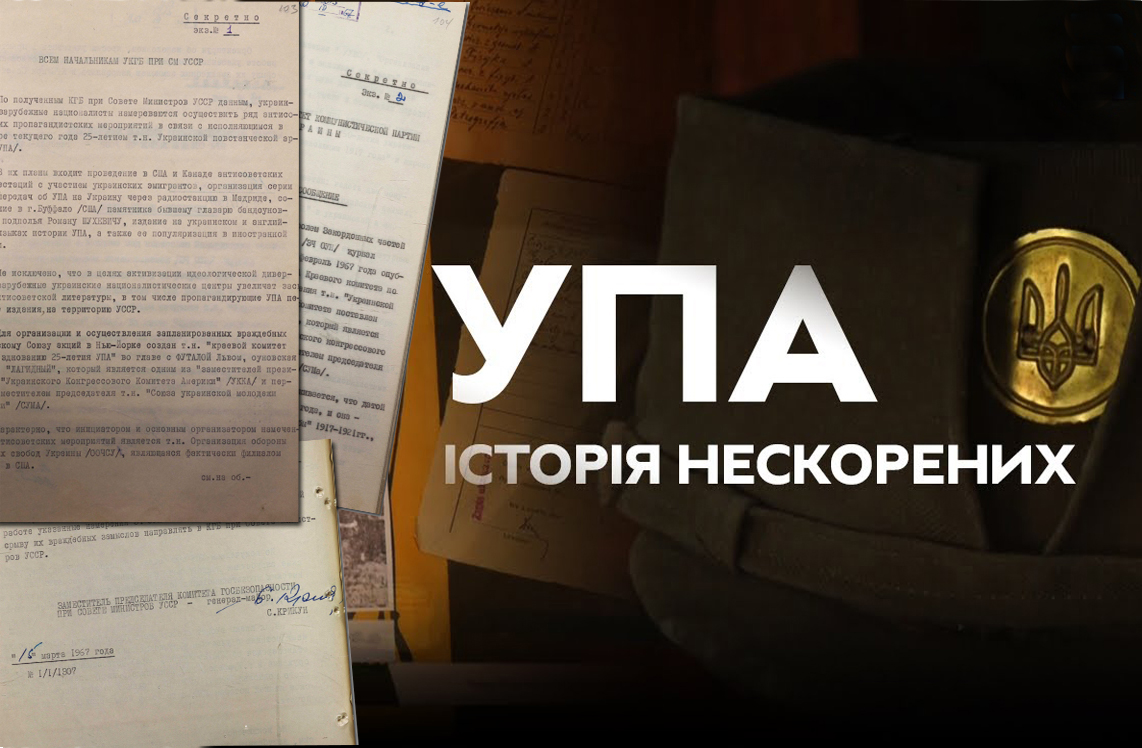
Declassified documents from the archives of the Foreign Intelligence Service of Ukraine show that during the soviet period, the kgb not only within the ussr, but also abroad, used agent operational and ideological methods to completely erase from the memory of Ukrainians the Day of the creation of the Ukrainian Insurgent Army, which, according to a resolution of the Ukrainian Main Liberation Council, was traditionally celebrated on October 14, the Feast of the Intercession. Here is how in 1967 they monitored the events organized by the Ukrainian diaspora to mark the 25th anniversary of the creation of the UPA.
In March 1967, the kgb of the Ukrainian ssr sent a special report to the central committee of the communist party of Ukraine. It stated that a Regional Committee had been established in the United States to organize the celebration of the 25th anniversary of the creation of the UPA. Lev Futala (OUN pseudonym “Lahidnyi”), who was one of the Vice Presidents of the Ukrainian Congress Committee of America (UCCA) and First Vice Chairman of SUM (Spilka Ukrainskoi Molodi – Ukrainian Youth Association- Transl.) in the United States, was appointed Chair of the Committee. The report outlined the fundamental principles that formed the basis of the commemorative events. These principles emphasized that the UPA was the successor to the liberation struggle of 1917–1921 and the ideals of the Ukrainian Military Organization and the Organization of Ukrainian Nationalists, and that it emerged by the will of the Ukrainian people as their armed force to fight against colonial subjugation, terror, oppression, and the deprivation of the people’s rights.
A special report by the kgb pointed out that Ukrainian nationalists sought to combine the celebration of the Day of Creation of the UPA with the 50th anniversary of the 1917 Ukrainian national liberation revolution and to widely publicize this event abroad. Among the cultural and creative initiatives, plans included publishing two comprehensive histories of the UPA in Ukrainian and English, widely publicizing the insurgents’ activities in the Ukrainian and foreign press, organizing a series of radio broadcasts to Ukraine via Radio Madrid, and holding a contest for the best works of art dedicated to the UPA.
Educational initiatives included incorporating stories about the UPA into the program of summer camps for Ukrainian youth at SUM and Plast camps, inviting UPA soldiers to meetings, and holding various gatherings and demonstrations. The culmination of this large-scale event was to be the erection of a monument to UPA Commander-in-Chief Roman Shukhevych in one of the squares of the American city of Buffalo.
Besides, the document included the following quote from the Committee’s appeal to the Ukrainian diaspora: “…The Ukrainian people’s struggle against Germany and moscow under the flag of the UPA has created a great moral and political capital. Therefore, it is the duty of the Ukrainian diaspora to make the fullest use of this capital to spread the truth about Ukraine, win the sympathy of freedom-loving peoples, and secure their support for our people’s struggle for liberation” (FISU. – F. 1. – Case 14487. – Vol. 4. – P. 106).
The special report concluded by noting that the kgb was taking the necessary measures to thwart such plans. To confirm this, a corresponding directive was immediately sent to the chiefs of regional kgb directorates, instructing them to use their existing intelligence resources to develop proposals for disrupting the celebration of UPA Day abroad. However, as shown by declassified archival documents, they were unable to achieve this.
The events commemorating the regular anniversaries of the Ukrainian National Revolution and the Day of Creation of the UPA took place in the United States in mid-June 1967. Apart from ceremonial gatherings and demonstrations, the documents mention a celebratory banquet marking the UPA’s anniversary, “organized by nationalists in Washington”. It is noted that congratulatory telegrams were received for this event from 14 US Senators and 63 members of the US House of Representatives, and that Republican Congressman Edward Derwinski and Democratic Congressman Michael A. Feighan were guests of honor and speakers representing the USA’s government at the banquet.
“The best way to honor the UPA’s efforts,” said Edward Derwinski in his speech, “is to draw Americans’ attention to the danger of communism and moscow’s imperialism… We must persuade everyone that victory over communism is our most important task… You, Ukrainians, have always been and will continue to be in the front lines of the struggle against communism” (FISU. – F. 1. – Case 14487. – Vol. 4. – P. 220).
Besides Edward Derwinski, the kgb’s reports mention North Dakota Senator Milton Young’s special speech in the US Senate, dedicated to the 25th anniversary of the UPA. Among the events held in Canada to mark the Day of creation of the UPA, the reports mention a manifestation in Toronto attended by 8,000 people, including members of the Canadian Parliament and Ministers from the province of Ontario, as well as congratulatory telegrams from Prime Minister of Canada Lester Pearson, Minister of National Defense Paul Hellyer, Leader of the Opposition in the Canadian Parliament John G. Diefenbaker, and other officials.
Employees of the kgb’s Ottawa residentura quoted the words from a speech delivered at the meeting by MP Michael Starr, the first Canadian of Ukrainian descent to serve in the Federal Cabinet who served as Canada’s Minister of Labor from 1958 to 1963. He said the following: “If we are now commemorating all these significant dates, it is not only to remember the past and honor those who fought for Ukraine’s freedom. At the same time, we must also think about the future – about what we need to do to ensure that the country from which we or our parents originate is free and independent” (FISU. – F. 1. – Case 14487. – Vol. 4. – P. 223).
In addition to the United States and Canada, celebrations marking the 25th anniversary of the UPA took place in Great Britain, Germany, Australia, Argentina, Brazil, and other countries. At those events, cultural and educational traditions were combined with religious and military ones. Since the Day of Creation of the UPA was inextricably linked to the Feast of the Protection of the Most Holy Mother of God, the celebrations began in the churches of the Ukrainian Greek Catholic and Ukrainian Autocephalous Orthodox Churches. Solemn liturgies were served for the health of living underground veterans and for the freedom of Ukraine, while memorial services and prayers of remembrance were held for all those who fell in battles against the Nazi and soviet occupiers. After the services, participants would head to cenotaphs or monuments dedicated to those who fought for Ukraine’s freedom, which the émigrés had erected in their cemeteries and near community centers.
The main events of the day were the so-called “solemn ceremonies” – large public and political gatherings held in city halls, theaters, or Ukrainian cultural centers. During those assemblies, the flags of UPA military units – which had been successfully smuggled out by raiding detachments in the late 1940s – were solemnly carried onto the stage. Leaders of the émigré community, OUN leaders, and UPA veterans spoke from the stage. They emphasized that the struggle was not over and that the emigration community was the voice of a voiceless Ukraine. The artistic program featured performances of insurgent songs and dramatic theatrical skits depicting life in kryivkas.
In reports from abroad, kgb officers referred to all of this as “nationalist gatherings” and “anti-soviet propaganda”. In response to these measures, they initiated the publication of books and brochures in which UPA fighters were portrayed exclusively as German collaborators and bandits; they sowed discord among representatives of different factions of the OUN and attempted to disrupt joint events. Through front men and soviet embassies, the kgb pressured the governments of the United States, Canada, and West Germany, sending documents – often forged – demanding that UPA marches be banned and Ukrainian publishing houses be shut down, while accusing émigrés of all sorts of crimes.
At the same time, despite all the efforts of the kgb, the kremlin leadership failed to conceal the truth about the UPA’s activities. Information about the Ukrainian underground’s struggle, its goals, and the actual circumstances of its confrontation with the stalinist regime gradually reached the global public. Its dissemination was greatly facilitated by events – well-organized by the diaspora – commemorating the creation of the UPA and other significant dates in Ukraine’s history.
See declassified documents from the archives.