
The Union of Ukrainian Organizations in America Against the Holodomor in Ukraine
11/28/2026
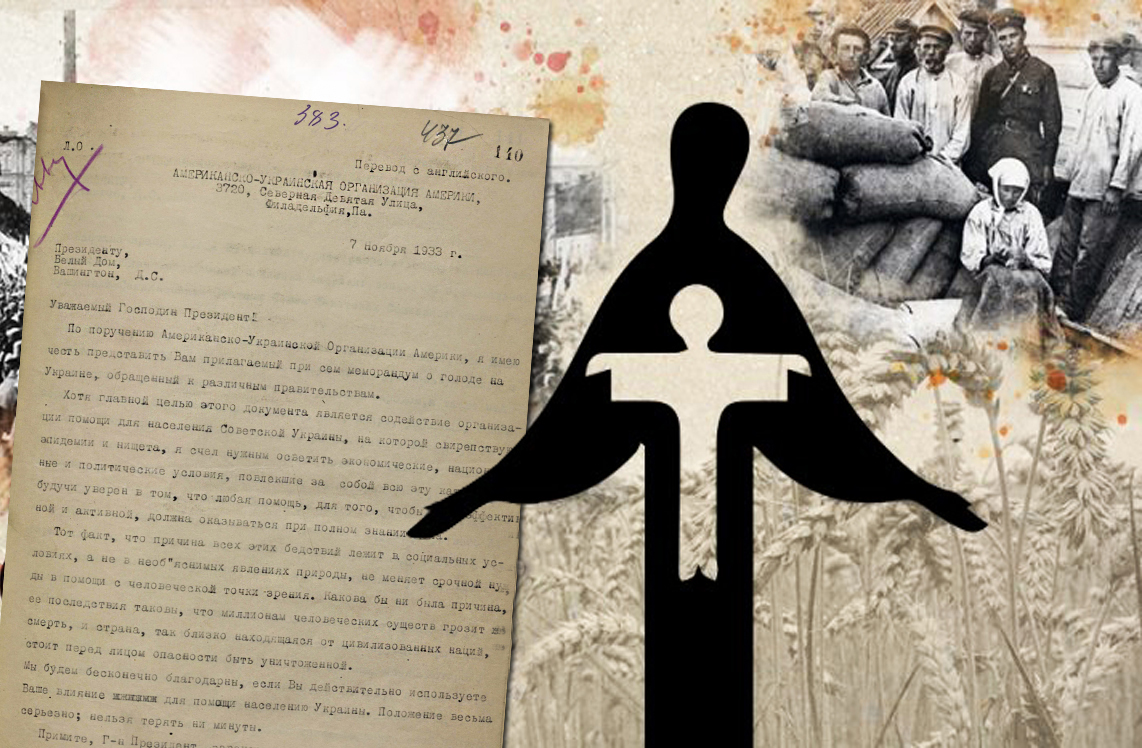
A directive plan from the Provid of Ukrainian Nationalists and other materials were found in the archives of the Foreign Intelligence Service of Ukraine regarding anti-bolshevik protest actions organized in the autumn of 1933 by OUN organizations in Europe, the United States, and Canada, aimed at drawing attention to the widespread famine in soviet Ukraine.
Information about the Ukrainian diaspora’s activities was obtained by employees of the ussr’s ogpu through its agents abroad. The plan is dated September 18, 1933, and addressed to secretariats and departments on the European continent, as well as to the Organization for the National Rebirth of Ukraine (ODVU) in the United States and the Ukrainian National Federation of Canada (UNF). It begins with the following words:
“Recent events in the Ukrainian lands occupied by communist moscow (famine, terror, a shift in the policy of Ukrainization, etc.) clearly demonstrate that the bolshevik dictatorship has decided to permanently paralyze the further development of the Ukrainian movement and the national consciousness of our people. moscow’s goal is to subjugate Ukraine, to deprive it – even under favorable conditions – of the opportunity to resume the struggle for its liberation, and to place it in the position of its own colony for a long time to come”
(FISU. – F. 1. – Case 31. – Vol. 4. – P. 360).
The plan outlined the objectives of the protest:
- to demonstrate to the entire world the relevance of the Ukrainian issue and the need to resolve it;
- to draw attention to the actual state of affairs in soviet Ukraine, as created by moscow;
- to protest before the governments of different countries against the reckless and world-threatening policy of appeasement and “pactomania” with communist moscow, which is being pursued at the expense of the Ukrainian nation’s interests;
- to demonstrate to the entire world that the Ukrainian people will not voluntarily submit to self-humiliation and will never recognize the treaties concluded by moscow;
- to show that all Ukrainians – both on Ukrainian soil and in exile – as well as all progressive humanity, stand in solidarity in the struggle against the moscow occupation.
These actions were to take the form of street meetings, speeches at such meetings, the adoption of resolutions calling for support for the oppressed Ukrainian people and assistance in their survival, as well as the submission of such resolutions to the governments and diplomatic missions of interested countries.
“A protest campaign in the United States is of particular importance,” the directive pointed out, “given the current government’s desire to conclude a treaty with the ussr. It would be highly desirable to demonstrate the true attitude of the Ukrainian émigré community in America to such tendencies on the part of Roosevelt and related circles… It would be very good if, following the rallies, a delegation of representatives from the Central Protest Committee could be sent to Roosevelt with a corresponding petition”
(FISU. – F. 1. – Case 31. – Vol. 4. – P. 375).
As shown by archival documents, in November of that year, thousands of representatives of the Ukrainian diaspora took part in silent marches and meetings in dozens of cities of the USA dedicated to the victims of the 1932–1933 Holodomor, protesting against the kremlin’s deliberate policy of exterminating the Ukrainian people. As a result of those actions, a series of memoranda regarding the famine in Ukraine were adopted and sent to the governments of countries around the world. One of them was sent by the American-Ukrainian Organization in Philadelphia to US President Franklin Roosevelt. The text of the memorandum also fell into the hands of the chekists. It read as follows:
“Although the main aim of this document is to facilitate the organization of aid for the population of soviet Ukraine, where epidemics and poverty are rampant, we consider it necessary to highlight the economic, national, and political conditions that led to this catastrophe, confident that any aid, to be effective and meaningful, must be provided with a full understanding of the nature of the situation.
The fact that the reason for all these misfortunes lies in social conditions, rather than in forces of nature beyond human control, should not affect the urgency of providing aid from a humanitarian standpoint. Whatever the reason, its consequences are such that millions of people are threatened with death, and a country so close to civilized nations faces the danger of destruction.”
(FISU. – F. 1. – Case 31. – Vol. 4. – P. 383).
Another memorandum came from the Union of Ukrainian Organizations of America, a socio-political organization of Ukrainians that consistently held events in support of the recognition of Ukrainian statehood, widely informed the public about the Ukrainian cause, raised funds to aid the starving, and published books about Ukraine in English.
“Last year”, the appeal states, “many millions of residents of soviet Ukraine, the land of our ancestors, died of starvation. The existence of this horrific tragedy in Ukraine has been repeatedly confirmed by leading European and American media outlets…
As for the reasons for this terrible famine in Ukraine, even foreign correspondents in soviet russia are no longer trying to conceal the fact that the famine is a consequence of soviet policy. They view the famine as moscow’s yet another step aimed at breaking the resistance of the Ukrainian peasantry, which has always been – and remains – unwaveringly hostile to the communist system, as well as to the occupation of Ukraine by moscow (that is, russia).
The American-Ukrainian press is filled with reprinted letters from Ukraine that have managed to slip past strict soviet censorship and contain emotional appeals for help in the face of this terrible famine. They implore us and others to appeal to the American sense of humanity and justice, so that America may once again come to the aid of devastated Ukraine, just as it did in 1921”
(FISU. – F. 1. – Case 31. – Vol. 4. – PP. 384–385).
The signatories of the memorandum pointed out that the famine situation in the Ukrainian ssr prompted them to appeal to the President and the US government and to express their concern regarding plans to officially recognize the ussr precisely during this period. They advised that all further negotiations on the establishment of diplomatic relations be conducted on the condition that a Special American Mission conduct a thorough on-site investigation into the causes of the widespread famine, and that only after all the circumstances had been clarified should the issue of “the US government’s official recognition of the ussr in accordance with American principles of justice and humanity, known to the entire world”, be resolved.
The memorandum concludes with the following words:
“Given that the Ukrainian people have repeatedly declared through their legitimate representatives that they do not recognize either the russian occupation of Ukraine or the treaties and obligations concluded by the moscow government regarding Ukrainian territories, and that, under the current soviet-russian oppression, the Ukrainian people cannot freely express their views on matters of vital importance to them, we appeal to the US government as loyal citizens, requesting that it take note of these facts”.
(FISU. – F.1. – Case 31. – Vol. 4. – PP. 385–386).
After obtaining these and other similar materials through intelligence operations, the soviet leadership tasked the ussr’s ogpu with finding a way to influence the course of events. In particular, they conveyed to the American side the information that “reactionary Ukrainian nationalists, extremists, and terrorists” were allegedly behind the OUN’s strategic plans and the authors of the memoranda, and that during protest actions in the USA, they might resort to all manner of provocations and mass disturbances. They also shared intelligence regarding the OUN’s preparations for an assassination attempt on people’s commissar for foreign affairs maksim litvinov, who was heading to Washington to meet with Franklin Roosevelt and sign, on November 16, 1933, the relevant documents establishing diplomatic relations between the ussr and the United States.
According to the chekists’ plan, negative information about OUN leaders and representatives of Ukrainian émigré organizations in the United States and Canada was intended to discredit the events they had planned, divert attention from exposing the true reasons for the protests, and obscure the actual state of affairs in Ukraine. At the same time, the soviet regime, led by joseph stalin, categorically denied the fact of the Holodomor at all levels, closed Ukraine’s borders to international missions, imposed strict censorship, and refused any external aid.
Despite this resistance, representatives of Ukrainian émigré organizations managed to convey the truth to the world. Publications such as the daily newspaper “Svoboda” and the weekly “The Ukrainian Weekly”, founded in October 1933, published letters detailing the mass deaths in the Ukrainian ssr caused by famine. Ukrainian communities overseas formed special relief committees. They raised money and attempted to send parcels or money transfers to their relatives in Ukraine through the “Torgsin” system (soviet shops established for trade with foreigners). Although the soviet authorities confiscated a significant portion of the parcels or imposed exorbitant duties on them, some of them still helped individual families survive.
As a result of all those efforts – including mass meetings by the Ukrainian diaspora in Chicago and New York and articles in the American press by Gareth Jones and other concerned journalists – the kremlin’s information blockade was breached, the truth about the Holodomor was brought to the attention of the international community, and the historical foundation was laid for the future official recognition of this tragedy as genocide at the national level in the United States.
The protests served as the impetus for the creation of relief committees, notably the Ukrainian Public Committee for the Rescue of Ukraine and a political association of Ukrainians abroad dedicated to defending the rights of their Motherland. In May 1934, the US House of Representatives passed a special resolution condemning moscow’s policies in Ukrainian territories.
It was precisely those early decisions and the protests of 1933 that, decades later, formed the basis for the investigations of a special US Congressional Commission headed by James Mace (1985–1988), which officially concluded that joseph stalin and his inner circle had committed genocide against the Ukrainians. Finally, in 2018, the US House of Representatives unanimously passed a resolution recognizing the 1932–1933 Holodomor as genocide against the Ukrainian people.
See declassified documents from the archives.