Yaroslav Stetsko. 40 Years Since His Premature Death
7/5/2026
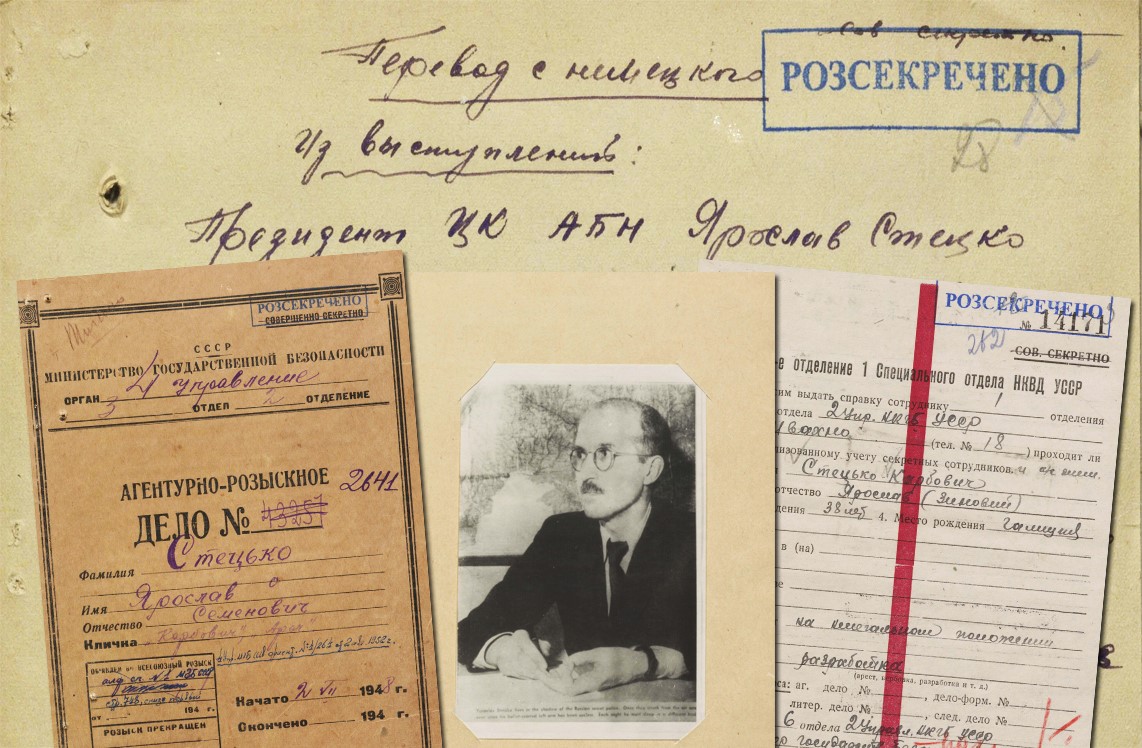
On July 5, 1986, Yaroslav Stetsko, Head of the OUN-B Provid, President of the Anti-Bolshevik Bloc of Nations (ABN), one of the leading ideologists of the Ukrainian national liberation movement, and an organizer of the struggle for Ukraine’s independence, passed away. The cause of his death, as evidenced by declassified documents from the archives of the Foreign Intelligence Service of Ukraine, was the ussr kgb’s special operation codenamed “Nekro”, aimed at inflicting psychological trauma on him by spreading a falsified obituary purportedly from the editorial staff of Radio Liberty, which led to a sharp deterioration in his health condition. On the occasion of the 40th anniversary, new materials from the operational file on Ya. Stetsko are being published, detailing his consistent struggle against the imperialist policies of the kremlin leadership.
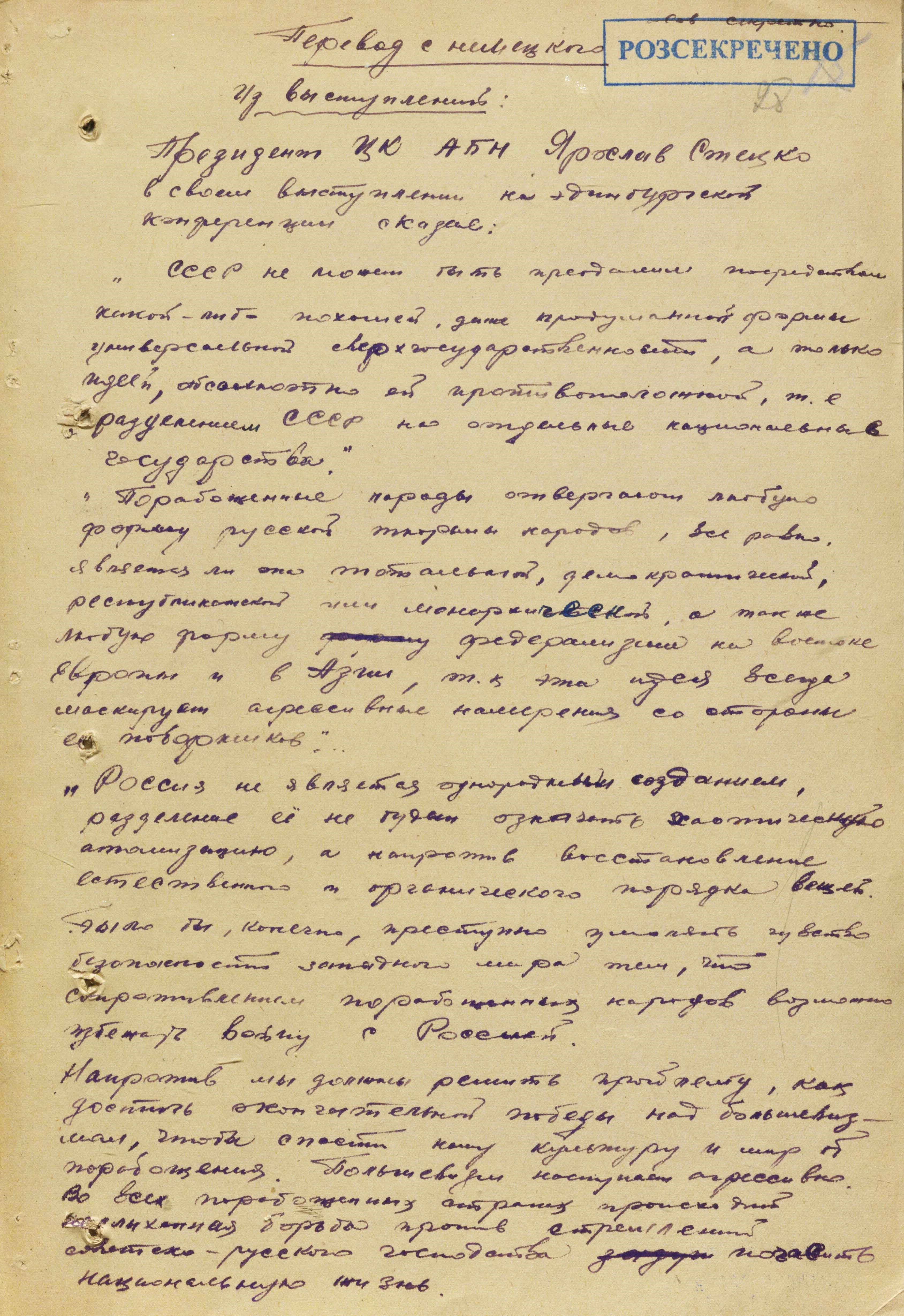
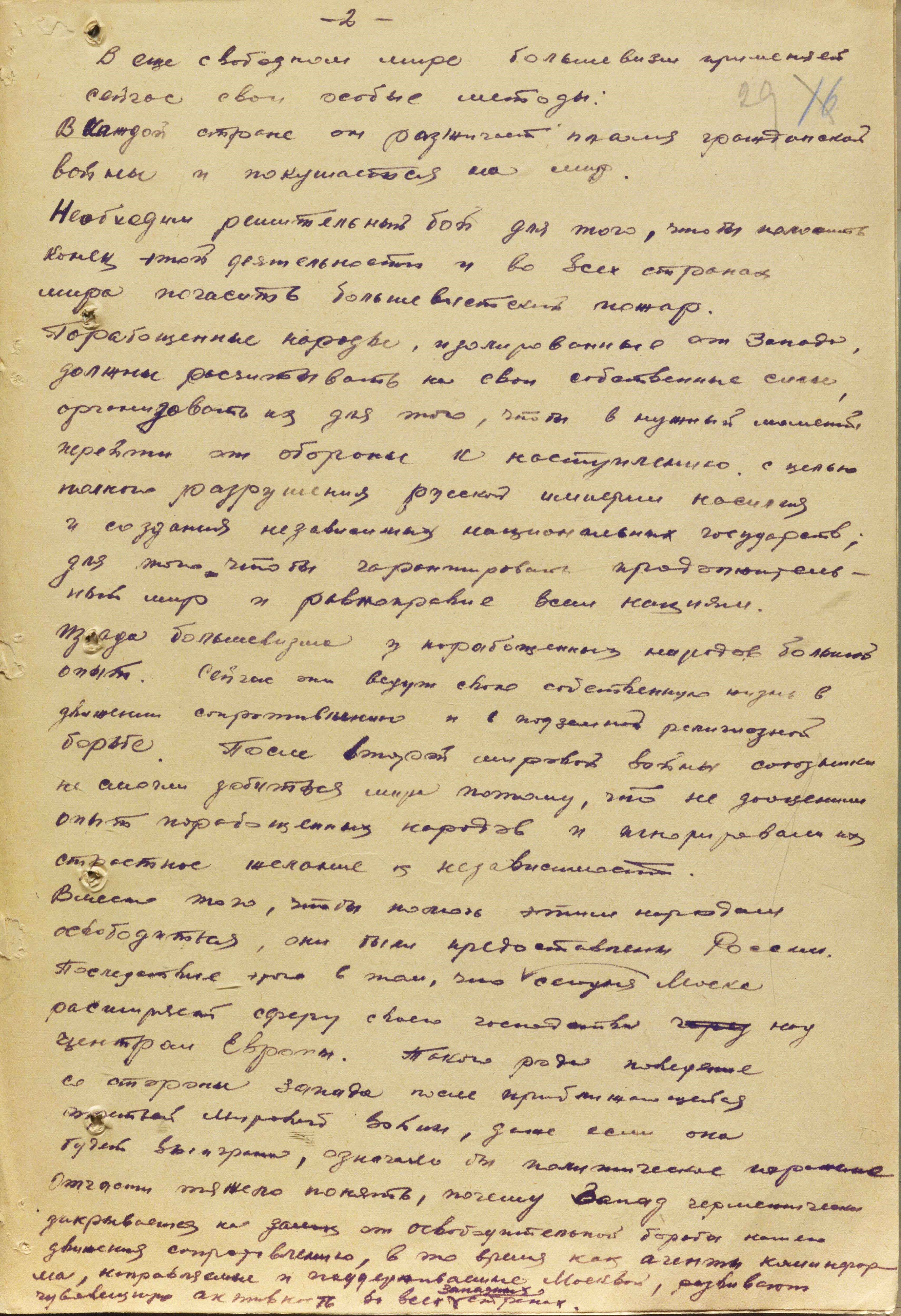
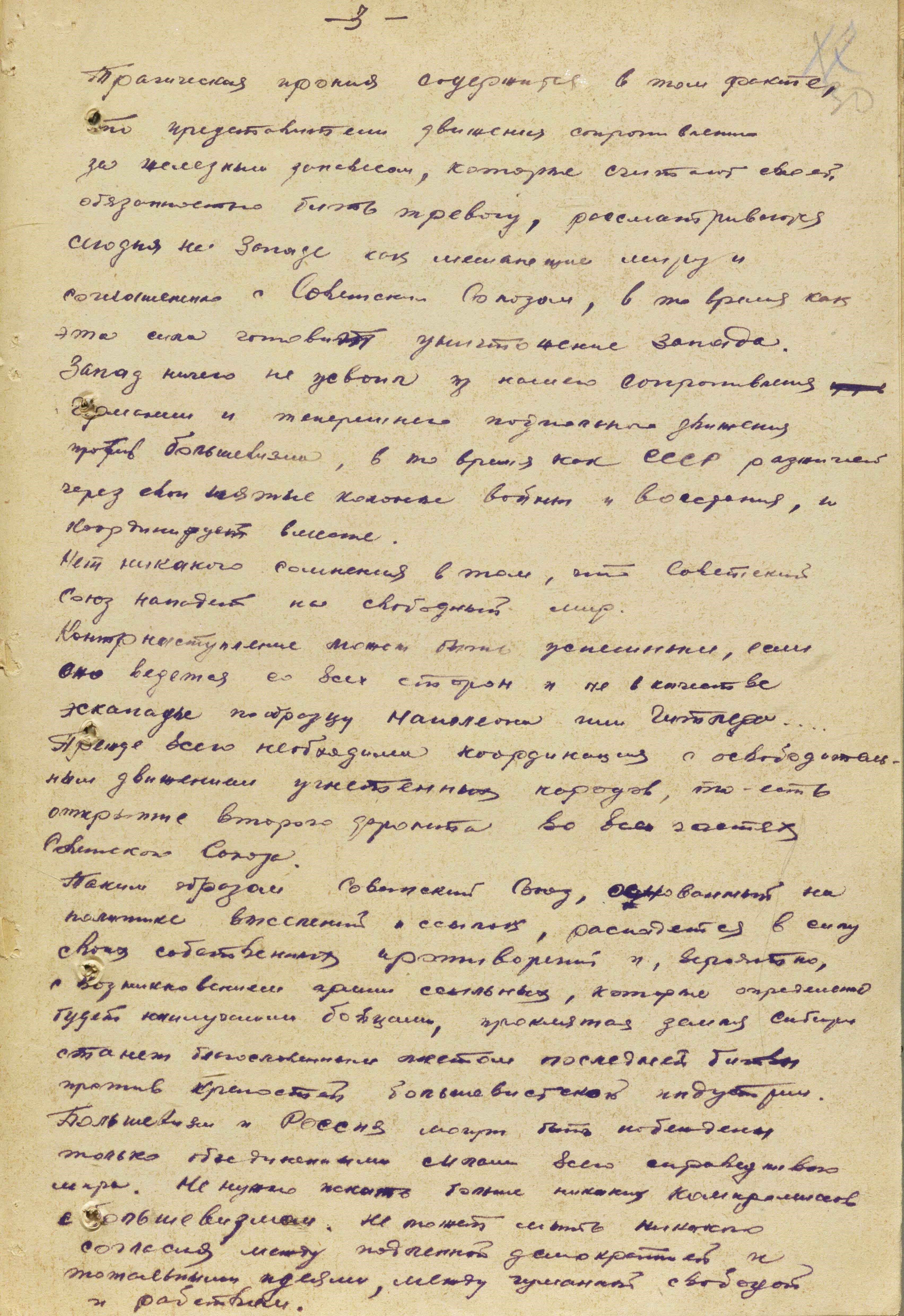
Among the archival documents there is a speech delivered in 1950 by Ya. Stetsko as chairman of the Central Committee of the Anti-Bolshevik Bloc of Nations (ABN) at the Edinburgh (Scotland) Conference of Oppressed Nations. That passionate and emotional speech is considered one of the defining events of the “Cold War” era, a manifestation of an uncompromising stance in the struggle for national liberation, and a bold appeal to the democratic world not to pursue a policy of appeasement toward moscow, but to work toward the collapse of the russian empire in order to save global freedom.
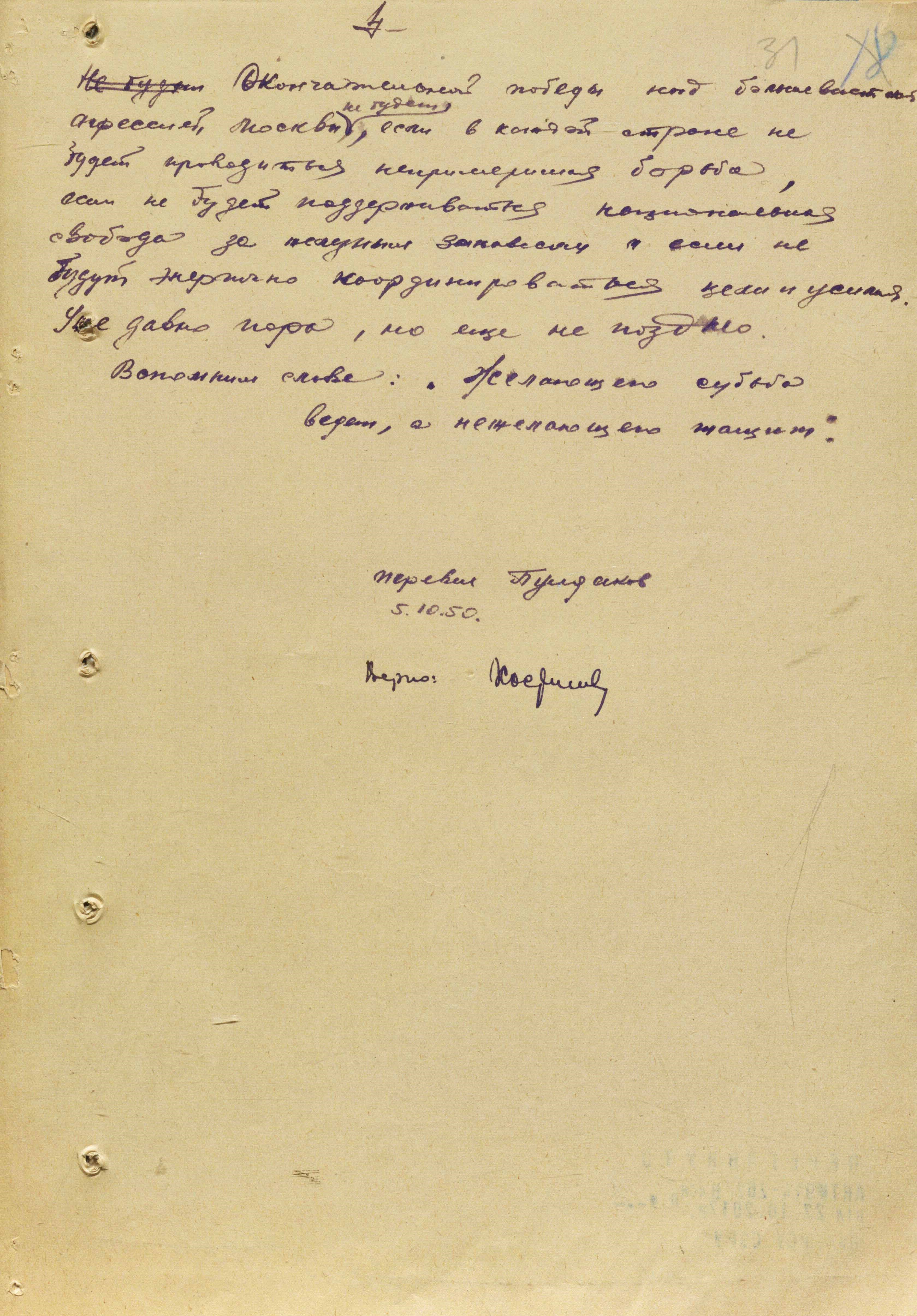
As noted in the case file, the text of the speech was translated from German and handwritten on October 5, 1950, by one of the translators at the mgb of the ussr. It bore the classification “Top Secret”, which did not comply with any regulatory documents but at the same time indicated the particular importance of its content. The activities of the ABN and similar international conferences were the subject of close scrutiny by soviet secret services, as the unification of anti-communist forces on the European continent posed a significant ideological and political threat to the kremlin.
The Encyclopedia of Ukrainian Studies points out that the ABN is the name of the coordinating center for the revolutionary and liberation organizations of the peoples subjugated by bolshevik russia. Founded on the initiative of the OUN on November 21–22, 1943, at a secret conference in the Zhytomyr forests with the participation of delegates from 12 nations, it was reorganized in 1946 in exile. Following this reorganization, Ya. Stetsko became President of the ABN and led the Organization until the end of his life. His remarkable organizational skills helped unite representatives of the peoples subjugated by the kremlin in their quest for liberation and enabled the Organization to involve numerous countries through political and diplomatic initiatives.
It is no wonder, then, that all of the ABN’s activities were constantly monitored, materials from various international forums were collected, the speeches of active figures were transcribed, and reports were submitted to prompt the taking of urgent measures. What, then, so alarmed the staff of the mgb that it prompted them to translate Ya. Stetsko’s speech into russian and immediately send it via diplomatic channels to moscow?
From the very beginning of his speech, Ya. Stetsko clearly outlined his position. He pointed out that no changes to the system in the ussr could alter the essence of that superpower. The only solution was to divide it into separate nation-states. “The oppressed peoples,” he said, “reject any form of the russian prison of nations – whether totalitarian, democratic, republican, or monarchical – as well as any form of federalization in Eastern Europe and Asia, since this idea always masks the aggressive intentions of its proponents… It would, of course, be criminal to undermine the Western world’s sense of security by suggesting that the resistance of the oppressed peoples could prevent war with russia. On the contrary, we must resolve the problem of how to achieve a final victory over bolshevism in order to save our culture and the world from subjugation. bolshevism is advancing aggressively. In all oppressed countries, an unprecedented struggle is taking place against the aspirations of soviet-russian domination to suppress national life.”
Ya. Stetsko reproached Western countries for failing to adequately support, after World War II, the aspirations of oppressed peoples to liberate themselves from moscow’s communist yoke, and for attempting to curry favor with the soviet union and negotiate with it. “After World War II,” he noted, “the Allies failed to achieve peace because they underestimated the experiences of the subjugated peoples and disregarded their fervent desire for independence. Instead of helping these peoples gain their freedom, they were left at russia’s mercy. As a result, moscow is now expanding its sphere of influence over Central Europe. Such behavior on the part of the West, with World War III looming, would amount to a political defeat – even if the war were won. To some extent, it is difficult to understand why the West is hermetically sealing itself off from the liberation struggle of our resistance movement, while komintern agents, directed and supported by moscow, are carrying out horrific activities in all Western countries.”
Ya. Stetsko bitterly lamented that Western countries often viewed representatives of the resistance movement as obstacles to the conclusion of agreements with the soviet union and failed to notice that the latter was preparing to destroy them. He stated: “The West has learned nothing from our resistance to Germany and the current underground movement against bolshevism…” After backing up his words with relevant arguments, he categorically asserted: “There is no doubt whatsoever that the soviet union will attack the free world.”
The head of the ABN emphasized that a totalitarian system can adapt to new conditions and undergo a partial transformation, but in essence it will always remain a prison for enslaved peoples. “bolshevism and russia can be defeated only by the united forces of the entire just world,” Ya. Stetsko urged. “We must no longer seek any compromises with the bolsheviks. There can be no common ground between just democracy and totalitarian ideas, between humane freedom and slavery. There will be no final victory over moscow’s bolshevik aggression unless an uncompromising struggle is waged in every country, unless national freedom is upheld behind the Iron Curtain, and unless goals and efforts are vigorously coordinated.”
At the conclusion of his speech, Ya. Stetsko, addressing those present and those to whom he had been appealing all the time, reminded the words of the ancient Roman philosopher Lucius Seneca, paraphrasing them slightly. In particular, he said: “Fate leads those who desire it, but drags those who do not.”
Ya. Stetsko’s speech at the Edinburgh Conference of Oppressed Nations demonstrates that he took a realistic view of the global situation at the time, the possible scenarios for its development, and the threats and risks to the civilized world; he was concerned about the lack of active and effective support for Ukraine’s aspirations to restore independence, which often made him overly emotional and harsh in his statements. All of this drew even more attention from soviet secret services to his person, which led to numerous operational measures aimed at compromising, discrediting, and, ultimately, liquidating him. Declassified documents from the Foreign Intelligence Service of Ukraine archives now provide clear evidence of this.
(FISU – F. 1. – Case 13091. – Vol. 4. – PP. 28–31).